
Marchman Act Attorney
Florida Involuntary Treatment for Addiction
When a loved one refuses help, Robinson & Casey can file a Marchman Act petition to seek court-ordered evaluation and treatment.
By Richard J. Casey III, Esq. · Published October 02, 2026
Marchman Act Attorney in Florida: Involuntary Treatment Petitions for Substance Abuse
When a loved one is struggling with addiction and refuses help, the Florida Marchman Act gives families a legal path to petition a court for involuntary assessment and treatment. Robinson & Casey represents families and concerned persons across South Florida and statewide in Marchman Act petitions—the only practice we handle. This guide explains what the Marchman Act is, how it works, what’s included in our representation, and why time matters in these cases.

Not sure what your next step is?
Talk it through with our team — the first consultation is free, confidential, and carries no obligation.
What Is the Marchman Act and Who Needs It?
The Marchman Act is a Florida statute that allows family members, healthcare providers, law enforcement, and other concerned persons to petition a court for involuntary assessment and treatment when someone’s substance abuse poses a danger to themselves or others.
Florida Statutes Chapter 397 provides the legal framework for voluntary admissions and involuntary assessment, stabilization, and treatment of adults and youth severely impaired by substance abuse. The law recognizes that addiction is a chronic condition requiring intervention—not a moral failing—and that evidence-based treatment is the standard approach when someone cannot or will not seek help voluntarily.
Who Can File a Marchman Petition?
You don’t have to be a family member to petition. The law allows:
- Spouse, parent, adult child, or sibling
- Healthcare provider or mental health professional
- Law enforcement officer
- Any other concerned person with knowledge of the substance abuse
When Families Use the Marchman Act
Families typically turn to the Marchman Act when:
- Voluntary treatment has been attempted and failed
- The person denies having a problem or refuses help
- Substance abuse is escalating and poses immediate danger (overdose risk, reckless behavior, harm to others)
- An acute crisis has occurred (arrest, overdose, hospitalization)
- Waiting any longer feels unsafe
How the Marchman Act Works: Step-by-Step Process
The Marchman Act process moves quickly, especially in emergencies. Here’s what happens from petition to treatment.
Step 1: Initial Petition
Your attorney files a detailed petition with the court describing the person’s substance abuse history, specific incidents of danger, and why involuntary treatment is necessary. The petition must include factual evidence—not just concern, but concrete examples of behavior, failed treatment attempts, or medical findings. We prepare this petition to meet Florida court standards and maximize the likelihood of approval.
Step 2: Emergency Custody Order
Once filed, the court may issue an emergency order allowing law enforcement to take the person into custody for evaluation. This can happen within 24 hours in urgent cases. The order directs law enforcement to transport the person to a licensed treatment facility.
Step 3: Medical Evaluation
At the treatment facility, a licensed physician or mental health professional conducts a comprehensive evaluation. This assessment determines whether the person meets the legal criteria for involuntary treatment—specifically, whether substance abuse has caused severe impairment and poses a danger.
Step 4: Court Hearing
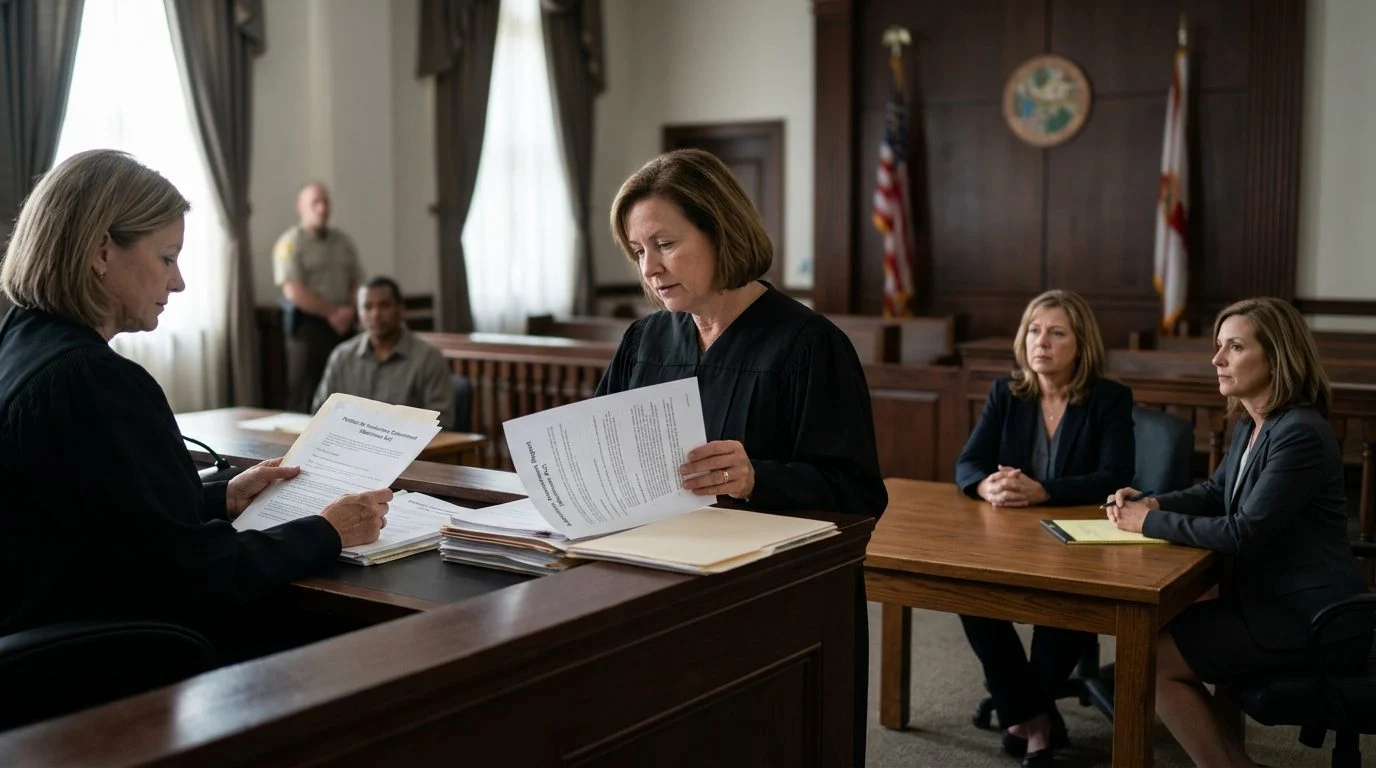
Within 5 days of the emergency custody order, a hearing is held before a judge. You (the petitioner) present evidence supporting the need for treatment. The person being evaluated has the right to be heard, to have an attorney, and to contest the petition. We represent you at this hearing and present your case.
Step 5: Court Order for Treatment
The judge determines whether involuntary treatment is warranted. If approved, the court issues an order specifying the duration of treatment (typically up to 60 days initially) and the treatment facility. The order is enforceable—if the person refuses to comply, law enforcement can assist in transport.
Step 6: Treatment and Follow-Up
The person enters the treatment program. We remain available to monitor compliance, communicate with the treatment facility and court, and address any changes in circumstances. If treatment needs to be extended or modified, we can file additional petitions.
Timeline
From petition filing to emergency custody order: 24–48 hours in urgent cases. From emergency custody to court hearing: up to 5 days. Total time from filing to treatment entry: typically 1–2 weeks, depending on court availability and treatment facility placement.
What’s Included in Marchman Act Representation
When you work with Robinson & Casey, here’s what we handle:
- Comprehensive legal intake: We gather detailed facts about substance abuse history, incidents, and danger to build a strong petition.
- Petition drafting: We prepare a thorough, court-ready petition that meets all Florida statutory requirements.
- Court filing: We file immediately with the appropriate Florida court and coordinate with the clerk’s office.
- Emergency coordination: We work with law enforcement and treatment facilities to execute emergency custody orders.
- Hearing representation: We appear in court on your behalf, present evidence, and advocate for the court order.
- Treatment facility coordination: We communicate with providers to ensure proper placement and compliance with court orders.
- Ongoing monitoring: We follow up throughout the treatment period and are available if circumstances change or extension is needed.
- Modifications and extensions: If the person needs continued treatment beyond the initial order, we can file for extension or modification.
Why Robinson & Casey for Marchman Act Petitions
Robinson & Casey has one focus: Marchman Act petitions and guardianship matters. This exclusive practice means we understand the urgency of addiction crises, the court system in South Florida and across Florida, and the steps required to move quickly and effectively.
Rapid response: We prioritize emergency petitions. When you call, we assess your situation immediately and begin filing within hours if needed.
Statewide reach, local experience: Based in South Florida and serving Miami-Dade and families across Florida, we know the courts, treatment providers, and procedures in your area.
Continuity of care: We don’t hand off your case. The same attorney who files your petition represents you at the hearing and remains available throughout treatment.
Accuracy and compliance: Every petition is prepared to meet Florida court standards. Errors or incomplete filings can delay the process or result in dismissal. We ensure compliance at every step.
Experience with crisis situations: We understand the emotional toll of substance abuse crises on families. We communicate clearly, answer your questions, and guide you through each stage without judgment.
Have questions about what happened?
Ask our team directly. The first conversation is free, confidential, and there is no obligation to continue.
Marchman Act vs. Baker Act: What’s the Difference?
Both the Marchman Act and the Baker Act are Florida laws that allow involuntary intervention, but they address different crises.
| Aspect | Marchman Act | Baker Act |
|---|---|---|
| Focus | Substance abuse (alcohol, drugs) | Mental health crisis |
| Who files | Family, concerned persons, professionals | Law enforcement, healthcare providers, others |
| Grounds | Severe impairment from substance abuse; danger to self or others | Danger due to mental illness or imminent threat of serious harm |
| Evaluation | Substance abuse assessment at treatment facility | Psychiatric evaluation at mental health facility |
| Outcome | Involuntary substance abuse treatment | Psychiatric hold and evaluation (up to 72 hours initial) |
When they overlap: Some individuals struggle with both mental health conditions and substance abuse. Both acts may apply, and treatment may address both issues.
When to use Marchman: The primary concern is addiction or substance abuse.
Frequently Asked Questions
Can I file a Marchman petition without an attorney?
Technically yes, but the process is complex and time-sensitive. Errors in drafting or filing can delay or derail the petition. An attorney ensures proper preparation, timely filing, and effective representation at the hearing.
How long does the entire process take?
Emergency custody can occur within 24–48 hours. The court hearing typically happens within 5 days. Treatment duration is determined by the court order, usually starting at up to 60 days and extendable if necessary.
What if the person refuses to go to treatment?
The court order is enforceable. Law enforcement can assist in transporting the person to the treatment facility if they refuse voluntarily.
Do I have to be family to file?
No. Florida law allows any concerned person—including friends, employers, healthcare providers, and law enforcement—to petition for involuntary treatment.
What’s the cost?
Court filing fees apply (typically $100–$200 depending on the county). Attorney fees vary based on the complexity of your case. Contact Robinson & Casey for a consultation to discuss costs specific to your situation.
Can treatment be extended after 60 days?
Yes. If the court finds that the person continues to pose a danger and requires ongoing treatment, the order can be extended. We can file for extension if needed.
What documentation do I need?
We gather the facts from you during intake. Helpful items include medical records, prior treatment attempts, incident reports, or any documentation of substance abuse or danger. We’ll guide you on what’s needed.
When to Consider a Marchman Act Petition
Consider filing a Marchman Act petition if:
- Substance abuse is escalating and the person refuses help
- The person’s addiction poses a danger to themselves (overdose risk, self-harm) or others (reckless behavior, violence)
- Voluntary treatment has failed
- The person is in denial about the severity of the problem
- Family members are exhausted and need legal intervention
- An immediate crisis (arrest, overdose, hospitalization) has occurred
What to Expect When You Work with Robinson & Casey
Initial consultation: You describe the situation; we explain the Marchman Act process, your legal options, and next steps. We answer your questions and assess whether a petition is appropriate.
Detailed intake: We gather facts, history, and evidence to build a strong petition. We ask about substance abuse patterns, prior treatment, incidents of danger, and your relationship to the person.
Petition preparation: Our attorney drafts a comprehensive petition tailored to your case and the specific court where it will be filed.
Court filing and coordination: We file immediately and coordinate with the court, law enforcement, and treatment providers to execute the emergency custody order.
Representation at hearing: We present your case before the judge, answer questions, and advocate for the court order.
Communication: We keep you informed at every stage. You’ll know when the petition is filed, when the hearing is scheduled, and what to expect.
Follow-up and monitoring: We monitor compliance with the court order and are available if modifications are needed or if the order needs to be extended.

Want to know where you stand?
Tell us what happened and our team will walk you through the options available to you, at no cost.
Contact Robinson & Casey Today
If your loved one is struggling with substance abuse and you believe involuntary treatment is necessary, Robinson & Casey is ready to help you navigate the Marchman Act process.
We serve families across South Florida and statewide Florida.
Call (561) 849-4700 to schedule a consultation.
Time is critical in Marchman Act cases. The sooner you reach out, the sooner we can assess your situation and begin the process. Families facing substance abuse crises contact us every week—you don’t have to face this alone.
How We Help Families Navigate Marchman Act Petitions
Petition Preparation & Filing
We draft and file your Marchman Act petition with accuracy and speed, ensuring all required documentation meets Florida court standards.
Emergency & Expedited Hearings
Emergency custody can occur within 24–48 hours. We handle urgent filings and represent you at hearings to seek immediate protective orders.
Court Representation
We advocate on your behalf at all stages—from initial emergency custody through final disposition—presenting evidence and testimony to support treatment.
Guidance Through the Process
The Marchman Act process is complex and time-sensitive. We explain each step, answer your questions, and keep you informed throughout.
Acting Quickly Matters
Errors in drafting or filing can delay or derail a petition. Procedural mistakes may cost critical time when your loved one needs immediate intervention. An attorney ensures proper preparation and timely filing to protect your rights and pursue treatment options.
Marchman Act & Involuntary Treatment Services
Marchman Act Petitions
We file petitions seeking court-ordered evaluation and treatment for individuals struggling with addiction who refuse voluntary help.
Emergency Custody Orders
When immediate intervention is necessary, we pursue emergency protective orders to enable rapid assessment and stabilization.
Involuntary Commitment for Addiction
We represent families seeking involuntary commitment through the Marchman Act process, navigating hearings and court proceedings.
Mental Health Guardianship
For cases involving co-occurring mental health conditions, we address guardianship matters alongside addiction treatment petitions.
Frequently Asked Questions
Can I file a Marchman petition without an attorney?
Technically yes, but the process is complex and time-sensitive. Errors in drafting or filing can delay or derail the petition. An attorney ensures proper preparation, timely filing, and effective representation at the hearing.
How long does the entire process take?
Emergency custody can occur within 24–48 hours. The full Marchman Act process, from petition filing through final court order, typically takes days to weeks depending on the court's schedule and case circumstances.
Who can file a Marchman Act petition?
Family members, healthcare providers, law enforcement, and others with a legitimate interest in the person's welfare may petition the court. We advise you on standing and the strongest basis for your petition.
What happens at a Marchman Act hearing?
The court hears evidence about the person's substance use, danger to self or others, and likelihood to benefit from treatment. We present your case, examine witnesses, and argue for court-ordered evaluation and treatment.
Ready to Take the Next Step?
Related practice areas
- Plenary Guardianship Attorney | Robinson & Casey