
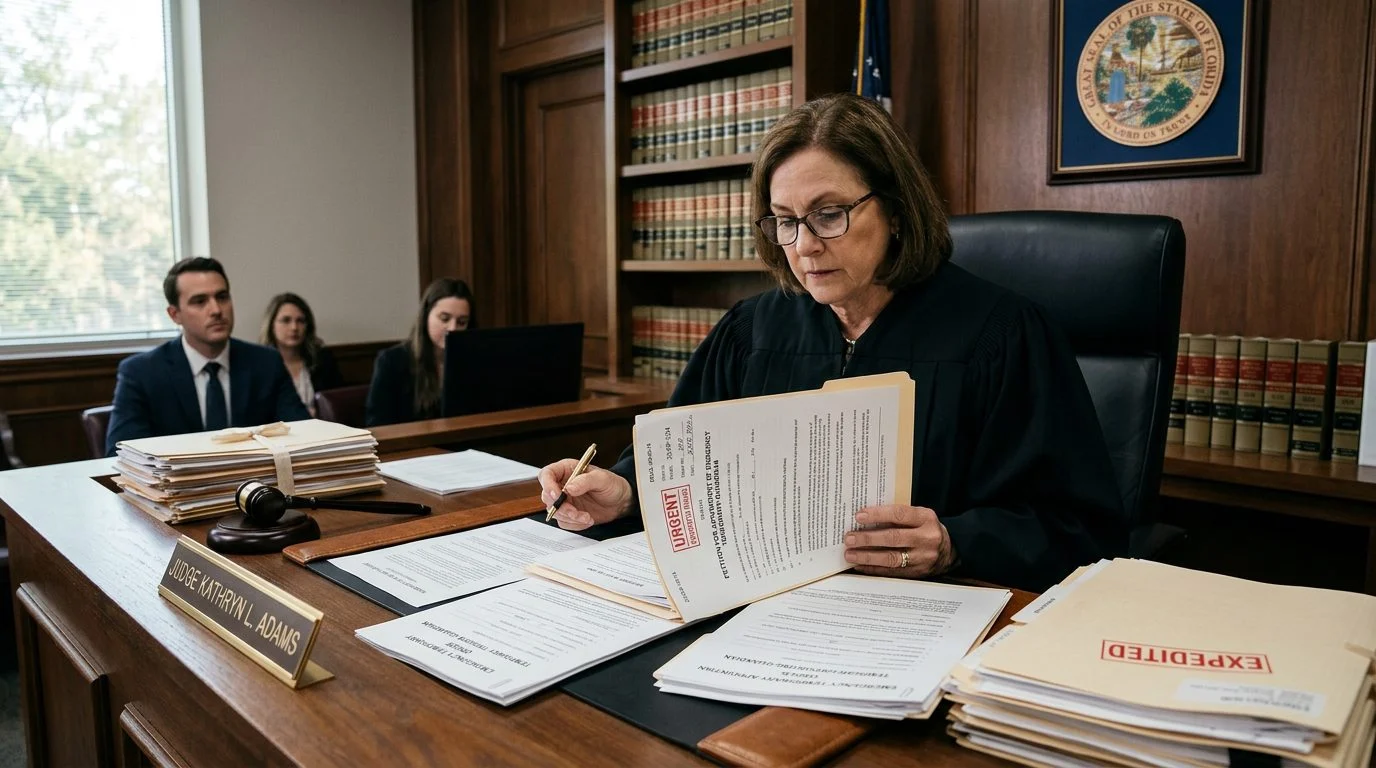
Emergency Temporary Guardianship
Immediate Legal Protection for Your Loved One in Crisis
When a family member faces imminent danger due to substance abuse, mental illness, or self-neglect, emergency temporary guardianship can provide swift court intervention. Robinson & Casey handles urgent petitions across Florida.
By Richard J. Casey III, Esq. · Published October 02, 2026
Emergency Temporary Guardianship Attorney in Florida
When a family member faces immediate danger, you need legal protection now. Emergency temporary guardianship is a Florida court order granting you immediate authority to make critical decisions for a vulnerable person. Robinson & Casey handles emergency temporary guardianship cases for families across South Florida and statewide, moving from consultation to court protection in one to two weeks.

Not sure what your next step is?
Talk it through with our team — the first consultation is free, confidential, and carries no obligation.
What Is Emergency Temporary Guardianship?
Emergency temporary guardianship is a court-ordered legal arrangement. It grants immediate authority to make decisions for a vulnerable person whose health, safety, or property faces imminent danger. Unlike a power of attorney, a guardianship requires a judge’s written order. No private arrangement has legal force in Florida.
Emergency temporary guardianship differs from other guardianship types:
- Plenary guardianship: full authority over the person and their assets; typically long-term or permanent
- Limited guardianship: authority over specific decisions (medical, financial, or living arrangements) while the person retains some rights
- Mental health guardianship: focused authority when mental illness is the primary concern
- Emergency temporary guardianship: immediate, short-term authority (typically up to 90 days) to prevent imminent harm while full guardianship proceedings move forward
Emergency temporary guardianship applies when:
- A family member is in immediate danger from substance abuse and needs involuntary placement or treatment
- Sudden illness or injury leaves someone unable to make medical or financial decisions
- An elder is being exploited by a caregiver or family member
- Untreated mental illness creates risk to the person or others
- A child or vulnerable adult is abandoned or without supervision
- Medical emergency requires someone to authorize life-saving treatment
Family members, trusted individuals, or designated professionals can be appointed as emergency temporary guardians if they meet Florida requirements and the court approves.
Can I Get Emergency Temporary Guardianship Without Going to Court?
No—a valid guardianship in Florida requires a court order. No guardianship arrangement is legally enforceable without judicial approval, even in emergencies. However, Florida law expedites the court process for emergencies.
Florida law allows emergency ex parte hearings (without the respondent present) when urgent circumstances exist. A judge can grant a temporary order quickly, sometimes within days, based on evidence of imminent danger. The respondent later has the opportunity to contest the order at a full hearing.
Emergency temporary guardianship is a court process that moves fast. Speed comes from expedited filing and judicial urgency, not from avoiding court involvement.
How Long Does Emergency Temporary Guardianship Last in Florida?
Emergency temporary guardianship in Florida typically lasts up to 90 days under Florida Statutes Chapter 744. It serves as a bridge period—providing immediate protection while full guardianship proceedings move forward.
The order can be extended if circumstances warrant and the court approves. After 90 days, you typically petition for plenary or limited guardianship for longer-term protection, or the emergency guardianship ends. This timeline clarity helps families plan next steps.
Have questions about what happened?
Ask our team directly. The first conversation is free, confidential, and there is no obligation to continue.
What Does Emergency Temporary Guardianship Cover?
Emergency temporary guardianship grants authority over specific decisions tailored to the emergency:
- Medical decision-making: consent for treatment, hospitalization, medication, surgery
- Living arrangements: placement in a facility, home care decisions, or relocation for safety
- Financial protection: limited authority to prevent exploitation or misuse of assets
- Educational or vocational decisions (if applicable to the person’s age and circumstances)
Emergency temporary guardianship does not transfer full asset control. That requires plenary guardianship. The scope is narrower and tailored to the immediate crisis. An emergency temporary guardian may authorize medical treatment and arrange safe housing but cannot liquidate property or change a will without additional court authorization.
How the Emergency Temporary Guardianship Process Works
The process moves quickly but follows clear steps:
Step 1: Initial Consultation You meet with an attorney who evaluates the situation, urgency, and whether emergency temporary guardianship is appropriate. Bring medical records, evidence of incapacity or danger, family information, and details about the person’s assets or care needs.
Step 2: Petition Preparation The attorney prepares a detailed petition explaining why emergency protection is needed. Supporting evidence (medical records, witness statements, documentation of exploitation) is gathered.
Step 3: Filing with the Court The petition and supporting documents are filed with the probate court in the county where the person lives or is located. Filing fees typically run several hundred dollars, depending on the court.
Step 4: Ex Parte Hearing (if appropriate) In urgent cases, the judge may hold an ex parte hearing—without the respondent present—and grant a temporary order immediately. This can happen within days of filing.
Step 5: Full Hearing The respondent is served with notice and has the opportunity to appear and contest the guardianship. The judge hears evidence from both sides and makes a final determination. This hearing typically occurs within one to two weeks of the emergency order.
Step 6: Court Order Issued Once the judge grants emergency temporary guardianship, the order becomes effective immediately. You receive certified copies and can begin acting as guardian.
Ongoing Compliance As guardian, you must file annual reports with the court and comply with court supervision. The court may require accountings of any funds you manage on behalf of the ward.
Timeline: Emergency cases can move from consultation to court order in one to two weeks, compared to months for standard guardianship proceedings.
Common Situations Requiring Emergency Temporary Guardianship
Substance Abuse Crisis A family member is in immediate danger due to addiction—refusing treatment, at risk of overdose, or unable to care for themselves. Emergency temporary guardianship allows you to authorize involuntary placement or treatment. This often intersects with Marchman Act petitions, which provide a separate legal mechanism for involuntary commitment related to substance abuse in Florida.
Sudden Incapacity A stroke, accident, or acute illness leaves someone unable to make medical or financial decisions. Emergency temporary guardianship lets you authorize surgery, hospitalization, or necessary care immediately.
Elder Exploitation A caregiver or family member is taking advantage of a vulnerable elder—stealing funds, forging documents, or isolating them from family. Emergency temporary guardianship removes the person from the exploitative situation and protects their assets.
Untreated Mental Health Crisis A person with mental illness refuses treatment and poses risk to themselves or others. Emergency temporary guardianship allows you to authorize psychiatric evaluation, hospitalization, or medication.
Abandonment A minor or vulnerable adult is left without care or supervision. Emergency temporary guardianship ensures the person has a legal caregiver immediately.
Medical Emergency A person is unconscious, incapacitated, or unable to communicate, and urgent medical decisions are needed. Emergency temporary guardianship authorizes life-saving treatment without delay.
Why Robinson & Casey for Your Emergency Guardianship
Robinson & Casey handles emergency temporary guardianship, guardianship, and Marchman Act petitions exclusively—not a general practice offering guardianship as one of many services. This focused approach means:
- Deep knowledge of guardianship law: We know Florida probate courts, judges, and procedures intimately
- Speed and responsiveness: We understand the time-sensitive nature of emergency cases and move quickly
- Bilingual service: We serve Spanish-speaking families in South Florida in their preferred language
- Statewide reach: We handle cases across Florida with particular strength in South Florida and Miami-Dade County
- Integrated knowledge: We understand how emergency temporary guardianship intersects with Marchman Act petitions and involuntary commitment in substance abuse crises
- Streamlined process: Our approach to emergency filings and court representation reduces delays and strengthens your case
Want to know where you stand?
Tell us what happened and our team will walk you through the options available to you, at no cost.
Frequently Asked Questions
Do I need an attorney to file for emergency temporary guardianship in Florida?
While not legally required, an attorney ensures proper filing, meets all deadlines, presents the strongest evidence, and guides you through court procedures. Mistakes or delays can cost you weeks and put your loved one at greater risk.
How long does the process take?
Emergency cases can move from consultation to court order in one to two weeks. Standard guardianship proceedings typically take two to four months.
What happens after 90 days?
You may petition for plenary or limited guardianship for ongoing protection. If you don’t, the emergency guardianship ends and your authority ceases.
Can the person under guardianship challenge the order?
Yes—they have the right to contest the guardianship at the full hearing. The judge will hear their objections and decide whether to grant or deny the guardianship.
Can a family member be appointed as emergency temporary guardian?
Yes, family members are often appointed if they meet Florida requirements and the court finds it in the person’s best interest.
What evidence do I need?
Medical records, documentation of incapacity or danger, witness statements, and evidence of exploitation (if applicable). Your attorney will advise you on what to gather.
What if I delay?
Delay can result in harm to the vulnerable person, missed opportunities for court intervention, or loss of assets to exploitation. The sooner you act, the sooner you can protect them.

Next Steps: How to Begin
If a family member faces immediate danger and you need court-ordered protection, contact Robinson & Casey for a confidential consultation. We’ll evaluate your situation, explain your options, and move quickly if emergency temporary guardianship is appropriate.
Call (561) 849-4700 to schedule your consultation today.
Bring relevant documents: medical records, evidence of incapacity or danger, family information, and details about the person’s assets or care needs. Our attorney will assess urgency, outline the timeline, and guide you through each step of the court process.
Why Robinson & Casey for Emergency Temporary Guardianship
Rapid Response to Crisis Situations
Emergency temporary guardianship moves fast. We understand the urgency and prepare petitions designed to meet Florida court requirements and move through the system efficiently.
Precise Petition Preparation
Errors or incomplete filings delay relief when time matters most. We ensure every document meets court standards and presents the strongest factual foundation for your petition.
Court Procedure Guidance
Emergency hearings involve specific rules and evidence standards. We guide you through the process, help you prepare testimony, and represent your interests before the judge.
Direct Attorney Access
You work directly with attorneys focused exclusively on guardianship and Marchman Act matters. No referrals, no handoffs—just dedicated representation when you need it.
What Emergency Temporary Guardianship Covers
Immediate Court Authority
Emergency temporary guardianship gives the court power to intervene quickly when a person is in imminent danger. It can be granted before a full hearing if circumstances warrant urgent protection.
Substance Abuse Crises
When addiction poses immediate risk to health or safety, emergency guardianship can authorize intervention, treatment placement, and protective decisions without delay.
Mental Health Emergencies
Acute mental illness that creates danger to self or others can support emergency guardianship petitions, enabling rapid court action and protective measures.
Self-Neglect and Vulnerability
Severe self-neglect, inability to meet basic needs, or exploitation of a vulnerable adult may justify emergency temporary guardianship to restore safety and stability.
Time Matters in Emergency Cases
Delays in filing or procedural mistakes can extend the crisis and leave your loved one unprotected. An attorney ensures your petition is filed correctly, meets all deadlines, and presents the strongest case to the court.
Common Questions About Emergency Temporary Guardianship
Do I need an attorney?
While not legally required, an attorney ensures proper filing, meets all deadlines, presents the strongest evidence, and guides you through court procedures. Mistakes or delays can cost you weeks and put your loved one at greater risk.
How fast can the court act?
Emergency temporary guardianship is designed for rapid intervention. With proper preparation and filing, courts can grant temporary authority quickly—sometimes within days—when imminent danger is demonstrated.
What happens after emergency guardianship is granted?
Emergency temporary guardianship is typically short-term. A full hearing on plenary (permanent) guardianship usually follows, or the emergency order may expire. We guide you through the next steps.
What evidence do I need?
Courts require clear, specific facts showing imminent danger: medical records, witness statements, documentation of the crisis, and details of the threat to health or safety. We help you gather and present this evidence effectively.