
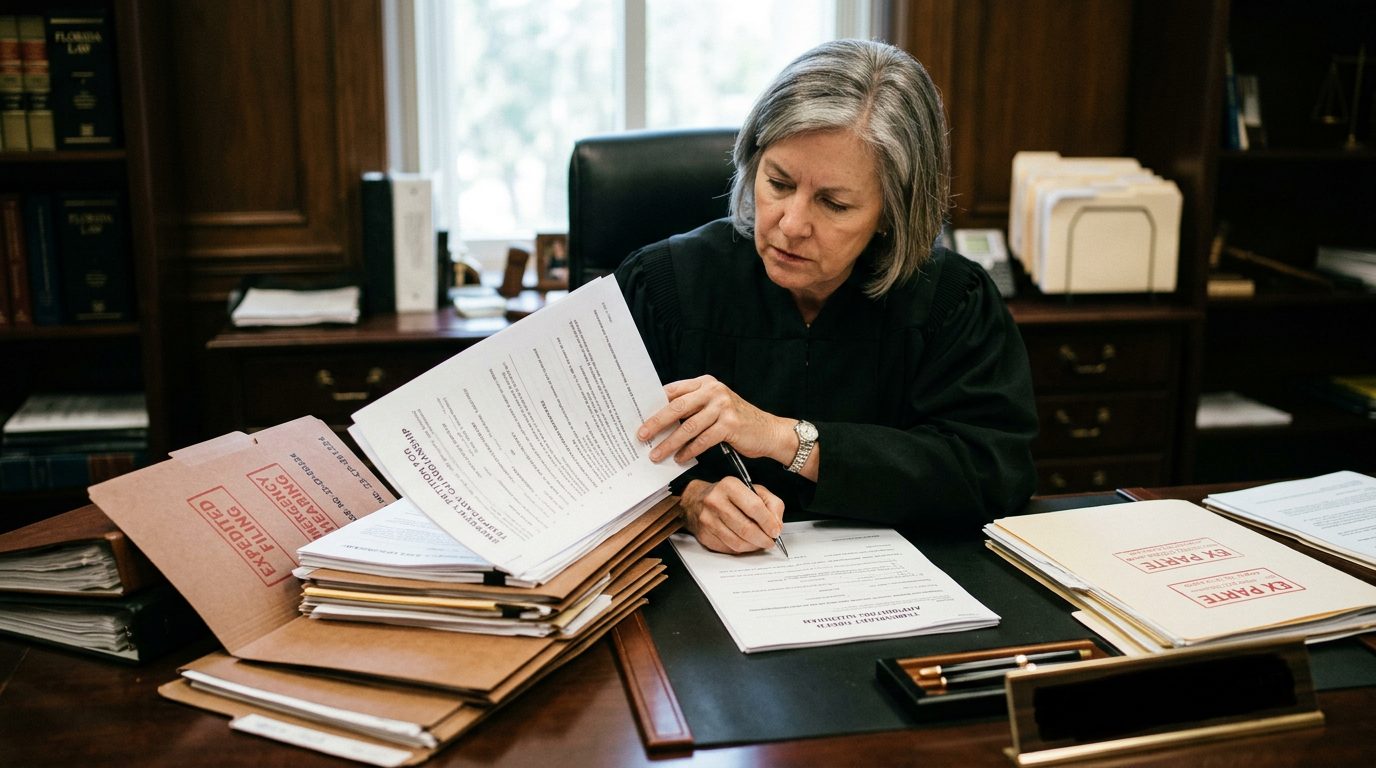
Emergency Guardianship
Emergency Guardianship Without a Hearing in Florida
When a loved one needs immediate protection, Florida law allows courts to grant emergency temporary guardianship quickly—sometimes within hours. Robinson & Casey guides families through this urgent process.
By Richard J. Casey III, Esq. · Published September 22, 2026
Emergency Guardianship Without a Hearing in Florida
Yes—Florida law allows a judge to appoint an emergency temporary guardian without a hearing when the court finds probable cause that someone faces imminent danger and lacks capacity to manage their person or property. This is called an ex parte emergency guardianship, and it can happen within hours or days when the situation is urgent.
If you’re researching this because a family member is in crisis—struggling with active addiction, experiencing a mental health emergency, or suddenly unable to care for themselves—this page explains how the process works, what you’ll need to prove, and what comes next.

Not sure what your next step is?
Talk it through with our team — the first consultation is free, confidential, and carries no obligation.
What Is an Ex Parte Emergency Guardianship in Florida?
An ex parte emergency guardianship is a temporary guardianship granted by a judge without the respondent (the person being petitioned for guardianship) present or having received notice beforehand.
Under Florida Statute § 744.331, courts can appoint an emergency temporary guardian without a hearing under specific circumstances. This differs sharply from standard guardianship, which requires notice to the respondent, a full hearing, and their opportunity to be heard and represented by an attorney.
The key distinction: standard guardianship protects the respondent’s right to contest the guardianship in court. Ex parte emergency guardianship bypasses the hearing requirement because the court finds that waiting for a hearing would expose the person to immediate, serious harm.
Emergency temporary guardianship typically lasts 60 days or until a full hearing is held, whichever comes first. After that period, the court must hold a hearing where the respondent can contest the guardianship and present their own evidence.
When Can You Get Emergency Guardianship Without a Hearing?
The court must find two things: imminent danger and incapacity.
Imminent danger means the respondent faces immediate risk to their person or property if a hearing is delayed. This is not theoretical or future risk—it’s danger that exists right now. Courts look for specific, concrete facts: Is the person actively using drugs with overdose risk? Are they refusing food and shelter? Is someone actively stealing their money? Are they expressing suicidal thoughts?
Incapacity means the person lacks the capacity to manage their person (medical decisions, living situation, self-care) or their property (finances), or both. The court must find probable cause—more likely than not—that both elements are true based on the documents you file.
Examples of situations where emergency guardianship without a hearing is sought include:
- Substance abuse crisis: active addiction with overdose risk, refusal of treatment, inability to obtain food or shelter
- Mental health emergency: acute psychiatric crisis, suicidal ideation, untreated psychosis, danger to self or others
- Sudden incapacity: stroke, accident, or severe illness leaving someone unable to make decisions or care for themselves
- Financial exploitation: an elder or vulnerable adult being drained of assets by a caregiver or family member
- Homelessness or neglect: a person unable to secure shelter, food, or medical care due to incapacity
The court does not need to hold a hearing if you establish probable cause for both imminent danger and incapacity through your petition and supporting documents—affidavits, medical records, police reports, and other evidence.
What Documents Do You Need to File?
To petition for emergency temporary guardianship without a hearing, you’ll file several documents with the court in the county where the respondent lives:
- Petition for Emergency Temporary Guardian: the formal request to the court, signed under oath, explaining why emergency guardianship is necessary
- Affidavit or sworn statement: your detailed account of the imminent danger, with specific facts, dates, and incidents—not general concerns
- Medical or professional documentation: a physician’s affidavit, mental health evaluation, addiction assessment, or police reports that support both incapacity and danger
- Proposed Order: a draft order for the judge to sign if the petition is granted
- Proof of service or notice: documentation that the respondent or their attorney (if known) has been notified, or a request for waiver of notice if circumstances prevent it
The quality of your documentation matters. Courts need specific, verifiable facts—not predictions or assumptions. For example, “He has overdosed twice in the past month and refuses treatment” is far more persuasive than “He might overdose.”
How Does the Ex Parte Process Work?
Here’s the timeline:
Filing: You file the petition and supporting documents with the court in the respondent’s county of residence.
Judge review: The judge reads your petition and attachments without a hearing and without the respondent present. They’re looking for probable cause that imminent danger and incapacity both exist.
Decision: If the judge finds probable cause, they sign an order appointing you (or another named person) as emergency temporary guardian. This can happen within hours or days, depending on court availability and how complete your paperwork is.
Notice after appointment: Once appointed, you must notify the respondent, their family members, and any known attorney of the guardianship and their right to request a hearing. The respondent can ask for a hearing sooner than 60 days.
What Happens After Emergency Guardianship Is Granted?
Once the court signs the emergency temporary guardianship order, you gain immediate authority to make decisions about the respondent’s medical care, living situation, and finances—depending on the scope of guardianship the judge granted.
However, Florida law requires a full hearing within 60 days. At that hearing, the respondent has the right to be present, have an attorney (court-appointed if they cannot afford one), and contest the guardianship.
If the court finds after the hearing that guardianship is necessary, the emergency temporary guardianship converts to a longer-term guardianship—either plenary guardianship (full authority over person and property) or limited guardianship (authority over specific matters only).
The respondent retains the right to request the hearing sooner and has the right to legal representation throughout.
Have questions about what happened?
Ask our team directly. The first conversation is free, confidential, and there is no obligation to continue.
What Must You Prove to Get Emergency Guardianship Without a Hearing?
To succeed, you must meet the probable cause standard—more likely than not that the facts you present are true. Courts require:
- Imminent danger: specific, concrete facts showing the person faces immediate risk, not theoretical or future risk
- Incapacity: evidence that the person cannot manage their person or property, or both
- Nexus: a clear connection between the incapacity and the danger (for example, untreated addiction leading to overdose risk)
- Documentation quality: sworn affidavits, medical records, police reports, or other objective evidence—not just your word
The judge has discretion to deny the petition even if the standard is met. This is why working with an attorney to present your case persuasively and gather the right evidence matters.
Limitations and Important Considerations
Emergency temporary guardianship is not permanent. A full hearing must follow within 60 days, and the respondent can contest the guardianship at any time.
The court may limit your authority to specific decisions—medical decisions only, financial decisions only, or both. You don’t automatically have full control.
The respondent has the right to an attorney. If they cannot afford one, the court will appoint one at no cost to them.
As guardian, you have legal duties to act in the respondent’s best interest and to account for their finances if you have financial authority. These duties continue even after the emergency period ends.
Why Working With an Attorney Matters
Guardianship law in Florida is detailed and strict. An attorney can help you:
- Draft the petition with all required elements and present facts persuasively to the judge
- Gather and organize evidence that courts find most compelling for imminent danger and incapacity
- Ensure procedural compliance: Florida has strict filing, notice, and hearing requirements; mistakes can delay or derail the process
- Represent you at the full hearing if the case proceeds and advocate for the respondent’s best interests
- Guide you through your duties as guardian, including annual accountings and reports required by law
The stakes are high—you’re seeking to remove someone’s right to make their own decisions. Courts scrutinize these petitions carefully, and the documentation must be clear and specific.
Frequently Asked Questions
How quickly can a judge grant emergency guardianship in Florida?
Emergency temporary guardianship can be granted within hours or days, depending on court availability and how complete your petition and supporting documents are.
Is emergency guardianship the same as the Marchman Act?
No. The Marchman Act (Florida Statute Chapter 397) is a separate civil commitment pathway for involuntary substance abuse treatment and does not require guardianship. Guardianship is a broader legal arrangement for managing a person’s person and property; the Marchman Act is specifically for addiction treatment.
Can the respondent contest emergency guardianship after it’s granted?
Yes. The respondent can request a hearing at any time and has the right to be represented by an attorney at that hearing.
What happens if the 60-day period ends before a hearing is held?
The emergency temporary guardianship expires. A new petition would be required, or the case would proceed to a full guardianship hearing if one is scheduled.
Do I need an attorney to file for emergency guardianship?
You are not required to have an attorney, but the process is complex and the burden of proof is high. An attorney can significantly increase the likelihood that your petition is granted and that you comply with all ongoing legal duties.

Want to know where you stand?
Tell us what happened and our team will walk you through the options available to you, at no cost.
Next Steps
If you’re facing a substance abuse crisis, mental health emergency, or sudden incapacity with a family member, you’re navigating a difficult and urgent situation. Many families in your position reach out to understand their options and what emergency guardianship actually requires.
Robinson & Casey handles emergency temporary guardianship petitions and guardianship matters throughout Florida. We can review your situation, help you gather the right evidence, and guide you through the filing and hearing process.
Contact us to schedule a consultation or call (561) 849-4149. We’re here to help you protect someone you care about.
Time Matters in Emergency Situations
Emergency temporary guardianship is designed for situations where waiting for a full hearing would put a vulnerable person at serious risk. Courts can act without a hearing when the petition and supporting documents show clear grounds for immediate protection.
How Emergency Guardianship Works in Florida
What Is Emergency Temporary Guardianship?
A court order that grants a guardian immediate authority to make decisions for an incapacitated person without waiting for a full hearing. It remains in effect until a plenary (full) guardianship hearing can be held.
When Can a Judge Grant It Without a Hearing?
Florida law allows judges to skip the hearing if your petition and supporting documents—such as medical evidence or affidavits—clearly demonstrate that the person is incapacitated and immediate action is necessary to prevent serious harm.
How Fast Can It Happen?
Emergency temporary guardianship can be granted within hours or days, depending on court availability and the completeness of your petition and supporting documents.
What Comes After?
Once emergency guardianship is granted, you must petition for plenary guardianship and attend a hearing within a set timeframe. Robinson & Casey handles both the emergency filing and the full guardianship process.
Why Robinson & Casey for Emergency Guardianship
Speed When It Counts
We prepare emergency petitions with the supporting documents courts need to act without delay.
Thorough Documentation
Strong medical evidence and affidavits strengthen your petition and increase the likelihood of approval without a hearing.
Focused on Your Family's Needs
We focus exclusively on Marchman Act petitions and guardianship matters—emergency temporary, plenary, limited, and mental health guardianship.
Available When You Need Us
Guardianship emergencies don't follow business hours. We work to respond quickly to urgent situations.
Common Questions About Emergency Guardianship Without a Hearing
Is emergency guardianship the same as the Marchman Act?
No. The Marchman Act (Florida Statute Chapter 397) is a separate civil commitment process for involuntary treatment of substance use disorders. Emergency temporary guardianship is a guardianship tool used when someone is incapacitated and needs immediate protection.
What counts as 'incapacity' for emergency guardianship?
Incapacity generally means the person lacks the mental or physical ability to manage their person or property. This can include advanced dementia, severe mental illness, or inability to make safe decisions due to a medical condition.
Who can file for emergency temporary guardianship?
Family members, caregivers, healthcare providers, or other interested parties can petition the court. An attorney can help you determine whether you have standing and strengthen your petition.
What happens if the judge denies emergency guardianship without a hearing?
If denied, you may request a full hearing where you can present evidence and testimony. Robinson & Casey can prepare your case for that hearing and explore other options to protect your loved one.