
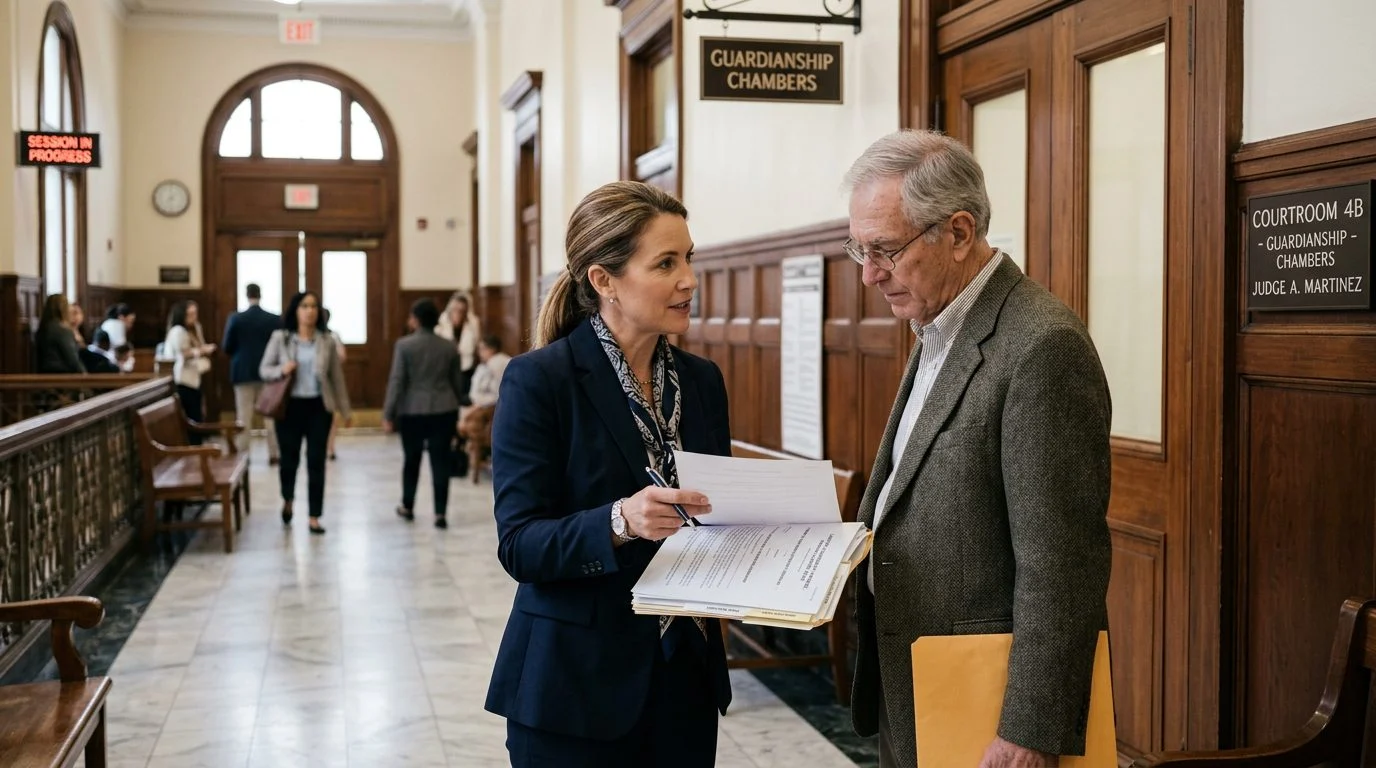
Guardianship Attorney
Establish Legal Authority Over an Incapacitated Adult or Minor
Robinson & Casey guides Florida families through guardianship proceedings—from initial evaluation through court approval and ongoing compliance.
By Richard J. Casey III, Esq. · Published October 02, 2026
Guardianship Attorney in Florida | Robinson & Casey
A guardianship attorney helps you establish legal authority to manage the personal and financial affairs of an incapacitated adult or minor through the Florida court system. Robinson & Casey handles guardianship matters exclusively, guiding families through every step—from initial evaluation through court approval and ongoing compliance.

Not sure what your next step is?
Talk it through with our team — the first consultation is free, confidential, and carries no obligation.
What Do Guardianship Attorneys Do?
A guardianship attorney represents you (the petitioner) in court proceedings to establish guardianship over an incapacitated person. Your attorney prepares all required legal documents, gathers medical evidence, files the petition with the court, and represents you at the guardianship hearing.
The attorney’s core responsibilities include:
- Petition preparation: Draft the guardianship petition with all required documentation and supporting affidavits.
- Medical evidence: Coordinate with physicians to obtain the incapacity evaluation required by Florida Statutes Chapter 744.
- Court filing and notice: File the petition in the correct county and ensure all interested parties receive proper notice.
- Court representation: Appear at the guardianship hearing, present evidence, and answer the judge’s questions.
- Compliance guidance: Explain your duties as guardian and help you file annual reports and accountings with the court.
It’s important to understand: your attorney represents you, the petitioner. The incapacitated person has the right to independent counsel appointed by the court to protect their interests.
Types of Guardianship in Florida
Florida law recognizes several guardianship types, each suited to different circumstances.
Emergency Temporary Guardianship
Emergency temporary guardianship provides immediate protection when an incapacitated person faces imminent danger. The court can grant this guardianship without a full hearing if it finds reasonable cause to believe the person is in serious danger of harm. This type typically lasts 60 days pending a full guardianship hearing. Use emergency temporary guardianship when someone is being neglected, exploited, or at immediate risk.
Plenary Guardianship
Plenary guardianship grants full authority over the ward’s person and property. The guardian makes all medical decisions, determines where the ward lives, manages finances, and handles legal matters. This is the broadest form of guardianship and is appropriate when the incapacitated person cannot manage any aspect of their affairs.
Limited Guardianship
Limited guardianship grants specific powers only—for example, authority over medical decisions but not finances, or vice versa. Limited guardianship preserves the ward’s autonomy and decision-making rights in areas where they remain capable. Courts prefer limited guardianship when possible, as it’s the least restrictive alternative.
Mental Health Guardianship
Mental health guardianship is established when an individual is incapacitated due to mental illness or developmental disability and cannot manage personal or property affairs. The process is the same as other guardianships, but the physician’s evaluation focuses on the mental health condition and its effect on capacity.
Guardianship of Minors vs. Adults
Guardianship of a minor (under 18) is often simpler—a parent or court-appointed guardian manages the child’s affairs until age 18. Guardianship of an adult requires proof of incapacity and is subject to ongoing court oversight and annual reporting.
Who Needs a Guardianship Attorney?
You need a guardianship attorney if you’re responsible for an incapacitated person and need legal authority to act on their behalf. Common situations include:
- Aging parents with dementia or cognitive decline: You need authority to make medical and financial decisions.
- Adult children with severe mental illness or developmental disabilities: Parents or siblings seek guardianship to ensure proper care and protection.
- Incapacitated persons with no power of attorney: When no advance directive exists, guardianship is the only path to legal authority.
- Exploitation or neglect: An incapacitated person is being abused or their assets are at risk; emergency intervention is needed.
- Medical decision-making: The person cannot consent to treatment; a guardian’s authority is required.
The Guardianship Process: Step-by-Step
Understanding the process removes uncertainty and helps you move forward confidently.
Step 1: Initial Consultation
You meet with your attorney to discuss the incapacitated person’s situation, medical history, family circumstances, and your goals. The attorney determines which type of guardianship fits your needs and explains the process, timeline, and costs.
Step 2: Physician Evaluation
Your attorney arranges for a physician to evaluate the incapacitated person and prepare a written report establishing incapacity. This is required by Florida law before any guardianship petition can be filed. The evaluation typically takes 1–2 weeks.
Step 3: Petition Preparation
Your attorney drafts the guardianship petition, including all required forms, affidavits, and supporting documentation. You’ll review and sign the petition.
Step 4: Court Filing
The petition is filed in the circuit court in the county where the incapacitated person resides. The court clerk assigns a case number and sets a hearing date.
Step 5: Notice and Service
All interested parties—including the incapacitated person, their spouse, adult children, and other relatives—receive notice of the guardianship petition. The incapacitated person has the right to hire an attorney or request one be appointed at no cost.
Step 6: Court Hearing
The judge reviews the petition, physician’s report, and any other evidence. You may testify about why guardianship is necessary and in the person’s best interest. If the respondent (incapacitated person) contests the guardianship, a full hearing is held with testimony and evidence presented by both sides.
Step 7: Guardianship Order and Letters
If the judge approves, the court issues a guardianship order and letters of guardianship. These letters grant you authority to act on the ward’s behalf.
Step 8: Ongoing Compliance
As guardian, you must file annual reports with the court, manage the ward’s finances responsibly, and comply with all court orders. Your attorney can guide you through these requirements.
Timeline and What to Expect
Emergency temporary guardianship: Can be granted within days if the court finds imminent danger.
Standard guardianship: Typically 4–8 weeks from filing to final order, depending on court docket and case complexity.
Physician evaluation: Usually completed within 1–2 weeks.
Court hearing: Scheduled 2–4 weeks after petition filing.
Timeline varies based on:
- Completeness of your initial documentation
- Court availability and docket
- Whether the respondent contests the petition
- Complexity of the incapacitated person’s affairs
Your attorney will give you a realistic estimate based on your specific situation.
Have questions about what happened?
Ask our team directly. The first conversation is free, confidential, and there is no obligation to continue.
What Guardianship Covers
Personal guardianship grants authority over:
- Medical decisions and healthcare choices
- Living arrangements and residential placement
- Daily care and personal needs
- Education and vocational training
Property guardianship grants authority over:
- Financial accounts and assets
- Bill payment and expense management
- Real estate and property transactions
- Investment decisions and tax matters
Combined guardianship grants both personal and property authority when the incapacitated person cannot manage either.
All guardianship authority is limited by Florida Statutes Chapter 744. Guardians must act in the ward’s best interest, not their own, and are accountable to the court. Annual accountings and status reports are required.
How Much Does Guardianship Cost in Florida?
Guardianship costs vary based on case complexity and type. Typical expenses include:
- Attorney fees: Depend on whether the case is contested, complexity, and the type of guardianship. Uncontested cases are typically less expensive than contested ones.
- Court filing fees: Set by the county; typically a few hundred dollars.
- Physician evaluation: Usually $300–$800 for the incapacity evaluation.
- Ongoing costs: Annual court filing fees and potential attorney fees for compliance and reporting.
Many costs can be paid from the ward’s estate if property guardianship is established. Robinson & Casey discusses payment options and provides a cost estimate during your initial consultation.
What Disqualifies Someone from Guardianship?
The court may reject a proposed guardian if:
- They have a financial interest in the ward’s estate or property (conflict of interest).
- They have certain felony convictions.
- They lack the capacity to manage the ward’s affairs.
- The judge finds them unsuitable based on evidence presented.
Florida law prioritizes the ward’s best interest. The court has discretion to appoint a different guardian or impose conditions on guardianship authority.
Why Choose Robinson & Casey for Your Guardianship Matter
Focused practice: Robinson & Casey handles guardianship matters exclusively, alongside Marchman Act petitions. This focus means deep knowledge and efficiency in these specific areas.
Statewide Florida service: Licensed to practice throughout Florida and serving South Florida and statewide clients. Your location doesn’t limit your access to experienced counsel.
All guardianship types: We handle emergency temporary, plenary, limited, and mental health guardianship—whatever your situation requires.
Clear, personalized guidance: We explain your options in plain language and tailor our approach to your family’s unique circumstances.
Court representation: We handle all filings, court appearances, and compliance work on your behalf.
Accessible and responsive: Straightforward consultation process; we’re ready to answer your questions and move forward quickly.
Want to know where you stand?
Tell us what happened and our team will walk you through the options available to you, at no cost.
Guardianship FAQs
Can I establish guardianship without going to court? No. Florida law requires a court order and judicial approval. An attorney streamlines the process and ensures all requirements are met.
What if the incapacitated person objects to guardianship? They have the right to contest it. The court will hold a hearing and determine whether guardianship is necessary and in their best interest based on evidence presented.
Can I be a guardian if I live out of state? Yes, but Florida law may require you to appoint a resident agent or co-guardian. Discuss this with your attorney.
What happens to guardianship if the guardian becomes incapacitated? The court can appoint a successor guardian. This should be addressed in your guardianship plan.
Can guardianship be terminated? Yes. If the ward regains capacity or circumstances change, guardianship can be modified or terminated by court order.
Do I need a guardianship attorney or can I file the petition myself? While self-representation is possible, guardianship involves complex legal requirements and court procedures. An attorney ensures compliance, protects your interests, and increases the likelihood of approval.

Schedule Your Consultation
If you’re managing the care of an incapacitated family member and need legal authority to make decisions on their behalf, families in your situation reach out to Robinson & Casey regularly—call (561) 849-4700 to schedule your consultation.
During your consultation, be prepared to discuss:
- The incapacitated person’s medical history and current condition
- Family circumstances and who else is involved
- Your goals for guardianship and the type you believe is appropriate
- Any immediate concerns or timeline pressures
Robinson & Casey will listen, answer your questions, explain your options, and guide you through the next steps. Let us handle the legal work so you can focus on caring for your loved one.
Types of Guardianship We Handle
Emergency Temporary Guardianship
Urgent court orders to protect an incapacitated person when immediate action is needed, before a full guardianship hearing.
Plenary Guardianship
Full legal authority over both personal and financial decisions for an incapacitated adult or minor.
Limited Guardianship
Targeted authority over specific areas of decision-making, preserving the ward's rights in other matters.
Mental Health Guardianship
Guardianship established when mental illness or incapacity requires court-supervised management of personal or financial affairs.
What Our Guardianship Attorneys Do
Petition Preparation
We prepare all required court documents, including medical evaluations and detailed petitions tailored to your situation.
Court Representation
We represent you throughout guardianship proceedings, presenting evidence and advocating for the ward's protection.
Family Guidance
We explain your rights and obligations as a guardian and help you understand the ongoing compliance requirements.
Ongoing Compliance
We assist with annual accountings, court filings, and other duties guardians must fulfill under Florida law.
Guardianship Is a Serious Legal Responsibility
Establishing guardianship requires court approval and places you under ongoing legal obligations to act in the ward's best interest. An attorney ensures the process protects both the incapacitated person and you as guardian.
When You May Need a Guardianship Attorney
An Adult Becomes Incapacitated
Illness, injury, or cognitive decline leaves an adult unable to manage personal or financial decisions.
A Minor Lacks Parental Care
A child's parents are deceased, unavailable, or unable to provide adequate care and supervision.
Urgent Protection Is Needed
An incapacitated person faces immediate risk and requires emergency temporary guardianship before a full hearing.
Partial Authority Is Appropriate
An incapacitated person retains some decision-making capacity and a limited guardianship better serves their interests.