
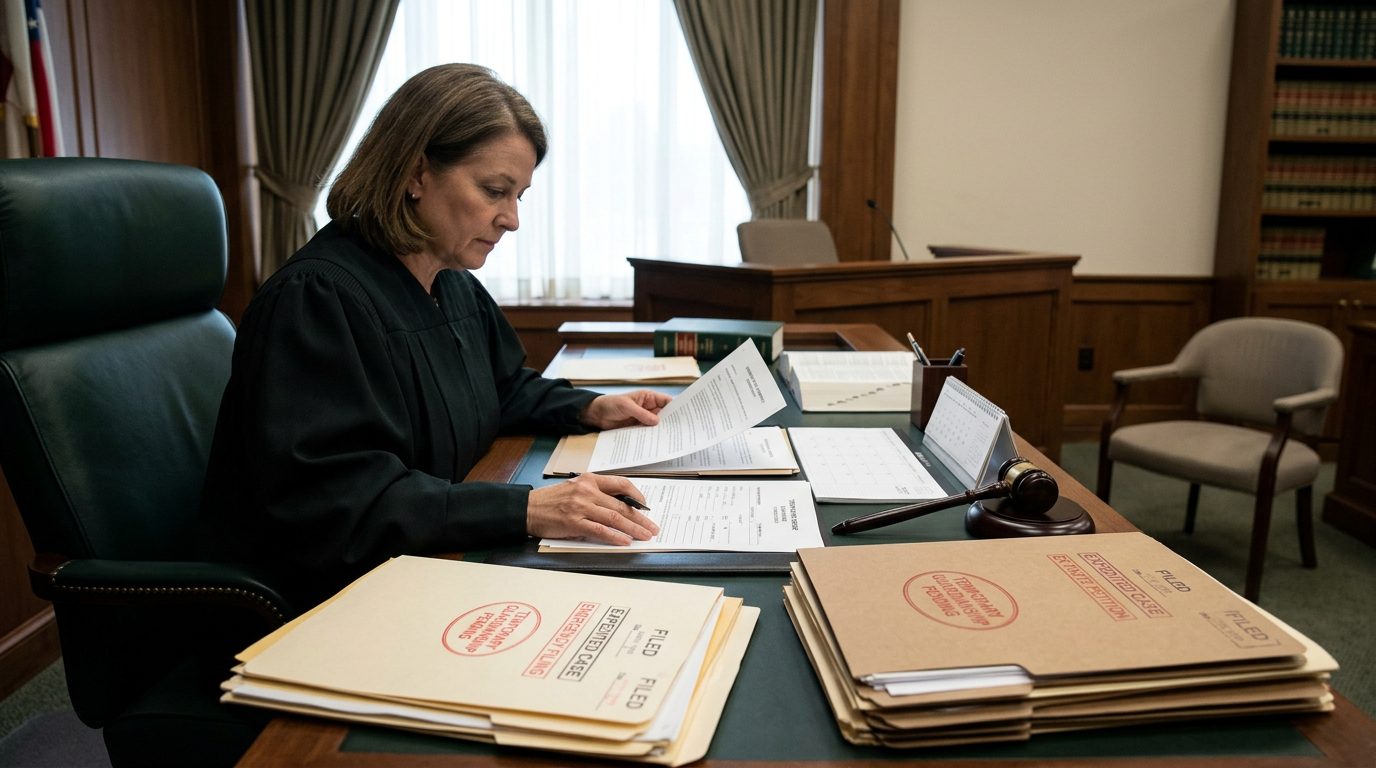
Emergency Temporary Guardianship
How Long Emergency Temporary Guardianship Lasts in Florida
Understand the 90-day timeline, extension options, and next steps for protecting your loved one.
By Richard J. Casey III, Esq. · Published September 22, 2026
How Long Does Emergency Temporary Guardianship Last in Florida?
Emergency temporary guardianship in Florida is limited to 90 days from the date the court issues the order. This short window is by design—it’s meant to give you immediate decision-making authority during a crisis, not to serve as a permanent solution. Understanding what happens when those 90 days end, and what your options are, is critical to avoiding a gap in your legal authority when your family needs it most.

Not sure what your next step is?
Talk it through with our team — the first consultation is free, confidential, and carries no obligation.
The 90-Day Window: Florida’s Emergency Temporary Guardianship Timeline
Emergency temporary guardianship in Florida is designed as a short-term measure, not a permanent solution. Under Florida Statute § 744.331, emergency temporary guardianship is limited to 90 days from the date the court issues the order.
One critical detail: the 90-day clock starts when the judge signs the emergency order, not when you file the petition. If you file on a Monday and the judge signs the order on a Wednesday, your 90 days begin on that Wednesday. This distinction matters because it affects when you must file your next petition to avoid a lapse in authority.
During those 90 days, you have legal authority to make medical, financial, and personal decisions for the ward (the person under guardianship). This period gives you time to assess the situation, gather medical records and financial documents, and decide whether a longer-term guardianship arrangement is necessary. Many families use this window to determine whether the ward’s condition might improve, whether guardianship will be permanent, or whether a less restrictive arrangement would be more appropriate.
What Happens When the 90 Days End
At the end of 90 days, the emergency temporary guardianship automatically expires unless the court extends it or converts it to a plenary (permanent) guardianship. If no action is taken before the deadline, your authority as guardian ends completely. Decision-making power reverts to the ward—or to no one—creating a potential legal vacuum at a moment when your family may still need protection and direction.
This automatic expiration isn’t punitive; it’s a safeguard. It ensures that emergency temporary guardianship is used only when truly necessary and that families make a deliberate, informed choice about longer-term arrangements. The court also uses the deadline as an opportunity to review the ward’s condition and the guardianship itself before approving anything indefinite.
During the 90-day period, the ward’s medical condition, financial situation, or care needs may have changed significantly. The court will want current information before approving any extension or conversion. If you’ve been serving as emergency temporary guardian and the ward has improved, the court may determine that guardianship is no longer needed. If the ward’s condition has worsened or remained unchanged, the court will consider what type of guardianship is most appropriate going forward.
Can Emergency Temporary Guardianship Be Extended or Converted?
Yes—you have three main options before the 90 days expire.
Extension for an additional 90 days. If the ward’s situation still requires emergency temporary guardianship but you’re not yet ready to pursue a permanent arrangement, you can petition the court to extend the emergency temporary guardianship for another 90 days. This extension is not automatic; you must file a petition and the court must approve it based on the ward’s current condition and circumstances.
Conversion to plenary guardianship. Plenary guardianship is the permanent form. Once the court grants it, it remains in effect indefinitely—until the court terminates it or the ward dies. Plenary guardianship requires a full hearing, current medical evidence, and notice to the ward (or the ward’s attorney). It takes longer to obtain than emergency temporary guardianship, but it provides lasting authority without a time limit.
Conversion to limited guardianship. If the ward needs protection in only specific areas—for example, medical decisions but not financial ones—you can petition for limited guardianship. Limited guardianship also has no automatic expiration date; it continues until the court modifies or terminates it. This option respects the ward’s autonomy in areas where they can still function independently.
The court will review your petition, consider updated medical evidence and the ward’s current condition, and decide which arrangement best serves the ward’s interests. The choice depends on whether the ward’s condition is expected to improve, whether guardianship will be needed long-term, and what level of authority you actually need.
Have questions about what happened?
Ask our team directly. The first conversation is free, confidential, and there is no obligation to continue.
The Difference Between Emergency Temporary and Plenary Guardianship Duration
Emergency temporary guardianship is a crisis tool: it’s fast to obtain (often within days) but short-lived (90 days). The process is streamlined because the situation is urgent. You don’t need a full hearing or extensive medical documentation; the court can grant it based on an affidavit and a showing of immediate need.
Plenary guardianship requires more process but provides permanence. You must file a formal petition, provide medical evidence of incapacity, give notice to the ward, and attend a hearing. The ward has the right to contest the guardianship and to be represented by an attorney. Once granted, however, plenary guardianship remains in effect indefinitely unless circumstances change.
Limited guardianship also has no automatic expiration. It’s a middle ground: it requires the same formal process as plenary guardianship, but it grants you authority over only specific decisions, leaving the ward with autonomy in other areas.
For families, the key difference is this: emergency temporary guardianship buys you time to make the right decision about a permanent arrangement. It’s not meant to be the final answer.
Planning Ahead: What to Do Before the 90 Days End
Don’t wait until day 89 to think about what comes next. Start early in the 90-day period.
Gather documentation. Collect medical records, psychiatric or psychological evaluations, financial statements, and any other evidence of the ward’s incapacity. If you’ll need these for a plenary guardianship petition, having them ready before the deadline prevents delays.
Consult with an attorney. Discuss with a guardianship attorney whether plenary guardianship, limited guardianship, or another arrangement is appropriate for your situation. An attorney can also advise you on whether the ward’s condition might improve or whether guardianship might eventually be unnecessary.
Assess the ward’s condition and needs. Has the ward’s situation improved, worsened, or remained stable? Are there less restrictive alternatives—such as a power of attorney or healthcare proxy—that might work instead of guardianship? These questions will shape your next petition.
File early. File any extension or conversion petition well before the 90-day deadline. This gives the court time to process your petition and issue an order before your current authority expires. Filing at the last minute risks a gap in your legal authority.
Keep detailed records. Document your decisions and actions as emergency temporary guardian. Keep receipts, medical notes, and communications about the ward’s care. These records may be relevant if the court reviews your petition for a longer-term arrangement, and they protect you by showing that you’ve acted responsibly.
Why the Timeline Matters
The 90-day limit ensures that emergency temporary guardianship is used only when truly necessary and that families make a deliberate choice about longer-term arrangements—not by default, but by decision. It also protects the ward by requiring the court to review the guardianship and the ward’s condition before it continues indefinitely.
For you, it means you have a defined window to assess care needs, explore alternatives, and make an informed decision about the next step. Missing the deadline can leave you without legal authority at a critical moment, so planning ahead is essential. The court’s role is to balance your need for authority with the ward’s right to the least restrictive guardianship necessary.

Want to know where you stand?
Tell us what happened and our team will walk you through the options available to you, at no cost.
Frequently Asked Questions
Can I extend emergency temporary guardianship beyond 90 days?
Yes. You can petition the court to extend emergency temporary guardianship for an additional 90 days if circumstances still require it, or you can convert it to plenary or limited guardianship.
What happens if I don’t file anything before the 90 days expire?
Your authority as guardian ends automatically, and the ward’s decision-making power reverts to them or to no one, creating a legal gap.
Is plenary guardianship the only permanent option?
No. Limited guardianship is also permanent and may be more appropriate if the ward needs protection in only specific areas.
When should I start preparing for the next step?
Begin gathering documents and consulting with an attorney early in the 90-day period, not at the last minute.
Can emergency temporary guardianship be terminated early?
Yes, but only by court order. If the ward’s condition improves significantly, you can petition the court to terminate the guardianship.
If you’re navigating the end of a 90-day emergency temporary guardianship period—or you’re just starting the process and want to understand what lies ahead—the decisions you make now will shape your family’s legal authority for months or years to come. Families in your situation reach out to discuss their options regularly. Contact us to talk through what comes next.
The 90-Day Window
Emergency temporary guardianship in Florida is designed as a short-term protective measure. Your authority as guardian automatically expires 90 days from the date the court grants the order—unless you take action before that deadline.
Your Options Before the 90 Days End
Extend for Another 90 Days
Petition the court to extend emergency temporary guardianship if circumstances still require the protection. The court may grant an additional 90-day period.
Convert to Plenary Guardianship
Transition to a permanent guardianship arrangement. Plenary guardianship gives you broad authority over the ward's person and estate for the long term.
Convert to Limited Guardianship
Establish guardianship over specific areas only—such as medical decisions or financial matters—while preserving the ward's autonomy in other areas.
Let the Order Expire
If circumstances have changed and protection is no longer needed, your guardianship authority will end automatically when the 90 days expire.
Why Act Before the Deadline
Time Matters
Court filings and hearings take time. Starting the process early ensures you have protection in place before the 90-day period ends.
No Gap in Protection
Without a timely filing, your legal authority to make decisions for your loved one ends. A gap leaves them vulnerable.
Proper Paperwork
Extensions and conversions require specific court filings. Robinson & Casey handles the documentation and court process on your behalf.
Guidance Through the Process
We explain your options, help you choose the right path, and manage the legal steps so you can focus on your family.
Don't Let Your Guardianship Expire
Related practice areas
- Guardianship Attorney in Florida | Robinson & Casey