
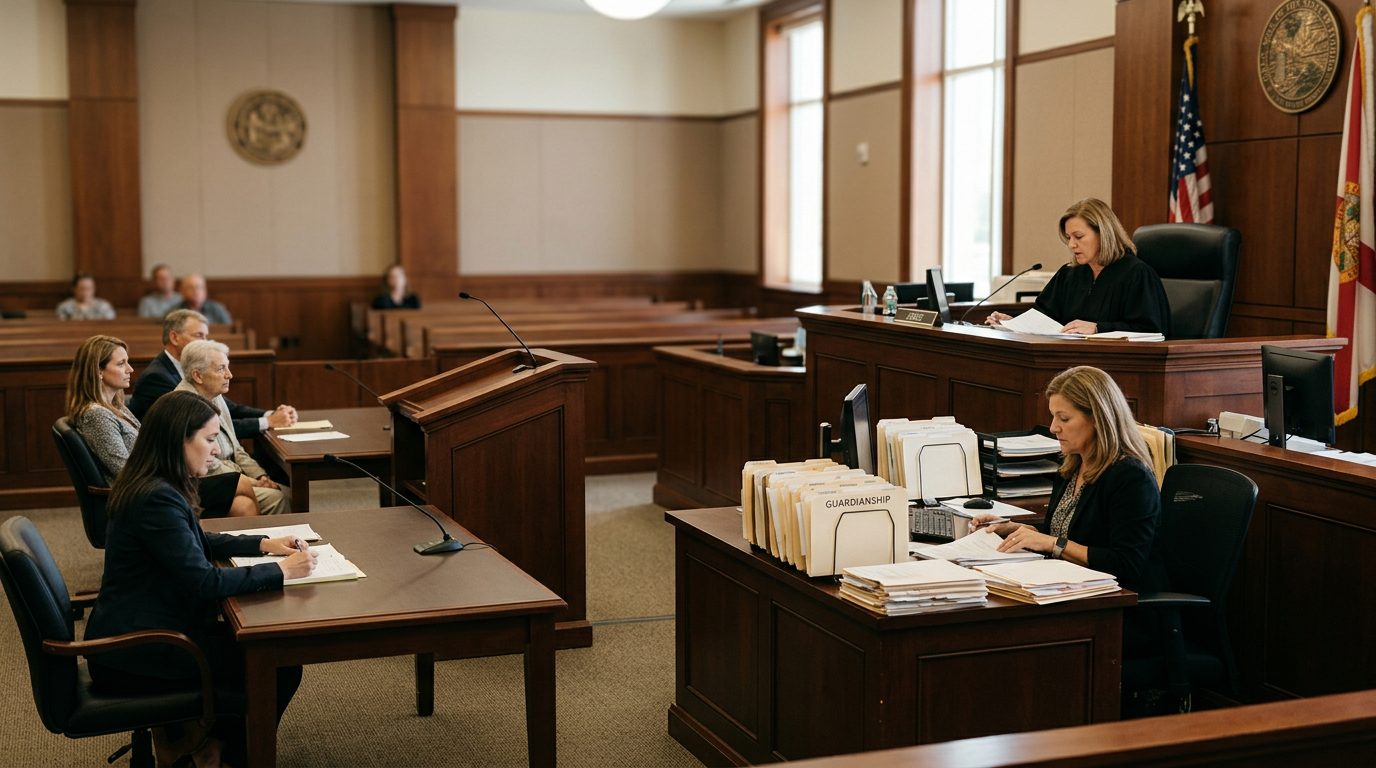
Guardianship in Florida
Guardian Duties & Responsibilities in Florida
Understanding what the court expects of you as a guardian—and how to fulfill those obligations.
By Richard J. Casey III, Esq. · Published September 21, 2026
Guardian Duties and Responsibilities in Florida: What the Law Requires
When you become a guardian in Florida, you take on significant legal duties that go far beyond good intentions. The law holds you to a strict fiduciary standard—meaning you must act solely in your ward’s best interest, manage their affairs with care, and report regularly to the court. Understanding these obligations before or shortly after your appointment is essential to protecting both your ward and yourself.

Not sure what your next step is?
Talk it through with our team — the first consultation is free, confidential, and carries no obligation.
What Is a Guardian’s Legal Role in Florida?
A guardian in Florida is a person appointed by the court to make decisions and manage the affairs of someone (called the “ward”) who cannot do so themselves due to incapacity. Florida Statute Chapter 744 establishes the legal framework for guardianship and defines the guardian’s role as a fiduciary with duties to act in the ward’s best interest.
Guardians may be appointed as a guardian of the person, a guardian of the property, or both. A guardian of the person makes decisions about the ward’s personal care, living arrangements, and health care. A guardian of the property manages the ward’s money and assets. The scope of your authority depends on whether you hold a plenary guardianship (full authority over the ward’s person and/or property) or a limited guardianship (authority only in areas the court specifically grants).
Your duties begin the moment the court appoints you, and they continue until the guardianship is terminated or modified by the court.
Core Duties of a Guardian of the Person
If you’re a guardian of the person, you’re responsible for the ward’s day-to-day personal care and well-being. This includes arranging safe housing, ensuring the ward receives adequate food and clothing, and maintaining a living environment appropriate to their needs.
Health care decision-making is a major responsibility. You have the authority to consent to or refuse medical treatment on the ward’s behalf. You’ll attend medical appointments, communicate with doctors, and make choices about medications, surgeries, and long-term care. You must keep detailed records of the ward’s medical history and any significant health changes.
You’re also responsible for coordinating education and social services if the ward is a minor or needs vocational rehabilitation or day programs. This means researching available resources, enrolling the ward in appropriate services, and monitoring their progress.
Beyond these formal duties, you must maintain regular contact and communication with the ward. You need to know their condition, their wishes (to the extent they can express them), and any changes in their circumstances. You’re also the point of contact for family members and other caregivers.
Most importantly, you must act in the ward’s best interest, not your own. This is the core fiduciary duty. Every decision you make—from where the ward lives to what medical treatment they receive—must be guided by what’s best for them, even if it’s inconvenient or costly for you.
Core Duties of a Guardian of the Property
If you’re a guardian of the property, you manage the ward’s financial assets and estate. This is a detailed, ongoing responsibility that requires careful record-keeping and court oversight.
Your duties include paying bills, taxes, and living expenses from the ward’s funds; investing and protecting the ward’s property in a prudent manner; and maintaining detailed records of all transactions. Every deposit, withdrawal, investment, and expense must be documented. You cannot commingle the ward’s money with your own.
You must also obtain court approval for major financial decisions, such as selling real estate, making large investments, or taking out loans on the ward’s behalf. Not every transaction requires advance court approval, but significant ones do, and you’ll need to understand which decisions fall into that category.
Most significantly, you must file annual accountings with the court. These accountings show exactly how much money the ward had at the start of the year, what came in, what went out, and what remains. The court reviews these accountings to ensure you’re managing the ward’s property properly and in their best interest.
Fiduciary Duties: The Legal Standard
Florida law imposes fiduciary duties on all guardians. These are legal standards that define how you must behave. Understanding them helps you avoid liability and protect your ward.
The duty of loyalty requires you to act solely for the ward’s benefit. You cannot use the guardianship to benefit yourself, your family, or anyone else. For example, you cannot hire your own business to provide services to the ward, pay yourself excessive compensation, or use the ward’s funds for your personal expenses.
The duty of care requires you to manage the ward’s affairs with reasonable diligence and prudence. You must stay informed about the ward’s condition, make informed decisions, and act promptly when problems arise. Neglect or carelessness can breach this duty.
You must also avoid conflicts of interest. If you have a personal or financial interest that conflicts with the ward’s interest, you must disclose it to the court and may need to recuse yourself from that decision. Self-dealing—using your position as guardian to benefit yourself—is strictly prohibited and can result in serious legal consequences.
If you’re managing property for multiple wards, you must maintain impartiality and avoid favoring one ward’s interests over another’s.
Court Reporting and Accounting Requirements
Florida law requires guardians to file annual guardianship reports with the court. These reports detail the ward’s personal status, health, living situation, and any significant changes or concerns. You must file these reports by the deadline set by the court, typically within a specific number of days after your appointment anniversary.
If you’re a guardian of the property, you must also file an annual accounting showing all financial transactions during the year. This accounting must be detailed, accurate, and submitted on time. The court reviews it to ensure proper management of the ward’s funds.
Failure to file reports or accountings on time can result in the court issuing an order to show cause—essentially a court order demanding an explanation for the delay. Repeated failures or false reports can lead to your removal as guardian.
The court may also require you to file supplemental reports if significant changes occur—for example, if the ward’s health deteriorates, they move to a new living situation, or a large sum of money comes into their estate.
Have questions about what happened?
Ask our team directly. The first conversation is free, confidential, and there is no obligation to continue.
Specific Responsibilities in Different Guardianship Types
Your specific duties depend on the type of guardianship the court has appointed you to.
In a limited guardianship, your authority is restricted to only those areas the court order specifically names. For example, you might be guardian of the person but not the property, or guardian only for health care decisions. You must carefully read your court order and understand its boundaries. Acting outside those boundaries is a violation of your authority.
In a mental health guardianship, you have specific duties related to the ward’s mental health treatment and decisions. You may be required to coordinate with mental health providers, ensure the ward complies with treatment plans, and make decisions about psychiatric medications or hospitalization. These guardianships often involve closer court oversight and more frequent reporting.
In an emergency temporary guardianship, you assume immediate duties to protect the ward’s safety and welfare while the case transitions to a plenary guardianship. Your first priority is ensuring the ward is safe and their immediate needs are met. You’ll then work with the court and your attorney to transition to a permanent guardianship arrangement.
Day-to-Day Responsibilities You’ll Handle
Beyond the formal legal duties, guardianship involves practical, ongoing work. You’ll arrange and oversee the ward’s housing, ensuring it’s safe, clean, and appropriate. You’ll manage medical appointments, communicate with doctors, and monitor medications. You’ll handle insurance claims, government benefits (like Social Security), and financial assistance applications.
You’ll maintain the ward’s personal documents—birth certificates, Social Security card, medical records, legal papers. You’ll make decisions about the ward’s social and recreational activities, ensuring they have opportunities for engagement and quality of life. You’ll communicate with family members, other caregivers, and service providers.
This work is often time-consuming and emotionally demanding. Many guardians find it helpful to keep a log or calendar of major decisions and events, both for their own reference and to support their annual court reports.
What Happens If You Don’t Meet Your Duties
The consequences of failing to meet your guardian duties are serious. The court can remove you as guardian if you breach your fiduciary duties or fail to meet your legal obligations. This removal becomes part of the public record and can damage your credibility.
You can face personal liability for damages caused by your negligence or misconduct. If you mismanage the ward’s property or fail to provide adequate personal care, the ward (or their family) may sue you for the losses they suffered.
The court may impose a surcharge—a court order requiring you to repay money to the ward’s estate if you’ve mismanaged or misappropriated funds. This is a financial penalty that can be substantial.
In serious cases—such as theft, fraud, or abuse of authority—you could face criminal charges. Guardianship fraud and elder abuse are prosecuted as felonies in Florida and carry prison time and fines.
Beyond the legal consequences, failure to meet your duties harms the ward. They may not receive adequate care, their property may be depleted or mismanaged, and their safety and well-being suffer.
When to Seek Legal Guidance on Your Guardian Duties
You don’t have to figure out guardianship alone. It’s wise to seek legal guidance if you’re uncertain about what decisions you can make independently versus what requires court approval. Many guardians have questions about proper accounting, record-keeping, or reporting requirements.
You should also reach out if significant changes occur in the ward’s condition or needs—for example, if they develop a serious illness, need to move to a care facility, or their financial situation changes dramatically. You may need to file a supplemental report or seek court approval for a major decision.
If you face conflict with family members or other interested parties, or if you need to modify or terminate the guardianship, legal guidance is essential. An attorney can help you navigate these complex situations and ensure you’re meeting your legal obligations while protecting the ward’s interests.

Want to know where you stand?
Tell us what happened and our team will walk you through the options available to you, at no cost.
Frequently Asked Questions
What’s the difference between a guardian of the person and a guardian of the property?
A guardian of the person makes decisions about personal care, living arrangements, and health care. A guardian of the property manages the ward’s money and assets. The court appoints you to one role, both, or neither depending on the ward’s needs.
Do I need court approval for every decision I make as a guardian?
No, but major financial decisions—such as selling real estate or making large investments—typically require advance court approval. Personal care decisions usually don’t, but significant changes (like moving the ward to a care facility) should be documented and reported.
What if I make a mistake in my accounting or miss a filing deadline?
Contact the court immediately and explain the error or delay. File a corrected accounting or supplemental report as soon as possible. Most courts are willing to work with guardians who act in good faith and correct problems promptly.
Can the guardianship be modified or terminated?
Yes. If the ward’s condition improves or their needs change, you can petition the court to modify the guardianship (for example, converting a plenary guardianship to a limited one) or terminate it entirely if the ward no longer needs a guardian.
What resources are available to help me understand my duties?
The Florida courts provide guidance materials, and many county bar associations offer guardianship training. An attorney who handles guardianship matters can also answer specific questions about your duties and responsibilities.
If you’re newly appointed as a guardian and feel uncertain about your legal obligations, or if you’re facing questions about your duties and responsibilities, reach out to discuss your situation. People in guardianship roles can contact us to clarify what the law requires and to ensure they’re meeting their duties properly. Contact Robinson & Casey today for a consultation.
Core Guardian Responsibilities
Guardian of the Person
Make decisions about the ward's personal care, living arrangements, medical treatment, and daily life. You act in the ward's best interest and must consider their preferences and values.
Guardian of the Property
Manage the ward's financial assets, pay bills, handle investments, and protect their estate. All transactions must be documented and may require court approval.
Fiduciary Duty
Act with honesty, loyalty, and prudence. You must avoid conflicts of interest, keep detailed records, and prioritize the ward's welfare above all else.
Court Accountability
File annual accountings, attend court hearings, and report on the ward's condition and care. The court monitors your compliance with guardianship orders.
What Guardians Must Know
Record Keeping
Maintain detailed records of all decisions, medical care, living arrangements, and financial transactions. Documentation protects both you and the ward.
Legal Authority
Your powers are defined by the court's guardianship order. You may have authority over personal care, property, or both—act only within the scope granted.
Ongoing Reporting
Florida law requires guardians to file annual reports with the court detailing the ward's status, care provided, and financial management.
Ward's Best Interest
Every decision must prioritize the ward's welfare, health, and dignity. Consider their known wishes and values when making choices on their behalf.
Court Approval May Be Required
Certain decisions—such as selling property, making major medical choices, or spending significant funds—may require advance court approval. Failing to seek approval when required can result in liability.
Common Questions About Guardian Duties
Do I need court approval for every decision?
No. Routine personal care and daily decisions do not require court approval. However, major medical procedures, property sales, and significant expenditures typically do. Your guardianship order specifies which decisions require approval.
What happens if I make a mistake?
Guardians are held to a high standard of care. Honest mistakes in judgment are generally protected, but willful misconduct, negligence, or self-dealing can expose you to liability and court sanctions.
Can I be compensated for my work?
Yes. Florida law allows guardians to petition the court for reasonable compensation. Family members serving as guardians may also seek compensation, subject to court approval.
How long does guardianship last?
Guardianship continues until the ward regains capacity, the court terminates the guardianship, or the ward passes away. The court may review the need for guardianship periodically.
How Robinson & Casey Can Help
Guardianship Guidance
We help guardians understand their duties, navigate court requirements, and fulfill their obligations under Florida law.
Petition & Court Filings
Whether you need to establish guardianship, seek court approval for major decisions, or modify an existing guardianship, we handle the legal process.
Ongoing Support
From annual accountings to emergency guardianship matters, we provide the legal counsel guardians need throughout the guardianship.