
Marchman Act & Guardianship
Involuntary Commitment for Addiction Attorney in Miami Dade
When addiction threatens your loved one's life, Robinson & Casey provides legal guidance for involuntary commitment proceedings in Florida.
By Richard J. Casey III, Esq. · Published October 03, 2026
Involuntary Commitment for Addiction: Legal Guidance for Families
Involuntary commitment for addiction is a court-authorized legal process that allows a person struggling with substance use disorder to be placed in treatment without their consent when they pose imminent danger to themselves or others or cannot care for themselves due to addiction. Robinson & Casey helps families navigate this difficult decision.
If you decide to move forward, we will gather documents and prepare the petition. You may contact Robinson & Casey to talk through your situation.

What Is Involuntary Commitment for Addiction?
Involuntary commitment for addiction is a civil medical intervention, not a criminal punishment, that uses the court system to authorize emergency treatment when voluntary options have been exhausted or are unsafe.
When someone’s addiction creates immediate danger and they refuse voluntary help, involuntary commitment allows a court to authorize treatment as a protective medical measure.
This process is distinct from guardianship. Guardianship is a longer-term legal arrangement that may grant someone authority over the person’s finances, medical decisions, or daily care. Both tools may be used together, but they serve different purposes.
Who Qualifies for Involuntary Commitment in Miami-Dade
Common situations include:
- Repeated overdoses or near-fatal incidents
- Refusal of voluntary treatment despite clear, documented danger
- Inability to feed, house, or care for themselves due to active addiction
- Threats of harm to self or others while under the influence
- Rapid deterioration in physical health, mental health, or functioning
- Exhaustion of family resources and voluntary treatment options
Involuntary commitment is not a punishment. It’s a legal tool to access emergency medical treatment when the person cannot or will not seek it themselves.
Florida law sets out who may file a petition for involuntary commitment, and other requirements may also apply; the court decides each petition based on its discretion and the circumstances of the case. You don’t need to be the person’s legal guardian or have power of attorney.
What Involuntary Commitment Covers
Involuntary commitment includes emergency medical evaluation and assessment by licensed healthcare professionals. If the court orders commitment, it may authorize placement in a licensed addiction treatment facility. Whether the initial hold period is extended is up to the court, which decides based on the circumstances of each case.
Throughout the process, we provide representation and advocacy—preparing the petition, presenting evidence to the court, and explaining your rights and options at every step.
What involuntary commitment does NOT cover:
- Ongoing guardianship or long-term decision-making authority (unless you pursue guardianship separately)
- Financial management or control of assets
- Long-term custody or living arrangements after the initial treatment period
- Mental health treatment beyond addiction services (unless a separate mental health guardianship is also filed)
If your situation requires ongoing legal authority over the person’s decisions or finances, we can discuss whether guardianship should be filed alongside or after involuntary commitment.
How the Involuntary Commitment Process Works
Step 1: Initial Consultation You call Robinson & Casey and describe your situation. We listen to the details—the person’s substance use history, recent dangerous incidents, any prior treatment attempts, and why voluntary options haven’t worked. We explain involuntary commitment, the Marchman Act, and guardianship options. There’s no obligation; we’re here to help you understand what’s possible.
Step 2: Petition Preparation If involuntary commitment is appropriate, we gather the facts. We ask for medical records, incident reports, documentation of overdoses or dangerous behavior, and any prior treatment records. We build a factual case showing imminent danger or inability to care for oneself.
Step 3: Filing with the Court The petition is then filed with the appropriate court. The petition includes all evidence, your statement, and the legal basis for commitment.
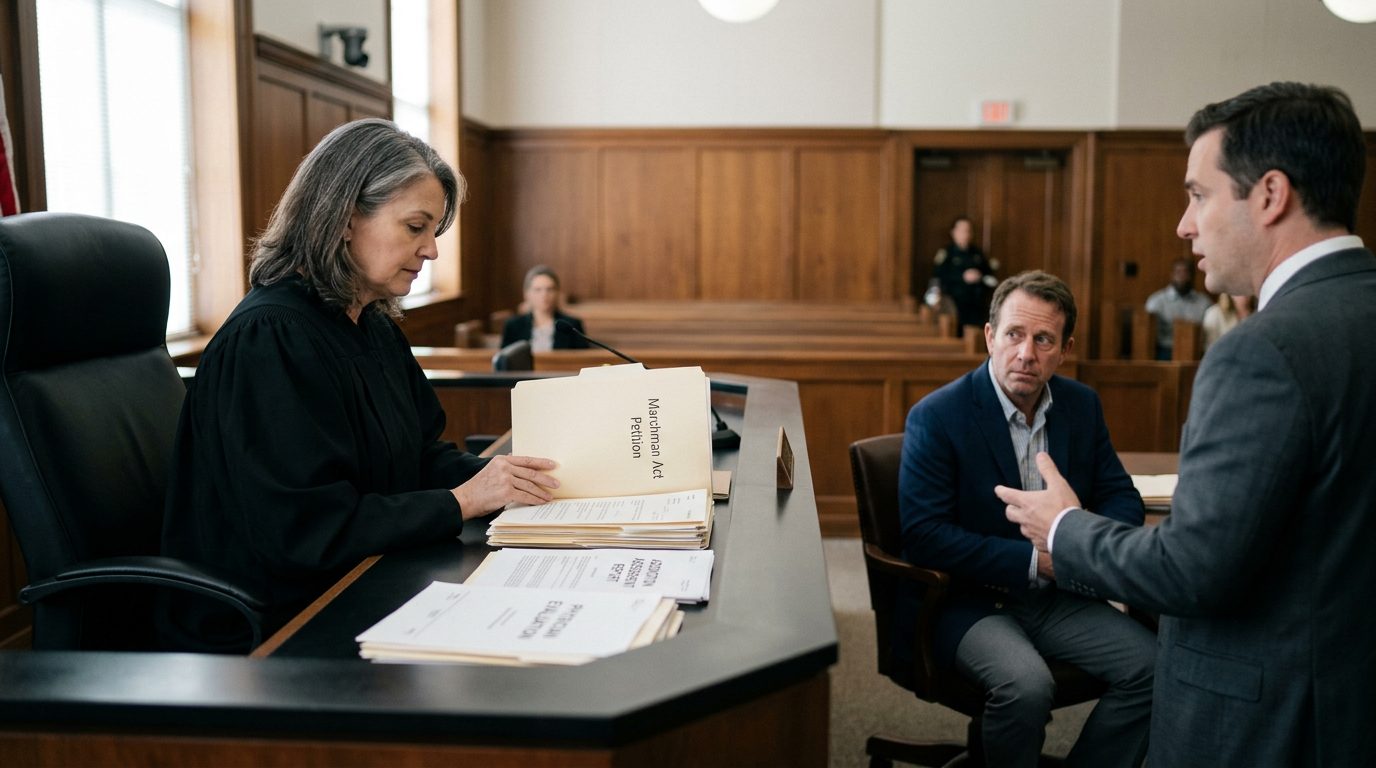
Both sides present evidence. The person has the right to an attorney and to contest the commitment. We present your case, answer the judge’s questions, and advocate for authorization of the commitment.
Step 6: Placement and Treatment If the court orders commitment, the order may direct that the person be placed in a licensed treatment facility, subject to the court’s discretion. The legal order may authorize treatment even if the person initially resists. Treatment providers are trained to work with resistant patients. We monitor compliance and advise you on next steps—whether the commitment will be extended, when discharge is planned, or whether guardianship should be pursued.
Timeline: An emergency hold may be ordered by the court after filing, at its discretion. The timing of the full hearing may depend on the court’s schedule and discretion.
Why Families Choose Robinson & Casey
Robinson & Casey focuses on involuntary commitment and guardianship matters.
When a family member is in danger, we understand the urgency. We also aim to explain each step clearly so you can follow what is happening and why.
Not sure what your next step is?
Talk it through with our team — the first consultation is free, confidential, and carries no obligation.
What to Expect When You Call
When you call Robinson & Casey at (561) 849-4149, you’ll speak directly with an attorney.
In your initial phone consultation, we’ll ask about the person’s substance use, recent dangerous incidents, any prior treatment attempts, and immediate concerns. We’ll explain involuntary commitment, the Marchman Act, and whether either is right for your situation. We’ll discuss fees transparently—no hidden costs, no surprises.
If you decide to move forward, we will gather documents and prepare the petition. We keep you informed every step of the way.
Common Questions About Involuntary Commitment for Addiction
Q: Will this damage my relationship with my family member?
Involuntary commitment is a medical intervention, not punishment. Many families report that successful treatment and recovery actually repair relationships that addiction has broken.
Q: What if the person refuses treatment after commitment?
The legal order authorizes treatment; refusal doesn’t void the commitment. Treatment providers are trained to work with resistant patients and help them engage in recovery.
Q: Can we do this without going to court?
No. A judge must authorize involuntary commitment. We handle all court filings and representation.
Q: What if the person is already in jail or on probation?
Involuntary commitment can still proceed; we coordinate with law enforcement and the court system.
Q: Is involuntary commitment the same as guardianship?
No. Involuntary commitment is short-term medical intervention. Guardianship is a longer-term legal arrangement granting decision-making authority. Both may be needed.
Q: What evidence do I need?
Bring documentation of substance use, overdoses, dangerous behavior, prior treatment attempts, medical records, and any incidents showing imminent danger or inability to care for oneself.
When to Act: Signs Involuntary Commitment May Be Necessary
- Repeated overdoses or near-fatal incidents
- Refusal of voluntary treatment despite clear danger
- Inability to feed, house, or care for self due to addiction
- Threats of harm to self or others while under the influence
- Rapid deterioration in health or functioning
- Exhaustion of family resources and voluntary options
If you recognize these signs in your family member, involuntary commitment may be one option to discuss with an attorney.

Schedule Your Consultation Today
If your family member’s addiction has become dangerous and voluntary treatment has failed, involuntary commitment may be one option to discuss with an attorney. Call Robinson & Casey at (561) 849-4149 to speak with an attorney who handles involuntary commitment cases. Bring details about the situation: substance use history, recent incidents, and any prior treatment. We’ll explain your options and what the process looks like for your family. You don’t have to face this alone.
How Robinson & Casey Can Help
Marchman Act Petitions
We guide families through the legal process of filing for involuntary commitment under Florida's Marchman Act, which allows intervention when addiction poses an imminent danger.
Petition Preparation & Filing
Our attorneys prepare all required documentation and handle the filing process, ensuring your petition meets Florida's procedural and substantive requirements.
Emergency & Expedited Hearings
When immediate intervention is necessary, we pursue emergency temporary commitment orders and expedited court hearings to protect your family member.
Court Representation
We represent families at all commitment hearings, present evidence, and advocate for the treatment and care your loved one needs.
Understanding Involuntary Commitment in Florida
What Is the Marchman Act?
Florida's Marchman Act (Fla. Stat. § 397.675) allows family members, healthcare providers, and others to petition a court for involuntary assessment and treatment of a person whose substance abuse poses an imminent danger to themselves or others.
Who Can File a Petition?
A spouse, parent, adult sibling, adult child, or other family member, as well as certain professionals and agencies, may file a Marchman Act petition on behalf of someone struggling with addiction.
What Happens After Filing?
The court schedules a hearing, typically within a few days. If the judge finds probable cause that the person meets the criteria for involuntary commitment, an order for assessment and treatment is issued.
Is This Punishment?
No. Involuntary commitment is a medical intervention designed to interrupt the cycle of addiction and connect your loved one with treatment and recovery services.
Time Matters in Addiction Crises
When someone's addiction reaches a critical point, delays can be dangerous. Robinson & Casey understands the urgency and works quickly to prepare and file petitions, pursue emergency hearings, and protect your family member.
Common Questions About Involuntary Commitment
Will this damage my relationship with my family member?
Involuntary commitment is a medical intervention, not punishment. Many families report that successful treatment and recovery actually repair relationships that addiction has broken.
What if the person refuses treatment after commitment?
The legal order authorizes treatment; refusal does not void the commitment. Treatment providers are equipped to work with individuals who initially resist, and many come to accept help once they are in a safe, structured environment.
How long does involuntary commitment last?
Initial commitment for assessment and stabilization is typically up to five days. If treatment is recommended and accepted, the person may remain in treatment voluntarily or the court may extend commitment for up to 60 days.
What if my loved one has co-occurring mental health issues?
Involuntary commitment can address both addiction and mental health conditions. Robinson & Casey handles cases involving dual diagnoses and works with treatment providers who address the whole person.
Why Families Choose Robinson & Casey
Focused on South Florida & Statewide
We serve families throughout Miami Dade, South Florida, and across Florida, with deep knowledge of local courts and procedures.
Clear Guidance Through a Crisis
Addiction crises are overwhelming. We explain your options, the legal process, and what to expect so you can make informed decisions.
Responsive & Available
We understand that addiction emergencies don't wait. We respond quickly to calls and work to move your case forward with urgency.
Experience with Marchman Act & Guardianship
Robinson & Casey focuses exclusively on Marchman Act petitions and guardianship matters, bringing focused knowledge to every case.
Your Family Deserves Help
Related practice areas
- Plenary Guardianship Attorney South Florida | Robinson