
Marchman Act Petitions | Miami-Dade & South Florida
When your adult son's relapse puts him and your family at risk, you need a clear next step
Robinson Casey focuses on Marchman Act petitions and guardianship matters for families in Miami-Dade, across South Florida and statewide. Start with a free, confidential first consultation, with no obligation to continue.
How we work with families
Free
Confidential first consultation with no obligation to continue
Statewide
Serving families across South Florida and throughout Florida
Casey III, Esq. · Published November 6, 2026
You Brought Him Home Hoping This Time Would Be Different
If your adult son has relapsed after a hospital discharge, Florida law may offer a legal route into treatment. This page explains how the Marchman Act works, what a judge reviews, and what you can do right now.
You have spent years on this. You paid for treatment, tried interventions, and held the boundaries you were told to hold. Then he came home with discharge papers, and for a few days it looked like it might hold. Then the signs came back: missed calls, money gone, and the same look you have learned to dread.
The worst part is the waiting. You listen for a car in the driveway. You stand outside a closed door and wonder whether he is breathing. That kind of fear wears a person down.
This is not a sign that you failed. Many parents reach this point after a hospital stay. You want a way to get him proper care, from people who understand addiction, so you no longer carry this alone.
If your son is home and using again, you do not have to sort out the legal options alone. Our team is ready to talk with you about where your family stands. Talk it through with our team — the first consultation is free, confidential, and carries no obligation.

Why the Weeks After Discharge Feel So Dangerous
The weeks after discharge are dangerous because you often cannot see what he is using or how much. Many parents say the hardest part is not knowing whether he is safe behind a closed door.
Florida law looks at that kind of danger. A person meets the criteria for involuntary admission if there is good faith reason to believe he is substance abuse impaired and, because of that impairment, has lost the power of self-control over his use, and also is in need of substance abuse services and cannot appreciate that need, or is likely to neglect himself or harm himself or others (Fla. Stat. § 397.675).
The law also asks whether he cannot see his need for help. It asks whether he is likely to neglect himself in a way that poses a real and present threat of substantial harm, and whether that harm could not be avoided through willing, able family members or friends or other services. It also asks whether there is a substantial likelihood that he has inflicted, threatened, or attempted physical harm on himself or someone else, or is likely to inflict it unless admitted.
The test looks at impairment and risk. Ask his discharge team what overdose safety steps they recommend for your home, including whether naloxone should be kept there.
What a Discharge Plan Is and Why Relapse Doesn’t Erase It
A discharge plan is the written set of next steps a hospital or treatment team gives a patient before he goes home. It usually lists follow-up visits, medicines and referrals. It only helps if the steps are carried out after he leaves.
Relapse can happen even after careful treatment. It does not mean the hospital stay was wasted, and it does not mean you failed. It is a sign the plan may need to change. That is the time to ask the team for an updated plan in writing.
Keep every record. Hospital papers, discharge plans and treatment history can matter if a court case is later considered. A court can hear relevant evidence about his history, including the results of a professional assessment (Fla. Stat. § 397.6957).
How the Marchman Act Works in Florida
The Marchman Act is Florida’s court process for getting a person assessed and, when the legal criteria are met, into involuntary treatment for substance use.
For an adult, the law allows a petition from a spouse or legal guardian, any relative, a service provider, or an adult with direct personal knowledge of the person’s impairment and treatment history (Fla. Stat. § 397.68112). A parent is a relative, so a parent may be able to file.
It must lay out the facts that show why you believe he is impaired and has lost self-control, and either that he has inflicted or is likely to inflict physical harm on himself or others unless the court orders services, or that his impaired judgment keeps him from appreciating his need for care and from making a rational decision about that need (Fla. Stat. § 397.68141). It is filed with the clerk in the county where he is located, and the clerk may not charge a filing fee (Fla. Stat. § 397.681). For more on venue, read the Marchman Act filing county guide.
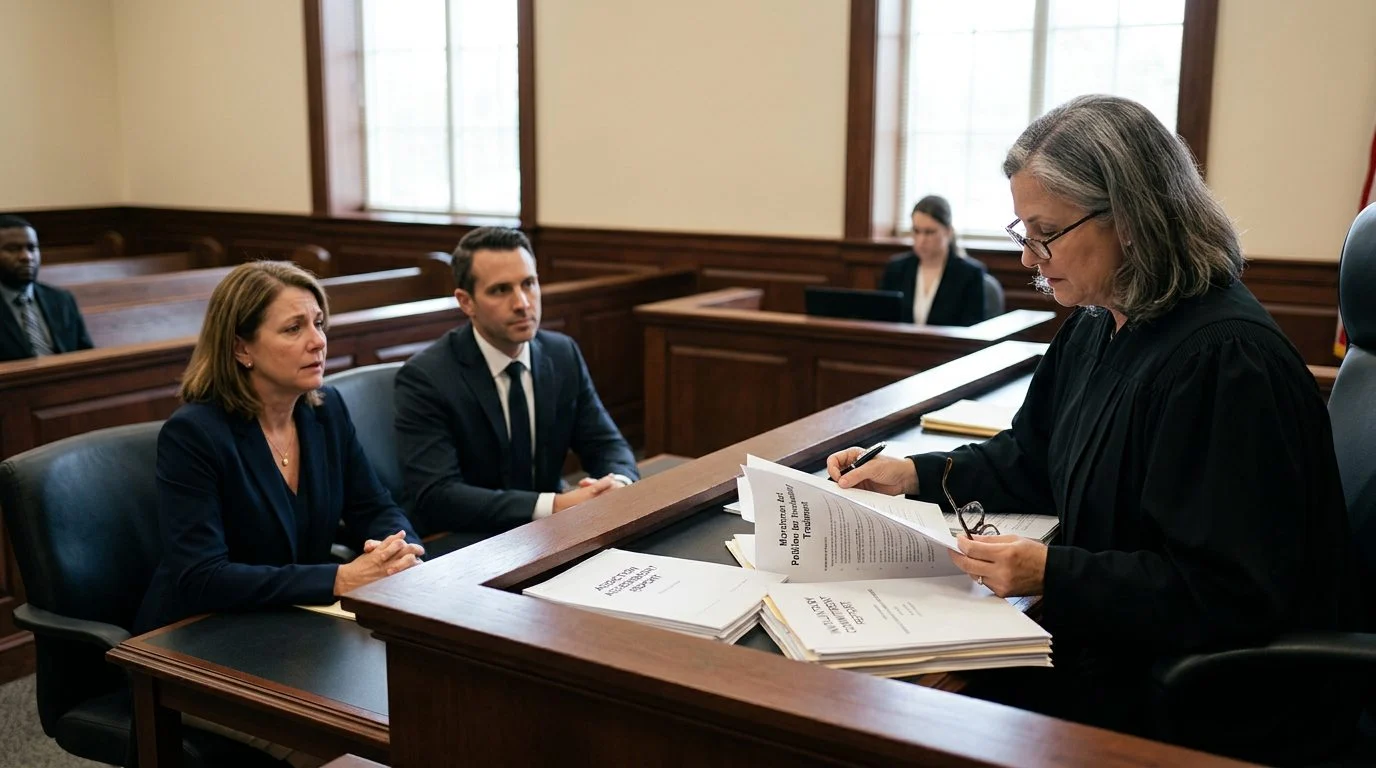
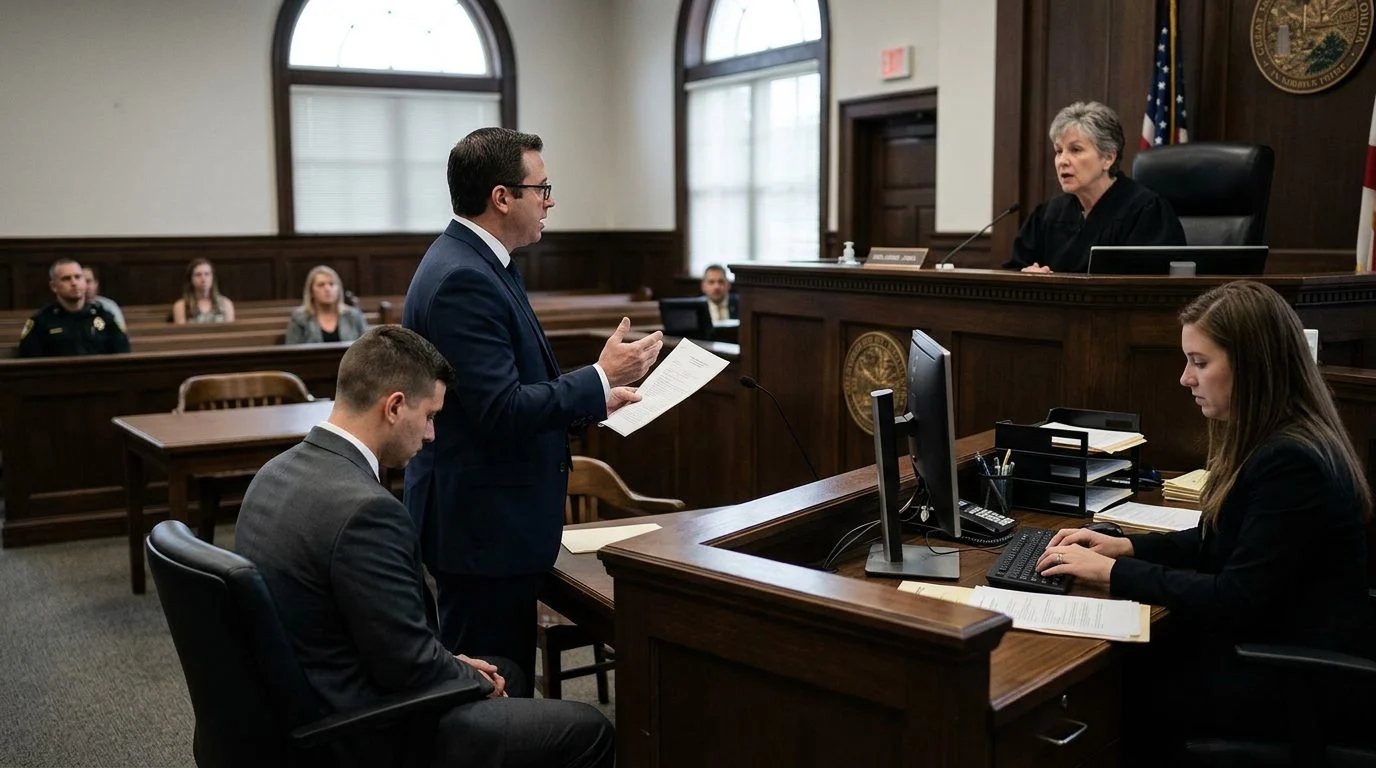
He has the right to a lawyer at every stage, though he may waive that right if he is present and the court finds the waiver is knowing, intelligent, and voluntary. If he wants counsel but cannot afford one, he has the right to court-appointed counsel (Fla. Stat. § 397.681). The court must set a hearing within 10 court working days unless it is continued (Fla. Stat. § 397.68151). Fla. Stat. § 397.68151 reads: “(2) The court shall schedule a hearing to be held on the petition within 10 court working days unless a continuance is granted.” In an emergency, a judge may enter an ex parte order for assessment based on the petition alone (Fla. Stat. § 397.6818). How this applies depends on the facts of your family’s situation.
What a Judge Looks at When a Family Asks for Help
A judge looks for proof that he is substance abuse impaired and has a history of not following treatment. The petitioner must prove both points by clear and convincing evidence (Fla. Stat. § 397.6957).
Family testimony counts. The court hears testimony from family members who know his history and how it connects to his current condition (Fla. Stat. § 397.6957). Families usually gather:
- Hospital and discharge records
- Prior treatment history, with dates
- Incident reports, such as police or emergency calls
- A dated log of relapses and dangerous episodes
If the judge finds by clear and convincing evidence that the conditions for involuntary treatment have been proven, an order can require treatment for up to 90 days (Fla. Stat. § 397.697).
Court records in these cases are confidential, and only listed people may see them (Fla. Stat. § 397.6760). Treatment records from federally assisted programs generally cannot be used against the patient without his consent or a court order granted after a showing of good cause (42 U.S.C. § 290dd-2). For more on proof, see what evidence matters in a Marchman Act petition.
What a Parent Can Do Now While Protecting Their Own Safety
Start a written record today. Protect your home, your money and your health while you decide on next steps.
Write down each date, what happened, who was present, and any call to emergency services. Keep the entries plain and factual. A short, dated log is easier for anyone reviewing the facts to follow.
If he is not breathing or cannot be woken, call 911 right away. Between crises, ask the discharge team what overdose safety steps they recommend for your home, including naloxone.
Set clear limits on money, car keys and valuables. Protecting money and property from an adult child who is using covers that situation in more detail.
You need support too. Watching a child decline wears down even the strongest parent. Caring for your own stress is part of the plan, not a side issue.
Quick Answers
Can a parent file a Marchman Act petition for an adult son?
Yes, a parent is a relative, and any relative may file for an adult under Fla. Stat. § 397.68112.
Does my son have the right to a lawyer?
Yes, he has the right to counsel at every stage, but he may waive that right only if he is present and the court finds the waiver is knowing, intelligent, and voluntary. If he cannot afford private counsel, he has the right to court-appointed counsel (Fla. Stat. § 397.681).
How long can a treatment order last?
A court can order involuntary treatment for up to 90 days, and a renewal of the order may be requested before that period ends if the conditions are expected to continue (Fla. Stat. § 397.697).
Not sure what your next step is?
Talk it through with our team — the first consultation is free, confidential, and carries no obligation.
Talk Through Your Son’s Situation With Robinson Casey
If your son is home and using again, and you want a legal route into proper treatment, you do not have to carry this alone. Robinson Casey concentrates in Marchman Act petitions and guardianship matters for families across South Florida and statewide. Richard J. Casey III, Esq., is the lawyer responsible for this page. You can learn more about Marchman Act attorney services.
Your first step can be a conversation. The first consultation is free, confidential, and carries no obligation to continue. Call (561) 849-4700 or request a consultation online. No one can promise how a case will end, but a conversation can help you see your options.
What to expect when you contact our office
Call or request a consultation
Reach us at (561) 849-4700 or schedule online. Our support staff will help arrange a time to speak with an attorney.
Confidential discussion
Your first consultation is confidential.
Clear explanation of the process
We walk you through the petition process, what the court will need from you, and how each step may affect your family.
Support for the whole family
Our team keeps families informed and organized through every stage of a Marchman Act or guardianship matter.
If your son is in immediate danger
If your son is threatening himself or someone else, or has overdosed, call 911 right away. A legal petition is not an emergency response. Once the immediate danger has passed, call our office to talk through your options.
Matters we handle
Marchman Act Petitions
Help families petition the court for assessment and treatment of an adult family member struggling with substance use.
Guardianship Matters
Guardianship attorney services for families seeking court authority to make decisions for an adult who cannot make them safely alone.
Emergency Temporary Guardianship
Guidance on urgent court requests when a family member needs immediate protection while a longer case proceeds.
Involuntary Commitment for Addiction
Representation for families navigating involuntary commitment proceedings related to addiction and related mental health needs.