
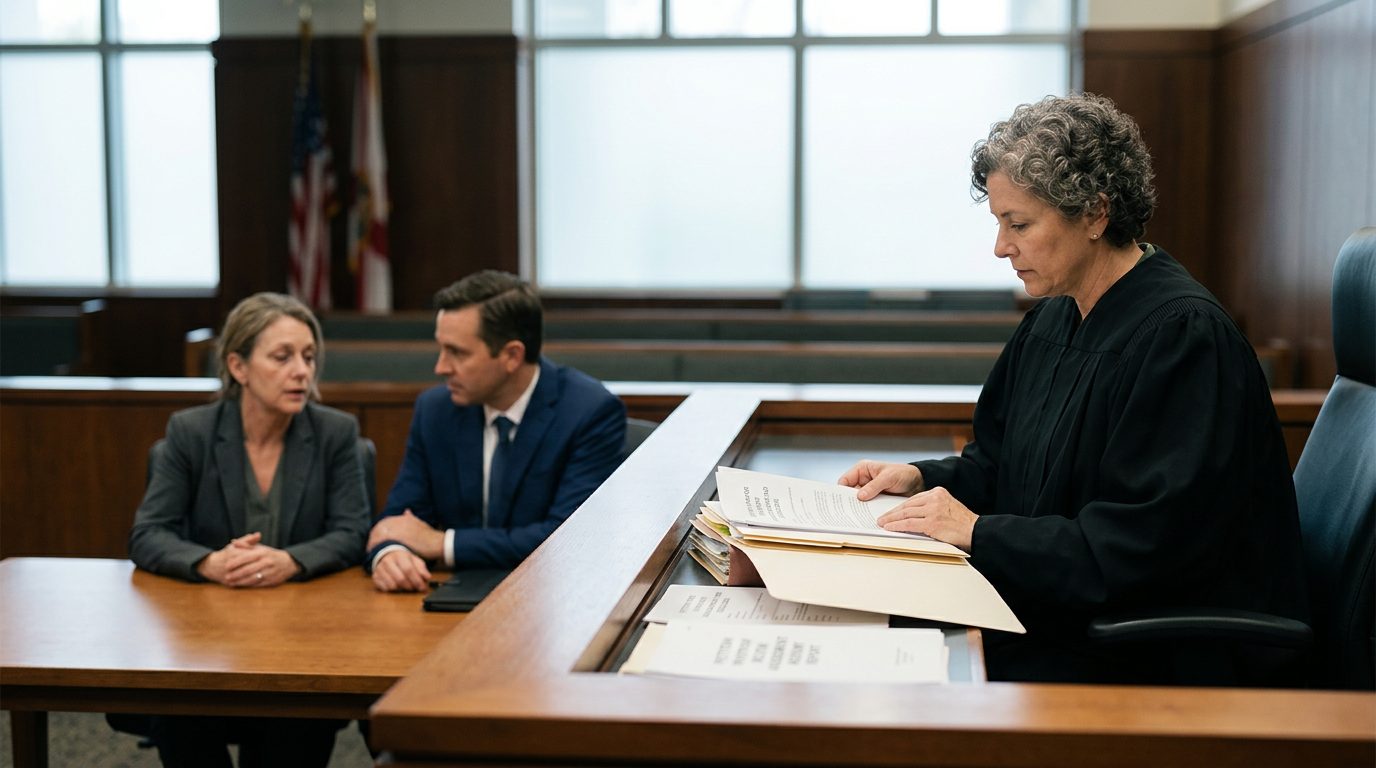
Marchman Act Petitions | Florida
A Marchman Act Petition Was Filed on You? Start With the Next Steps.
Robinson Casey focuses exclusively on Marchman Act petitions and guardianship matters. Richard J. Casey III, Esq. and our team can explain what happens next and answer your questions in a confidential, free first consultation.
By Richard J. Casey III, Esq. · Published October 17, 2026
If someone filed a Marchman Act petition on me in Florida, the first step is understanding what the papers ask for. A Marchman Act petition asks a Florida court to order an involuntary assessment for substance use and, if the statute’s criteria are met, involuntary treatment. The court makes that decision after a hearing.
This guide explains the petition, your rights as the person named, and what the hearing involves.
What a Marchman Act Petition Is and Who It Names
A Marchman Act petition is a civil request to a Florida court for involuntary help with substance use. The law’s official name is the Hal S. Marchman Alcohol and Other Drug Services Act, as Fla. Stat. § 397.301 states.
The adult named in the petition is the respondent. The person who files it is the petitioner.
Who may file depends on who is named. Under Fla. Stat. § 397.68112, for an adult respondent, a petition may be filed by a spouse or legal guardian, any relative, a service provider, or an adult with direct personal knowledge of the impairment. Other requirements may apply, and the court decides.
The petition must name both parties, describe their relationship, and give the facts supporting the need for services. Fla. Stat. § 397.68141 lists these requirements. The petition is filed with the clerk in the county where the person is located, and the clerk may not charge a filing fee, under Fla. Stat. § 397.681. For Miami-Dade, the Miami-Dade Clerk mental health court page directs adults to the Probate Court.
The Marchman Act covers substance use. Mental health commitments fall under a different Florida law, so the wording on your papers matters. The Lake County Clerk substance abuse page describes the substance use process.

Not sure what your next step is?
Talk it through with our team — the first consultation is free, confidential, and carries no obligation.
What the Petition Asks the Court to Do
The petition asks the court to order involuntary assessment, stabilization, or treatment. The judge decides whether to order any of these after hearing the evidence.
In an emergency, the court may act before the full hearing. Under Fla. Stat. § 397.6818, the court may rely on the petition alone and, without appointing an attorney, enter an ex parte order for assessment and stabilization.
The criteria are set out in Fla. Stat. § 397.675. The person must be substance abuse impaired, or have a substance use disorder with a co-occurring mental health disorder. Because of that condition, the person must have lost the power of self-control with respect to substance use. The statute then sets out two further tests, one about impaired judgment and one about risk of harm. The full text lists each element, and the court applies them.
If the court finds the conditions proved by clear and convincing evidence, Fla. Stat. § 397.697 says the court may order treatment for a period not to exceed 90 days.
Your Rights as the Person Named
The statute gives the person named several protections. The court decides how each applies to your case.
- Notice. Under Fla. Stat. § 397.68151, a copy of the petition and the hearing notice must be provided to the respondent. The clerk also issues a summons to the person whose admission is sought.
- Counsel. Under Fla. Stat. § 397.681, the respondent has the right to counsel at every stage. You may waive counsel only if you are present and the court finds the waiver knowing, intelligent, and voluntary.
- Appointed counsel. A respondent who cannot afford private counsel may ask for court-appointed counsel.
- Presence. Under Fla. Stat. § 397.6957, the respondent must be present at the hearing unless the court makes specific findings about waiver or the respondent’s best interests.
- Assessment. The respondent may not be ordered into treatment without a clinical assessment. That rule does not apply if the respondent is present in court and expressly waives the assessment. The respondent may also request an independent assessment.
- Testimony. Testimony is taken under oath, and the respondent may refuse to testify.
Responding to a Petition, Step by Step
Start by reading the papers closely, then get advice before the hearing.
- Read the petition and the notice. Note the court, the case number, the hearing date, and every name listed.
- Write down the facts. List dates, events, and people who know about the situation. Bring this list to any conversation with a lawyer.
- Plan around the hearing date. Fla. Stat. § 397.68151 says the court shall schedule the hearing within 10 court working days unless a continuance is granted. The court’s calendar and discretion control the actual timing.
- Present your position. The court hears all relevant evidence, including testimony from family members familiar with your history. It may also order drug tests, under Fla. Stat. § 397.6957.
Have questions about what happened?
Ask our team directly. The first conversation is free, confidential, and there is no obligation to continue.
What Representation Covers
A lawyer can review the petition, prepare filings the court allows, and speak for the person named at the hearing.
- Review. A lawyer can review the petition, supporting papers, and the statutory criteria that apply.
- Access. Under Fla. Stat. § 397.68151, an attorney representing the person has access to the person, witnesses, and relevant records.
- Filings. A lawyer can prepare written responses and filings that the court permits.
- Hearing. A lawyer can present the person’s position and question witnesses, as the court allows.
- Treatment questions. A lawyer can discuss treatment options and how they relate to any court order. No lawyer can promise a particular result.
Common Questions About Responding to a Marchman Act Petition
These answers cover the first questions readers ask on this topic.
If someone filed a Marchman Act petition on me in Florida, what should I do first?
Read the papers, note the hearing date, and talk with a lawyer before the hearing. The court decides the case based on the evidence and the statute.
Can I be held before the hearing?
Possibly. Fla. Stat. § 397.6818 says a provider may not hold a person for more than 72 hours of observation, unless a listed exception applies.
Do I need a lawyer to respond?
The statute gives you the right to counsel, and you can ask for appointed counsel if you cannot afford one. Hiring your own lawyer is your choice.
Will hiring a lawyer get the petition dismissed?
No lawyer can promise a dismissal. The court decides based on the petition, the evidence, and the statutory criteria.
Can I refuse an assessment?
The statute says you may not be ordered into treatment without a clinical assessment, unless you are present and expressly waive it. Other requirements may apply.
Is there a filing fee for the petition?
No. The clerk may not charge a fee for filing a petition under Fla. Stat. § 397.681.
How long does the process take?
The statute says the hearing is set within 10 court working days unless a continuance is granted. Timing depends on the court’s calendar and discretion.
Why Work With Robinson Casey
Robinson Casey is a Florida law firm that limits practice to Marchman Act petitions and guardianship matters. That includes involuntary commitment for addiction and several guardianship types, including emergency temporary, plenary, limited, and mental health guardianship.
Richard J. Casey III, Esq. is the responsible lawyer for this page. Our team includes support staff who handle office and administrative work.
Your first consultation is free, confidential, and carries no obligation to continue.
Attorney Advertising. This page is general information, not legal advice.

Talk With Someone About Your Situation
A petition can arrive at a hard time, when the papers are confusing and a hearing date is close. If a Marchman Act petition was filed about you or someone close to you, you don’t have to sort through the notice alone. Our team can talk with you about the specific petition and your questions. Call (561) 849-4700 or request a consultation.
Want to know where you stand?
Tell us what happened and our team will walk you through the options available to you, at no cost.
How Robinson Casey Can Help
Review of the Papers
We can walk you through the petition and the court papers you received so you understand the allegations and the dates listed.
Plain-Language Explanations
Our team explains the Marchman Act process step by step, including what the court may consider, in terms you can follow.
Focused Practice
Robinson Casey limits its practice to Marchman Act petitions and guardianship matters, so every consultation stays on these issues.
Confidential Consultation
Your first consultation is free, confidential, and carries no obligation to continue.
Important: Do Not Wait Until the Hearing
Read every page you were given, write down the hearing date, and gather any records you have. Talk with a lawyer before the hearing. The court decides each case based on the evidence and the statute.
Matters We Handle
Marchman Act Attorney
Representation for people named in a Marchman Act petition for substance use treatment in Florida.
Guardianship Attorney
Guidance on guardianship proceedings, including the types of guardianship the court may consider.
Emergency Temporary Guardianship
Help understanding temporary guardianship requests and the court's review of them.
Involuntary Commitment for Addiction
Information about the involuntary commitment process under Florida law and how it may apply to your situation.