
Involuntary Commitment for Addiction
Understanding the Involuntary Commitment Hearing Process in Florida
When a loved one struggles with addiction, Florida law provides a path to court-ordered treatment. Robinson & Casey guides families through every stage of the hearing.
By Richard J. Casey III, Esq. · Published September 22, 2026
What Happens During an Involuntary Commitment Hearing for Addiction in Florida
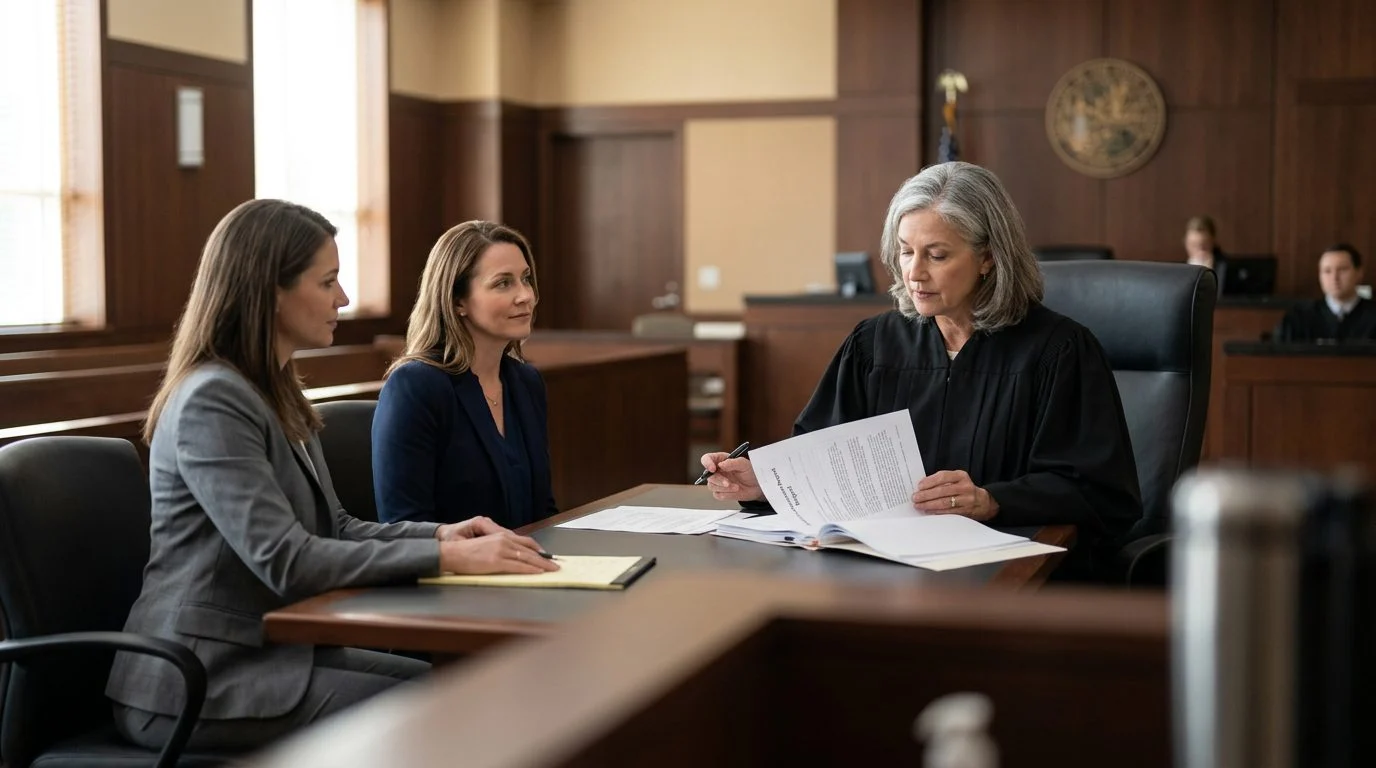
An involuntary commitment hearing for addiction is a court proceeding where a judge determines whether there is clear and convincing evidence that a person has a substance use disorder posing a substantial threat of harm to themselves or others. The hearing is the formal judicial step that follows the filing of a petition under Florida’s Marchman Act—it’s where the evidence is presented, witnesses testify, and the judge decides whether commitment to treatment is warranted.
Understanding the hearing process—who attends, what evidence is presented, what your rights are, and what happens afterward—can reduce anxiety and help you prepare effectively if you’re facing this situation or supporting someone who is.

Not sure what your next step is?
Talk it through with our team — the first consultation is free, confidential, and carries no obligation.
Overview: The Involuntary Commitment Hearing in Florida
The involuntary commitment hearing is the court’s opportunity to examine whether the legal grounds for commitment exist. Florida Statute Chapter 397 establishes the framework for involuntary commitment based on substance use disorders. The hearing is separate from the petition filing—filing a petition starts the process, but the hearing is where the judge actually hears evidence and makes the commitment decision.
In Florida, the hearing must occur within a specific timeframe after the petition is filed. The respondent (the person subject to the petition) has the right to notice and to be present at the hearing. This is not a quick administrative process; it’s a formal court proceeding with specific procedural protections.
Who Attends the Involuntary Commitment Hearing
Several key people participate in an involuntary commitment hearing:
The respondent is the person whose commitment is being sought. They have the right to attend and hear all evidence presented against them.
The petitioner is the person or entity who filed the petition—often a family member, healthcare provider, law enforcement officer, or another authorized party. The petitioner (or their attorney) presents evidence supporting the commitment.
The judge or hearing officer presides over the hearing, rules on procedural matters, hears evidence, and makes the final decision about whether to order commitment.
The respondent’s attorney represents the respondent’s interests. If the respondent cannot afford an attorney, they have the right to request a public defender. The respondent also has the right to request a continuance (delay) to obtain legal representation.
Witnesses and medical professionals may testify. These often include family members, healthcare providers, clinical evaluators, law enforcement officers, or treatment professionals who have direct knowledge of the respondent’s substance use and its consequences.
Court staff—the clerk and court reporter—document the proceeding.
The Hearing Structure and Procedural Steps
A typical involuntary commitment hearing follows this structure:
Opening. The judge explains the purpose of the hearing and informs the respondent of their rights, including the right to be represented by counsel, to cross-examine witnesses, and to present evidence.
Presentation of evidence by the petitioner’s side. The petitioner or their attorney presents evidence supporting commitment. This includes testimony from witnesses and introduction of medical or clinical records.
Testimony from witnesses. Family members, healthcare providers, law enforcement, or treatment professionals may testify about the respondent’s substance use, behavior, statements, incidents, or failed treatment attempts. Witnesses are typically subject to cross-examination by the respondent or the respondent’s attorney.
Medical or clinical evidence. Clinical evaluations, substance use assessments, medical records, and behavioral observations are presented. An expert witness—such as a physician or addiction professional—may testify about the clinical findings.
Cross-examination. The respondent or their attorney has the opportunity to question the petitioner’s witnesses and challenge the evidence.
Respondent’s case. The respondent has the opportunity to present their own evidence, call witnesses on their behalf, and testify. The petitioner may cross-examine the respondent’s witnesses.
Closing statements. Both sides may make closing arguments summarizing the evidence and their position on whether commitment is warranted.
Evidence Presented at the Hearing
The evidence presented at an involuntary commitment hearing typically includes:
- Clinical evaluations and assessments documenting the respondent’s substance use disorder, severity, and functional impact
- Medical records and prior treatment history
- Behavioral incidents or dangerous conduct related to addiction—overdoses, accidents, violence, or self-harm
- Testimony about the respondent’s statements, actions, and deteriorating condition
- Documentation of failed voluntary treatment attempts or the respondent’s refusal of treatment
- Expert witness testimony from physicians, psychiatrists, or addiction professionals about the clinical basis for commitment
The legal standard is clear and convincing evidence—a higher burden than “preponderance of the evidence” (more likely than not) but lower than “beyond a reasonable doubt.” This means the evidence must persuade the judge that commitment is substantially more likely true than not, and the judge must have a firm belief in the truth of the allegations.
Addiction is recognized by the National Institute on Drug Abuse (NIDA) as a chronic brain disorder affecting reward, motivation, and memory systems. This neuroscience foundation is often part of the clinical evidence presented to explain why the respondent’s behavior and decision-making are impaired by substance use.
The Respondent’s Rights During the Hearing
The respondent has important protections:
- Right to be present and hear all evidence against them
- Right to legal representation—and the right to request a continuance to obtain counsel if they cannot afford an attorney
- Right to cross-examine all witnesses presented by the petitioner
- Right to present their own evidence and testify on their own behalf
- Right to call witnesses in their defense
- Right to challenge the sufficiency of the evidence presented
- Right to appeal the judge’s decision if commitment is ordered
These rights ensure that the respondent has a fair opportunity to contest the petition and present their side of the case.
Have questions about what happened?
Ask our team directly. The first conversation is free, confidential, and there is no obligation to continue.
What the Judge Considers
The judge must determine whether the evidence meets the legal standard for commitment. Key factors include:
- Whether the respondent has a substance use disorder
- Whether the disorder poses a substantial threat of harm to self or others (based on recent behavior, statements, or clinical assessment)
- Whether less restrictive alternatives have been tried or are inadequate—for example, outpatient treatment, counseling, or voluntary inpatient treatment
- The respondent’s capacity to consent to voluntary treatment (can they understand and agree to treatment?)
- The nature and severity of the addiction and its consequences—how long the substance use has continued, how it has affected their health, relationships, employment, and safety
- Prior treatment history and outcomes—whether the respondent has attempted treatment before and what happened
The judge cannot order involuntary commitment simply because someone uses substances. The law requires a finding that the substance use disorder creates a substantial threat of harm and that less restrictive alternatives are inadequate.
Possible Outcomes of the Hearing
After hearing all evidence, the judge may:
- Grant the petition and order involuntary commitment. The initial commitment period is typically 5 days, during which the respondent is placed in a treatment facility. The facility may renew the commitment if clinically necessary.
- Deny the petition. The respondent is released and not subject to commitment.
- Order a continuance to allow for additional evaluation or evidence.
- Order conditional release or alternative arrangements, such as mandatory outpatient treatment or placement in a specific facility.
- Modify the terms of commitment or specify conditions.
After the Hearing: What Comes Next
If commitment is ordered: The respondent is transported to a designated treatment facility. The facility must notify the respondent and relevant parties of their rights, including the right to request a new hearing or appeal.
If the petition is denied: The respondent is discharged and free to leave. No commitment is ordered.
Right to appeal or request a new hearing: Under Florida law, the respondent retains the right to appeal the judge’s decision or request a new hearing if circumstances change or new evidence emerges.
Duration and review: If commitment continues beyond the initial 5 days, the treatment facility must periodically review whether continued commitment remains necessary.
Transition to ongoing treatment: Whether commitment is ordered or denied, the focus shifts to treatment planning, discharge planning, or connection to community resources.
Preparing for an Involuntary Commitment Hearing
If you’re preparing for a hearing—either as the petitioner or supporting the respondent—consider these steps:
- Gather medical records, clinical evaluations, and documentation of the substance use disorder and its consequences
- Identify and prepare witnesses who can testify about the respondent’s behavior, substance use, and any incidents
- Understand the specific grounds alleged in the petition so you know what the hearing will address
- Consult with an attorney familiar with Florida involuntary commitment law to understand your rights and the hearing procedures
- Organize evidence in a clear, chronological format so it’s easy to follow during the hearing
- Know your rights and the hearing procedures in advance to reduce anxiety and feel more prepared

Want to know where you stand?
Tell us what happened and our team will walk you through the options available to you, at no cost.
Frequently Asked Questions
What is the difference between filing a petition and the hearing?
Filing a petition starts the involuntary commitment process; the hearing is where the judge actually examines the evidence and decides whether to order commitment.
Can the respondent refuse to attend the hearing?
The respondent has the right to attend and to be present. If they refuse, the hearing may proceed, but their absence may affect how the judge views the case.
What if the respondent doesn’t have an attorney?
They have the right to request a public defender if they cannot afford private counsel. They can also request a continuance to obtain representation.
How long does an involuntary commitment last?
The initial period is typically 5 days. The treatment facility may renew commitment if clinically necessary, but continued commitment requires ongoing evaluation and justification.
Can family members testify?
Yes. Family members often provide important testimony about the respondent’s substance use, behavior, and the impact on safety and health.
If you’re facing an involuntary commitment hearing for addiction or supporting someone through one, families and loved ones reach out regularly to understand the process and their options. Robinson & Casey handles involuntary commitment petitions and the hearings that follow. Contact us to discuss your situation and learn how we can help you navigate this process.
The Hearing Process: What Happens
Petition Filing
The process begins when a family member, healthcare provider, or law enforcement files a petition with the court alleging that the respondent is unable to care for themselves due to substance abuse and poses a danger to themselves or others.
Notice and Scheduling
The respondent receives notice of the petition and a hearing date. Florida law ensures they have the opportunity to be present, to be represented by an attorney, and to present evidence or witnesses on their behalf.
The Hearing
A judge examines evidence from the petitioner, medical professionals, and the respondent. The judge determines whether clear and convincing evidence supports involuntary commitment to a treatment facility.
The Order
If the judge finds grounds for commitment, an order is entered requiring the respondent to enter a designated treatment program. The order specifies the duration and conditions of treatment.
How Robinson & Casey Supports Your Family
Petition Preparation
We prepare and file the petition with precision, ensuring all required facts and legal grounds are clearly presented to the court.
Evidence and Witness Coordination
We help organize medical records, gather witness testimony, and present a compelling case to the judge about the need for treatment.
Representation at Hearing
Our attorneys represent you at the hearing, examine witnesses, respond to the respondent's arguments, and advocate for the court's commitment order.
Clear Communication
We explain each step of the process, answer your questions, and keep you informed about timelines and what to expect.
Time Matters in Addiction Cases
When someone is in crisis due to substance abuse, delays can be dangerous. The sooner you contact an attorney to discuss your situation, the sooner we can help you explore whether involuntary commitment is appropriate and begin the legal process.
Common Questions About Involuntary Commitment Hearings
What is the difference between filing a petition and the hearing?
Filing a petition starts the involuntary commitment process; the hearing is where the judge examines the evidence and decides whether to order commitment.
Can the respondent refuse to attend the hearing?
The respondent has the right to attend and to be present. If they refuse, the hearing may proceed without them, but the judge will consider their absence when evaluating the case.
What evidence is needed to support commitment?
The court requires clear and convincing evidence that the person cannot care for themselves due to substance abuse and poses a danger to themselves or others. Medical evaluations, witness testimony, and documented incidents are typically presented.
How long does the commitment last?
The judge's order specifies the duration of treatment. The respondent may petition for release, and treatment facilities conduct periodic reviews to determine if continued commitment remains necessary.