
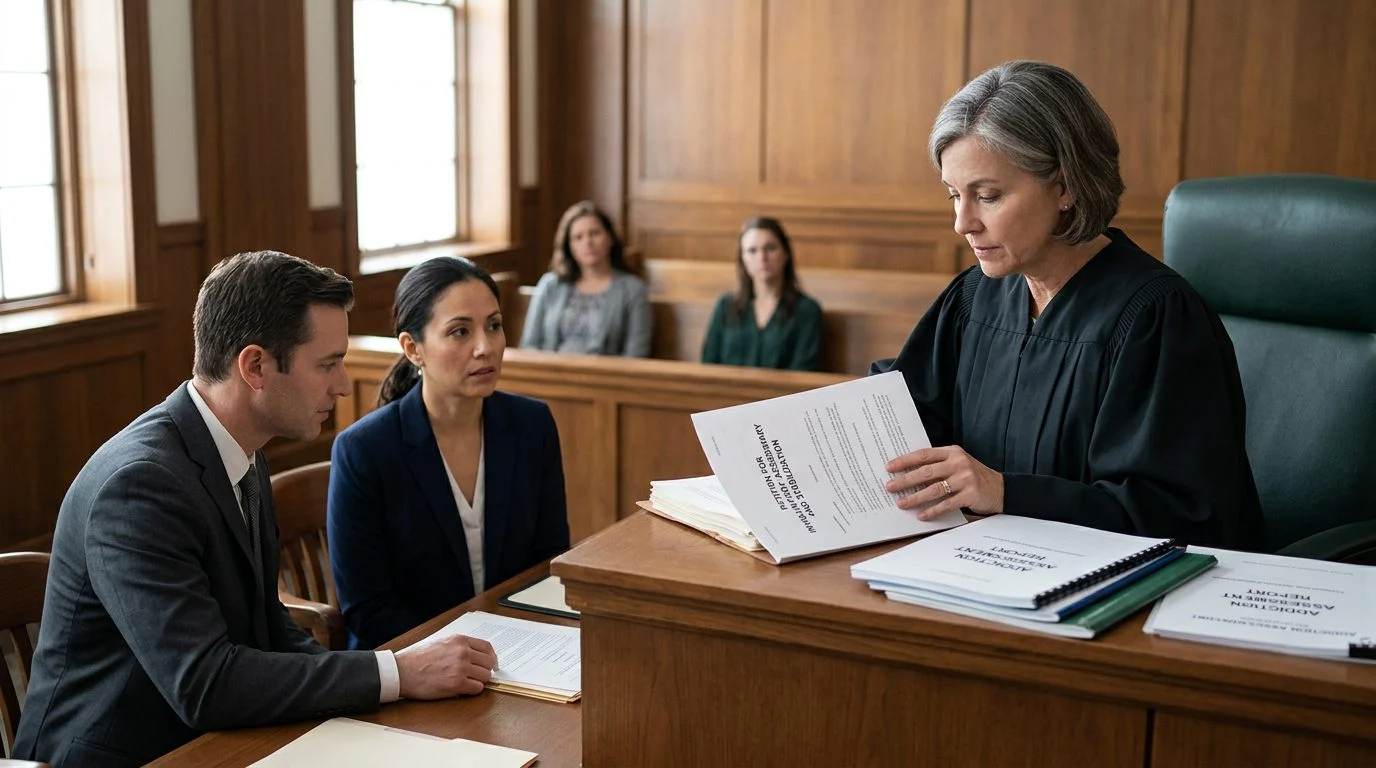
Marchman Act & Involuntary Commitment
Involuntary Commitment for Opioid & Heroin Addiction in Florida
When a loved one refuses treatment, the Marchman Act allows you to petition the court for involuntary commitment. Robinson & Casey guides families through the legal process.
By Richard J. Casey III, Esq. · Published October 03, 2026
Involuntary Commitment for Opioid and Heroin Addiction in Florida: What Families Need to Know
When someone you love is struggling with opioid or heroin addiction, and they refuse or cannot access voluntary treatment, involuntary commitment may be a legal option available to you in Florida. Under the Marchman Act (Fla. Stat. § 397.675), Florida law allows family members, caregivers, healthcare providers, and others to petition a court to order treatment for someone with a substance abuse disorder when they pose a serious risk to themselves or others. This guide explains how involuntary commitment works, who can file, what the court process looks like, and how to move forward if you’re facing this difficult decision.

Not sure what your next step is?
Talk it through with our team — the first consultation is free, confidential, and carries no obligation.
Understanding Involuntary Commitment for Opioid and Heroin Addiction in Florida
Involuntary commitment is a court-ordered intervention that requires someone with a substance abuse disorder to enter a treatment facility when they cannot or will not seek help voluntarily. Unlike voluntary treatment—where someone chooses to enter a program—involuntary commitment removes that choice and places the decision in the hands of the court. This distinction matters because opioid and heroin addiction can severely impair judgment and motivation to seek treatment, even when the addiction is life-threatening.
The Marchman Act is Florida’s primary legal framework for involuntary commitment related to substance abuse. It’s a civil (not criminal) process designed to intervene when addiction reaches a critical point. Families and caregivers often turn to involuntary commitment when they see someone spiraling into active addiction, when overdose risk is imminent, or when repeated attempts at voluntary treatment have failed.
The Opioid Crisis and Involuntary Commitment
Florida has been hit hard by the opioid epidemic. According to the National Institute on Drug Abuse (NIDA), opioid overdose deaths have risen dramatically over the past two decades, and opioids—including prescription painkillers and illicit drugs like heroin—remain a leading cause of overdose death nationwide. In Florida specifically, opioid-related deaths continue to be a major public health crisis, affecting families across every county and socioeconomic background.
Involuntary commitment for opioid and heroin addiction exists because addiction changes the brain in ways that make voluntary treatment unlikely or impossible. Opioids alter dopamine pathways and decision-making centers, creating powerful cravings and reducing the ability to recognize danger. A person deep in opioid addiction may refuse treatment even when facing overdose risk, homelessness, or legal consequences. For families watching this unfold, involuntary commitment represents a legal tool to intervene when addiction has progressed beyond the point where persuasion or encouragement works.
It’s important to understand that involuntary commitment is a health intervention, not criminal prosecution. The goal is treatment and recovery, not punishment. The person is placed in a licensed treatment facility for evaluation, stabilization, and ongoing care—not in jail.
Who Can File for Involuntary Commitment in Florida
You don’t need to be a lawyer to file a petition for involuntary commitment under the Marchman Act. Eligible petitioners include:
- Family members (spouse, parent, adult child, sibling)
- Caregivers or guardians currently responsible for the person’s care
- Healthcare providers who have treated or evaluated the person
- Law enforcement officers who have encountered the person
- State officials (DCF, mental health authorities)
The court requires that the petitioner have some knowledge of the person’s substance abuse and be able to describe specific facts and behaviors that support the petition. You don’t need a personal relationship, but you do need firsthand knowledge or reliable information about the person’s addiction and the danger it poses.
The Legal Process: From Petition to Court Order
Filing for involuntary commitment involves several steps, each with specific legal requirements:
Step 1: Filing the Petition
You file a petition with the circuit court in the county where the person lives. The petition must include your name, your relationship to the person, and a detailed description of the person’s substance abuse, specific incidents, and why you believe they pose a serious risk to themselves or others.
Step 2: Affidavit and Supporting Evidence
The petition must be supported by an affidavit (a sworn statement) describing the person’s addiction, failed treatment attempts, overdose risk, unsafe behavior, or other evidence of imminent danger. Courts want concrete facts: dates of drug use, overdose incidents, statements the person has made, changes in behavior or health, and any prior treatment rejections.
Step 3: Emergency Ex Parte Hearing
If you’re filing because of immediate danger (active overdose risk, suicidal behavior, or acute crisis), you can request an emergency ex parte hearing. “Ex parte” means the hearing happens without the person present. A judge reviews your affidavit and decides whether to issue a temporary involuntary commitment order. This can happen within hours in a true emergency.
Step 4: Full Hearing
Within a set timeframe (typically 5 business days), a full hearing must be held. At this hearing, the person has the right to be present, to have an attorney, to present evidence, and to challenge the petition. You (the petitioner) present your evidence; the person or their attorney may present defenses or alternatives. The judge decides whether to issue a final involuntary commitment order based on the evidence.
Burden of Proof
The court must find “clear and convincing evidence” that the person has a substance abuse disorder and is likely to cause serious harm to themselves or others without treatment. This is a high standard—higher than “preponderance of the evidence” but lower than “beyond a reasonable doubt.”
What Courts Look For: Grounds for Involuntary Commitment
To order involuntary commitment, a Florida court must find:
- Substance Abuse Disorder: Clinical evidence or diagnosis of opioid use disorder, heroin addiction, or other substance abuse.
- Likelihood of Serious Harm: Without treatment, the person is likely to cause serious physical harm to themselves or others.
- Inability or Unwillingness to Seek Voluntary Treatment: The person has refused treatment, is incapable of deciding to seek it, or has failed at voluntary treatment attempts.
- Imminent Danger: There is an immediate, urgent risk—overdose, unsafe behavior, deteriorating health, or active drug use that poses a direct threat.
Courts evaluate opioid addiction severity by looking at the frequency and amount of use, overdose history, medical complications, loss of employment or housing, family breakdown, and any statements or behavior indicating suicidal intent or recklessness. The more specific and recent your evidence, the stronger your case.
Have questions about what happened?
Ask our team directly. The first conversation is free, confidential, and there is no obligation to continue.
Opioid and Heroin Addiction: Why Involuntary Commitment May Be Necessary
Opioid and heroin addiction is uniquely dangerous because of its high overdose mortality rate and the neurological changes it causes. According to SAMHSA (Substance Abuse and Mental Health Services Administration), opioid overdose is a leading cause of unintentional injury death in the United States. In Florida, the overdose crisis is ongoing and severe.
When someone is actively using opioids or heroin, they face:
- Overdose risk: Each use carries the risk of fatal overdose, especially as tolerance changes or if the drug is mixed with fentanyl or other potent substances.
- Impaired judgment: Opioid addiction affects the prefrontal cortex, the brain region responsible for decision-making and risk assessment. A person may be unable to recognize or care about the danger they’re in.
- Resistance to treatment: Unlike some other addictions, opioid addiction often involves such strong cravings and physical dependence that the person refuses help even when facing catastrophic consequences.
- Rapid deterioration: Opioid addiction can escalate quickly, leading to overdose, infection (if injected), organ damage, or death within weeks or months.
For families, involuntary commitment is often a last resort—a way to save someone’s life when nothing else has worked. It acknowledges that addiction has progressed beyond the point where the person can make their own treatment decision, and that waiting for voluntary compliance may mean waiting for a fatal overdose.
What Happens After an Involuntary Commitment Order
Once a court issues an involuntary commitment order, the person is transported to a licensed treatment facility. Here’s what typically follows:
- Initial Evaluation: Medical and psychiatric staff evaluate the person, assess withdrawal risk, and screen for co-occurring mental health conditions.
- Stabilization and Detoxification: If the person is actively using, they may undergo medically supervised detoxification to safely manage withdrawal.
- Treatment Planning: A treatment team develops an individualized plan, which may include medication-assisted treatment (MAT), counseling, group therapy, and aftercare planning.
- Duration: The initial commitment may last 5 days, 30 days, or longer depending on the court order and the person’s progress. The court may hold review hearings to assess whether continued commitment is necessary.
- Transition to Aftercare: As the person progresses, the focus shifts to discharge planning, connecting them to outpatient treatment, support groups, and community resources to prevent relapse.
The person retains certain rights during commitment, including the right to medical care, the right to contact family or an attorney, and the right to request a review hearing if they believe the commitment is no longer necessary.
Challenges and Defenses in Involuntary Commitment Cases
The person subject to an involuntary commitment petition has the right to contest it. Common defenses or challenges include:
- Insufficient Evidence: The petitioner did not provide clear and convincing evidence of a substance abuse disorder or imminent danger.
- Lack of Imminent Danger: The person’s addiction, while serious, does not currently pose an immediate risk of serious harm.
- Less Restrictive Alternatives: Outpatient treatment, medication-assisted treatment, or other less restrictive options are available and appropriate.
- Procedural Defects: The petition was not properly filed, or the petitioner lacked standing to file.
The person has the right to legal representation at the hearing. A judge must balance the individual’s liberty interest against the state’s interest in protecting public health and safety. Courts take this balance seriously, which is why evidence must be clear and specific.
Working With a Florida Attorney on Involuntary Commitment Petitions
Navigating the involuntary commitment process can be complex, especially in an emergency. An attorney familiar with the Marchman Act can help you:
- Draft a Petition: Ensure your petition includes all required elements and presents your evidence persuasively and factually.
- Prepare Affidavits: Gather and organize the specific facts and incidents that support your case.
- Represent You at Hearings: Present evidence, examine witnesses, and argue on your behalf before the judge.
- Handle Emergency Procedures: If you need an immediate ex parte hearing, an attorney can expedite the process and ensure proper notice.
- Anticipate Defenses: Prepare for the respondent’s arguments and strengthen your case preemptively.
Robinson & Casey focuses exclusively on Marchman Act petitions and involuntary commitment for substance abuse. Our attorneys understand Florida’s involuntary commitment law, the court procedures in South Florida and statewide, and the urgency families face when addiction reaches a critical point. We’ve worked with families who are desperate to save a loved one’s life and who need clear guidance on whether involuntary commitment is appropriate and how to pursue it effectively.

Want to know where you stand?
Tell us what happened and our team will walk you through the options available to you, at no cost.
Frequently Asked Questions
Can I force my loved one into treatment for opioid addiction in Florida?
Yes, under the Marchman Act, you can petition a Florida court to order involuntary commitment if you can show clear and convincing evidence that the person has a substance abuse disorder and poses a serious risk to themselves or others without treatment.
What is the difference between involuntary commitment and guardianship?
Involuntary commitment is a time-limited, treatment-focused intervention for substance abuse. Guardianship is a broader legal arrangement that gives someone decision-making authority over another person’s finances, healthcare, and personal matters. They can be used together or separately depending on the situation.
How long does the involuntary commitment process take?
An emergency ex parte order can be issued within hours in a crisis. A full hearing must occur within 5 business days. The commitment itself may last 5 days to 30 days or longer, depending on the court order and the person’s progress.
Do I need a lawyer to file for involuntary commitment?
No, you can file a petition yourself, but an attorney can ensure your petition is complete, properly filed, and presents the strongest possible case. Legal guidance is especially valuable in emergencies or if you expect the person to contest the petition.
What happens if someone refuses to comply with an involuntary commitment order?
If the person refuses to go to the treatment facility or leaves without authorization, law enforcement can be involved to ensure compliance with the court order. The facility and the court work together to manage non-compliance.
If you’re watching someone you love struggle with opioid or heroin addiction and voluntary treatment hasn’t worked, you’re not alone—families in your situation reach out to us regularly to understand their legal options. Whether you’re considering involuntary commitment, exploring the Marchman Act process, or simply trying to understand what’s possible under Florida law, we’re here to listen and to help you navigate this difficult time. Reach out to Robinson & Casey today to schedule a consultation. Call us at (561) 849-4700 to speak with an attorney who handles these cases every day.
Time Matters
Marchman Act petitions require prompt action and proper legal documentation. The sooner you contact an attorney, the sooner you can move forward with protecting your loved one.
How Involuntary Commitment Works
File a Petition
A family member, healthcare provider, or law enforcement files a petition with the court alleging substance abuse disorder and serious risk to self or others.
Court Review
The court examines evidence to determine whether clear and convincing proof supports involuntary commitment for evaluation and treatment.
Evaluation & Treatment
If the court orders commitment, your loved one receives professional assessment and access to treatment programs designed for opioid and heroin addiction.
Legal Representation
Robinson & Casey handles the petition, presents evidence, and protects your family's interests throughout the Marchman Act process.
Why Choose Robinson & Casey
Focused on Marchman Act & Guardianship
We focus exclusively on Marchman Act petitions and guardianship matters—not general practice law. This focus means we know the specific rules, judges, and strategies that work in South Florida.
Proper Documentation & Evidence
Involuntary commitment requires clear and convincing evidence. We gather medical records, witness statements, and documentation to build a strong petition.
Fast Action When Needed
Addiction crises don't wait. We respond quickly to help you file emergency petitions and move through the court process without delay.
Family-Centered Guidance
We explain your options, answer your questions, and support your family through a difficult decision. You're not alone in this process.
Common Questions About Involuntary Commitment
Can I force my loved one into treatment for opioid addiction?
Yes. Under the Marchman Act, you can petition a Florida court to order involuntary commitment if you can show clear and convincing evidence that the person has a substance abuse disorder and poses a serious risk to themselves or others without treatment.
What is the difference between involuntary commitment and guardianship?
Involuntary commitment under the Marchman Act is a court order for substance abuse evaluation and treatment. Guardianship is a broader legal arrangement where a guardian makes decisions on behalf of another adult. Both may be appropriate depending on your situation.
Who can file a Marchman Act petition?
Family members, healthcare providers, law enforcement, and other authorized individuals can file. An attorney will confirm who has standing in your case and help prepare the petition.
What happens after the court orders commitment?
Your loved one is evaluated by medical professionals and admitted to a treatment facility. The court may order continued treatment or modify the commitment based on progress and medical recommendations.