
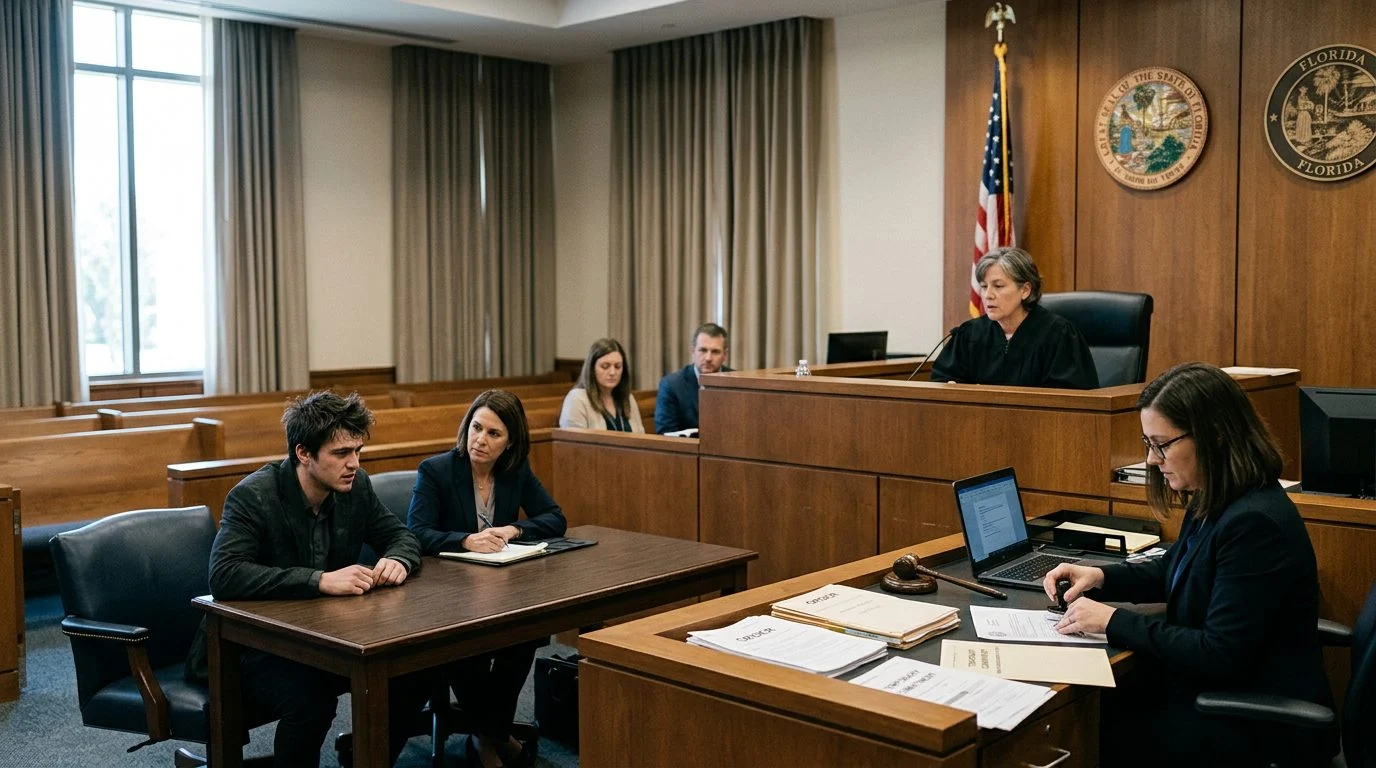
Marchman Act Attorney · South Florida
Clear Legal Options for Parents Facing an Adult Child's Addiction
Robinson Casey focuses on Marchman Act petitions and guardianship matters for families in Miami-Dade, across South Florida, and throughout Florida.
By Richard J. Casey III, Esq. · Published October 23, 2026
Florida parents usually cannot order an adult child into treatment on their own. Under Florida law, involuntary treatment for substance use comes from a court order. The Marchman Act is the main court process for this. Guardianship is a separate tool for adults who cannot manage their own affairs. This guide explains the legal options for parents of an adult child who uses drugs. It covers who can file, how the process moves, and what each path involves.
Why It Feels So Hard to Help an Adult Child With an Addiction to Drugs
Helping an adult child who uses drugs is hard, in part because Florida law recognizes that substance use can take away self-control. That is a legal standard. It is not a judgment about your child’s character.
Most parents try many things first. They talk, plead, set rules, pay bills, and look for programs. Many keep at it for months or longer. That is a common path, and it does not mean the family did something wrong.
The law also treats refusal with care. The same statute says that mere refusal to receive services does not, by itself, show a lack of judgment. A “no” alone does not settle the question. Courts look at the full picture before they decide anything.
This page walks through Florida’s legal options, who can use them, and what each one involves. Legal terms are explained as they come up.
If your adult child's drug use has you weighing a Marchman Act petition or guardianship, you don't have to sort out the filing questions alone. Call Robinson Casey at (561) 849-4149. Talk it through with our team — the first consultation is free, confidential, and carries no obligation.

Steps You Can Take Right Now
You can start with steps that do not require filing anything with a court. These steps are useful on their own, and they stay useful if you later decide to go to court.
Start by writing things down. Record dates, times, and specific events, such as a missed job, money that went missing, or an overdose scare. Specific notes are easier to explain to a doctor, a counselor, or a judge than general statements like “things keep getting worse.”
Be careful with ultimatums. A rule only helps if you can enforce it. Saying “leave or get treatment” and then not following through can teach your child that your limits are negotiable. Pick a few limits you can keep, and state plainly what you will do.
Encourage a medical or clinical assessment. A professional can look at health risks and recommend a level of care. Offer to help with the appointment, but let your child be the one who goes whenever possible.
Protect the household. If there has been violence, theft, or signs of overdose, make a plan ahead of time. Decide who will act, keep emergency phone numbers where everyone can find them, and secure medications and valuables.
Can You Force an Adult Child Into Rehab in Florida?
A parent cannot order rehab on their own. Florida’s Marchman Act lets a court order involuntary assessment and treatment in certain cases.
The Florida Department of Children and Families describes the Marchman Act as allowing both voluntary admission and involuntary assessment, stabilization, and treatment for adults and youth who are severely impaired by substance abuse.
The key difference is consent. Voluntary treatment starts when the adult child agrees. Under Fla. Stat. § 397.697, if the court finds the conditions proved by clear and convincing evidence, it may order involuntary treatment for a period not to exceed 90 days.
Many people call this involuntary commitment for addiction. The court process is the legal core of that idea. Our pillar page covers the full overview of how it works in Florida. A court path is a legal process with steps and deadlines, not a quick fix.
Who Can File a Marchman Act Petition in Florida?
For an adult, a spouse, legal guardian, any relative, a service provider, or an adult with direct personal knowledge can file a Marchman Act petition. For an adult respondent, a petition for involuntary treatment services may be filed by the respondent’s spouse or legal guardian, any relative, a service provider, or an adult who has direct personal knowledge of the respondent’s substance abuse impairment and his or her prior course of assessment and treatment.
Whether a specific person fits one of those categories depends on the facts of your family’s situation.
Under Fla. Stat. § 397.68141, the petition must name the adult child and the petitioner, and state their relationship. It must also give the factual reasons for believing the person is impaired, has lost self-control, and either has inflicted or is likely to inflict physical harm on themselves or others unless the court orders services, or refuses voluntary care because impaired judgment prevents them from appreciating the need for it. A petition may include a report from a qualified professional who examined the adult child within 30 days before filing. If the adult was not assessed, the petition must say so.
Under Fla. Stat. § 397.681, the petition goes to the clerk of court in the county where the person is located. The clerk may not charge a fee for filing it.
Robinson Casey limits its practice to Marchman Act petitions and guardianship matters. The firm’s lawyers can review whether a particular family member may file and what the petition should say.
The Filing Process, Step by Step
After filing, the court must schedule a hearing within 10 court working days, unless a continuance is granted. Under Fla. Stat. § 397.68151, copies of the petition and notice go to the adult child, the petitioner, the adult’s attorney if known, the adult’s spouse or guardian if applicable, and any other persons the court directs.
Under Fla. Stat. § 397.681, a person who cannot afford one may receive court-appointed counsel. Under Fla. Stat. § 397.681(2), a respondent has the right to counsel at every stage of a judicial proceeding relating to a petition for involuntary treatment for substance abuse impairment.
Under Fla. Stat. § 397.6957, the court hears relevant evidence, including testimony from family members who know the adult’s history. The adult may refuse to testify.
Urgent situations can call for quicker action. The court still reviews the petition before it acts.
Who presents the evidence also matters. In J.C. v. State, the court failed to follow the applicable statute by essentially functioning as the absent petitioner. It reversed where the trial court questioned the only witness while the petitioner was absent. The Fourth District later disagreed with a related rule in J.J.J. v. D.G., so the issue is not settled statewide.
Does My Adult Child Have to Agree to Be Assessed?
No. A refusal to be assessed does not end the process. In a nonemergency case, if the adult was not assessed or refused, and it reasonably appears the person qualifies, the court shall issue an involuntary assessment and stabilization order under Fla. Stat. § 397.6957.
The assessment must come from a qualified professional. The report must reach the clerk by the close of business the day before the hearing. It must include a treatment recommendation. A report that omits a recommendation, or recommends no treatment, leads to dismissal of the petition.
If the adult remains unassessed after 90 days, the court must dismiss the case. When an assessment was attached to the petition, the adult may also request an independent assessment by a court-appointed or agreed-upon qualified professional, the court may order one on its own, and the court must tell the adult about that right.
Refusal is not the same as proof of lack of judgment. The statute’s second prong asks whether impaired judgment leaves the person unable to understand their need for care.
Not sure what your next step is?
Talk it through with our team — the first consultation is free, confidential, and carries no obligation.
When Guardianship Comes Into the Picture
Guardianship is a different legal tool. It is for adults who cannot manage their own personal or financial affairs because of incapacity. A guardianship case begins with a petition to determine incapacity. Under Fla. Stat. § 744.3201, that petition must be verified. It must state the petitioner’s relationship to the person and the facts behind the belief that the person is incapacitated.
Emergency temporary guardianship handles urgent danger.
Robinson Casey also handles limited guardianship, plenary guardianship, and mental health guardianship. Some families face both a substance use question and a guardianship question. The firm can review which path fits.
Signs It May Be Time to Consider Legal Action, and Why Tough Love Often Falls Short
Legal action is worth considering when drug use puts your child or others at real risk and voluntary help has not worked. The petition to determine incapacity is governed by Fla. Stat. § 744.3201, which sets out who may execute it and what it must state.
Under Fla. Stat. § 397.675, one question is whether, without care, the person is likely to neglect themselves in a way that poses a real and present threat of substantial harm, and that it is not apparent such harm may be avoided through the help of willing, able, and responsible family members or friends or the provision of other services. Another is whether the person has inflicted, threatened, or attempted to inflict physical harm on themselves or another person.
Families often describe similar situations. These include repeated medical emergencies, missed basic obligations, and threats. A petition has to describe facts like these with specifics, not general worry.
Tough love can help a family set limits. But it works through your child’s willingness. Cutting off contact or giving an ultimatum does not give a family a court order.
The Marchman Act works differently. It runs through a petition, notice, a hearing, and a judge’s decision based on evidence. It does not depend on the adult child agreeing first.
Not every situation calls for a court filing. Some families decide to keep working on voluntary options first.

Talking With Robinson Casey About Your Family’s Situation
If you are weighing a Marchman Act petition or guardianship for your adult child, talking with Robinson Casey is a practical next step. You may not be ready to decide anything yet. That is normal.
You may be reading this late at night, trying to understand what the law allows for a child you love. You can bring those questions to us without choosing a filing first.
Robinson Casey limits its practice to Marchman Act petitions and guardianship matters, serving families in Miami-Dade County, across South Florida, and statewide. Richard J. Casey III, Esq., is the responsible attorney for this page. The first consultation is free, confidential, and comes with no obligation to continue.
To talk through your family’s facts, call (561) 849-4149 or schedule a consultation through our contact page.
How Robinson Casey Supports Families
Plain-Language Guidance
We explain each legal path in terms you can act on, so you know what each option involves before you decide.
Confidential Conversations
Your first consultation is confidential. Share the details of your family's situation in a private setting.
Support for the Whole Family
Our team works with parents and relatives who are carrying the day-to-day weight of a loved one's addiction or incapacity.
Free First Consultation
Your initial consultation is free, confidential, and carries no obligation to continue. Call (561) 849-4149 to talk through your family's options.
Legal Paths Robinson Casey Handles
Marchman Act Petitions
Court process for involuntary assessment and treatment of an adult with a substance use disorder, filed by a family member or other qualifying petitioner.
Involuntary Commitment for Addiction
Guidance on the court-ordered treatment path for adults whose substance use puts their health or safety at serious risk.
Emergency Temporary Guardianship
Immediate court protection for an adult facing a situation that calls for urgent action while the case moves forward.