
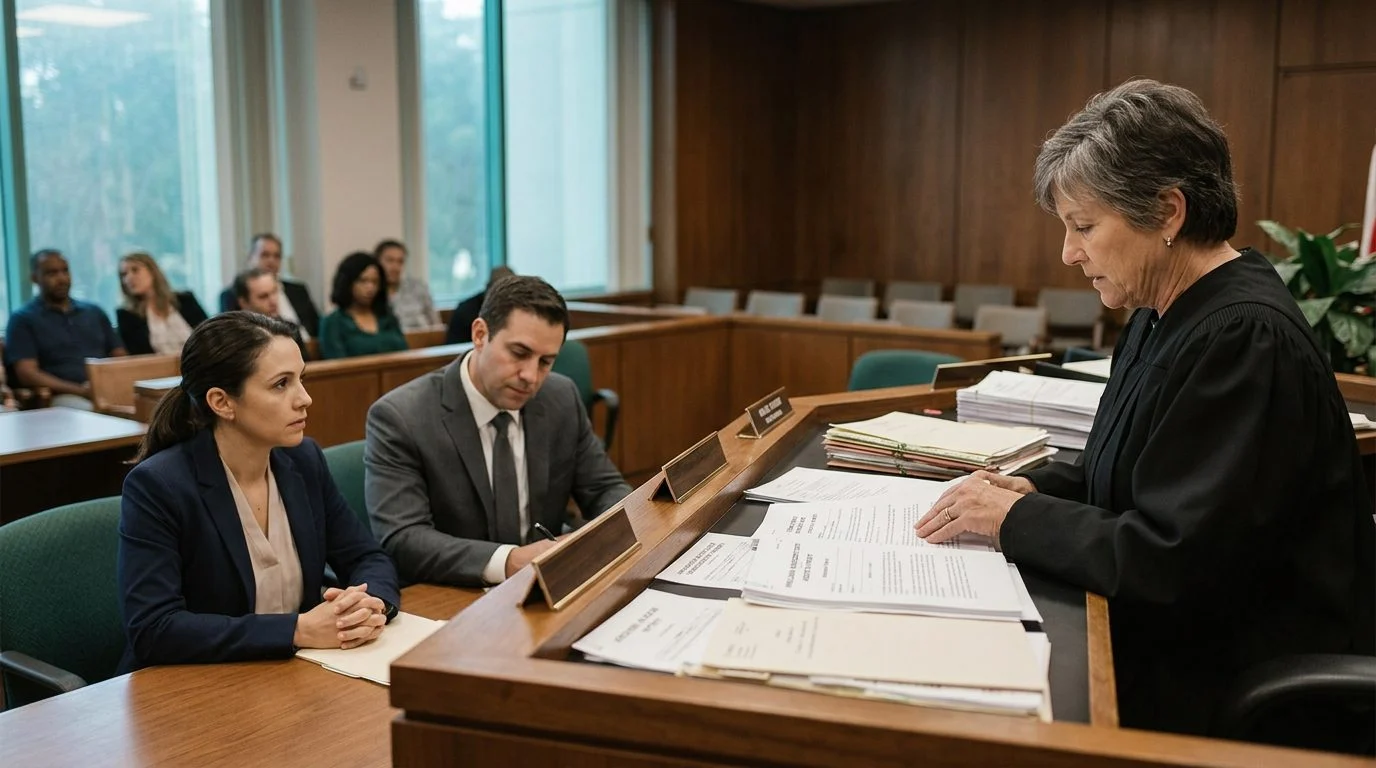
Miami-Dade Marchman Act Attorney
Marchman Act Petitions for Miami-Dade Families
Robinson Casey focuses on Marchman Act petitions and guardianship matters for families across Miami-Dade, South Florida and statewide. Start with a free, confidential first consultation, with no obligation to continue.
Casey III, Esq. · Published November 4, 2026
Miami-Dade Marchman Act Attorney for Families Across South Florida
A Marchman Act petition asks a Florida court to order an assessment and, if the legal tests are met, treatment for a person with a substance use problem. Robinson Casey limits its practice to Marchman Act petitions and guardianship matters. The firm serves families across South Florida, including Miami-Dade County, and statewide. Richard J. Casey III, Esq. is the lawyer responsible for this page.
This guide explains who can file, what goes into a petition, and what happens in court.
Not sure what your next step is?
Talk it through with our team — the first consultation is free, confidential, and carries no obligation.

What the Marchman Act Is and Who Can File
The Marchman Act is Florida’s court process for people who have a substance use problem. It lets a judge order an assessment and, when the criteria are proved, treatment. The core test is in Fla. Stat. § 397.675.
For an adult, a petition may be filed by a spouse or legal guardian, any relative, a service provider, or an adult with direct personal knowledge of the person’s substance use and past treatment (Fla. Stat. § 397.68112). For a minor, a parent, legal guardian, or service provider may file.
The petition goes to the clerk of court in the county where the person is located. The clerk may not charge a fee for filing (Fla. Stat. § 397.681). Filing in the wrong county is a venue problem, not a loss of jurisdiction, and the usual fix is transfer (J.P. v. J.N.).
What a Marchman Act Petition Involves
A petition must name the person and the person filing. It must also state how they are related and the facts behind the request (Fla. Stat. § 397.68141). Those facts must explain why the family believes the person is impaired and has lost self-control.
The petition must also give a reason. Either the person has harmed or is likely to harm self or others, or the refusal of care comes from judgment so impaired that the person can’t see the need for care. The statute adds that mere refusal of services is not, by itself, proof of impaired judgment (Fla. Stat. § 397.675).
Fla. Stat. § 397.675 sets the admission criteria and does not address reports; under Fla. Stat. § 397.68141, a petition may include a report from a qualified professional who examined the person within 30 days before filing.
Fla. Stat. § 397.675 sets the criteria for involuntary admission and does not state who carries the burden of proof. A Fifth District court held that a judge who questions the only witness when the petitioner is absent has acted as the absent petitioner (J.C. v. State). Florida’s appeals courts have split on this point. The Fifth District ruled against that questioning in a later case (C.W.R.K. opinion), while the Fourth District reached a different result and certified a conflict (J.J.J. opinion). The 2024 amendments may affect that dispute.
How the Process Works, Step by Step
The case moves through court in set stages, and each stage has its own clock.
- Consultation. You share the facts, and the firm reviews whether a petition fits them.
- Records and timeline. You gather dates, records, and witness names, as covered below.
- Filing. The petition goes to the clerk in the county where the person is located.
- Counsel and hearing date. The court decides whether the person has a lawyer or should get one. It sets a hearing within 10 court working days unless a continuance is granted (Fla. Stat. § 397.68151).
- Emergency orders. In an emergency, the court may enter an order based on the petition alone (Fla. Stat. § 397.6818). A provider generally may hold the person no more than 72 hours of observation, with exceptions.
- Hearing. If the person does not appear at the hearing for any reason, the court may still issue or reissue an ex parte assessment and stabilization order valid for 90 days, if it reasonably believes the commitment criteria are met and a substance abuse emergency exists (Fla. Stat. § 397.6818). Under Fla. Stat. § 397.6818, the court reviews the petition, testimony, and evidence presented; this section does not state that testimony must be taken under oath or that the proceedings must be recorded.
- Order and renewal. A treatment order can last up to 90 days (Fla. Stat. § 397.697). A renewal can add up to another 90 days (Fla. Stat. § 397.6975).
Want to see where your family’s facts fit these steps? Contact Robinson Casey through the contact page.
What to Gather Before a Consultation
Bring a written timeline, any records you have, and the names of people who saw what happened. Specific facts about your loved one’s situation can help the court understand the request.
- A timeline of incidents with dates, places, and what happened.
- Names of hospitals, emergency rooms, detox or treatment providers, and any discharge papers.
- Prior assessment or treatment records, and any professional report from the last 30 days.
- Court papers already filed in this or any other case.
- Names and phone numbers of witnesses, such as family members, roommates, or employers.
Family members who know the person’s history can testify at the hearing, and the court hears that testimony (Fla. Stat. § 397.6957). Incomplete records still help. Bring what you have, even if some dates are unclear.
Protecting the Household During the Case
Families often need a safety plan while a case is pending, especially when the person is using at home. Common situations include a hospital discharge without a treatment plan, repeated refusal of care, and active use around children or in the home.
- Write down each safety concern with the date and what you saw.
- Keep messages with your loved one short and factual.
- Expect the person to receive a copy of the petition and notice of the hearing (Fla. Stat. § 397.68151).
- Keep your own list of court dates and the names of anyone you have spoken with.
The firm also handles guardianship matters. Guardianship is a separate court process, and this page covers Marchman Act petitions only.
Not sure what your next step is?
Talk it through with our team — the first consultation is free, confidential, and carries no obligation.
Why Families in Miami-Dade Work With Robinson Casey
Robinson Casey limits its practice to Marchman Act petitions and guardianship matters. The firm serves families across South Florida, including Miami-Dade County, and statewide.
- Richard J. Casey III, Esq. is the lawyer responsible for this page.
- Our assistants and office staff keep scheduling and paperwork organized for families.
- Our attorneys focus on these two areas of law and on the court process described above.
Once a petition is filed, the respondent has the right to counsel at every stage. The respondent may waive the right to counsel if the respondent is present and the court finds that the waiver is made knowingly, intelligently, and voluntarily.
Common Questions About Marchman Act Petitions
Most families ask who can file, how long the case takes, and what it costs to start.
A refusal of help alone is not proof of impaired judgment.
Do we need a lawyer to file?
The process runs through the court, and Robinson Casey can handle the petition for your family.
How long does the process take?
A hearing is set within 10 court working days unless it is continued, and a treatment order can last up to 90 days. How the case unfolds depends on the facts.
The first consultation with Robinson Casey is free, confidential, and carries no obligation to continue.
What if our loved one leaves the hospital before a hearing?
A person placed under protective custody or given an emergency admission within the past 10 days can be the subject of a petition (Fla. Stat. § 397.68111).

Talk to Robinson Casey About Your Loved One’s Petition
If your loved one keeps refusing care or is using in a way that puts the household at risk, a Marchman Act petition may be the next legal step to review. Call (561) 849-4700 or request a consultation through the Robinson Casey contact page. Bring your timeline and any records you have, and the team will review your facts with you.
Why Families Turn to Robinson Casey
Confidential First Consultation
Your free first consultation is confidential and comes with no obligation to continue.
Direct Phone Line
Call (561) 849-4700 to reach the firm and talk through your family's situation.
Support Staff Who Keep You Informed
Our team of assistants and office staff helps families organize documents, track each step and stay informed as the case moves forward.
Matters We Handle for Miami-Dade and South Florida Families
Marchman Act Attorney
Guidance on Marchman Act petitions for a family member struggling with substance use who may need court-ordered treatment.
Involuntary Commitment for Addiction
Help navigating the court process when a loved one's addiction places them or others at risk.
Emergency Temporary Guardianship
Representation when a person needs immediate court protection and a temporary guardian must be appointed quickly.
Plenary and Limited Guardianship
Guardianship petitions for adults who need broad or narrowly defined court-supervised support.
Mental Health Guardianship
Guardianship matters involving adults whose mental health condition affects their ability to make safe decisions.
Guardianship Attorney Services
Petition preparation, court filings and hearing preparation for families across South Florida and statewide.
Do Not Wait for a Crisis to Ask for Help
If a loved one is in immediate danger, call 911 first. For non-emergency questions about a Marchman Act petition or guardianship, early guidance can help your family understand the process before a situation escalates.