
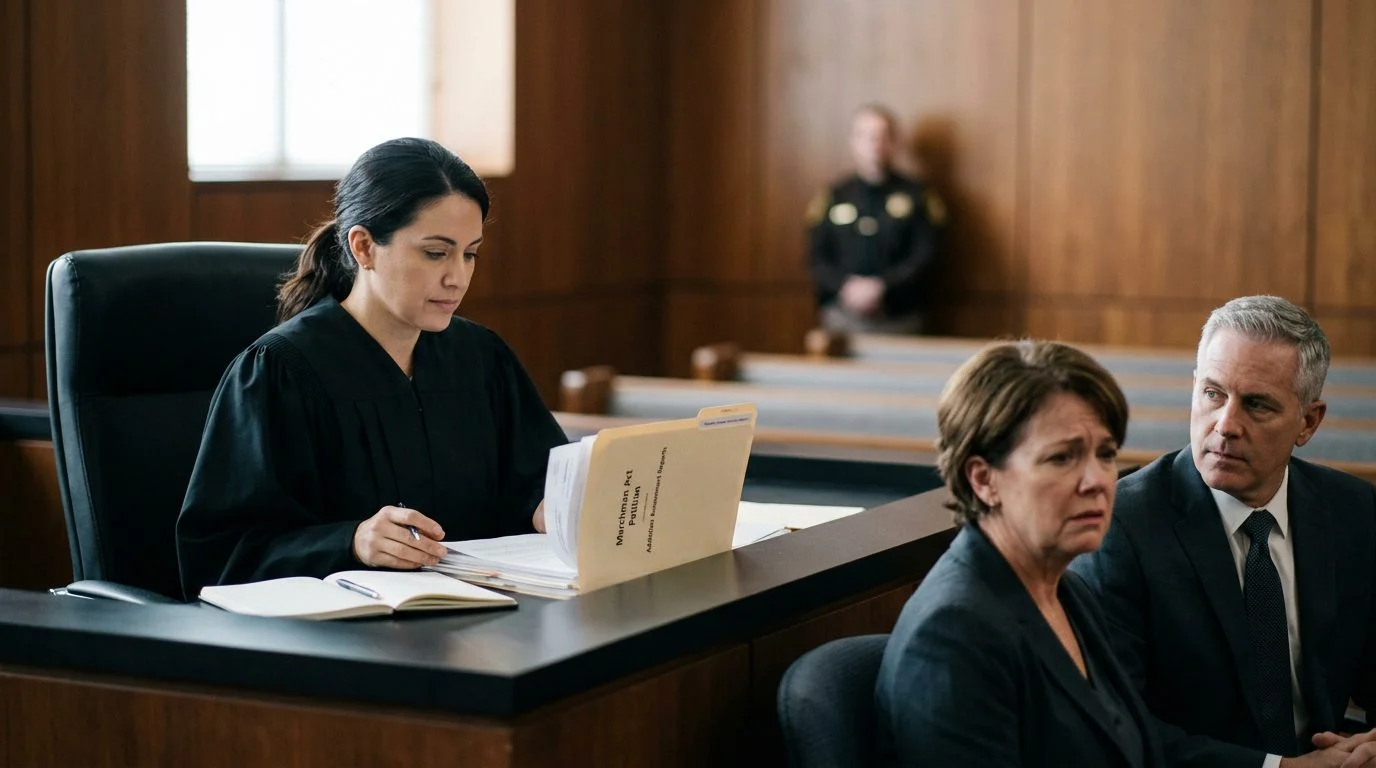
Marchman Act Petitions | Miami-Dade & South Florida
Facing a Marchman Act Petition? Get Clear Answers About a Parent's Role
Robinson Casey focuses on Marchman Act petitions and guardianship matters for families across South Florida and statewide.
By Richard J. Casey III, Esq. · Published November 2, 2026
The Short Answer for Parents Considering a Marchman Act Petition
The risk depends on what the petition says and whether the facts in it are true and given in good faith.
If your loved one is struggling with substance use and may be refusing help, you may be weighing whether to go to court. That is a hard place to be. You may feel fear for their safety and worry about what a filing could mean for you.
This page explains the legal framework in general terms. The details of any situation depend on the facts. The Marchman Act is found in Chapter 397 of the Florida Statutes.
If your loved one is refusing help and you are weighing a filing, you do not have to sort out the facts alone. Our team can talk them through with you. Talk it through with our team — the first consultation is free, confidential, and carries no obligation.

Who May File a Marchman Act Petition in Florida
A parent of an adult may file, because a parent is a relative. Under Fla. Stat. § 397.68112, an adult’s spouse or legal guardian, any relative, a service provider, or an adult with direct personal knowledge of the person’s impairment and prior care may file. The group is broader than one designated family member.
In J.P. v. J.N., the Fifth District held that filing in the wrong county is a venue problem, not a loss of jurisdiction. However, the filing of the petition in the wrong county did not divest the circuit court in Putnam County of jurisdiction, according to J.P. v. J.N..
Filing starts a request. The court decides what happens next. Under § 397.68151, the court must schedule a hearing within 10 court working days unless a continuance is granted.
What Matters Legally: Good Faith and Accurate Information
A petition must give the reasons for each belief it claims. Fla. Stat. § 397.68141 sets out these required contents.
Stick to observed behavior, dates, places, and incidents. Don’t add details you can’t back up, and don’t guess at events you didn’t see.
Keep a dated written record of the events that led you to act. Note the date, the place, what happened, and who else was there. Specific detail gives the court something to test. Vague claims give it little to work with.
Courts look closely at this point. In D.H. v. K.J.R., the Second District held that an ex parte order must rest on petition facts giving a good-faith reason to believe the statutory criteria are met. The same good-faith idea appears in the criteria for involuntary admission under § 397.675. In J.C. v. State, the Fifth District said that the court failed to follow the applicable statute by essentially functioning as the absent petitioner.
When a Petitioner Could Face Legal Exposure
The clearest legal exposure comes from a knowingly false sworn statement. Florida’s verification statute allows a document to be verified by an oath or affirmation taken before an officer authorized to administer oaths, or by a written declaration: “Under penalties of perjury, I declare that I have read the foregoing [document] and that the facts stated in it are true,” followed by the signature of the person making the declaration. Where a verification on information or belief is permitted by law, the words “to the best of my knowledge and belief” may be added.
A person who knowingly makes a false declaration under that statute is guilty of perjury by false written declaration. That is a felony of the third degree.
An honest mistake is not the same as a fact you know is untrue. Write down only what you know, and say plainly what you are unsure of.
A common mistake is turning one bad night into a long pattern, or adding details for emphasis. Both can weaken a petition. Judges also cannot step into the petitioner’s role. The Fifth District reversed an order where the trial court questioned the only witness after the petitioner was absent, in J.C. v. State.
Related Decisions Families Often Weigh Alongside a Petition
Families often compare a Marchman Act case with drug court. The two routes have different steps. You can read how they differ in drug court and the Marchman Act compared.
If your loved one is homeless and refusing help, the decision can feel even more urgent. The guide on a homeless adult son refusing help in Florida covers that situation.
Relapse after court-ordered treatment raises its own questions. The guide on relapse after court-ordered treatment in Florida walks through them.
If the court finds the conditions proved by clear and convincing evidence, it may order involuntary treatment for up to 90 days, under § 397.697. Your loved one also has the right to counsel at every stage of the case, which they may waive only if they are present and the court finds the waiver is made knowingly, intelligently, and voluntarily, under § 397.681.

Talk Through Your Situation With Robinson Casey
Watching someone you love struggle is hard. Deciding whether to file adds pressure. Robinson Casey is a Florida law firm that limits practice to Marchman Act petitions and guardianship matters. The firm serves families in Miami-Dade, South Florida, and statewide. Richard J. Casey III, Esq. is the responsible lawyer for this page.
Can a parent file a Marchman Act petition in Florida?
Yes. A parent of an adult may file as a relative under § 397.68112.
Is there a filing fee for the petition?
No. The clerk may not charge a fee for filing the petition under § 397.681.
Does the person named in the petition have a lawyer?
They have the right to counsel at every stage, which they may waive only if they are present and the court finds the waiver is made knowingly, intelligently, and voluntarily; if they cannot afford private counsel, they have the right to court-appointed counsel, and if the court believes they need or desire counsel, the court shall appoint one without regard to their wishes. The court may do so even when the person does not ask for it.
If your loved one is refusing help and you are weighing a filing, you don’t have to sort out the facts alone. The first consultation is free, confidential, and comes with no obligation to continue. Call (561) 849-4149 or visit our contact page to talk it through.
How We Can Help Your Family
Marchman Act Petitions
We focus on the filing, procedure, and paperwork involved in Marchman Act petitions under Florida law.
Guardianship Matters
Our practice covers emergency temporary, plenary, limited, and mental health guardianship.
Family-Centered Guidance
We take time to explain what each option means for your loved one and for you.
Confidential Consultation
Your first consultation is free, confidential, and carries no obligation to continue.
Time Matters in Urgent Family Situations
A Marchman Act matter can move quickly. If a family member's safety or health is at risk, do not wait to get informed guidance.
Where Families Start
Describe Your Situation
Tell us about your loved one, the concerns you have, and any steps already taken.
Review Your Options
We explain the Marchman Act, guardianship, and involuntary commitment for addiction in plain language.
Plan the Next Step
Together we identify the filings and actions that fit your family's circumstances.