
Marchman Act Attorney · Miami-Dade & South Florida
Help for Families Facing a Spouse's Addiction
Robinson Casey focuses on Marchman Act petitions and guardianship matters for families across South Florida and statewide. Start with a free, confidential first consultation with no obligation to continue.
By Richard J. Casey III, Esq. · Published November 1, 2026
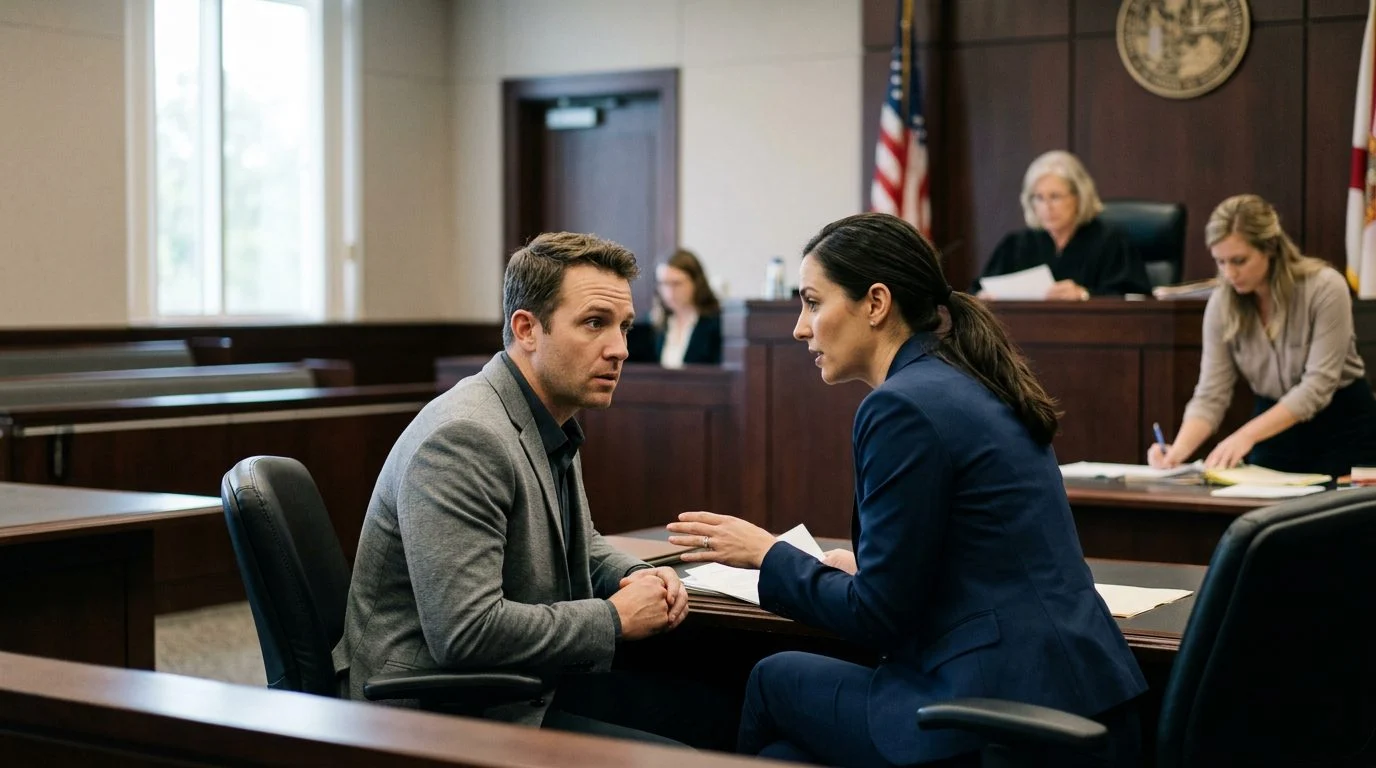
A Marchman Act petition is a Florida court filing that asks a judge to order assessment and treatment for a person who is substance abuse impaired. It is not a divorce filing. If you’re asking whether a court order for treatment without divorce is possible in Florida, this page explains the process, the limits, and the next step.
Your home may feel unpredictable right now. Money is tight. You worry about the kids. You keep asking what happens if nothing changes. You shouldn’t have to carry that alone.
What a Marchman Act Petition Is, and Why It Is Not a Divorce
A Marchman Act petition asks a court to order assessment and treatment for a person with substance abuse impairment. It is a treatment filing, not a divorce case.
Florida law says who may file. For an adult, a petition may be filed by the respondent’s spouse or legal guardian, any relative, a service provider, or an adult with direct personal knowledge of the impairment and the prior course of assessment and treatment (Fla. Stat. § 397.68112). The person named in the petition is the respondent.
Your fear is that filing means losing the marriage and the family. A petition does not decide the marriage. It asks the court to look at your spouse’s need for care. No lawyer can promise how your family’s future will look.
Florida law describes substance abuse impairment as a disease that affects the whole family. It calls for a system of care that supports and strengthens the family unit (Fla. Stat. § 397.305).
If your spouse's drinking has made your home unsafe, we can talk through your facts with you at a free first consultation. Talk it through with our team — the first consultation is free, confidential, and carries no obligation.

What You Need to Show About Your Household and Your Children
A petition needs specific facts, not general worry. Florida law lists what it must contain (Fla. Stat. § 397.68141):
- Your spouse’s name, your name, and how you are related
- Your spouse’s attorney’s name, if known
- Why you believe your spouse has a substance abuse impairment
- Why you believe the impairment has taken away your spouse’s power of self-control over substance use
-
- At the hearing, the petitioner must prove by clear and convincing evidence that your spouse is substance abuse impaired and has a history of lack of compliance with treatment for substance abuse. The petitioner must also prove that, because of the impairment, your spouse is unlikely to voluntarily participate in the recommended services or is unable to decide whether services are necessary. On top of that, one of two things must be shown. The first is that without services your spouse is likely to suffer from neglect or refuse self-care, that this poses a real and present threat of substantial harm to your spouse’s well-being, and that there is a substantial likelihood that without services your spouse will cause serious bodily harm to self or another in the near future, as evidenced by recent behavior. The second is that your spouse’s refusal of care is based on judgment so impaired by substance abuse that your spouse is incapable of appreciating the need for care and of making a rational decision about that need.
Start a written record now. For each incident, write the date, what happened, who saw it, and any injury, police contact, or missed work. Dated facts are easier for a court to follow than a summary of how things have felt.
Note whether your spouse had a recent assessment. A petition may include an assessment by a qualified professional done within 30 days before filing. If there was none, or your spouse refused one, the petition must say so.
Refusal alone is not enough. The law says a mere refusal to receive services does not count as evidence of lack of judgment about the need for them (Fla. Stat. § 397.675). Fla. Stat. § 397.675 reads: “(b) Without care or treatment, is likely to suffer from neglect or refuse to care for himself or herself; that such neglect or refusal poses a real and present threat of substantial harm to his or her well-being; and that it is not apparent that such harm may be avoided through the help of willing, able, and responsible family members or friends or the provision of other services, or there is substantial likelihood that the person has inflicted, or threatened to or attempted to inflict, or, unless admitted, is likely to inflict, physical harm on himself, herself, or another.” The facts around the refusal matter.
Bring your notes to a consultation so we can sort out which facts apply to your household.
What a Petition Can Request, and What It Cannot Do
A petition can ask the court to order assessment and treatment for your spouse.
If the court finds the conditions proved by clear and convincing evidence, it may order involuntary treatment services for up to 90 days (Fla. Stat. § 397.697). A renewal may be requested before that period ends if the conditions are expected to continue.
Family questions run in separate cases and need their own advice. Some of them may need a different lawyer or firm, and we may refer those matters to one.
For more on protecting the children during this period, read our guide on spouse drinking and fear for the kids.
How the Process Works, Step by Step
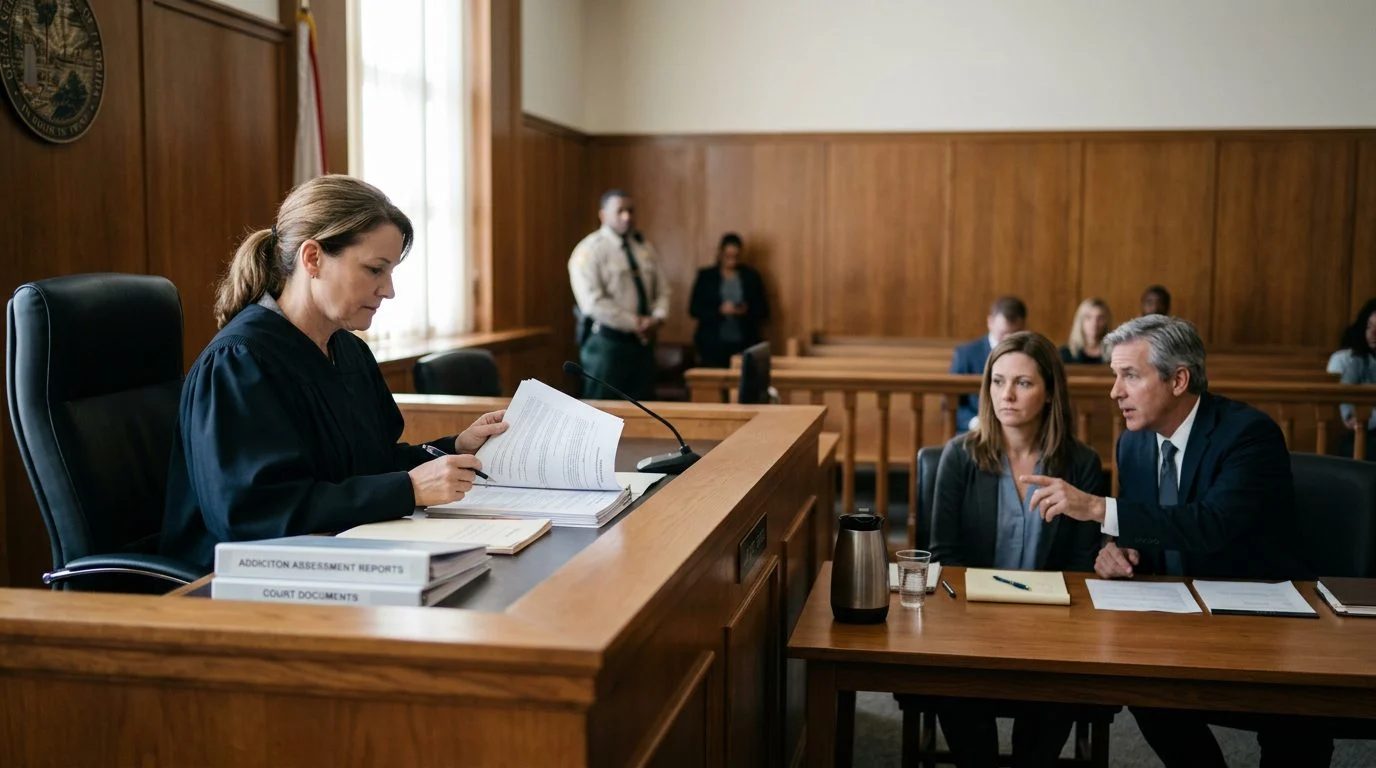
A Marchman case moves from your facts to a filing, then to a hearing where the judge decides whether treatment is ordered.
- Consultation. We review your facts and whether a petition fits your situation.
- Filing. The petition goes to the clerk of court in the county where your spouse is located. The clerk may not charge a filing fee for it (Fla. Stat. § 397.681). Under Fla. Stat. § 397.681(1), involuntary treatment petitions for substance abuse impaired persons must be filed with the clerk of the court in the county where the person is located, and the clerk may not charge a fee for filing such a petition.
- Hearing date. The court must schedule a hearing within 10 court working days unless a continuance is granted (Fla. Stat. § 397.68151).
- Notice and counsel. Your spouse receives a copy of the petition and the hearing notice. Your spouse has the right to a lawyer (Fla. Stat. § 397.681).
- Hearing. The court hears evidence. That can include testimony from family members familiar with your spouse’s history (Fla. Stat. § 397.6957).
If there is an emergency, the petition can ask for an ex parte assessment and stabilization order, meaning an order entered without a prior hearing (Fla. Stat. § 397.6818). Under that section, a provider generally may not hold a person for more than 72 hours of observation, with limited exceptions.
If a mental health disorder is also involved, Florida’s criteria cover a co-occurring mental health disorder alongside substance use (Fla. Stat. § 397.675).
Protecting the Children and the Household While the Case Moves
The steps that help most right now are a dated record, steady routines for the children, and a clear plan for emergencies.
- Keep a dated log of incidents, with the names of anyone who saw them.
- Keep money records: bills, past-due notices, and any debts taken on because of the crisis.
- Keep the children’s routines steady: school, meals, bedtime, and an adult they trust.
- If anyone is in immediate danger, call 911 first.
Write down changes too, such as new behavior, trouble sleeping, or a child who stops talking about school. These details show the strain on the household. They also help you describe the situation clearly at a consultation.
Why Robinson Casey Handles Marchman Act Petitions
Robinson & Casey limits its practice to Marchman Act petitions and guardianship matters.
Richard J. Casey III, Esq. is the responsible lawyer for this page. The firm serves families across South Florida, including Miami-Dade County, and statewide.
Our attorneys focus on the petition itself: the facts, the filing county, the hearing, and the order. Our team includes office staff who handle scheduling and intake, so you know who to talk to.
Because the work is narrow, we’re direct about its edges. Custody, divorce, and property questions may need a different lawyer or firm, and we may refer those matters out. If your situation also involves guardianship, that falls within this practice.
Not sure what your next step is?
Talk it through with our team — the first consultation is free, confidential, and carries no obligation.
Common Questions Before You Decide
Short answers: a Marchman petition is not a divorce, and a spouse may file one.
Does filing a petition mean we’re getting divorced?
No. A Marchman petition asks for assessment and treatment. Divorce is a separate case.
Can I file if my spouse refuses treatment?
Yes, a spouse may file (Fla. Stat. § 397.68112). A refusal alone does not prove lack of judgment (Fla. Stat. § 397.675).
Does my spouse get a lawyer?
Yes. Yes. Your spouse has the right to a lawyer at every stage, though your spouse may waive that right if present and the court finds the waiver is made knowingly, intelligently, and voluntarily. If the court believes your spouse needs or wants a lawyer, the court must appoint one, whatever your spouse’s wishes are (Fla. Stat. § 397.681).
Does a Marchman Act case cost money?
The clerk may not charge a filing fee for the petition. Our first consultation is free, confidential, and carries no obligation to continue. Whether other costs apply depends on the facts of your case.
Can a Marchman case decide custody?
Is my spouse’s treatment record private?
Under 42 U.S.C. § 290dd-2, records of the identity, diagnosis, prognosis, or treatment of a patient in federally assisted substance use disorder programs are confidential and may be disclosed only for the purposes and under the circumstances the statute expressly authorizes, including with the patient’s prior written consent or under a court order granted after a showing of good cause.
If your spouse’s drinking has made your home unsafe and you’re weighing a Marchman petition, call (561) 849-4149 or schedule a consultation. We’ll go through your facts with you.
Why Families Contact Robinson Casey
Focused Practice
Our firm focuses on Marchman Act petitions and guardianship matters, so these cases are the core of our work.
Confidential Conversations
What you share during your first consultation is kept confidential.
Free First Consultation
Your initial consultation is free, confidential, and carries no obligation to continue.
Support Staff
Our assistants and office staff work with our attorneys to keep you informed and organized.
Statewide Reach
We serve families in Miami-Dade and across South Florida, and we assist clients statewide.
A Marchman Act Petition Is Not a Divorce
A Marchman Act petition asks the court for assessment and treatment. Divorce is a separate case. Speak with our team to understand how the two differ.
Matters We Handle
Marchman Act Attorney
Petitions for assessment and treatment when a loved one's substance use puts their safety or health at risk.
Guardianship Attorney
Guidance through guardianship proceedings for adults who need court-supervised support.
Emergency Temporary Guardianship
Requests for short-term court protection when an immediate need arises.
Plenary and Limited Guardianship
Full and limited guardianship options, each tailored to the level of support a person requires.
Mental Health Guardianship
Court-supervised guardianship for individuals whose mental health affects their ability to make decisions.
Involuntary Commitment for Addiction
Petitions seeking court-ordered treatment for addiction under Florida law.