
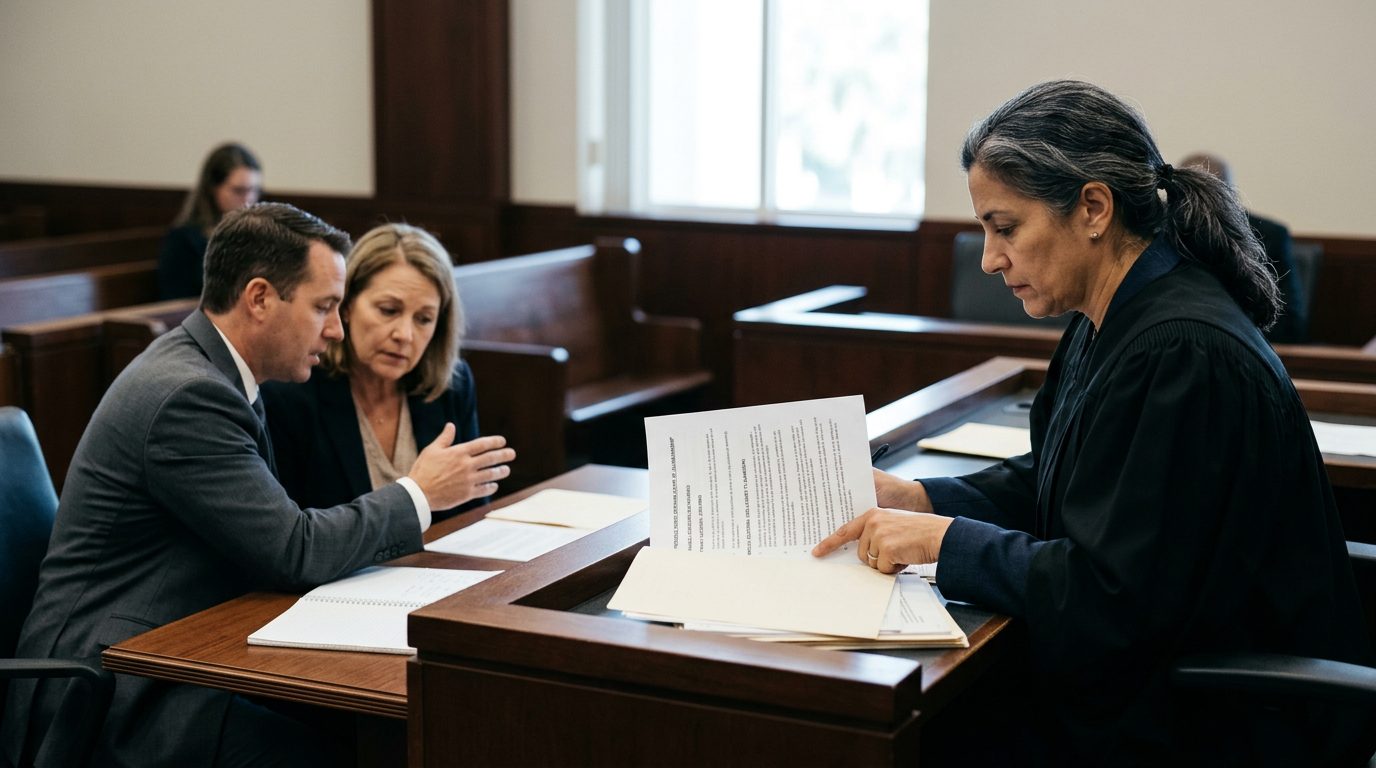
Limited Guardianship · Florida
Targeted Protection Without Removing Every Right
Robinson & Casey helps Florida families establish limited guardianships that give a guardian authority over specific areas of a loved one's life while preserving their autonomy everywhere else.
By Richard J. Casey III, Esq. · Published 28/09/2026
Limited Guardianship Attorney in Florida
A limited guardianship gives you court-ordered authority over specific areas of an adult’s or minor’s life—such as finances, healthcare, or personal care—while the person retains decision-making rights in all other domains. Robinson & Casey handles limited guardianship petitions across Florida, helping families establish the targeted protection their loved ones need without removing unnecessary autonomy.

Not sure what your next step is?
Talk it through with our team — the first consultation is free, confidential, and carries no obligation.
What Is Limited Guardianship in Florida?
Limited guardianship is a court-ordered arrangement where a guardian has authority over specific, defined areas of an adult’s or minor’s life, not all decisions. The ward—the person under guardianship—keeps rights and decision-making power in areas the court does not assign to the guardian.
For example, a guardian might manage the ward’s finances and bill payments but have no authority over healthcare decisions or where the person lives. Another arrangement might grant authority over healthcare and personal care but leave financial decisions to the ward. The court defines exactly which powers the guardian holds in the guardianship order.
Florida Statutes Chapter 744 establishes the legal framework for guardianship in Florida, including limited guardianship. This law exists to protect people who lack full capacity while respecting their autonomy and dignity in areas where they can still decide for themselves.
Who Needs Limited Guardianship?
Limited guardianship is right for situations where a person has partial capacity—meaning they can manage some affairs independently but need help in specific domains.
Common circumstances include:
- Adults with cognitive decline: early-stage dementia, mild intellectual disability, or mental illness affecting some but not all decision-making
- Minors with special needs: developmental disabilities, autism, mental health conditions, or learning differences requiring targeted support in finances or healthcare
- Individuals managing daily life independently: can handle personal routines and some decisions but struggle with complex financial management or medical choices
- Situations where full guardianship is unnecessary: the person retains substantial autonomy and doesn’t need a guardian making all decisions
- Families seeking to preserve dignity: limited guardianship respects the ward’s remaining capabilities and avoids the broader restrictions of plenary guardianship
What Does Limited Guardianship Cover?
The guardian’s powers are explicitly defined by the court order. Common areas of authority include:
- Financial management: banking, bill payment, asset protection, and investment decisions (if granted)
- Healthcare decisions: consent to medical treatment, medication management, and facility placement (if granted)
- Personal care: living arrangements, nutrition, and safety decisions (if granted)
- Property management: real estate, vehicles, and personal property (if granted)
- Educational or vocational decisions: for minors or young adults (if granted)
Critically, the guardian has authority only in the areas the court order specifies. The ward keeps decision-making power in all other areas. This is the core distinction from plenary guardianship, which grants broad authority across most major life decisions.
Have questions about what happened?
Ask our team directly. The first conversation is free, confidential, and there is no obligation to continue.
How Limited Guardianship Works in Florida
The process from initial consultation to court order typically takes 2 to 4 months, depending on court schedules and case complexity. Here’s what to expect:
Step 1 – Initial Consultation
You meet with Robinson & Casey to discuss the situation, explain which areas of the person’s life require help, and determine whether limited guardianship is appropriate or if another tool (like power of attorney or a less-restrictive alternative) might work better.
Step 2 – Petition Preparation
We draft the guardianship petition, specifying which powers you’re seeking and why. The petition explains the person’s capacity limitations in the targeted areas and justifies why limited guardianship is necessary.
Step 3 – Medical Evaluation
Florida law requires a physician or psychologist to evaluate the proposed ward and provide a written report to the court. This evaluation documents the person’s capacity (or lack thereof) in relevant areas.
Step 4 – Filing with the Court
The petition, medical evaluation, and supporting documents are filed in the county court where the proposed ward lives.
Step 5 – Notice and Service
The proposed ward and interested parties (spouse, adult children, parents, and others named in the petition) receive formal notice of the guardianship proceeding. This gives them the opportunity to object or participate.
Step 6 – Hearing
A judge reviews the evidence, hears testimony from you and any witnesses (including the evaluating physician or psychologist), and may speak with the proposed ward. The judge decides whether limited guardianship is necessary and appropriate.
Step 7 – Court Order
If approved, the judge issues an order naming you as guardian and defining your specific powers. This order is the legal foundation for your authority.
Step 8 – Ongoing Compliance
The guardian must file annual accountings and reports with the court detailing how the ward’s affairs are managed and confirming compliance with the court order.
Limited Guardianship vs. Plenary Guardianship
The key differences help you understand when each is appropriate:
| Aspect | Limited Guardianship | Plenary Guardianship |
|---|---|---|
| Scope | Authority over specific areas only | Authority over all major life decisions |
| Ward autonomy | Ward retains rights in non-assigned areas | Ward loses most decision-making rights |
| Restrictiveness | Less restrictive; preserves independence | More restrictive; removes substantial autonomy |
| When to use | Person has partial capacity; needs help in specific domains | Person lacks capacity across most major decisions |
| Court scrutiny | Clear justification required for each power sought | Broader grant of authority |
Choose limited guardianship when the person can manage some affairs independently and needs help only in specific areas. Choose plenary guardianship when the person lacks capacity across most or all major life decisions.
Why Robinson & Casey for Limited Guardianship
Robinson & Casey focuses exclusively on guardianship and Marchman Act matters, including limited guardianship petitions. This focused practice means:
- Deep procedural knowledge: we understand county court procedures, medical evaluation requirements, and judicial expectations across Florida
- Customized petitions: each petition is tailored to the specific circumstances and the particular powers needed, not a generic template
- Compliance experience: we ensure proper filing, notice, and ongoing court compliance to protect both the guardian and the ward
- Statewide experience: we handle limited guardianship petitions across South Florida and throughout the state
- Direct access: call (561) 849-4700 to speak with an attorney about your situation
Common Questions About Limited Guardianship in Florida
Can a family member serve as a limited guardian?
Yes. A spouse, adult child, parent, or other relative can serve as guardian if the court approves and the person is willing and able.
What if the proposed ward objects to limited guardianship?
The ward has the right to contest the petition in court. The judge will hear evidence from both sides before deciding whether limited guardianship is necessary.
Can limited guardianship be changed or ended later?
Yes. The court can modify the guardian’s powers or terminate the guardianship if the ward’s circumstances change or if limited guardianship is no longer appropriate.
What are the guardian’s duties?
The guardian must act in the ward’s best interest, manage assigned responsibilities prudently, file annual reports with the court, and avoid conflicts of interest.
Is limited guardianship the same as power of attorney?
No. Power of attorney is a voluntary document the person signs themselves; limited guardianship is court-ordered and applies when the person cannot or will not grant authority voluntarily.
How much does limited guardianship cost?
Court filing fees, physician evaluation costs, and attorney fees vary by case. Robinson & Casey discusses costs during an initial consultation.
Can a limited guardian make healthcare decisions?
Only if the court order explicitly grants healthcare decision-making authority. This must be requested in the petition and approved by the judge.
Want to know where you stand?
Tell us what happened and our team will walk you through the options available to you, at no cost.
The Robinson & Casey Approach
We listen carefully to your situation and explain whether limited guardianship is the right tool for your family. We guide you through the process step by step, prepare precise petitions supported by medical evidence, and ready you for the guardianship hearing. After the court order is entered, we can advise on guardian duties and compliance requirements.

Next Steps: Schedule Your Consultation
If you’re managing some of a loved one’s affairs but need court authority in specific areas—finances, healthcare, or personal care—families in your situation reach out to Robinson & Casey regularly to explore limited guardianship. Call (561) 849-4700 to discuss your circumstances. Bring details about the person’s capacity, the specific areas where help is needed, and any relevant medical information. We’ll explain whether limited guardianship fits your needs and outline the path forward.
How Robinson & Casey Approaches Limited Guardianship
Preserving Autonomy
We ask the court for authority only over the areas where support is genuinely needed, leaving your loved one's remaining rights intact.
Petition Preparation
We prepare and file the limited guardianship petition and supporting documents required for the Florida court process.
Family-Centered Guidance
We work with families across South Florida and statewide to explain each step and what a guardian's role involves.
Focused Practice
Robinson & Casey focuses exclusively on Marchman Act petitions and guardianship matters, including limited guardianship.
Not Sure Which Type of Guardianship Fits?
Limited, plenary, emergency temporary, and mental health guardianships each serve different situations. Talk with us before filing so the petition matches your loved one's actual needs.
Areas a Limited Guardianship Can Cover
Financial Decisions
A guardian may be given authority over specific financial matters, such as managing income, accounts, or property.
Healthcare Decisions
The court can grant authority over medical and healthcare choices while other areas remain with the individual.
Personal Care
Authority can extend to certain personal care decisions where a person needs assistance in daily life.
Retained Rights
In a limited guardianship, the person keeps decision-making rights in every domain the court does not assign to the guardian.