
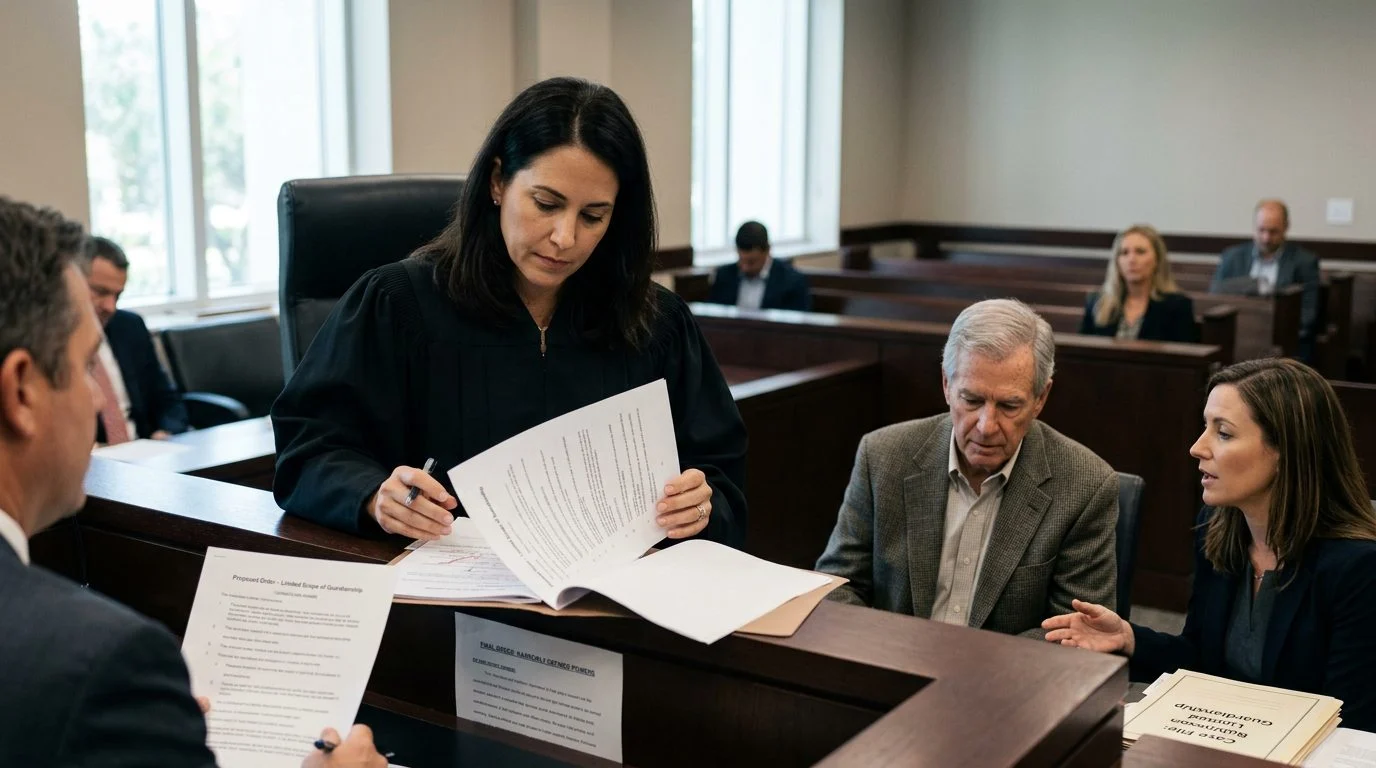
Limited Guardianship Attorney
Limited Guardianship for Your Family in South Florida
When a loved one needs court-ordered protection in specific areas of life, Robinson & Casey guides you through the process.
By Richard J. Casey III, Esq. · Published October 02, 2026
Limited Guardianship Attorney South Florida
Limited guardianship grants a guardian authority over specific areas of an incapacitated person’s life—such as healthcare, finances, or living arrangements—while the person retains other rights and decision-making power. Unlike plenary guardianship, which gives a guardian full control, limited guardianship is tailored to actual needs and preserves the person’s autonomy and dignity.
Robinson & Casey handles limited guardianship petitions for families across South Florida and Miami Dade. We guide you through the court process, prepare the medical evidence, and help you establish the guardianship authority your family member needs.

Not sure what your next step is?
Talk it through with our team — the first consultation is free, confidential, and carries no obligation.
What Is Limited Guardianship and Who Needs It
Limited guardianship is a court-ordered arrangement that gives one person (the guardian) authority to make decisions in specific areas on behalf of another person (the ward) who lacks capacity in those areas. The ward keeps rights and decision-making power in areas outside the guardianship scope.
Common scenarios where limited guardianship makes sense:
- An aging parent who can manage daily living but needs help with medical decisions and bill payment
- An adult child with intellectual disability who can work and socialize but needs financial oversight and healthcare management
- A person recovering from serious illness or injury who regains some capacity but still needs help with specific matters
- A senior with early cognitive decline who can handle some affairs but needs assistance with complex finances and medical choices
Who can serve as a limited guardian:
- A family member (spouse, adult child, parent, sibling)
- A trusted friend
- A professional guardian appointed by the court
Limited guardianship differs from plenary guardianship—which grants full authority over all personal and financial matters—because it’s narrower and less restrictive. It also differs from emergency temporary guardianship, which provides short-term authority (up to 60 days) when immediate danger exists and often leads to limited or plenary guardianship later.
What Limited Guardianship Covers
The court order establishing limited guardianship specifies exactly which powers are granted. No blanket authority exists; the guardian’s powers are limited to those areas the court identifies based on the evidence presented.
Limited guardianship typically covers:
- Healthcare and medical decisions: treatment options, surgery, medication, end-of-life care, and medical facility placement
- Financial management: bill payment, banking, asset management, and investment decisions
- Living arrangements: decisions about where the person lives and residential care
- Educational or vocational decisions: choices about training, employment support, or skill development
- Social and personal decisions: within the scope the court grants (for example, decisions about social activities or personal relationships)
What limited guardianship does NOT cover:
The ward retains the right to vote, marry, make or change a will, and exercise other rights unless the court specifically removes them. The court order is precise: it names the powers granted and the powers retained by the ward.
Limited Guardianship vs. Other Guardianship Types
Understanding how limited guardianship differs from other guardianship arrangements helps you choose the right tool for your situation.
Limited Guardianship
Grants authority over specific matters only. The ward retains significant rights and decision-making power in other areas. Used when the person has capacity in some areas but needs help in others.
Plenary Guardianship
Grants the guardian authority over all personal and financial matters. The ward loses most rights and decision-making power. Used when the person lacks capacity across all or nearly all areas of life.
Emergency Temporary Guardianship
Provides short-term authority (up to 60 days, renewable) granted quickly when immediate danger or urgent need exists. Under Fla. Stat. § 744.331, emergency temporary guardianship often precedes the establishment of limited or plenary guardianship after a full hearing.
Mental Health Guardianship
Grants specific authority to make mental health treatment decisions for an adult with serious mental illness, focused narrowly on psychiatric care and treatment.
When to choose limited guardianship: The person has capacity in some areas but needs help in others. You want to preserve their autonomy and dignity. The court agrees it is the least-restrictive alternative that meets the person’s actual needs.
Have questions about what happened?
Ask our team directly. The first conversation is free, confidential, and there is no obligation to continue.
The Limited Guardianship Process: Step-by-Step
Establishing limited guardianship requires a court order. Here’s what the process looks like:
Step 1: Initial Consultation
You meet with our attorney to discuss your situation, identify what authority is needed, and review whether limited guardianship is the right tool. We also discuss alternatives such as power of attorney or healthcare proxy (which work only if the person still has capacity to sign).
Step 2: Medical Evaluation
We work with you to obtain a physician’s affidavit or medical evaluation documenting the person’s incapacity in the specific areas where guardianship is sought. Under Fla. Stat. § 744.331, this medical evidence is required to support the petition.
Step 3: Petition Preparation and Filing
We draft the guardianship petition, naming the proposed guardian and specifying the limited powers requested. The petition is filed with the probate court in the county where the person lives.
Step 4: Notice and Service
The alleged incapacitated person, their family members, and other required parties receive notice of the petition. They have the right to respond and to contest the guardianship.
Step 5: Capacity Evaluation (If Required)
The court may appoint an independent evaluator to assess the person’s capacity in the areas where guardianship is sought.
Step 6: Court Hearing
We present evidence—the medical affidavit, testimony, and documentation—to the judge. The alleged incapacitated person has the right to be present and to contest the petition. If the petition is contested, the judge hears evidence from both sides.
Step 7: Court Order
If the judge finds clear and convincing evidence of incapacity in the specified areas, an order is entered establishing limited guardianship with defined powers. The order specifies exactly which authority is granted and which rights the ward retains.
Step 8: Guardianship Administration
The guardian takes the oath, receives letters of guardianship from the court, and begins managing the specified affairs. Ongoing court reporting and compliance with Florida guardianship law are required.
Timeline and What to Expect
Initial consultation to petition filing: 1–2 weeks (depending on how quickly the medical evaluation is obtained).
Petition filing to court hearing: Typically 4–8 weeks in South Florida and Miami Dade courts.
Hearing to final order: Same day or within days if uncontested; longer if the person contests or if the court orders additional evaluation.
Total process: 2–4 months in most cases. Cases may take longer if the alleged incapacitated person objects, if complex medical or family issues arise, or if the court requires additional evaluation.
Ongoing obligations: After the guardianship is established, the guardian must file annual accountings with the court, comply with guardianship laws, and manage the ward’s affairs in their best interest. The guardianship can be modified or terminated if circumstances change or the person regains capacity.
Why Robinson & Casey Handles Limited Guardianship Petitions
Focused practice. Limited guardianship and other guardianship matters are the core of what we do. This focus means deep familiarity with local court procedures, judges, and requirements in South Florida and Miami Dade probate courts.
South Florida and statewide experience. We serve families across Miami Dade and South Florida and handle guardianship cases throughout Florida. We know the courts, the procedures, and what judges expect.
Thorough preparation. We gather the right medical evidence, draft precise petitions that clearly state the limited powers needed, and prepare you and your family for the hearing so there are no surprises.
Guidance on alternatives. We discuss whether limited guardianship is the right tool or whether a power of attorney, healthcare proxy, or other arrangement might work better for your situation. We prioritize the right legal solution, not just guardianship.
Clear communication. We explain the process, timeline, costs, and what to expect at each stage so you understand what’s happening and why.
Want to know where you stand?
Tell us what happened and our team will walk you through the options available to you, at no cost.
Common Questions About Limited Guardianship
Can I establish limited guardianship without going to court?
No. Limited guardianship requires a court order. A power of attorney or healthcare proxy may work if the person still has capacity to sign; limited guardianship is for those who lack capacity in the specified areas.
How much does limited guardianship cost?
Costs vary based on complexity, court fees, and whether the person contests the petition. We discuss fees and costs upfront during your consultation.
Can limited guardianship be changed or ended?
Yes. The court can modify the powers granted, expand them to plenary guardianship if circumstances change, or terminate guardianship if the person regains capacity or the guardianship is no longer needed.
Does the person have a right to an attorney?
Yes. The alleged incapacitated person has the right to be represented by an attorney and to contest the petition.
What if the person objects to limited guardianship?
The case proceeds to a hearing where evidence is presented. The judge decides based on clear and convincing evidence of incapacity in the specified areas.
What are the ongoing duties of a limited guardian?
The guardian must act in the ward’s best interest, manage finances prudently, file annual accountings with the court, and comply with Florida guardianship law. The guardian cannot use the ward’s funds for personal benefit.
Can a family member be the limited guardian?
Yes. Family members are often appointed as limited guardians if they are willing and able to serve and if the court finds them suitable.

Get Started Today
If you’re caring for an aging parent, adult child with disability, or incapacitated relative and need to establish limited guardianship, families in your situation reach out to Robinson & Casey regularly. We’ll review your facts, explain the process, and outline what to expect.
Call (561) 849-4700 or contact us online to schedule your consultation.
Why Choose Robinson & Casey
Focused Practice
We focus exclusively on guardianship and Marchman Act matters, serving South Florida families with deep knowledge of Florida's guardianship law.
Court Filings & Representation
We handle all court documents, petitions, and representation to establish limited guardianship where a loved one lacks capacity in specific areas.
Timely Process
We work efficiently to move your case through the court system while ensuring all legal requirements are met.
Direct Access
Call us at (561) 849-4700 to discuss your situation and learn how limited guardianship may protect your loved one.
Limited Guardianship Requires a Court Order
Limited guardianship is not the same as a power of attorney or healthcare proxy. It is a formal legal arrangement established through the Florida court system when a person lacks capacity in specific areas of decision-making.
What Limited Guardianship Covers
Medical & Healthcare Decisions
A limited guardian may make healthcare choices for the ward in areas where the ward lacks capacity, while the ward retains rights in other matters.
Financial & Property Matters
Limited guardianship can authorize a guardian to manage specific financial decisions or property on behalf of the ward.
Personal & Living Arrangements
A limited guardian may make decisions about where the ward lives and personal care needs, tailored to the ward's actual incapacity.
Court Oversight
The court retains authority over the guardianship and may require periodic accountings and reports to protect the ward's rights.
Common Questions About Limited Guardianship
Can I establish limited guardianship without going to court?
No. Limited guardianship requires a court order. A power of attorney or healthcare proxy may work if the person still has capacity to sign; limited guardianship is for those who lack capacity in the specified areas.
How is limited guardianship different from plenary guardianship?
Limited guardianship grants authority only in specific areas where the ward lacks capacity. Plenary guardianship gives the guardian broad authority over all decisions.
What does the court process involve?
The process typically includes filing a petition, providing medical or other evidence of incapacity, and a court hearing. Robinson & Casey handles the filings and representation.
How much does limited guardianship cost?
Costs vary based on complexity and court fees. We discuss fees and costs during your consultation so you understand the financial commitment.