
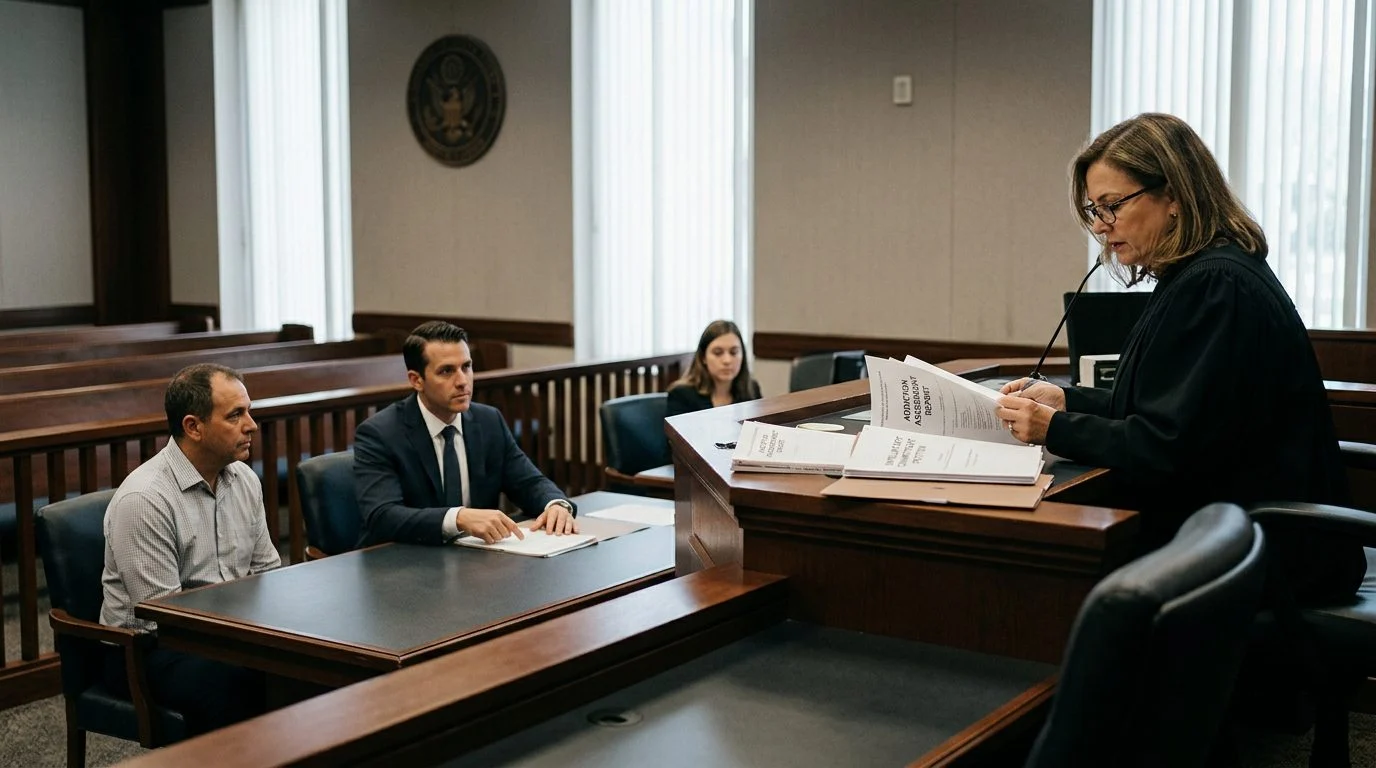
Florida Hold Laws | Miami-Dade and South Florida
5150 or Baker Act? Understand Florida's Hold Laws Before You Act
Robinson Casey focuses on Marchman Act petitions and guardianship matters for families across South Florida and statewide. Responsible attorney: Richard J. Casey III, Esq.
Where We Serve
Statewide
Families across Florida
Miami-Dade
South Florida families
By Richard J. Casey III, Esq. · Published November 2, 2026
5150 vs Baker Act: Florida Hold Laws and the Marchman Act
A 5150 vs Baker Act search usually starts in a hard moment. Someone you care about is being taken for a mental health evaluation, and you need answers fast. The Baker Act is Florida’s involuntary examination law for mental illness. The 5150 is a California term, so it doesn’t govern a Florida hold. This page explains Florida’s rules, including the Marchman Act for substance use.
Page responsible: Richard J. Casey III, Esq., Robinson & Casey.
Not sure what your next step is?
Talk it through with our team — the first consultation is free, confidential, and carries no obligation.

5150 vs Baker Act: Two Different State Laws
5150 and the Baker Act are two different state laws, and only the Baker Act governs holds in Florida. 5150 is a California term. The Baker Act is found in Florida Statutes § 394.463, the state rule for involuntary examination of people with mental illness.
Confusion is common because both terms describe emergency holds. People read about one term and then the other, and the facts get mixed together. A rule from one state can’t tell you what happens in another.
Florida also has a separate law, the Marchman Act, for people with substance use problems. Knowing which law applies changes where the person goes and which court papers matter. It helps to get the terms right before a crisis, not during one.
5150 vs Baker Act: Are They the Same Thing?
No, they aren’t the same thing. Each is a separate state law with its own wording, process, and court steps.
Florida’s Baker Act allows a person to be taken for examination when there is reason to believe they have a mental illness. The Baker Act is about mental illness, while the Marchman Act is about substance use.
That line matters. When the main problem is alcohol or drugs, Florida’s Marchman Act is often the law that applies. The Marchman Act covers involuntary admission for substance impairment.
Both kinds of hold can move fast. That’s why the difference between them is worth knowing early.
What Is a 5150 Hold?
A 5150 hold is California’s name for an emergency psychiatric hold. It is not a Florida term.
Families often hear “5150” in TV shows, online posts, or stories from other states. Those sources often mix state rules together. That can lead to wrong expectations about timing and court steps.
For a Florida family, the laws that matter are the Baker Act for mental illness and the Marchman Act for substance use. The sections below explain each one, starting with the Baker Act.
What Is a Baker Act Hold?
A receiving facility is a public or private facility or hospital designated by the department to receive and hold or refer, as appropriate, involuntary patients under emergency conditions for a mental health or substance abuse evaluation. The term does not include a county jail, as Florida Statutes § 394.455 defines the term.
A hold can start in several ways. Under Florida Statutes § 394.455, “court” means the circuit court unless otherwise specified, and Florida Statutes § 394.463 allows a circuit or county court to enter an ex parte order. That is an order based on sworn testimony with specific facts, entered without the other side present. If less restrictive options aren’t available, an officer or designated agent must take the person into custody and deliver them to a facility, under Florida Statutes § 394.463.
A physician, physician assistant, clinical psychologist, psychiatric nurse, advanced practice registered nurse, mental health counselor, marriage and family therapist, or clinical social worker can also sign a certificate. The signer must have examined the person within the preceding 48 hours.
Timing matters here. An ex parte order is valid only until the person is delivered, or for the period the order sets. If the order sets no time limit, it lasts 7 days after the date it was signed.
How Long Can Someone Be Held on a Baker Act in Florida?
The Baker Act sets a 72-hour examination period, as Florida Statutes § 394.4599 reflects.
A person may be taken to a receiving facility for involuntary examination if there is reason to believe the person has a mental illness and meets the criteria in § 394.463(1). Retention until the court hearing is governed by § 394.467(3)(a). That happens only if the facility administrator recommends it and the notice and hearing steps are followed. A patient recommended only for outpatient services must be released while waiting for the hearing once stabilized and no longer meeting the criteria, under Florida Statutes § 394.467.
Longer involuntary services require a court order. The 72 hours is not the end of the process, so families should plan for the hearing.
Not sure what your next step is?
Talk it through with our team — the first consultation is free, confidential, and carries no obligation.
Legal Rights During an Involuntary Hold
A person on a Florida involuntary hold has rights to notice, a representative, private communication, and court review.
Notice must be given both orally and in writing. It must use language the person can understand, with an interpreter if needed. The receiving facility must also give prompt notice of the person’s whereabouts, by telephone or in person within 24 hours after arrival, to a guardian, guardian advocate, health care surrogate or proxy, attorney, representative, or other emergency contact identified through electronic databases, under Florida’s notice statute for involuntary patients.
The patient can ask that the representative be replaced, as explained in Florida’s patient representative statute.
Patients can communicate freely and privately with people outside the facility. That right has a limit. A qualified professional may open, delay, hold, or censor a patient’s correspondence if they determine it is likely to be harmful to the patient or others. The harm must be directly related to the patient’s clinical well-being, the clinical well-being of other patients, or the general safety of staff. The administrator may direct reasonable examination of mail believed to contain harmful items, under Florida Statutes § 394.459.
Family members can also testify about the person’s history, as the court deems relevant under state law, as stated in Florida Statutes § 394.467.
What Qualifies Someone for a Baker Act Hold?
A Florida Baker Act hold requires reason to believe the person has a mental illness and meets a risk test.
The person may have refused voluntary examination after a clear explanation. The person may also be unable to decide whether an exam is needed.
Under Florida Statutes § 394.463, a person may be taken to a receiving facility for involuntary examination if there is reason to believe that the person has a mental illness. Because of that illness, the person has refused voluntary examination after conscientious explanation and disclosure of the purpose of the examination, or is unable to determine for himself or herself whether examination is necessary.
One of two further conditions must also be met. The first is that without care or treatment the person is likely to suffer from neglect or refuse to care for himself or herself. That neglect or refusal poses a real and present threat of substantial harm to his or her well-being, and it is not apparent that the harm can be avoided through help from willing, able, and responsible family members or friends or other services. The second is a substantial likelihood that without care or treatment the person will cause serious bodily harm to himself or herself or others in the near future, as evidenced by recent behavior.
Under Fla. Stat. § 394.463, a physician, a physician assistant, a clinical psychologist, a psychiatric nurse, an advanced practice registered nurse registered under s. 464.0123, a mental health counselor, a marriage and family therapist, or a clinical social worker may execute a certificate. The certificate states that the signer examined the person within the preceding 48 hours. It also states that the person appears to meet the criteria for involuntary examination, along with the observations behind that conclusion.
If You’re in Florida: Baker Act vs. Marchman Act
The Baker Act covers mental illness. The Marchman Act covers substance impairment and substance use disorders. Which law applies depends on the facts.
The Marchman Act sets its own petition process for substance impairment and substance use disorders. A Marchman respondent has a constitutional right to be represented by counsel. A Florida appellate court has held that due process requires counsel in Marchman Act proceedings, as Hillsborough County v. Albrechta explains.
Robinson & Casey focuses on Marchman Act petitions and guardianship matters.
Involuntary Commitment for Addiction in Florida
A person held under the Baker Act can file a petition in circuit court alleging that the patient is being unjustly denied a right or privilege granted under the Act, or that a procedure authorized under it is being abused. Relatives, friends, guardians, attorneys, and the patient can all file.
A petition can allege that a patient is being unjustly denied a right or that a procedure is being abused. The court can hold a judicial inquiry and issue an order to correct the problem, under Florida Statutes § 394.459.
A petition for writ of habeas corpus is another option. It asks the court to question the cause and legality of the detention, and it can request a return to the writ, as the same statute provides.
The statute sets specific steps for notice, examination, and time limits. Those written steps are the first things to check when reviewing a hold.

Key Takeaways
The key point: 5150 is a California term, and the Baker Act governs involuntary examination in Florida.
- The Baker Act, in Florida Statutes § 394.463, covers mental illness and a 72-hour examination period.
- The Marchman Act covers substance impairment and use disorders.
What’s the difference in 5150 vs Baker Act?
5150 is a California term. The Baker Act is Florida’s involuntary examination law for mental illness.
How long can a Baker Act hold last?
The initial examination period is 72 hours. Longer involuntary services need a court order.
Is the Marchman Act the same as the Baker Act?
No. The Marchman Act covers substance impairment, and the Baker Act covers mental illness.
Can a Baker Act hold be challenged?
Yes. A patient or someone close to them can petition the circuit court about a denied right.
If a Florida hold has already affected someone you love, you don’t have to work out the rules alone. Call (561) 849-4149 or visit our contact page. Our first consultation is free, confidential, and carries no obligation to continue.
Why Families Contact Robinson Casey
Focused Practice
The firm limits its practice to Marchman Act petitions and guardianship matters, so your situation is reviewed within those areas.
Free First Consultation
Your first consultation is free, confidential, and comes with no obligation to continue.
Speak With Us Directly
Call (561) 849-4149 to discuss your family's situation and the next steps.
Support From Our Team
Our team, including assistants and office staff, helps families stay informed and organized through each step.
If Someone Is in Immediate Danger
Call 911 or go to the nearest emergency room right away. A consultation with our office can help you understand the legal options that follow, but it does not replace emergency care.
Matters Robinson Casey Handles
Marchman Act and Addiction Commitment
Petitions under the Florida Marchman Act for involuntary assessment and services related to substance use disorders.
Emergency Temporary Guardianship
Urgent guardianship requests for situations where a person needs court-authorized protection without delay.
Plenary and Limited Guardianship
Full or limited guardianship petitions, shaped around the level of decision-making support a person needs.
Mental Health Guardianship
Guardianship matters for adults whose mental health condition affects their ability to make decisions for themselves.