
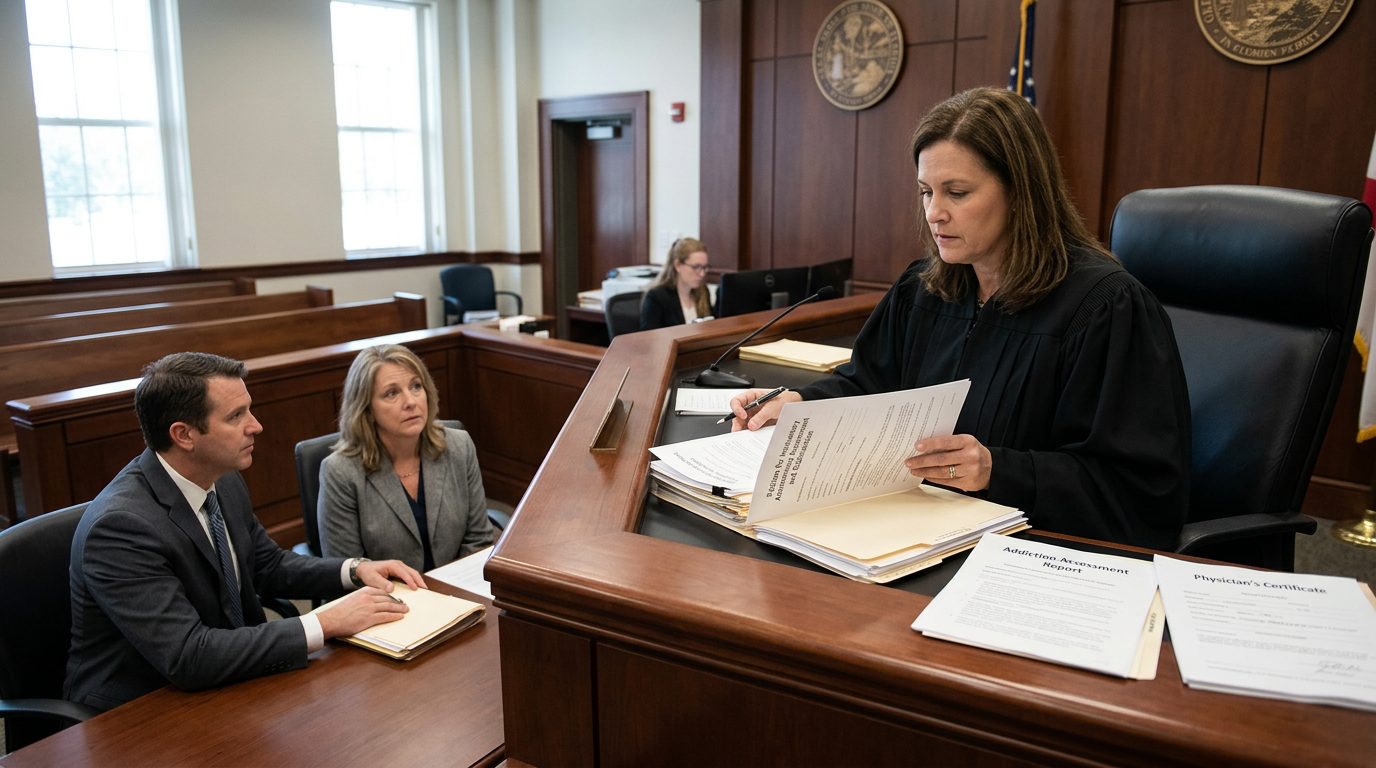
Marchman Act Process
Marchman Act Timeline in Florida: What to Expect
Understanding the legal process and key dates when petitioning for involuntary assessment and treatment.
By Richard J. Casey III, Esq. · Published September 30, 2026
Marchman Act Timeline in Florida: How Long Does the Process Take?
The Marchman Act process from filing a petition to a court-ordered treatment typically takes 10 to 21 days. Initial phases can move faster depending on court scheduling, facility availability, and custody status. Understanding each phase helps families set realistic expectations during a substance abuse crisis.
If a family member's substance abuse is creating immediate danger and you're weighing whether a Marchman Act petition makes sense, you don't have to navigate this alone—reach out to discuss your situation and next steps. Talk it through with our team — the first consultation is free, confidential, and carries no obligation.

The Marchman Act Process: Key Phases and Timelines
The Marchman Act unfolds in distinct legal phases, each with its own timeline. Florida Statutes Chapter 397 establishes the legal framework for involuntary assessment and treatment of substance abuse. The process is designed to move quickly when substance abuse poses immediate risk.
Understanding the Marchman Act timeline helps families prepare for what’s ahead. Court schedules and case specifics affect actual duration, but the law sets firm deadlines at each stage.
Filing the Petition: First Steps
A Marchman Act petition can be filed by a family member, healthcare provider, or law enforcement officer. Filing itself takes hours to a day once the petition is prepared and submitted to court. The petition must allege facts showing substance abuse and threat to self, family, or property.
Court filing fees and processing vary slightly by county but do not significantly extend the timeline. In Miami-Dade and other South Florida counties, the clerk’s office typically processes petitions the same day or next business day.
The 10-Day Hearing Deadline
From petition filing to the initial court hearing, the timeline is fixed by law: the court must hold a hearing within 10 days. Some cases move faster if the person is already in custody or if the court has an earlier available date. The hearing determines whether probable cause exists to order an involuntary assessment.
This 10-day window is a legal requirement, not a guideline. The actual hearing date depends on the court’s calendar. In busy counties, the hearing may be scheduled near the end of that 10-day window.
For details on what happens at this hearing, see our guide to the Marchman Act hearing process.
The Involuntary Assessment Phase
If the court orders an assessment, the person is transported to a designated assessment facility. The complete assessment typically takes 24 to 72 hours. Medical and mental health professionals evaluate substance abuse, medical condition, and treatment needs.
Addiction is recognized as a disease with biological, psychological, and social components, which forms the medical basis for involuntary assessment under the Marchman Act. The assessment facility must provide written findings and treatment recommendations to the court within this window.
From Assessment to Treatment Decision
After assessment completion, the court receives the facility’s report and recommendations. A second hearing may be held to determine whether involuntary treatment is necessary. This second hearing typically occurs within 5 to 10 days of assessment completion.
The court then orders either involuntary treatment or release, depending on assessment findings and legal criteria. If involuntary treatment is ordered, the person enters a treatment program.
Learn more about Marchman Act treatment options and what to expect.
Not sure what your next step is?
Talk it through with our team — the first consultation is free, confidential, and carries no obligation.
Total Timeline: Petition to Treatment Order
Best-case scenario: 10 to 14 days from petition filing to treatment order
Typical scenario: 14 to 21 days, accounting for court scheduling and assessment completion
Delays: Can occur if the court calendar is full, if the person cannot be located, or if the assessment facility is at capacity
Emergency situations: May move faster if the person is already hospitalized or in police custody
How Long Can You Be Held Under the Marchman Act?
Initial involuntary assessment and stabilization lasts up to 5 days. If the court orders involuntary treatment, the person can be held for up to 60 days for the initial treatment episode.
After 60 days, the treatment facility must either release the person or petition the court for continued involuntary treatment. Continued treatment beyond 60 days requires a new court order and must meet the legal criteria for involuntary commitment. This is not automatic—the facility must demonstrate that the person still meets the legal standard.
Factors That Affect the Marchman Act Timeline
Court schedules: Busier courts in Miami-Dade and Broward counties may have longer waits between filing and hearing.
Assessment facility availability: If facilities are full, scheduling delays occur. This is especially common during periods of high substance abuse admissions.
Location of the person: If they cannot be located quickly, the process is delayed. Law enforcement may need to locate and transport them.
Petition completeness: Incomplete or legally deficient petitions may require amendment, adding time to the process.
Custody status: Police custody or hospitalization can accelerate the timeline because the person is already located and accessible.
Common Misconceptions About the Marchman Act Timeline
Myth: The Marchman Act is instant. Reality: The process takes 1–3 weeks from filing to treatment order, though initial assessment can begin within days of the court hearing.
Myth: You can file a Marchman Act petition for yourself. Reality: Only specific people can file—family members, healthcare providers, or law enforcement. The person cannot petition for their own involuntary commitment.
Myth: The process is the same in every Florida county. Reality: Court schedules and facility availability vary by county, affecting overall timeline.
Myth: Once ordered, treatment lasts indefinitely. Reality: Initial involuntary treatment is limited to 60 days unless the court orders continued commitment based on new evidence.
Why the Marchman Act Timeline Matters in a Crisis
When substance abuse is escalating, understanding the realistic timeline helps families decide whether to file a petition. The process is designed to move quickly while protecting legal rights and ensuring proper assessment. Knowing what happens at each stage reduces uncertainty during an already stressful situation.
Early action—filing the petition as soon as criteria are met—helps avoid further delays. Waiting for the situation to worsen often extends the overall timeline and increases risk to the person and family.
If a family member's substance abuse is creating immediate danger and you're weighing whether a Marchman Act petition makes sense, you don't have to navigate this alone—reach out to discuss your situation and next steps. Talk it through with our team — the first consultation is free, confidential, and carries no obligation.
Frequently Asked Questions
Can the Marchman Act process be expedited?
The 10-day hearing deadline is set by law and cannot be shortened. The court may schedule a hearing earlier if the calendar permits. Emergency situations already in police or hospital custody may move faster.
What if the person refuses to go to the assessment facility?
Law enforcement can transport the person to the facility if the court has ordered an assessment. Refusal does not delay the process—it is managed through law enforcement assistance.
Is there a cost to file a Marchman Act petition?
Court filing fees vary by county but are typically modest. An attorney can explain the specific costs in your county.
What happens if the assessment facility finds the person does not need treatment?
If the facility’s assessment does not support involuntary treatment, the court may release the person or order outpatient treatment instead. The court must follow the assessment findings and legal criteria.
How do I know if a Marchman Act petition is the right option?
See our Marchman Act basics guide and petition requirements page for detailed information about eligibility and the filing process.

Next Steps: Getting Help With a Marchman Act Petition
If a family member’s substance abuse is creating immediate danger or crisis, a Marchman Act petition may be the right step. Understanding the timeline and process is the first part; the next is getting guidance specific to your situation and county.
An attorney who handles Marchman Act petitions can explain your options, answer questions about timing, and help you file correctly to avoid delays. Robinson & Casey handles Marchman Act petitions throughout South Florida and statewide.
If you’re in the middle of a substance abuse crisis and weighing your options, people in your situation reach out regularly. We’re ready to walk you through what comes next.
Call Robinson & Casey at (561) 849-4149 to discuss your situation and the Marchman Act process. You can also schedule a consultation to speak with an attorney about your specific circumstances.
Key Stages of the Marchman Act Process
Petition Filing
A family member, healthcare provider, or law enforcement files a petition with the court alleging that the person is dependent on alcohol or drugs and poses a danger to themselves or others.
Ex Parte Hearing (Within 24 Hours)
The court may hold an initial hearing without the respondent present to determine whether there is probable cause to believe the allegations are true.
Assessment Order
If probable cause is found, the court issues an order requiring the person to submit to an assessment at a designated facility to evaluate the extent of substance dependency.
Full Hearing (Within 10 Days)
The respondent has the right to be present, be represented by counsel, present evidence, and cross-examine witnesses. The court decides whether to order treatment.
Important: The 10-Day Deadline
Florida law sets a firm 10-day window from the filing of the petition to the full court hearing. This deadline cannot be shortened, though the court may schedule the hearing earlier if the calendar permits. Emergency situations involving police or hospital custody may move through the initial stages more quickly.
What Happens After the Hearing
If Treatment Is Ordered
The court may order the person to an inpatient or outpatient treatment program. The duration and type of treatment depend on the assessment findings and the court's determination of what is necessary.
If the Petition Is Denied
The petition is dismissed, and the person is released. The court may issue findings explaining why the evidence did not meet the legal standard for involuntary assessment or treatment.
Ongoing Court Involvement
If treatment is ordered, the court may schedule follow-up hearings to monitor compliance and adjust the treatment plan as needed.
Why the Timeline Matters
Early Intervention
The compressed timeline ensures that assessment and treatment decisions happen quickly, reducing delays when a person's safety is at risk.
Legal Protections
The 10-day window and right to a full hearing protect the respondent's due process rights while balancing the need for swift action.
Preparation Is Critical
Because the process moves fast, having your petition properly prepared and filed from the start is essential to meeting all deadlines.
What If the Person Refuses to Go to Assessment?
Law enforcement can transport the person to the assessment facility if they refuse to go voluntarily. The court order carries legal authority to compel compliance with the assessment requirement.