
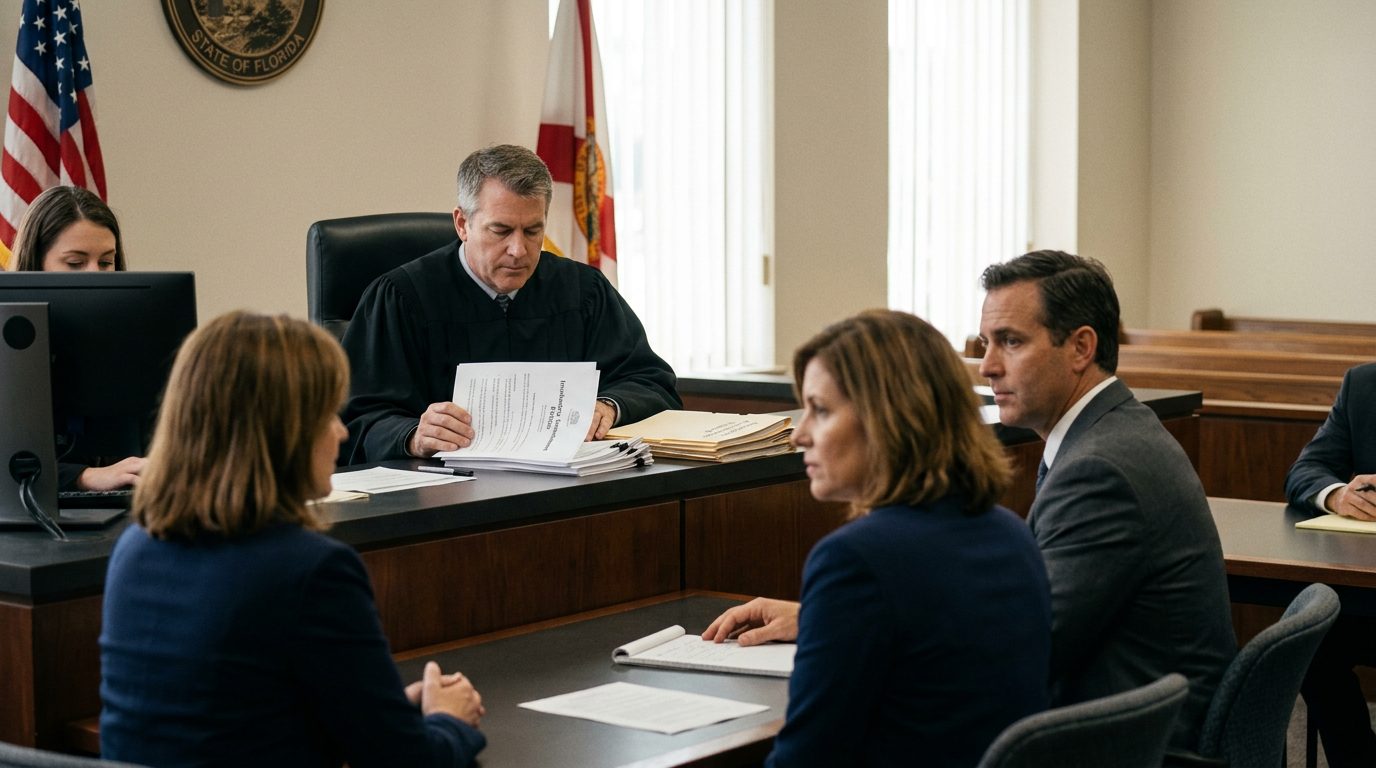
Marchman Act | Florida
Involuntary Commitment for Addiction in Florida
When someone you care about refuses treatment, the Marchman Act provides a legal path to court-ordered care. Robinson & Casey helps families take action.
By Richard J. Casey III, Esq. · Published September 28, 2026
Involuntary Commitment for Addiction in Florida: Legal Process and Options
Yes, you can pursue involuntary commitment for a loved one struggling with addiction in Florida. The state’s Marchman Act (Florida Statutes Chapter 397) allows courts to order treatment when someone is abusing substances and won’t or can’t seek help on their own. This legal tool exists precisely for families facing the heartbreak of watching addiction worsen while the person refuses voluntary care.
If you're watching a loved one struggle with addiction and voluntary treatment hasn't worked, families in your situation reach out to discuss involuntary commitment options—call us to talk through what's possible. Talk it through with our team — the first consultation is free, confidential, and carries no obligation.

What Is Involuntary Commitment for Addiction in Florida?
Involuntary commitment for addiction is a court order requiring someone to enter and remain in a treatment program, even without their consent.
Under Florida law, involuntary commitment differs sharply from voluntary admission. When someone enters treatment by choice, they can typically leave whenever they wish. Involuntary commitment removes that option—the court orders the person into care and keeps them there for the duration the judge sets. This matters because addiction often damages the brain’s decision-making systems, making voluntary treatment impossible even when the person’s health is collapsing.
Families and caregivers pursue involuntary commitment when:
- The person has refused voluntary treatment repeatedly
- Substance abuse is causing severe health, financial, or legal harm
- The person’s judgment is too impaired to recognize the need for help
- Waiting for voluntary compliance feels like watching a preventable crisis unfold
You don’t have to wait for your loved one to “hit bottom” or exhaust every voluntary option first. Florida law recognizes that addiction itself prevents people from making rational choices about treatment.
Legal Grounds for Involuntary Commitment Under the Marchman Act
That’s the core legal standard. It’s straightforward but powerful. The court doesn’t require proof that the person has lost housing, employment, or health—only that substance abuse is happening and that voluntary treatment isn’t working.
Evidence the court examines includes:
- Behavioral signs: erratic conduct, neglect of hygiene or responsibilities, mood swings tied to use
- Medical findings: physical health deterioration, overdose risk, withdrawal symptoms
- Admission by the person themselves (even if made during intoxication or denial)
- Testimony from family, friends, healthcare providers, or law enforcement
- Drug screens, arrest records, or treatment history
The “unable or unwilling” standard is flexible. A person may be unwilling—actively refusing help—or unable because addiction has impaired their judgment so severely they can’t recognize the problem. The court weighs both.
Importantly, Florida courts don’t require you to prove the person has tried and failed every voluntary option. Many families wait years hoping their loved one will accept help, only to watch the addiction worsen. The Marchman Act lets you act sooner.
Who Can File for Involuntary Commitment
You don’t need guardianship or legal authority over the person to file. A spouse, parent, adult child, sibling, or close relative can start the process. So can a doctor, therapist, nurse, or social worker who’s treating the person. Police officers and state officials also have standing to petition.
The person filing the petition must have direct knowledge of the substance abuse—not just suspicion or hearsay. You’ll need to describe what you’ve observed, when, and how it’s affecting the person’s life and health.
The Involuntary Commitment Process in Florida
The process unfolds in stages, designed to balance swift intervention with the person’s right to be heard.
Filing the Petition
You file a petition in the circuit court in the county where the person lives or is found. The petition describes the person’s substance abuse, why voluntary treatment has failed or isn’t feasible, and why involuntary commitment is necessary. An attorney can ensure your petition includes all required information and is filed in the right place.
Ex Parte Temporary Commitment
If immediate danger exists—overdose risk, severe withdrawal, or acute medical crisis—the court may issue a temporary commitment order without the person being present. This emergency order typically lasts a few days and allows law enforcement or paramedics to take the person into custody and transport them to a treatment facility for evaluation.
Notice and Judicial Hearing
The person must be notified of the petition and the hearing date. They have the right to appear, bring an attorney, present evidence, and contest the petition. This hearing is where the court examines whether the statutory grounds are met.
During the hearing, you or your attorney will present evidence of substance abuse and explain why voluntary treatment hasn’t worked. The person can testify, call witnesses, and argue against commitment. The judge weighs both sides and decides whether to order involuntary commitment.
Duration and Modification
An involuntary commitment order typically lasts for a set period—often 60 days initially, though it can be extended. The person has the right to request modification or termination of the order. The court reviews whether the grounds for commitment still exist and whether the person is making progress in treatment.
Involuntary Commitment vs. Other Intervention Options
Involuntary commitment is one tool among several. Understanding the differences helps you choose the right approach.
Voluntary Admission to Treatment
If your loved one is willing to enter a treatment program, voluntary admission is usually the first step. It’s faster, less adversarial, and respects the person’s autonomy. But voluntary admission only works if the person agrees—and addiction often prevents that agreement.
Emergency Psychiatric Holds
Law enforcement or healthcare providers can place someone on an emergency psychiatric hold (sometimes called a Baker Act hold) if they’re a danger to themselves or others due to mental illness or acute intoxication. This hold typically lasts 72 hours and is designed for immediate crisis response, not ongoing treatment for addiction. It’s a short-term safety measure, not a commitment to a treatment program.
Guardianship
Guardianship gives you legal authority to make decisions on someone’s behalf—medical, financial, or both. It’s useful for long-term decision-making but doesn’t automatically force someone into treatment. Guardianship and involuntary commitment can work together: guardianship provides ongoing authority, while involuntary commitment orders the specific intervention of addiction treatment.
Criminal Justice Involvement
If your loved one is arrested for drug possession or drug-related conduct, the criminal justice system may impose treatment as a condition of probation or diversion. This is separate from involuntary commitment but can serve a similar purpose—court-ordered treatment.
Involuntary commitment under the Marchman Act is distinct because it focuses solely on the addiction and the need for treatment, without requiring criminal charges or guardianship proceedings.
Not sure what your next step is?
Talk it through with our team — the first consultation is free, confidential, and carries no obligation.
What Happens After an Involuntary Commitment Order
Once the court orders involuntary commitment, the process moves into treatment and monitoring.
The court directs where the person receives care—typically a licensed addiction treatment facility. The person enters the program and participates in detoxification, counseling, group therapy, and other evidence-based interventions. Treatment duration varies; the court may order 30, 60, or 90 days depending on the severity of the addiction and the treatment plan.
During the commitment, the person retains important rights. They can’t be held indefinitely without review. They can request modification or early termination if circumstances change. They have access to legal counsel and the right to appeal the commitment order.
The treatment facility reports to the court on the person’s progress. If the person is complying and making progress, the commitment may end as scheduled. If the person is not engaging in treatment or poses ongoing danger, the court may extend the commitment.
After the commitment order expires, the person may transition to ongoing outpatient care, a step-down program, or return to the community with aftercare support. The goal is to stabilize the person in treatment and build a foundation for long-term recovery.
Common Questions About Involuntary Commitment for Addiction
Can you force an adult into treatment without their consent?
Yes. Under the Marchman Act, if a court finds that the person is abusing substances and is unable or unwilling to seek treatment voluntarily, the court can order involuntary commitment.
Will involuntary commitment work if the person doesn’t want help?
Commitment removes the barrier of refusal and places the person in professional care. Treatment effectiveness depends on many factors—the quality of the program, the person’s willingness to engage once in treatment, underlying mental health issues, and long-term support. But the legal process ensures professional intervention begins, which is often the critical first step.
How long does the involuntary commitment process take?
Emergency temporary commitments can be issued within hours if immediate danger exists. Full judicial hearings typically occur within a few days. Once the court orders commitment, placement in a treatment facility usually follows quickly.
Can an involuntary commitment be appealed or challenged?
Yes. The person has the right to contest the petition at the hearing, present evidence, and seek modification or termination of the order at any time. If the person believes the commitment is unlawful or the grounds no longer exist, they can appeal the court’s decision.
What if the person is a minor?
Different procedures may apply to minors. Consult an attorney for guidance specific to your situation and the person’s age.

Why Legal Guidance Matters
Navigating the involuntary commitment process correctly is crucial. Procedural errors—filing in the wrong court, incomplete petitions, missing deadlines—can delay the process or derail it entirely. An attorney experienced in Marchman Act petitions can ensure your petition is complete, filed properly, and supported by strong evidence.
At the hearing, presenting your case effectively to the judge matters. You’ll need to articulate clearly what you’ve observed, why voluntary treatment hasn’t worked, and why involuntary commitment serves the person’s health and safety. An attorney can help you organize that evidence and present it persuasively.
Your attorney also protects the person’s rights while pursuing intervention—balancing compassion with legal accuracy. The goal is to get your loved one into treatment, not to punish them or strip them of rights unnecessarily.
If you’re watching a loved one struggle with addiction and voluntary treatment hasn’t worked, families in your situation reach out to discuss involuntary commitment options. Contact Robinson & Casey or call (561) 849-4149 to talk through what’s possible under Florida law and how the Marchman Act may help your family.
Time Matters
Addiction progresses rapidly. If you're considering involuntary commitment, acting quickly can make a difference. Contact us to discuss your situation and explore your options.
How Involuntary Commitment Works
Petition Filed
A family member, healthcare provider, or law enforcement files a petition with the court alleging substance abuse and inability or unwillingness to seek voluntary treatment.
Court Review
The court examines evidence to determine whether grounds exist for involuntary commitment under the Marchman Act.
Treatment Ordered
If the court finds sufficient cause, it may order the person into an inpatient or outpatient treatment program for a specified period.
Legal Representation
Robinson & Casey guides you through each step, preparing petitions and representing your interests in court proceedings.
Why Choose Robinson & Casey
Focused Practice
We focus exclusively on Marchman Act petitions and guardianship matters. This narrow focus means deep knowledge of the law and the process.
Serving South Florida & Statewide
Based in South Florida with experience handling involuntary commitment cases across Miami-Dade, Broward, Palm Beach, and throughout Florida.
Your Advocate in Court
We represent your interests and your family's concerns before the judge, presenting the case for treatment and protecting your legal rights.
Available When You Need Us
Addiction crises don't follow business hours. We're ready to help you move forward with a consultation about your options.