
Marchman Act Attorney | Miami-Dade & South Florida
Marchman Act Attorney Help for Parents of Adult Children in Florida
Watching a loved one struggle with addiction or a mental health crisis is exhausting. Here is how a Marchman Act petition works and how our team can help you take the next step.
Casey III, Esq. · Published November 8, 2026
If your adult child is still living with you and getting worse, you may be asking whether you can start a legal process yourself. Florida law lets any relative, including a parent, file a Marchman Act petition for an adult. When your adult child is struggling with substance use, a court reviews the adult’s substance use and what has happened.
When Your Adult Child Is Living at Home and Getting Worse
When an adult child keeps getting worse under your roof, a legal route may be open to you. Many parents reach this point after years of paying for treatment, trying interventions and holding firm boundaries. A recent overdose, relapse, hospital stay, arrest or disappearance can push you to look for another way.
This page explains one such route, the Marchman Act. It covers who may file, where the petition goes, and what a judge reviews. It also shows which facts matter most, so you can organize them before you talk with a lawyer. No one can say in advance how a particular case will turn out.
If your adult child is still living with you and things keep getting worse, you don't have to work out the legal options alone. We're here to talk when you're ready. Talk it through with our team — the first consultation is free, confidential, and carries no obligation.

What the Marchman Act Is, in Plain Terms
The law sits in Chapter 397 of the Florida Statutes. Its stated purpose is services delivered in the least restrictive setting that promotes long-term recovery, while respecting people’s rights (§ 397.305).
Its focus is treatment; the chapter aims to offer substance abuse impaired adults and juvenile offenders an alternative to criminal imprisonment, instead of or in addition to criminal penalties. The chapter’s stated intent is to assist substance abuse impaired persons primarily through health and other rehabilitative services; the petition process itself is set out in § 397.681, which gives the courts jurisdiction over involuntary treatment petitions and requires that they be filed with the clerk of the court in the county where the person is located.
Can a Parent File When the Adult Child Lives With You?
Under Fla. Stat. § 397.68112(1), a petition for an adult may be filed by the respondent’s spouse or legal guardian, any relative, a service provider, or an adult with direct personal knowledge of the respondent’s substance abuse impairment and prior course of assessment and treatment. For an adult, § 397.68112 allows a petition by a spouse or legal guardian, any relative, a service provider, or an adult with direct personal knowledge of the person’s impairment and prior treatment. Whether a specific petition can proceed depends on the facts.
Location matters more than your family’s address. The petition goes to the clerk of the court in the county where the adult is physically located, and the clerk may not charge a filing fee (§ 397.681).
In one Fifth District case, a petition filed in the wrong county was treated as a venue defect, not a lack of jurisdiction (J.P. v. J.N. ruling). The fact to check is where your child is on the day you file. Whether your child moves out, stays, or is asked to leave is a separate practical question.
What a Judge Looks For
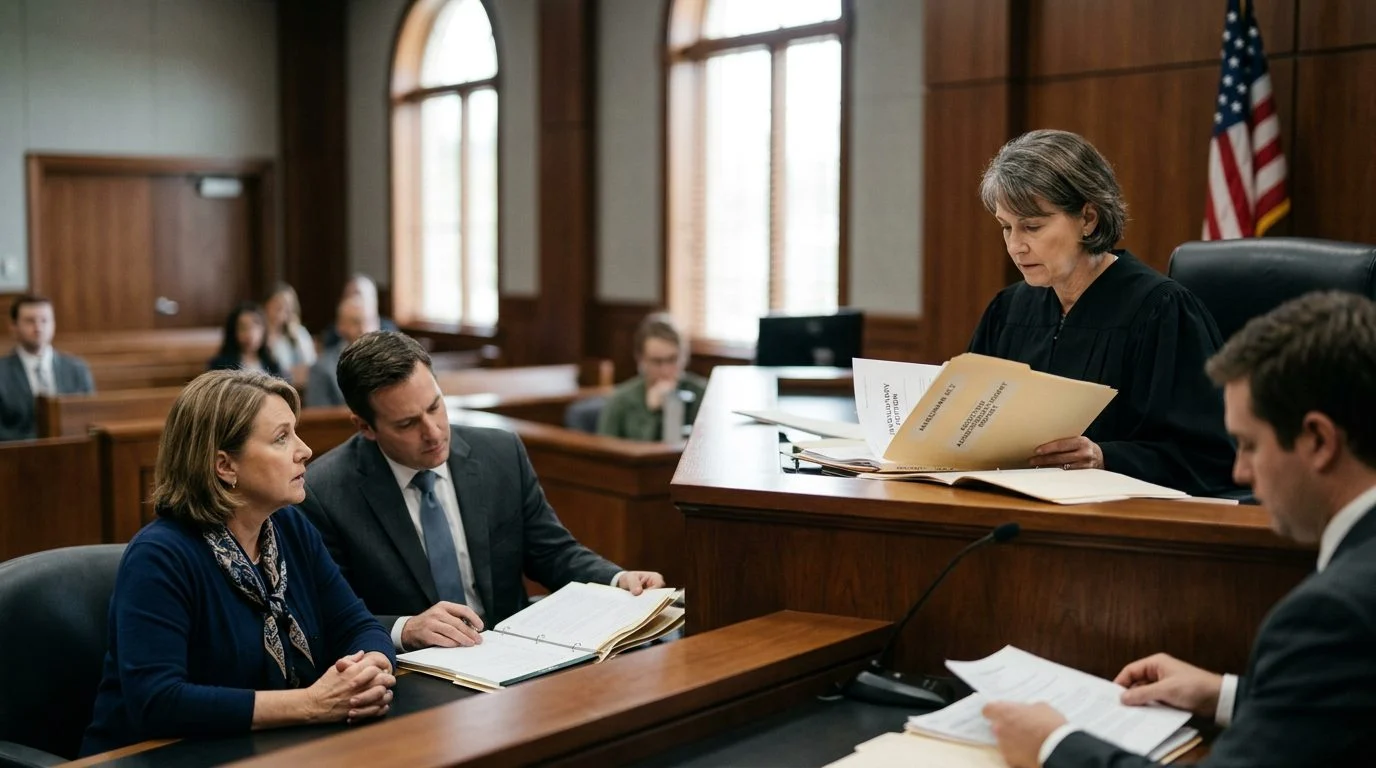
A judge looks for proof that the adult is impaired, has lost self-control, and needs treatment. Under § 397.675, the court asks whether there is good faith reason to believe the person is substance abuse impaired and has lost the power of self-control.
The petition must state the facts behind each belief (§ 397.68141). It may include a professional’s report from an exam within 30 days before filing. If the adult was never assessed, or refused an assessment, the petition must say so.
A court may order involuntary treatment for no more than 90 days, and only when the conditions are proved by clear and convincing evidence; if the conditions are expected to last past 90 days, a renewal of the involuntary services order may be requested before the period ends (§ 397.697). Family members who know the history can testify (§ 397.6957). Write down dates, incidents, who was present, and which treatments were tried. That record helps you explain the situation clearly to a lawyer. No one can promise how a court will rule.
The Fears Behind This Question: Overdose, Jail and Homelessness
A court process can bring an adult into assessment and treatment. It cannot promise that a relapse or overdose will not happen.
Fear of overdose is real, and you are not wrong to feel it. The law includes an emergency route for urgent situations. Recovery is a long process, and relapse can happen even after treatment.
The fear of jail is also common. The statute states an intent to give impaired adults an alternative to criminal imprisonment, referring them to treatment “instead of or in addition to criminal penalties” (§ 397.305). Your child may face other legal matters, and those run on separate tracks.
Housing is a real worry too. The same chapter lists housing support among the social services that help people live successfully in their communities. The petition centers on impairment and treatment, so housing needs need their own plan.
Losing hope is common after years of crisis. Knowing which legal options exist can make the next step feel less like managing everything alone.
How the Process Moves After a Petition Is Filed
After a petition is filed, the court must schedule a hearing within 10 court working days unless it grants a continuance (§ 397.68151).
The adult’s lawyer has access to the person, witnesses and records relevant to the case.
In an emergency, the court may enter an assessment and stabilization order based on the petition alone, without appointing an attorney (§ 397.6818).
Court records in these cases are confidential. The clerk may release them on request only to the people the statute lists, though the statute still allows the clerk to submit the information required by s. 790.065 to the Department of Law Enforcement (§ 397.6760).
Timelines differ from case to case, and the court sets them. For the full picture, read the Marchman Act guide, the Marchman Act records questions page, and the Marchman Act vs family intervention comparison.
Frequently Asked Questions
Can a parent file a Marchman Act petition for an adult child at home?
Yes. Florida law lets any relative file for an adult, and the court looks at the facts.
Where is the petition filed?
It is filed with the clerk in the county where the adult is physically located. The clerk may not charge a filing fee.
How soon is the hearing?
Under § 397.68151(2), the court generally must set the hearing within 10 court working days unless a continuance is granted.
Not sure what your next step is?
Talk it through with our team — the first consultation is free, confidential, and carries no obligation.

Your Next Step: Talk Through Your Child’s Situation
The next step is a conversation about your child’s situation, so you know which facts matter before anything is filed. Before you call, gather the dates of recent incidents, any hospital or police records, and a list of treatment already tried.
Robinson & Casey focuses on Marchman Act petitions and guardianship matters for families in Miami-Dade and across South Florida. Richard J. Casey III, Esq. is the responsible attorney for this page. To schedule a free, confidential first consultation, with no obligation to continue, call (561) 849-4700 or visit our contact page.
Why Families Turn to Robinson Casey
A Focused Practice
Robinson Casey focuses on Marchman Act petitions and guardianship matters, so our work centers on the legal issues families face in these cases.
Compassionate Guidance
We understand that a petition is a painful decision for any parent. We listen carefully and explain each option in plain language.
Miami-Dade and Statewide
We serve families across Miami-Dade and South Florida, and we represent clients in matters throughout the state.
Confidential Conversations
Everything you share with us during your first consultation is kept confidential.
If Your Adult Child Is in Immediate Danger
A legal petition is not an emergency response. If someone is at risk of harm, call 911 right away. Then contact our office so we can discuss the legal options available to your family.
How We Help Families Get Started
1. Free First Consultation
Tell us about your adult child's situation. Your first consultation is free, confidential and comes with no obligation to continue.
2. Review the Facts
We review the circumstances, the available documentation and the goals you have for your family.
3. Prepare the Petition
If a Marchman Act petition is appropriate, we prepare the filing and explain what the court will need to see.
4. Guide You Through the Court Process
We keep you informed at each stage of the proceedings and answer your questions as the matter moves forward.