
Marchman Act Attorney | Miami-Dade
Clear Guidance for Miami-Dade Families Facing a Marchman Act Petition
Robinson Casey focuses on Marchman Act petitions and guardianship matters for families across South Florida and statewide. Speak with Richard J. Casey III, Esq. in a free, confidential first consultation.
Our Focus
Free
First consultation, confidential and with no obligation to continue
South Florida
Serving Miami-Dade families and clients statewide
By Richard J. Casey III, Esq. · Published October 28, 2026
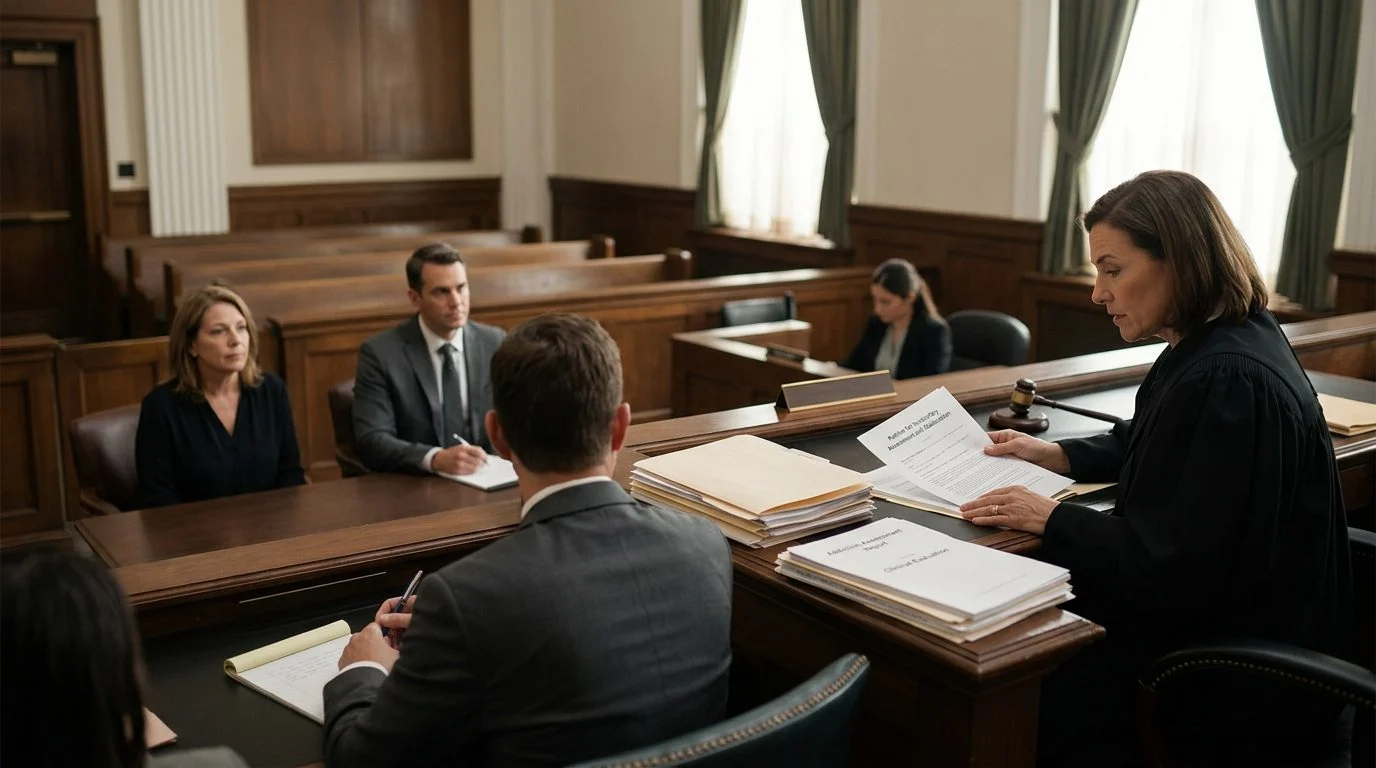
The Marchman Act is a Florida court process that lets a family ask a judge to assess and stabilize a loved one whose drinking has become severe. A spouse can file a petition, and a judge decides whether the legal criteria are met. If you are researching Marchman Act for alcoholic Florida families, this guide explains the law in plain words, the steps, and what to expect.
You may be reading this after a frightening night, a hospital stay, or drinking that keeps getting worse. You are not alone in this, and the questions you have are the right ones.
What the Marchman Act Is and Who It Covers
The Marchman Act is Florida’s court process for involuntary assessment, stabilization and treatment of a person impaired by substance use, including alcohol. The Florida Department of Children and Families says the Act covers severely impaired adults and youth.
The Legislature calls substance abuse impairment a disease that affects the whole family. It also aims to deliver services in the least restrictive setting that supports long-term recovery (§ 397.305).
Robinson Casey limits its practice to Marchman Act petitions and guardianship matters. We serve families in Miami-Dade, South Florida and statewide.
If your spouse's drinking has left your home unstable and your children frightened, you don't have to sort out the court process alone; call (561) 849-4149 to talk through your family's facts. Talk it through with our team — the first consultation is free, confidential, and carries no obligation.

Florida Marchman Act Criteria for Alcohol Addiction
A court can order involuntary treatment only when the person meets the statutory criteria. The court needs a good faith reason to believe the person is substance abuse impaired and has lost the power of self-control about substance use (§ 397.675).
The statute also requires one of these:
- The person needs help but is too impaired to see that need or make a rational decision about it.
- Without care, the person is likely to neglect themselves, posing a real and present threat of substantial harm, and that harm can’t be avoided through willing, able family members or other services. Fla. Stat. § 397.675 reads: “(b) Without care or treatment, is likely to suffer from neglect or refuse to care for himself or herself; that such neglect or refusal poses a real and present threat of substantial harm to his or her well-being; and that it is not apparent that such harm may be avoided through the help of willing, able, and responsible family members or friends or the provision of other services, or there is substantial likelihood that the person has inflicted, or threatened to or attempted to inflict, or, unless admitted, is likely to inflict, physical harm on himself, herself, or another.”
- The person is substantially likely to inflict physical harm on themselves or someone else.
Refusing help alone is not enough. The statute says mere refusal does not by itself show lack of judgment. The court must find the conditions proved by clear and convincing evidence (§ 397.697).
Some people also have a mental illness. If at any point during the hearing the court has reason to believe that the person has a mental illness in addition to substance abuse impairment and meets the involuntary commitment provisions of chapter 394, it may start involuntary examination under chapter 394 (§ 397.6957).
Who Can File a Petition and What to Gather First
A spouse can file a Marchman Act petition for an adult partner in Florida. The petition may come from the respondent’s spouse or legal guardian, any relative, a service provider, or an adult with direct personal knowledge of the impairment and prior treatment (§ 397.68112).
The petition must also give the facts behind your belief that the person is impaired and has lost self-control, and either that the person has inflicted or is likely to inflict physical harm on self or others unless the court orders services, or that the person’s refusal of care is based on judgment so impaired that they cannot appreciate the need for care and make a rational decision about it (§ 397.68141).
Start gathering these items:
- Dates and short descriptions of incidents, including any hospital, police or emergency room visits.
- Names of people who saw what happened, such as relatives or neighbors.
- Any past assessment or treatment. The petition must say if the person was never assessed or refused one.
- A written log with the date, time, what happened and who was there. Stick to what you saw.
If anyone is in immediate danger, call 911 first.
How the Marchman Act Process Works, Step by Step
The petition is filed with the clerk of court in the county where the person is physically located (§ 397.681). The clerk may not charge a fee to file it. Under Fla. Stat. § 397.681(1), a petition for involuntary treatment for substance abuse impairment must be filed with the clerk of the court in the county where the person is located.
- Consultation and fact review. We review your facts and documents.
- Filing. The petition goes to the clerk in the correct county.
- Hearing date. The court must schedule a hearing within 10 court working days unless a continuance is granted (§ 397.68151).
- Emergency order, if needed. When the petitioner asserts that emergency circumstances exist, or the court determines that an emergency exists, the court may rely on the petition alone and, without appointing an attorney, enter an ex parte assessment and stabilization order (§ 397.6818). A provider may hold the person for no more than 72 hours of observation, with listed exceptions.
- Notice. The respondent receives the petition and hearing notice.
- Hearing. Testimony is taken under oath and recorded. The respondent may refuse to testify (§ 397.6957).
- Order. At the end of the hearing the court either dismisses the petition or orders the respondent to receive involuntary treatment services from his or her chosen licensed service provider if possible and appropriate, with findings on the need for treatment and on less restrictive alternatives. The person is discharged automatically at the end unless a renewal motion is filed (§ 397.6977).
Timing varies by county, court calendar and case facts.
What a Marchman Act Attorney Handles for Your Family
Families often have questions about how the Marchman Act process works and what a petition involves. Our team works on the petitioner’s side. We help you organize dates, witnesses and records, and we explain each step as it comes.
The person named in the petition has a right to counsel at every stage, which the respondent may waive only if present and the court finds the waiver is made knowingly, intelligently, and voluntarily (§ 397.681). The Second District grounded that right in due process (Hillsborough County v. Albrechta). Expect that the other side may have a lawyer.
The petitioner carries the burden of proof. The Fourth District reached a different result, and a conflict was certified (J.J.J. v. D.G.).
If a family member also cannot manage their own affairs, guardianship questions may arise. We handle guardianship matters too. If a matter may need referral to another lawyer, we will tell you.
Protecting the Children, Finances, and Marriage: Honest Answers to Your Fears
The Marchman Act can get an impaired adult assessed and into treatment. No lawyer can promise how a judge will rule.
Your children. The court may hear family members who know the person’s history (§ 397.6957). The criteria also cover physical harm to another person (§ 397.675). Fla. Stat. § 397.675 reads: “(b) Without care or treatment, is likely to suffer from neglect or refuse to care for himself or herself; that such neglect or refusal poses a real and present threat of substantial harm to his or her well-being; and that it is not apparent that such harm may be avoided through the help of willing, able, and responsible family members or friends or the provision of other services, or there is substantial likelihood that the person has inflicted, or threatened to or attempted to inflict, or, unless admitted, is likely to inflict, physical harm on himself, herself, or another.”
Your finances. A person meets the criteria for involuntary admission if there is good faith reason to believe the person is substance abuse impaired or has a substance use disorder and a co-occurring mental health disorder and, because of that impairment or disorder, has lost the power of self-control with respect to substance abuse and also meets either the need-for-services test or the neglect or harm test. Contributions follow ability to pay (§ 397.431).
What if nothing changes. The statute looks at recent behavior, so a record of recent incidents matters (§ 397.6957). Waiting can mean more crises.
Your marriage. Filing is a hard decision.
Not sure what your next step is?
Talk it through with our team — the first consultation is free, confidential, and carries no obligation.
Why Families Work with Robinson Casey
Robinson Casey limits its practice to Marchman Act petitions and guardianship matters. We serve Miami-Dade, South Florida and statewide. Richard J. Casey III, Esq. is the responsible lawyer for this page. This practice has support staff who help the team keep families informed at each step.
The firm offers a free first consultation, which is confidential and carries no obligation to continue.
Frequently Asked Questions
What is the Marchman Act?
Families often want to understand how this court process works before deciding what to do.
Can a spouse file a Marchman Act petition for an alcoholic partner in Florida?
Yes. A spouse may file for an adult partner under § 397.68112.
What are the criteria for the Marchman Act in Florida?
The court needs a good faith reason to believe the person is impaired and has lost self-control. It also needs a need for services, a serious risk of neglect, or a likely risk of physical harm (§ 397.675).
What are the legal requirements for involuntary commitment in Florida?
Substance impairment petitions follow the criteria in § 397.675. A separate mental illness may bring in chapter 394 examination proceedings.
Who pays for Marchman Act assessment and treatment?
Costs follow the person’s ability to pay. Charges must be disclosed before admission (§ 397.431).
How long does the process take?
A hearing must be set within 10 court working days unless a continuance is granted. Treatment orders can last up to 90 days.
Does filing mean the marriage must end?
No. The petition rules focus on impairment, self-control and harm, not on ending a marriage.

Talk Through Your Situation with Robinson Casey
If your spouse’s drinking has made home unpredictable and your children are scared, you have carried this alone long enough. Our team can review the incidents, documents and worries you have already noted. Call (561) 849-4149 or request a consultation to talk through your family’s facts.
Why Families Turn to Robinson Casey
Focused Practice
Our practice focuses on Marchman Act petitions and guardianship matters, so your situation is handled by a firm concentrating in these areas.
Plain-Language Communication
We explain each step of the process clearly so you understand what to expect and can make informed decisions.
Compassionate Approach
We recognize that these matters involve people you love and some of the most difficult decisions your family will face.
Confidential First Consultation
Call (561) 849-4149 for a free, confidential first consultation with no obligation to continue.
Do Not Wait if Safety Is a Concern
If a family member's health or safety is at risk, contact our office promptly so we can discuss the situation with you and outline the matters to consider.
Matters We Handle
Marchman Act Petitions
Petitions for court-ordered assessment and treatment of an adult with substance use disorder, filed in Florida circuit courts.
Guardianship Matters
Guardianship attorney services for plenary and limited guardianship, including the court process from petition through hearing.
Emergency Temporary Guardianship
Help with urgent court requests when a person needs immediate protection and a guardian must be appointed quickly.
Mental Health Guardianship and Involuntary Commitment
Representation in mental health guardianship proceedings and involuntary commitment for addiction matters.