
Miami-Dade & South Florida | Robinson Casey
Marchman Act Petitions in Florida:
Robinson Casey focuses on Marchman Act petitions and guardianship matters for families across South Florida and statewide. Richard J. Casey III, Esq. is responsible for this page. Our free first consultation is confidential and carries no obligation to continue.
By Richard J. Casey III, Esq. · Published October 28, 2026
Where Your Family Stands Right Now
A Marchman Act petition asks a Florida court to order assessment and treatment for a person with a substance abuse impairment, and its factual allegations must show that the person has lost self-control over substance use and either has inflicted or is likely to inflict physical harm, or refuses care because impaired judgment leaves them unable to appreciate their need for it. If you’re searching this, you may be trying to protect someone you love before the next crisis.
Maybe it’s a son who drinks every night and can’t keep a job. Maybe it’s a sister who misses meals, owes money, and turns down every offer of care. You may have called the police or sat in an emergency room, only to see the same cycle return.
Searching for a statute usually means the easy options have run out. You need to know what the law allows, what a petition must say, and what happens after it’s filed.
This page walks through those questions in plain language. For the full picture, start with our Marchman Act guide.
If you're gathering facts about a loved one who keeps refusing care, our team can talk with you about what a Marchman Act petition needs. Talk it through with our team — the first consultation is free, confidential, and carries no obligation.

What Florida Statute 397.6950 Covers
The Marchman Act is Florida’s law for court-ordered help with substance abuse. Its petition rules sit in Chapter 397. Many people search for 397.6950 because older guides use different section numbers. The current petition-content rules are in Fla. Stat. § 397.68141, which notes it was formerly § 397.6951.
The law focuses on substance use. The same goes for a substance use disorder that comes with a co-occurring mental health disorder. The person must also have lost the power of self-control with respect to substance use.
The 2024 and 2025 amendments changed these sections. Older summaries may describe the law before those changes. This page uses the current text.
If police are part of your situation, read our guide on whether you need police to start a case.
Who Can File a Marchman Act Petition in Florida
For an adult, a spouse or legal guardian, any relative, or a service provider can file. An adult who has direct personal knowledge of the person’s impairment and his or her prior course of assessment and treatment can file too. That is the rule under § 397.68112, which requires the adult to have direct personal knowledge of the respondent’s substance abuse impairment and his or her prior course of assessment and treatment. A sibling or adult child is a relative, so either can file.
For a minor, a parent, legal guardian, or service provider may file.
The petition goes to the clerk of the court in the county where the person is located, under § 397.681. The clerk cannot charge a fee to file it. Under Fla. Stat. § 397.681(1), a petition must be filed with the clerk of the court in the county where the person is located.
If a spouse’s drinking is the issue, see our guide for families dealing with a spouse’s drinking.
What the Petition Must Include
The petition must name the respondent and the petitioner. It must state their relationship and name the respondent’s attorney if known. It must also set out the facts that show a need for services, as required by § 397.68141.
The factual allegations must demonstrate the matters listed in Fla. Stat. § 397.68141. First, why you believe the person is substance abuse impaired. Second, why you believe the impairment has cost them self-control over substance use. Third, either why you believe they have inflicted or are likely to inflict physical harm on themselves or others, or why their refusal of care is based on judgment so impaired by substance use that they cannot appreciate their need for care or make a rational decision about it.
Dated examples help the court follow the facts. Write the date, place, and what happened. Examples include driving after drinking, a fall, unpaid rent, missed medication, or a threat. Note what treatment was tried and how the person responded.
A petition may include an assessment by a qualified professional done within 30 days before filing. If there was no assessment, or the person refused one, the petition must say so.
Vague claims create real risk.
Gather hospital discharge papers, police reports, and a written timeline. Mark which facts you saw yourself. For a loved one who drinks daily, see our guide on that situation.
From Filing to the Court Hearing
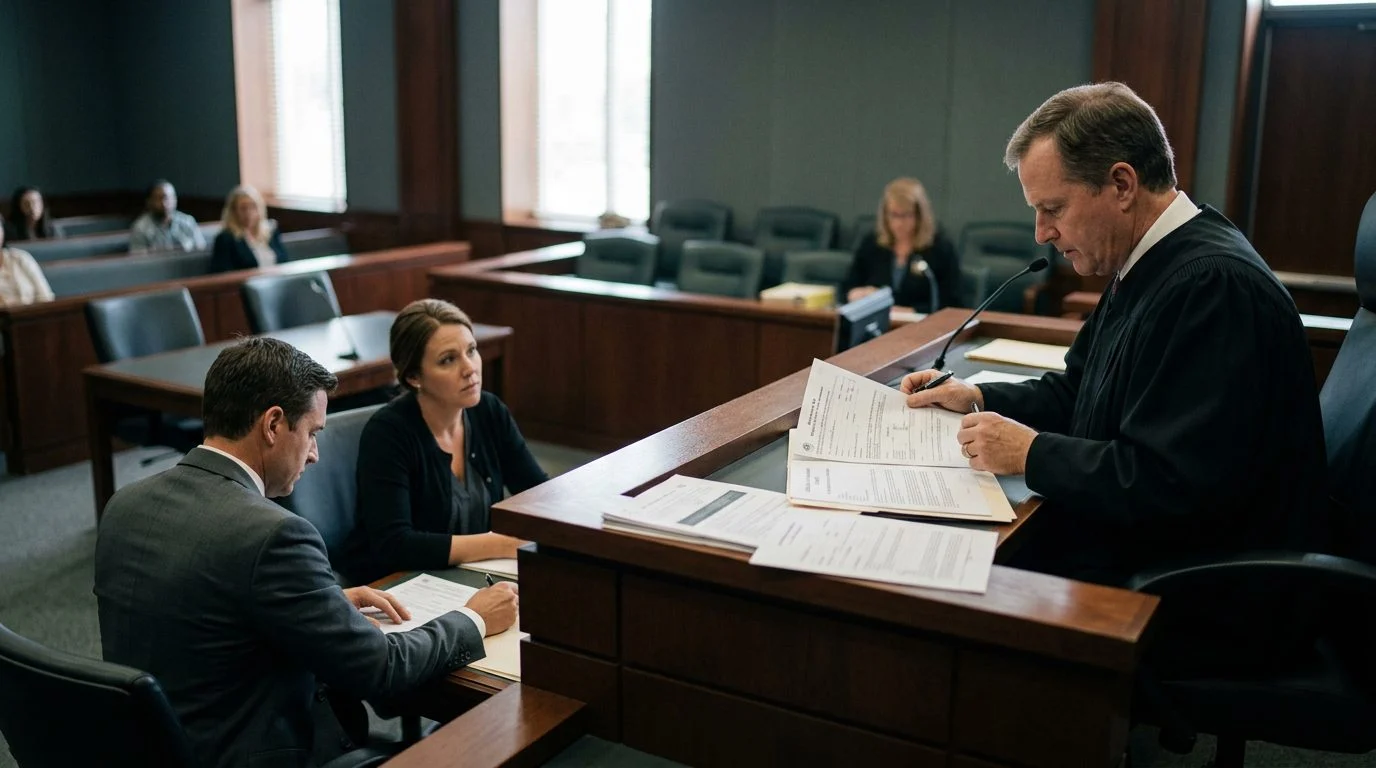
After filing, the court must decide right away whether the person has a lawyer or needs one. It must set a hearing within 10 court working days unless a continuance is granted, under § 397.68151.
The court must immediately determine whether the person has an attorney or whether appointing counsel is appropriate, under § 397.68151. If appointing counsel is appropriate, the court can appoint one, and the office of criminal conflict and civil regional counsel then represents the person. Under Fla. Stat. § 397.681(2), a respondent has the right to counsel at every stage of a judicial proceeding relating to a petition for his or her involuntary treatment for substance abuse impairment.
In an emergency, the petitioner can ask for an ex parte order. Under § 397.6818, the court may rely on the petition alone. The order is for assessment and stabilization, and no attorney needs to be appointed first. A service provider may not hold the person longer than 72 hours of observation, except in listed situations. An order not carried out by the initial hearing date is void.
Law enforcement must restrain a person being transported under § 397.341 in the least restrictive manner available and appropriate under the circumstances.
At the hearing, testimony is under oath, and the respondent may refuse to testify. The court may order treatment for up to 90 days, if it finds the conditions proved by clear and convincing evidence, under § 397.697. The result depends on the evidence the court hears.
Florida courts are not fully aligned on one point. The Fourth District certified conflict on a related question in J.J.J. v. D.G., so that rule is not settled statewide.
How the Petition Fits Your Family’s Longer-Term Goal
A petition starts a court process, and the court keeps authority after an order is entered. Under § 397.697, the court keeps jurisdiction to monitor treatment and enter further orders.
If a service provider believes the person still meets the criteria as their release date nears, a renewal petition must be filed before the court-ordered services period expires, under § 397.6975. The service provider can file it, or the original petitioner can file it with supporting documentation from the service provider. Under § 397.6975, the court may order up to an additional 90 days.
Lasting stability can need more than treatment. When a loved one cannot manage money, housing, or medical decisions, guardianship matters may also apply. Our firm handles guardianship matters too. For the full Marchman Act overview, see our Marchman Act guide.
Frequently Asked Questions
For an adult, a spouse, legal guardian, any relative, a service provider, or an adult with direct personal knowledge of the respondent’s substance abuse impairment and his or her prior course of assessment and treatment can file. For a minor, a parent, legal guardian, or service provider can file.
How long can someone be held under the Marchman Act?
A service provider may not hold the person longer than 72 hours of observation, except in listed situations. If the respondent does not appear at the hearing for any reason, including lack of service, and the court, after reviewing the petition, testimony, and evidence, reasonably believes the respondent meets the commitment criteria and that a substance abuse emergency exists, the court may issue or reissue an ex parte assessment and stabilization order valid for 90 days.
What happens at a Marchman Act hearing?
The court hears sworn testimony and reviews the evidence. The court must find the conditions proved by clear and convincing evidence before it orders treatment.
The person has a right to counsel at every stage of the proceeding, which they may waive if present and the court finds the waiver is made knowingly, intelligently, and voluntarily. The court can appoint one if they cannot afford it.
Not sure what your next step is?
Talk it through with our team — the first consultation is free, confidential, and carries no obligation.

Talk With Robinson Casey About Your Family’s Situation
If you’re gathering records now, you may be counting days until the next crisis. You don’t have to sort out the statute, the timeline, and the paperwork alone.
Reach out to Robinson Casey through our contact page or call (561) 849-4149. The first consultation is free, confidential, and carries no obligation to continue.
Richard J. Casey III, Esq. is the responsible lawyer for this page. Robinson Casey focuses on Marchman Act petitions and guardianship matters for families in Miami-Dade, South Florida, and statewide.
How Robinson Casey Supports Families
Focused Practice
Our practice focuses on Marchman Act petitions and guardianship matters, so the questions families bring to us are the ones we handle every day.
Support Staff
Our team of assistants and office staff helps keep your case organized and your communication with the firm clear.
Clear Explanations
We explain each step of the process in plain language so you know what to expect at every stage.
Compassionate Approach
We understand that a loved one's health and safety are at stake, and we treat every family with respect and patience.
Free, Confidential First Consultation
Families facing a Marchman Act petition or a guardianship question often have many questions at once. Our first consultation is free, confidential, and comes with no obligation to continue. Call (561) 849-4149 to talk through your situation.
Matters We Handle
Guardianship: Plenary & Limited
Help with plenary guardianship and limited guardianship petitions, including how each option is structured under Florida law.
Emergency Temporary Guardianship
Support for families who need the court to address an urgent situation involving a person who cannot care for themselves.
Mental Health Guardianship
Assistance with guardianship matters involving mental health needs, from initial petition through court proceedings.