
Marchman Act & Guardianship | South Florida
When Your Spouse Refuses Rehab, You Don't Have to Face It Alone
Robinson Casey focuses on Marchman Act petitions and guardianship matters for families across South Florida and statewide. Learn how a spouse can ask a Florida court for help when addiction treatment has been refused.
By Richard J. Casey III, Esq. · Published October 29, 2026
When Your Spouse Refuses Rehab: Florida’s Marchman Act for Spouses
When someone you love refuses addiction treatment despite the harm it’s causing, you face an impossible choice: accept the status quo or find a legal path forward. Florida recognizes this dilemma and provides a civil remedy called the Marchman Act, which allows a spouse to petition a court for involuntary assessment and treatment when voluntary approaches have failed and the risk is serious.
This page explains how the Marchman Act works for spouses, what evidence you’ll need, and how to know when legal intervention may be appropriate—while acknowledging the emotional weight of this decision.
If your spouse's addiction has progressed beyond what conversation or boundaries can address, and you're considering whether legal intervention is right for your situation, reach out to discuss your options—you don't have to navigate this alone. Talk it through with our team — the first consultation is free, confidential, and carries no obligation.

Understanding Your Situation: When Persuasion Isn’t Enough
Encouraging someone to seek help voluntarily and petitioning a court for involuntary treatment are two very different things. Persuasion relies on the other person’s willingness to change; legal intervention removes that barrier when addiction has progressed to a point where the person cannot or will not seek help.
The emotional toll on a spouse is real. You may feel guilt for “giving up” on voluntary approaches, frustration that your concerns are dismissed, fear for your spouse’s safety and your own, and a sense of powerlessness watching someone you love refuse help. These feelings are valid. Recognizing that you’ve exhausted compassionate options does not mean you’ve failed—it means the situation may require a different tool.
Florida law acknowledges this reality. The Marchman Act exists precisely for situations where addiction has crossed a threshold: the person has lost the power of self-control over substance use, poses a substantial risk of serious harm to themselves or others, and is unlikely to seek treatment voluntarily. At that point, the law allows a family member—including a spouse—to ask a court to intervene.
How to Help a Drug Addict Who Doesn’t Want Help: The Limits of Persuasion
Before considering legal action, understanding evidence-based approaches to conversation can sometimes shift a person’s perspective. These strategies work best when the person is not yet in acute crisis and retains some openness to dialogue.
Practical communication approaches include:
- Choose a calm moment. Don’t talk during active use, intoxication, or when emotions are high. Pick a time when both of you are clear and relatively calm.
- Use “I” statements. Say “I’m worried about your health” rather than “You’re destroying yourself.” This reduces defensiveness.
- Focus on specific behaviors and consequences. Describe what you’ve observed—missed work, financial strain, health decline, broken promises—not character attacks.
- Avoid shame and blame. Addiction is a health condition, not a moral failing. Shaming often deepens denial.
- Listen without trying to fix. Sometimes people need to feel heard before they’ll consider change.
Consulting a therapist, counselor, or addiction medicine physician can help you prepare for this conversation and assess your spouse’s readiness for treatment. A professional can sometimes help frame concerns in ways a spouse alone cannot.
Even with skilled communication, your spouse may refuse. That outcome doesn’t reflect on you or your effort. Addiction changes how the brain processes reward, risk, and decision-making. Denial is a symptom, not a choice your spouse is making to hurt you.
Can You Make a Person Go to Rehab? Florida’s Marchman Act Explained
Yes—under specific legal conditions, Florida allows you to petition a court to order involuntary assessment and treatment.
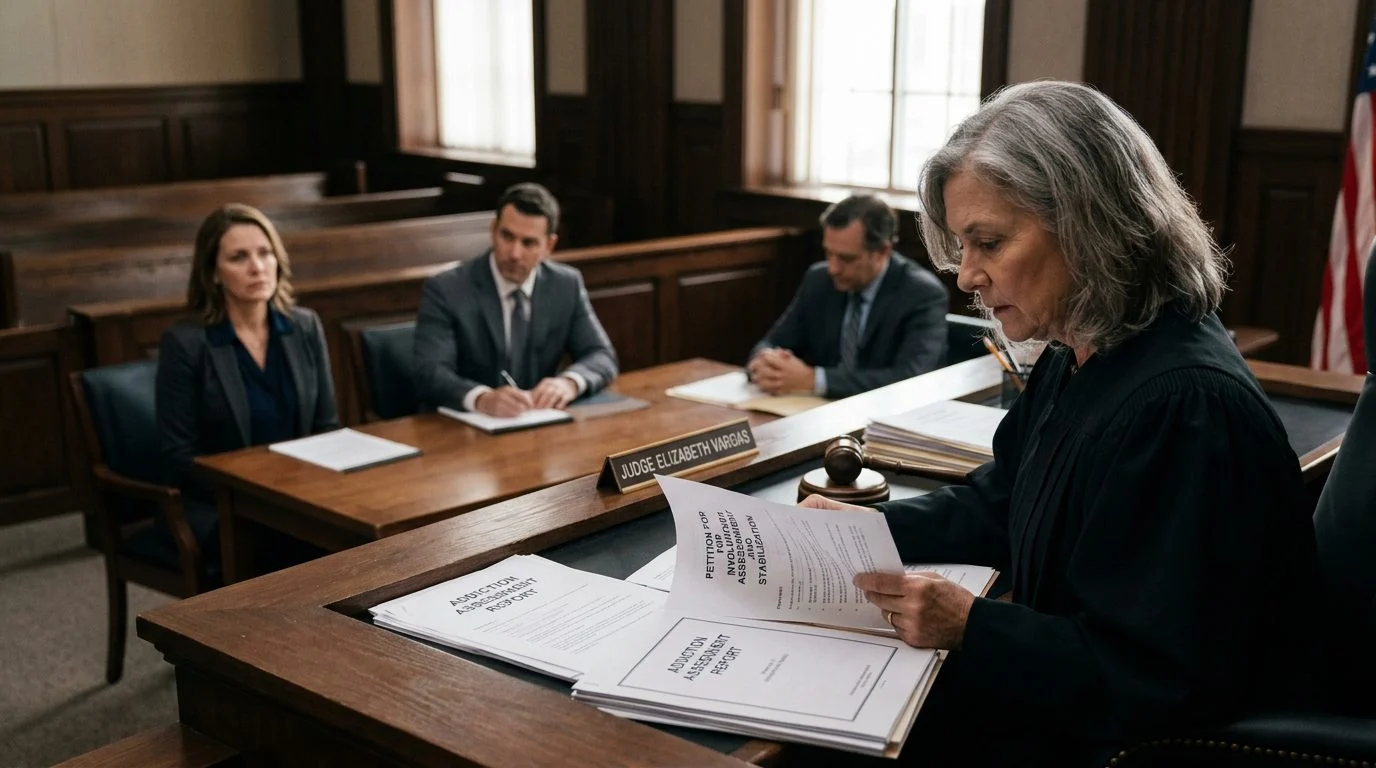
Here’s the crucial distinction: You do not make the decision. The court does. Your role is to file a petition and present evidence. A judge then determines whether the legal standard is met and whether to order involuntary treatment.
- The person has a substance use disorder. They use alcohol or drugs in a way that causes problems.
- They have lost the power of self-control over substance use. They’ve tried to stop or cut back and cannot.
- A person may qualify when they have lost self-control and either are at substantial risk of serious harm to themselves or others, or need services while their judgment is so impaired that they cannot appreciate that need. The addiction poses an immediate or escalating danger.
This is a civil health intervention, not a criminal proceeding. The person is not being punished. They are being referred for medical and therapeutic assessment and care.
What to Say to Encourage Someone to Go to Rehab: Before Legal Action
If you haven’t yet exhausted voluntary approaches, here are concrete steps to try:
Have an honest conversation. Pick a calm moment and express your concerns without judgment. Use specific examples. Listen to their perspective. Sometimes people need to feel understood before they’ll consider change.
Set clear boundaries. Decide what behaviors you will and won’t tolerate—financial support, living arrangements, contact with children—and communicate them calmly. Boundaries protect you and sometimes motivate change.
Consult a professional. A therapist or addiction counselor can help you prepare for the conversation and may offer to meet with your spouse. A physician can discuss health risks. Sometimes hearing concern from a professional carries different weight than hearing it from a spouse.
Suggest specific treatment options. Don’t just say “you need help.” Research local treatment programs, their approaches, and their costs. Reducing barriers to entry—having a specific option ready—can help.
Involve trusted others carefully. Sometimes hearing the same message from multiple people (a close friend, a family member, a faith leader) creates momentum. But too many people confronting at once can feel like an ambush.
If these steps don’t work, and your spouse’s addiction is escalating or causing serious harm, it may be time to consider the Marchman Act.
When Someone Won’t Go to Rehab: Recognizing When the Marchman Act May Apply
Warning signs that voluntary treatment is unlikely and risk is escalating include:
- Repeated failed attempts to quit or cut back
- Active denial that there is a problem
- Behavior that endangers you or others (driving under the influence, unsafe situations, violence or threats)
- Deteriorating physical health, legal problems, or financial crisis
- Isolation from supportive people and deepening involvement with others who use
- Neglect of responsibilities (work, parenting, household)
- Escalating use or switching to more dangerous substances
The Marchman Act is designed for situations where the person’s addiction has progressed to a point where they cannot or will not seek help, and the consequences are serious.
Important: Filing a petition does not mean the court will order treatment. The evidence must support the legal standard. The judge will weigh the evidence and make an independent decision.
The process is transparent. Your spouse will know you filed. They will have the opportunity to respond. This is not a secret intervention—it’s a legal proceeding with due process.
Not sure what your next step is?
Talk it through with our team — the first consultation is free, confidential, and carries no obligation.
The Marchman Act Petition Process for Spouses
Filing a Marchman Act petition involves several steps:
1. Prepare your petition. You will describe your spouse, the substance use, the risk, and why you believe involuntary treatment is necessary. You’ll provide factual details and evidence.
2. File with the court. The petition is filed with the circuit court in the county where your spouse lives. Questions about filing costs can be raised during your free first consultation, which is confidential and carries no obligation to continue.
3. Gather evidence. The stronger your case, the more likely the court will order treatment. Helpful evidence includes: – Documented incidents (police reports, medical records, emergency room visits) – Statements from people who have witnessed the behavior – Your spouse’s own admissions (texts, voicemails, conversations) – Medical records showing health decline – Financial records showing consequences – Testimony from you and others with direct knowledge
4. Attend the hearing. You will present your evidence to a judge. An attorney can represent you and help present your case effectively.
5. The judge decides. The court will determine whether the legal standard is met and, if so, whether to order involuntary assessment and treatment.
As a spouse, you have legal standing to file—you do not need to be a parent, guardian, or any other relationship. The law recognizes that a spouse often has the most direct knowledge of the person’s behavior and risk.
Involuntary Rehab Laws in Florida: What Happens After the Court Orders Treatment
Emergency involuntary assessment and stabilization. This order can be issued immediately when there is imminent danger, and involuntary treatment follows only after assessment and a hearing.
Longer-term involuntary treatment. After a full hearing where both sides present evidence, the court may order involuntary treatment for a longer period to allow for assessment and care.
In both cases, your spouse will be transported to a treatment facility for evaluation and, if appropriate, admission to a treatment program. They will receive medical care, psychiatric assessment, counseling, and therapeutic services—the same care offered to people who seek treatment voluntarily.
Involuntary treatment is still treatment. It is not punishment or imprisonment. The goal is to interrupt the cycle of denial and active use so that professional intervention can begin and recovery can be considered.
Effectiveness of Involuntary Treatment and What to Expect
Involuntary treatment does not ensure recovery. Motivation, engagement, and willingness to participate in treatment matter. But involuntary treatment removes one major barrier: the refusal to seek help at all.
Research shows that involuntary treatment can be effective, particularly when combined with ongoing support, aftercare, and family involvement. Many people who initially resist involuntary treatment later report that it was a turning point—that being in treatment allowed them to see their situation more clearly and to consider change.
During your spouse’s treatment, your role includes:
- Maintaining your own boundaries. Don’t bail them out of consequences or enable use.
- Participating in family therapy if offered. Many treatment programs include family sessions to heal relationships and build support.
- Preparing for their return home. Discuss aftercare plans, ongoing treatment, and how you’ll support recovery while protecting yourself.
- Seeking your own support. Al-Anon and Nar-Anon are peer support groups for families of people with addiction. They can help you process your feelings and learn from others in similar situations.
The legal process is one part of a longer recovery journey. It is not the end of the story—it is often the beginning.
Your Role as a Spouse: Protecting Yourself While Pursuing Treatment
Filing a Marchman Act petition is an act of care, not betrayal. You are seeking help for someone you love when they cannot or will not seek it themselves. Reframing this decision—from guilt to compassion—can help you move forward.
At the same time, protect yourself:
- Set financial boundaries. Do not pay for their drug use or bail them out of consequences that might motivate change.
- Ensure your physical safety. If your spouse has been violent or threatening, prioritize your safety. Consult local law enforcement or a domestic violence advocate.
- Establish emotional boundaries. You cannot control their recovery. You can only control your own response and the legal tools available to you.
- Connect with a therapist or support group. Processing your own feelings—anger, guilt, fear, grief—is essential. You deserve support too.
Seeking legal intervention does not mean you’ve given up on your spouse. It means you’re using the legal system to help them when they cannot help themselves.

Next Steps: Getting Legal Guidance on the Marchman Act for Your Situation
Every situation is unique. The strength of the evidence, the urgency of the risk, and the best legal strategy depend on your specific facts.
A Marchman Act attorney can:
- Evaluate your situation confidentially and advise whether a petition is appropriate
- Explain your options and the likely process and timeline
- Prepare the petition and gather evidence
- Represent you in court
- Help you understand what to expect after a court order
An initial consultation allows you to discuss your circumstances without commitment and to understand your options. Many people find that talking through their situation with someone who understands both the legal process and the emotional reality helps them make a clearer decision.
If your spouse’s addiction has progressed to the point where voluntary treatment seems unlikely and the risk is serious, contact Robinson & Casey to discuss whether the Marchman Act may be right for your family. You don’t have to face this alone.
How Robinson Casey Supports Families
Focused Practice
Our practice focuses on Marchman Act petitions and guardianship matters, so your case is handled by lawyers who work in these areas every day.
Clear Preparation
We help you understand what documentation and evidence a petition may require, and we walk you through each step of the process.
Plain-Language Guidance
Court processes can be intimidating. We explain your options in straightforward terms so you can make informed decisions for your family.
Compassionate Advocacy
We understand that a loved one's addiction affects the whole household. We advocate for your family with patience and respect.
Confidential First Step
Your free first consultation is confidential and carries no obligation to continue. Call (561) 849-4149 to begin.
Don't Wait Until Another Crisis
Harm from untreated addiction can escalate quickly. Keeping a record of incidents and speaking with a lawyer early will help you understand which options may be available to you.
Legal Options for Families in Florida
Marchman Act Petitions
A civil process under Florida law that lets a family member ask a court for an assessment and, where appropriate, involuntary treatment for a loved one with substance use disorder.
Involuntary Commitment for Addiction
Court-ordered assessment and treatment for individuals who refuse help despite serious risk to themselves or others.
Guardianship Matters
Court-supervised guardianship, including emergency temporary, plenary, limited, and mental health guardianship, for adults who cannot fully manage their own affairs.
Emergency Temporary Guardianship
Immediate court protection for a person facing an urgent risk to their health, safety, or property while a longer proceeding is considered.