
Marchman Act & Guardianship | South Florida and Statewide
Marchman Act Court-Appointed Attorney Guidance for Florida Families
Robinson Casey focuses on Marchman Act petitions and guardianship matters, helping families in Miami-Dade, South Florida and across Florida understand the process and their options.
By Richard J. Casey III, Esq. · Published October 30, 2026
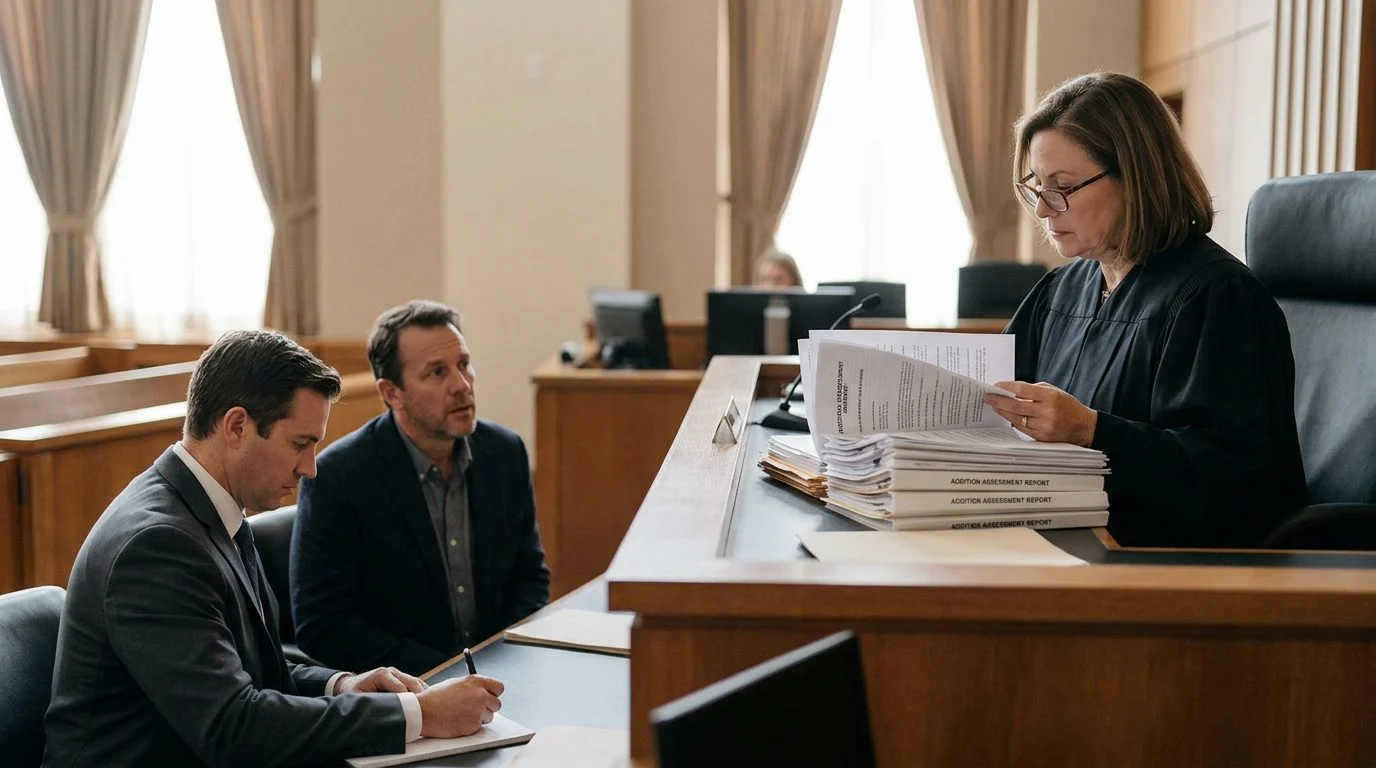
A court-appointed attorney represents the person named in a Florida Marchman Act petition. Florida law gives that person the right to a lawyer at every stage, which the person may waive only if present and the court finds the waiver is knowing, intelligent, and voluntary; a person who can’t afford private counsel has the right to court-appointed counsel. If your spouse’s substance use has put your home at risk, this page explains what that lawyer does, what happens next, and what you can expect.
What a Marchman Act Respondent Counsel Does for Your Family
A Marchman Act case is a court proceeding under Chapter 397 of the Florida Statutes for the involuntary assessment and treatment of a person whose substance abuse has left them unable to control it. The person named in the petition is called the respondent. The respondent’s lawyer works for the respondent’s interests in the case.
Your role may look different from the respondent’s. Under Fla. Stat. § 397.68112, a spouse can file the petition; under Fla. Stat. § 397.681, petitions must be filed with the clerk of the court in the county where the person is located. Under Fla. Stat. § 397.68112, an adult respondent’s spouse or legal guardian, any relative, a service provider, or an adult who has direct personal knowledge of the respondent’s substance abuse impairment and his or her prior course of assessment and treatment may file. A family member may also testify, because the court hears relatives who know the person’s history.
You may have received a court notice you didn’t expect. You may be worried about the kids, the money, and whether your spouse will accept help. Those worries make sense. You don’t have to sort them out alone.
If your spouse's substance use has put your household at risk, you don't have to sort out the court papers alone. Our team can talk it through with you. Talk it through with our team — the first consultation is free, confidential, and carries no obligation.

When Does the Court Appoint Counsel for the Respondent?
The court appoints a lawyer when the respondent wants one and can’t afford private counsel. The court must appoint a lawyer if it believes the respondent needs or desires counsel, even if the respondent objects. The respondent may give up the right to a lawyer only if present and the court finds the waiver is knowing, intelligent, and voluntary, under Fla. Stat. § 397.681.
Under Fla. Stat. § 397.68151, an appointed attorney stays on the case until the petition is dismissed, the order expires, the person is discharged, or the court discharges the attorney. The attorney has access to the person, witnesses, and relevant records.
A privately hired lawyer and an appointed lawyer have the same duty. Both must represent the respondent’s interests. The statute says this holds regardless of who pays the lawyer.
Notice matters because the court must schedule a hearing on the petition within 10 court working days unless a continuance is granted. Copies of the petition and the hearing notice go to the respondent; the respondent’s parent, guardian, or legal custodian if the respondent is a minor; the respondent’s attorney if known; the petitioner; the respondent’s spouse or guardian if applicable; and anyone else the court directs.
What Respondent Counsel Covers in a Marchman Act Case
Respondent counsel checks the petition, reviews the evidence, and prepares the respondent for the hearing. The petition must name the respondent and the petitioner. It must state their relationship and give the factual reasons for the request, as Fla. Stat. § 397.68141 requires.
The petition must explain why the petitioner believes the person is impaired. It must also explain why the person has lost the power of self-control. It must explain either the risk of physical harm or why the person can’t appreciate the need for care.
A professional’s report may be attached if it was done within 30 days before filing. If the respondent wasn’t assessed, or refused an assessment, the petition must say so.
Florida law sets out the criteria for involuntary admission for substance abuse impairment. Under Fla. Stat. § 397.697, the court may order treatment only if those conditions are proved by clear and convincing evidence.
Counsel also checks the clinical assessment. Under Fla. Stat. § 397.6957, the court shall hear and review all relevant evidence, including the results of the assessment completed by the qualified professional in connection with this chapter.
How a Marchman Act Case Moves, Step by Step
A Marchman Act case moves from a filed petition to a hearing, and then to an order with a set time limit.
- Petition filed. The petition goes to the clerk in the county where the person is located. The clerk may not charge a filing fee, under Fla. Stat. § 397.681. In Miami-Dade, the Miami-Dade Clerk routes adult petitions to Probate Court.
- Counsel decided. A respondent has the right to counsel at every stage of the proceeding, which the respondent may waive only if present and the court finds the waiver is made knowingly, intelligently, and voluntarily; and the court shall appoint counsel if it believes the respondent needs or desires it, without regard to the respondent’s wishes.
- The court must schedule a hearing on the petition within 10 court working days unless a continuance is granted, under Fla. Stat. § 397.68151.
- Assessment. A clinical assessment is required before any involuntary order. An assessment order is valid for 90 days.
- Hearing. Testimony is taken under oath, and the proceedings are recorded.
- Order. If the court orders treatment, it may last up to 90 days.
- Renewal or discharge. A renewal petition must be filed before the period ends. Otherwise, the respondent is discharged automatically at the end of 90 days.
Common Questions Before the Hearing
The respondent generally must attend the hearing. The court can excuse presence only if the respondent knowingly waives it, or if presence is inconsistent with the respondent’s interests or likely to be harmful, under Fla. Stat. § 397.6957. Fla. Stat. § 397.6957 reads: “(1)(a) The respondent must be present at a hearing on a petition for involuntary treatment services unless the court finds that he or she knowingly, intelligently, and voluntarily waives his or her right to be present or, upon receiving proof of service and evaluating the circumstances of the case, that his or her presence is inconsistent with his or her best interests or is likely to be injurious to self or others.”
In an emergency, the court may rely on the petition alone and enter an ex parte assessment order without appointing an attorney, under Fla. Stat. § 397.6818. A provider generally may hold the respondent for no more than 72 hours of observation, unless a listed exception applies.
Who must present the case matters. In J.C. v. State, the court failed to follow the applicable statute by essentially functioning as the absent petitioner. These are Fifth District rulings. A Fourth District court reached a different result in J.J.J. v. D.G. and certified a conflict.
Records are private. Under Fla. Stat. § 397.6760, petitions, orders, and related records are confidential and exempt from public records rules.
Why Families Work With Robinson Casey
Robinson Casey focuses its practice on Marchman Act petitions and guardianship matters.
Richard J. Casey III, Esq. is the responsible attorney for this page. The firm’s attorneys handle Marchman Act and guardianship matters. Our team includes support staff who help families keep track of paperwork and scheduling.
The first consultation is free, confidential, and carries no obligation to continue.
Not sure what your next step is?
Talk it through with our team — the first consultation is free, confidential, and carries no obligation.
Frequently Asked Questions
Does my spouse have to pay for a court-appointed attorney?
A respondent who wants a lawyer and can’t afford one has the right to appointed counsel. Under Florida law, a respondent has the right to counsel at every stage of a judicial proceeding on a petition for involuntary treatment for substance abuse impairment, which the respondent may waive only if present and the court finds the waiver is knowing, intelligent, and voluntary.
Can a spouse file a Marchman Act petition?
Yes. For an adult respondent, a spouse may file, under Fla. Stat. § 397.68112.
Is a Marchman Act case confidential?
Yes. Petitions, court orders, and related records are confidential and exempt from public records rules, under Fla. Stat. § 397.6760.
What happens after 90 days of treatment?
At the end of the 90-day period of court-ordered involuntary services, the respondent is automatically discharged unless a renewal motion was filed, under Fla. Stat. § 397.6977.
Does filing a petition cost money?
The clerk may not charge a fee for filing the petition, under Fla. Stat. § 397.681.

Talk With Robinson Casey About Your Family’s Situation
If a court notice has reached your home, or you’re deciding whether to file, you’re carrying this alone right now. You don’t have to face the court’s questions by yourself. Reach out to Robinson Casey at (561) 849-4149, or send us your questions online.
Why Families Contact Robinson Casey
Confidential Conversations
Your first consultation is free, confidential, and carries no obligation to continue.
A Focused Practice
The firm focuses on Marchman Act petitions and guardianship matters, the areas its practice is built around.
Compassionate Guidance
A loved one's crisis is stressful. We explain each step in plain language so you know what to expect.
Direct Access
Call (561) 849-4149 to speak with our team about your family's situation.
Don't Wait to Ask for Help
Marchman Act and guardianship matters often need prompt attention. Reach out early so we can review the facts of your situation and explain what may happen next.
Matters We Handle
Marchman Act Attorney
Guidance on petitions for involuntary treatment for substance abuse impairment and involuntary commitment for addiction under Florida's Marchman Act.
Guardianship Attorney
Help with plenary and limited guardianship petitions for adults who need support managing personal or financial decisions.
Emergency Temporary Guardianship
Assistance with urgent requests for temporary guardianship when a loved one needs immediate protection.
Mental Health Guardianship
Representation for families navigating guardianship matters connected to mental health needs.
Start with a Free, Confidential First Consultation, With No Obligation to Continue
Related practice areas
- Marchman Act Attorney | Florida Involuntary Commitment for Addiction
- Marchman Act Hearing Florida: If Your Son Refuses