

Marchman Act & Guardianship | South Florida and Statewide
Talking to Your Adult Child About Rehab? Start With a Plan.
Robinson Casey focuses on Marchman Act petitions and guardianship matters for families in Miami-Dade, South Florida and across Florida. Your first consultation is free, confidential and comes with no obligation to continue.
Casey III, Esq. · Published November 4, 2026
Many Florida parents search for how to talk to adult child about rehab Florida after a frightening event. Talk when your child is sober and calm, name the specific events you have seen, and state your own limits. If that talk does not work, Florida law lets certain family members ask a court for help.
Where You Are Right Now
You have likely spent years paying for treatment, trying interventions and setting boundaries. Then came the overdose, the relapse, the hospital visit, or the day your child disappeared. Waiting no longer feels like an option.
This page is for you, the parent, who may be carrying this crisis alone. The goal is not to win an argument. The goal is a plan for the next conversation, and a clear view of the legal options if talking is not enough.
This page is written for families in Florida, including Miami-Dade and South Florida. Richard J. Casey III, Esq. is the responsible lawyer for this page. Robinson Casey focuses exclusively on Marchman Act petitions and guardianship matters.
You have carried this crisis for a long time, and you do not have to figure out the legal options alone. Our team can talk through your child's situation with you. Talk it through with our team — the first consultation is free, confidential, and carries no obligation.

What You Fear Most, and Why Talks Keep Breaking Down
Most parents in your position fear the same four things. They fear an overdose or death. They fear a jail or prison sentence. They fear their child becoming homeless. And they fear losing hope that anything will work.
Past talks often fail for predictable reasons. Your child may feel judged before you finish a sentence. You may be reacting in the middle of a crisis, with fear shaping your words. Both of you may be worn out from years of the same fight.
Refusing treatment is common in addiction. It does not mean you failed. Federal guidance from the SAMHSA family support guide describes how family members can talk about substance use with an adult loved one in a compassionate way. Your child’s refusal is one moment, not the whole picture. Keep your focus on safety and on the next step you can take.
Decide Your Own Limits Before You Talk
Write your limits down before any conversation. Cover money, housing, bail, rides, and contact during active use. Clear limits protect you and give your child facts instead of moving targets.
Keep each limit to something you can actually carry out. A limit you cannot enforce teaches your child that your words do not match your actions. State each limit calmly, as a plain decision, not as a threat.
Gather the facts too. Note dates, places and specific events. Florida’s involuntary treatment statute treats a recent assessment by a qualified professional, within 30 days, as one basis for a petition (Fla. Stat. § 397.68111). For background on court-based options, read the Marchman Act overview.
Start With Questions and Specific Examples
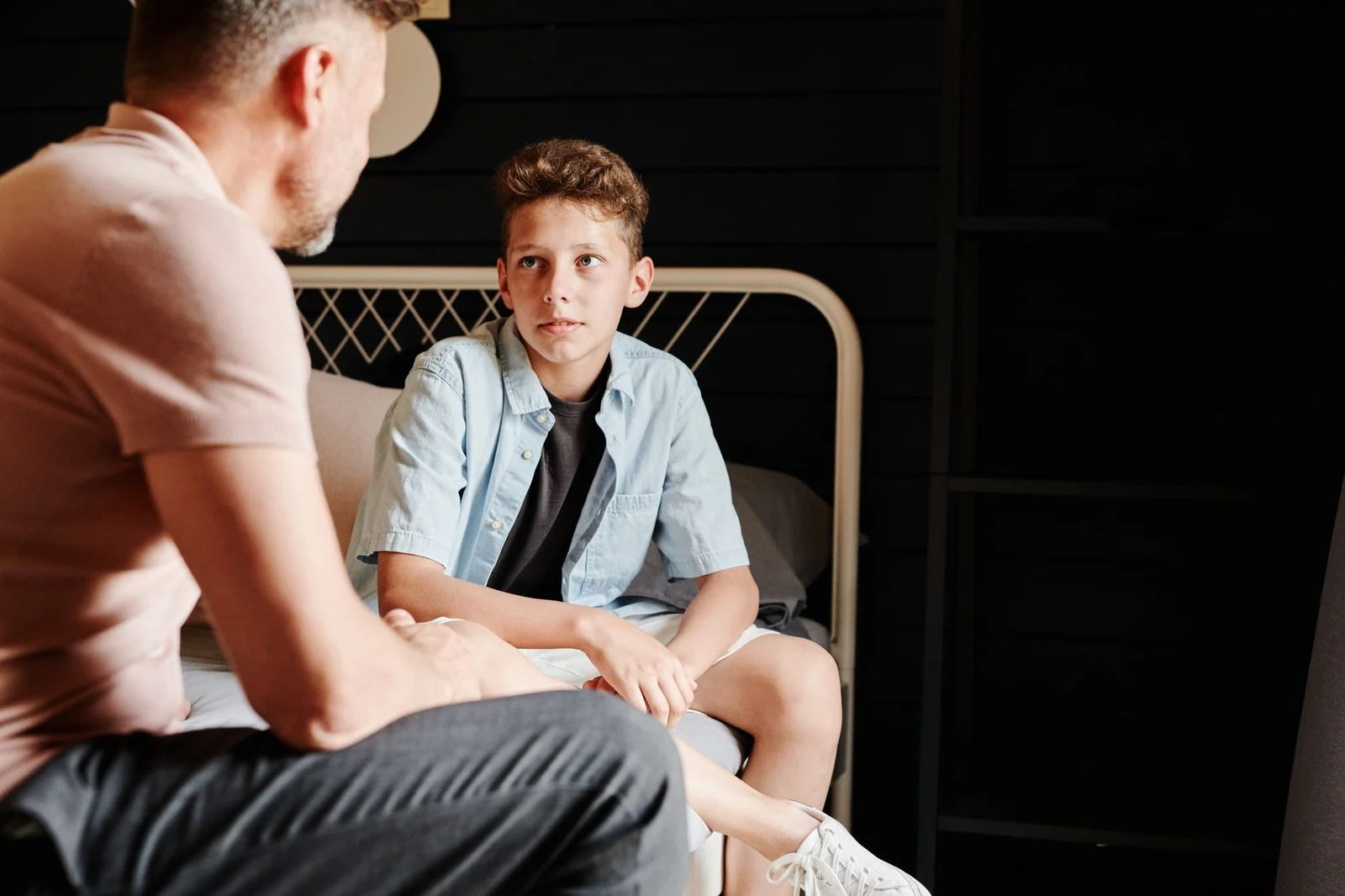
Open with one recent event, not a list of past mistakes. Describe what happened and how it affected your family. Then ask a question, such as, “What worried you most that night?” Listening matters more than winning.
Ask what your child is worried about and what would make treatment feel possible. You may hear fear about losing a job, a home or a relationship. Do not argue with it. Write down what you hear so you can return to it.
Offer one concrete, time-limited next step, such as a medical evaluation or an intake call. Accept that the first talk may not end in agreement. A single conversation rarely settles a long pattern. When you plan how to talk to adult child about rehab Florida families face, start small. For a related situation, read this guide on repeated hospitalizations.
Keep Overdose Safety in Place Now
Overdose safety comes before any conversation about rehab. Keep naloxone (Narcan) at home, and learn how to use it before you need it. Call 911 in any emergency, without waiting for a plan.
Ask the treating medical team about withdrawal risk and the safest next steps. Share the emergency plan with anyone who lives with your child or spends time with them. Write the emergency numbers on paper where everyone can see them.
Keep safety first. A talk about rehab should never wait for the next crisis to begin. Start it now, while you can still plan it calmly.
What Florida Law Allows If Your Child Will Not Agree
Florida’s Marchman Act, in Chapter 397 of the Florida Statutes, lets certain family members ask a court for an assessment and, if the legal criteria are met, involuntary treatment. For an adult, the petition may come from a spouse or legal guardian, any relative, a service provider, or an adult who has direct personal knowledge of the impairment and his or her prior course of assessment and treatment (Fla. Stat. § 397.68112).
Refusal to receive services alone is not evidence of lack of judgment about the person’s need for those services (Fla. Stat. § 397.675). Under Fla. Stat. § 397.675, a person meets the criteria only if there is good faith reason to believe the person is substance abuse impaired (or has a substance use disorder and a co-occurring mental health disorder), has lost the power of self-control over substance use, and, because of that, either needs services but cannot appreciate that need and decide rationally about it, or without care is likely to suffer neglect that poses a real and present threat of substantial harm and it is not apparent that the harm can be avoided with the help of willing, able and responsible family members or friends or other services, or there is a substantial likelihood the person has inflicted, threatened or attempted to inflict, or unless admitted is likely to inflict, physical harm on himself, herself or another. The petition must state the factual reasons for the request (Fla. Stat. § 397.68141).
Emergencies move faster. A service provider may hold a person for no more than 72 hours of observation, with limited exceptions (Fla. Stat. § 397.6818). Guardianship is a separate track. Robinson Casey focuses exclusively on Marchman Act petitions and guardianship matters. What is available depends on the facts of each family’s situation.
Not sure what your next step is?
Talk it through with our team — the first consultation is free, confidential, and carries no obligation.
Take the Next Step Toward Treatment
If the cycle keeps repeating, a legal consultation can explain which options fit your child’s facts. You do not need every answer before you call.
Can I force my adult child into rehab in Florida?
A Florida court can order involuntary treatment, but only after the conditions are proved by clear and convincing evidence (Fla. Stat. § 397.697).
Does my adult child have a right to a lawyer?
Yes. A respondent has the right to counsel at every stage of a judicial proceeding on a petition for involuntary treatment for substance abuse impairment, and may waive that right only if the respondent is present and the court finds the waiver is knowing, intelligent, and voluntary. If the court believes the respondent needs or desires counsel, the court shall appoint counsel for the respondent without regard to the respondent’s wishes, and a respondent who desires counsel but cannot afford private counsel has the right to court-appointed counsel (Fla. Stat. § 397.681).
Where should a petition be filed?
A petition must be filed in the county where the person is located (Fla. Stat. § 397.681). For a related situation, see this guide on a missing adult.
You have carried this for a long time. When talking is no longer enough, a free, confidential first consultation can help you see the options that fit your child’s facts. There is no obligation to continue. Call (561) 849-4700 or use the Robinson Casey contact form.
How Robinson Casey Can Help Your Family
Marchman Act Petitions
We focus on Marchman Act petitions, helping families understand the process and the paperwork involved in seeking treatment for a loved one.
Guardianship Matters
Our practice covers guardianship matters, including emergency temporary, plenary, limited and mental health guardianship.
A Confidential First Conversation
Your free first consultation is confidential and carries no obligation to continue, so you can speak openly about your concerns.
Support for Families
Our team works with families across South Florida and statewide, explaining options in plain language at every step.
Ways to Open the Conversation
Choose a calm moment
Pick a time when neither of you is intoxicated, rushed or in the middle of an argument. A quiet, private setting makes it easier to be heard.
Lead with concern, not blame
Describe what you have noticed and how it affects you, such as changes in work, health or money, instead of labeling your child or their choices.
Be specific and stay steady
Name concrete examples and the help you hope they will accept. Keep your tone steady, and be prepared for denial or anger.
Don't Wait for a Crisis
Many families delay talking about addiction until an emergency forces a decision. Speaking with a Florida attorney early can help you understand your options before the situation becomes urgent.