
Florida Guide | Marchman Act | Miami-Dade and South Florida
What the Marchman Act Stands For, and How Florida Families Use It
Robinson Casey focuses on Marchman Act petitions and guardianship matters for families in Miami-Dade and across South Florida. Start with a free, confidential first consultation.
Casey III, Esq. · Published November 5, 2026
What Does the Marchman Act Stand For?
The Marchman Act stands for the Hal S. Marchman Alcohol and Other Drug Services Act. It is Florida’s law for families who need a court route to help a loved one struggling with alcohol or drugs. The short title appears in Fla. Stat. § 397.301.
Each part of the name tells you something. “Alcohol and Other Drug Services” means the Act covers drugs as well as alcohol. The Act is named for Hal S. Marchman, and its text sits in Chapter 397 of the Florida Statutes. Families simply call that chapter “the Marchman Act.”
The Act does more than offer voluntary treatment. It also sets out an involuntary route. That route lets a court order assessment and treatment when the law’s criteria are met.
If your loved one's drinking or drug use has become dangerous, you do not have to sort out the court process alone; our team can talk it through with you. Talk it through with our team — the first consultation is free, confidential, and carries no obligation.

What the Act Covers and Who Can Start the Process
Certain people can ask the court to act. For an adult, a petition may be filed by the spouse or legal guardian, any relative, a service provider, or an adult with direct personal knowledge of the person’s substance abuse impairment and prior treatment (Fla. Stat. § 397.68112). The person named in the petition is called the respondent.
A petition is the written request that starts the court process. It names the respondent and the petitioner, and it explains how they are related. It also gives facts. Those facts must explain why the petitioner believes the respondent is impaired and has lost the power of self-control. They must also show either a risk of physical harm or care refused because judgment is too impaired (Fla. Stat. § 397.68141).
Where you file matters. The petition goes to the clerk of the court in the county where the person is located. The clerk may not charge a filing fee for it (Fla. Stat. § 397.681). A common mistake is filing in the county where the family lives, not where the person is at filing. In one Fifth District case, the petition belonged where the person was physically located, a detox facility rather than home. Under Fla. Stat. § 397.681(1), a petition for involuntary treatment for substance abuse impairment must be filed with the clerk of the court in the county where the person is located.
What Is a Marchman Hearing?
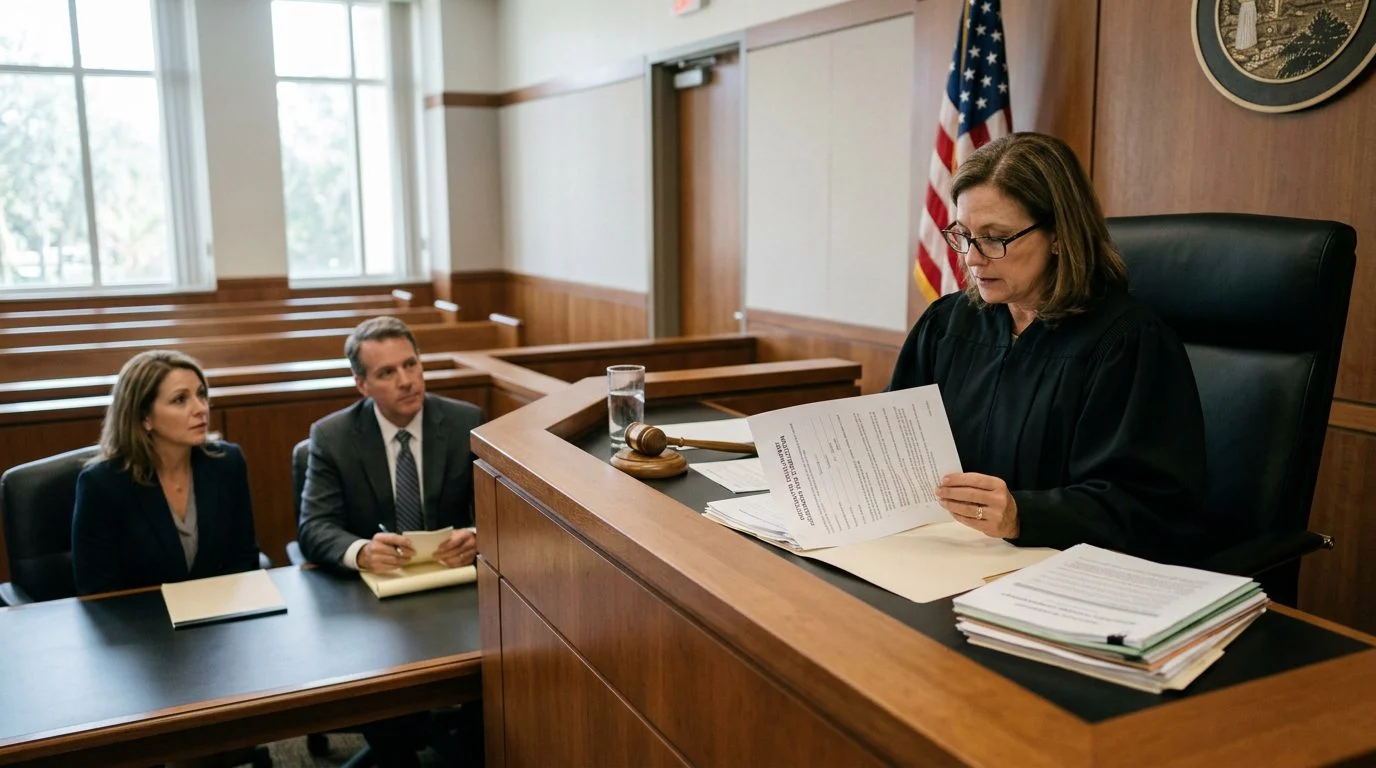
A Marchman hearing is the court hearing where a judge reviews the petition and the evidence. The judge then decides whether involuntary assessment or treatment is needed. The court must set the hearing within 10 court working days unless it grants a continuance. The respondent receives a copy of the petition and the notice (Fla. Stat. § 397.68151).
The respondent has a lawyer, or the court must immediately determine whether appointing one is appropriate. A respondent who cannot afford private counsel can receive court-appointed counsel (Fla. Stat. § 397.681). In Hillsborough County v. Albrechta, the court concluded that, because due process is implicated, a defendant has a constitutional right to be represented by counsel in Marchman Act proceedings.
The usual order runs like this: petition, assessment by a qualified professional, hearing, then a court order. The court must consider the results of the assessment completed by the qualified professional, which must be filed with the clerk no later than the close of business the day before the hearing (Fla. Stat. § 397.6957). If the court finds the conditions proved by clear and convincing evidence, it may order treatment for up to 90 days, and a renewal may be requested before that period ends if the conditions are expected to continue (Fla. Stat. § 397.697).
In an emergency, a court may enter an ex parte order for assessment without appointing an attorney. A provider may hold the person for no more than 72 hours of observation, subject to listed exceptions (Fla. Stat. § 397.6818). The hearing’s end depends on what the judge hears, so no one can predict it.
Marchman Act vs. Baker Act, and Is There a 5150 in Florida?
The Baker Act covers mental illness. Its involuntary examination criteria appear in Fla. Stat. § 394.463. The Marchman Act covers substance use. The two chapters rest on different definitions. Chapter 394 defines mental illness and states that, for purposes of that part, the term does not include intoxication or substance abuse. Chapter 397, the Marchman Act, defines substance abuse impairment as use of alcohol or another mood-altering substance that causes loss of self-control and likely harm.
Some people have both a substance use disorder and a co-occurring mental health disorder. The Marchman Act admission criteria address that situation. Which framework applies depends on the specific facts. That is why the distinction matters for a family.

Talk Through Your Family’s Situation With Robinson Casey
If your loved one’s drinking or drug use has become dangerous, you may feel stuck between waiting and acting. Reading the process is a sensible first step. The Marchman Act attorney guide explains how petitions work in more detail. Our guides on power of attorney versus guardianship and on temporary guardianship cover related questions families ask.
Richard J. Casey III, Esq. is the responsible lawyer for this page. If you want to talk through your loved one’s situation, call (561) 849-4700 or visit our contact page. The first consultation is free, confidential, and without obligation.
How Robinson Casey Can Help
Marchman Act Petitions
We focus on preparing and handling petitions under the Hal S. Marchman Alcohol and Other Drug Services Act for families seeking a court route to help a loved one.
Guardianship Matters
Our attorneys handle guardianship matters, including emergency temporary, plenary, limited and mental health guardianship.
Involuntary Commitment for Addiction
We help families understand involuntary commitment for addiction and the court process that surrounds it.
Confidential First Consultation
Your first consultation is free, confidential, and carries no obligation to continue.
Every Family's Situation Is Different
Reading about the Marchman Act is a useful first step, but the right path depends on the facts of your loved one's situation. Speak with our team before you decide what to do next.
Matters We Handle
Marchman Act Attorney
Guidance on petitions filed under Florida's Marchman Act for alcohol and drug treatment through the courts.
Guardianship Attorney
Representation for families navigating guardianship proceedings in Florida courts.
Emergency and Temporary Guardianship
Help with urgent guardianship requests when a loved one needs protection while the court considers the case.
Plenary, Limited and Mental Health Guardianship
Support for families considering the scope of guardianship that fits their loved one's needs.