
Guardianship & Mental Health
Adult Mental Health Guardianship in Florida
When a loved one can no longer make safe decisions about their care, Robinson & Casey helps families establish guardianship through Florida's court system.
By Richard J. Casey III, Esq. · Published September 19, 2026
Adult Mental Health Guardianship in Florida
When an adult cannot make decisions about their medical care, finances, or daily life due to mental illness, a court-appointed guardian can step in to act in their best interest under judicial oversight. This legal arrangement—called adult mental health guardianship—gives families and caregivers the authority they need while protecting the person’s remaining rights through Florida’s guardianship laws.

Not sure what your next step is?
Talk it through with our team — the first consultation is free, confidential, and carries no obligation.
What Is Adult Mental Health Guardianship?
Adult mental health guardianship is a legal relationship in which a court appoints a guardian to make decisions for an adult 18 or older who cannot do so due to mental illness. The guardian acts in the ward’s (the person under guardianship) best interest, subject to court supervision and statutory requirements.
Unlike a power of attorney or healthcare proxy, which depend on the person’s ability to sign documents and express intent, guardianship doesn’t require the person’s consent. It’s triggered when a documented mental health condition has impaired their decision-making capacity so severely that less restrictive options won’t work.
Florida law recognizes two main types:
- Plenary guardianship: The guardian makes all personal, medical, and financial decisions. The ward retains few legal rights.
- Limited guardianship: The guardian’s authority is restricted to specific decisions (for example, medical treatment or bill payment), while the ward retains other rights and decision-making power.
The court retains ongoing oversight. The guardian must file annual accountings, act in the ward’s best interest, and avoid conflicts of interest.
Who Needs Adult Mental Health Guardianship?
Adult mental health guardianship is appropriate when:
- An adult has severe mental illness that impairs judgment, communication, or the ability to care for themselves
- The person cannot manage personal affairs (where to live, medical decisions, daily care)
- The person cannot manage financial affairs (paying bills, managing assets, avoiding exploitation)
- Less restrictive alternatives—such as a power of attorney or healthcare proxy—are insufficient because the person cannot understand or execute them
- The person is at risk of harm or exploitation due to impaired decision-making
Guardianship isn’t automatically the answer. Florida courts are required to consider less restrictive alternatives before appointing a guardian. Your attorney will help you determine whether guardianship is truly necessary or whether another arrangement would be appropriate.
What Does Adult Mental Health Guardianship Cover?
The scope of guardianship depends on whether it’s plenary or limited.
Plenary guardianship covers:
- All personal decisions: residence, daily care, social activities
- All medical and mental health decisions: treatment consent, medication, hospitalization, therapy
- All financial decisions: managing assets, paying bills, entering contracts, managing benefits
Limited guardianship covers only specific decisions you and your attorney identify as necessary. For example, a limited guardian might have authority over medical decisions but not financial decisions, or vice versa. This approach preserves the person’s autonomy in areas where they retain capacity.
In both cases, the court retains oversight. The guardian must:
- Act in the ward’s best interest at all times
- Manage finances responsibly and avoid self-dealing
- Maintain appropriate medical care and treatment
- File annual accountings with the court
- Report significant changes in the ward’s condition or circumstances
How the Adult Mental Health Guardianship Process Works
The guardianship process in Florida follows a structured path from petition to court appointment.
Step 1: Petition Filing
Your attorney prepares a guardianship petition that includes:
- Specific facts showing why guardianship is necessary
- Medical evidence of the proposed ward’s mental illness and incapacity
- Information about the proposed guardian (relationship, background, willingness to serve)
- Financial disclosure, if applicable
- Proposed scope (plenary or limited)
Step 2: Medical Evaluation
The court orders an independent physician to examine the proposed ward and provide a written evaluation of their mental condition and decision-making capacity. This is a critical piece of evidence.
Step 3: Notice and Service
The proposed ward and interested parties (family members, healthcare providers, others with a stake in the outcome) receive formal legal notice of the guardianship petition and the hearing date.
Step 4: Judicial Hearing
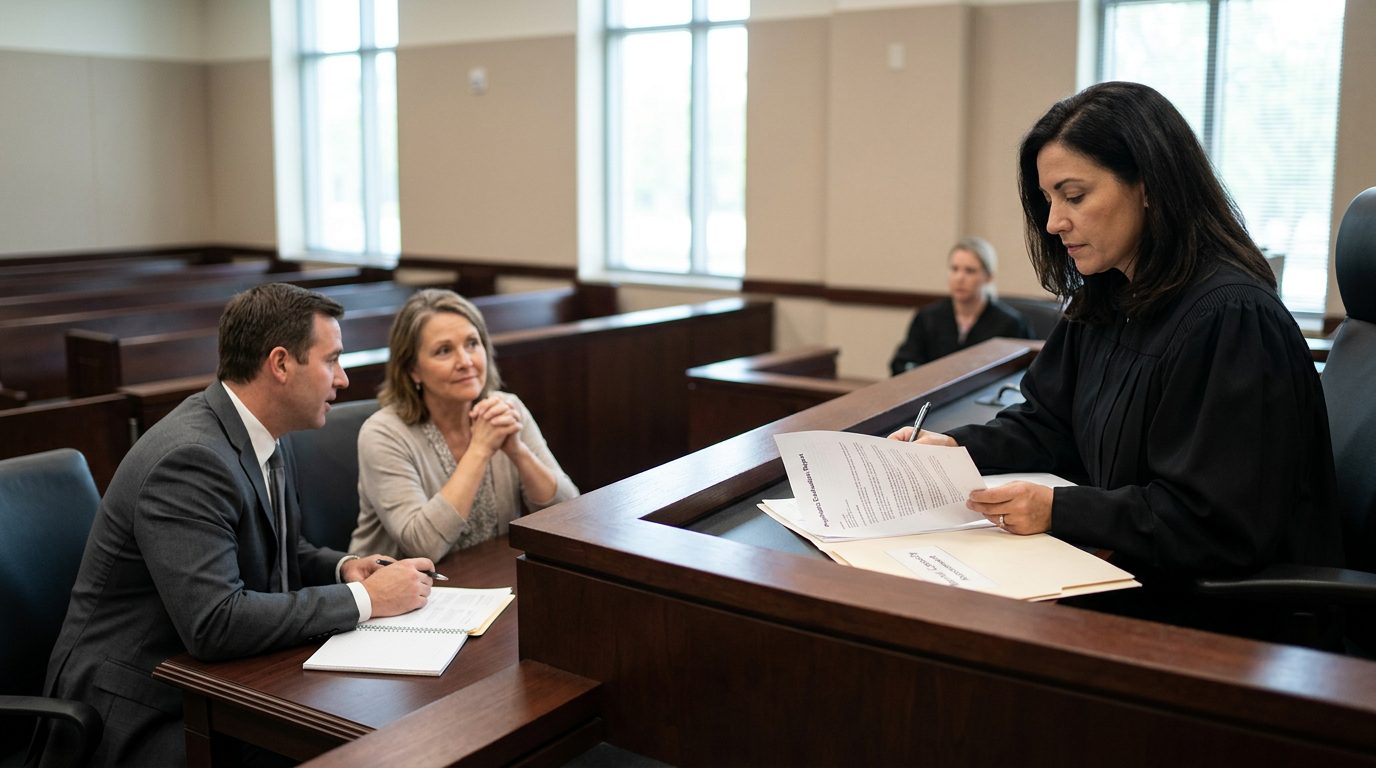
The judge reviews all evidence, hears testimony from the petitioner, the physician, and any other witnesses, and considers objections from the proposed ward or interested parties. The proposed ward has the right to be present and to object.
Step 5: Court Order and Appointment
If the judge finds that guardianship is necessary and in the person’s best interest, the court issues an order appointing the guardian and issues “letters of guardianship”—the official document that gives the guardian legal authority.
Step 6: Ongoing Duties
The guardian begins managing the ward’s affairs, files annual reports with the court, and maintains compliance with statutory requirements.
Timeline: The process typically takes 2 to 4 months from petition filing to appointment, depending on court schedule, case complexity, and whether the proposed ward objects.
What Documentation and Evidence Is Required?
To establish guardianship, you’ll need:
- Medical evidence: A physician’s affidavit or report documenting the proposed ward’s mental illness and incapacity to manage personal or financial affairs
- Capacity evaluation: A court-ordered independent medical examination
- Petition details: Specific facts explaining why guardianship is necessary and why less restrictive alternatives are insufficient
- Proposed guardian information: Your relationship to the ward, background, and willingness to serve
- Financial disclosure: Details of the ward’s assets, liabilities, and income (if applicable)
- Notice compliance: Proof that the ward and interested parties were properly notified
Your attorney will gather and organize this documentation and ensure it meets Florida’s statutory requirements.
Have questions about what happened?
Ask our team directly. The first conversation is free, confidential, and there is no obligation to continue.
Plenary vs. Limited Guardianship: Which Is Right?
The choice between plenary and limited guardianship depends on the person’s condition and decision-making capacity.
Plenary guardianship is appropriate when the person cannot make any significant decisions and needs the guardian to manage all personal, medical, and financial matters.
Limited guardianship is appropriate when the person retains some decision-making capacity in certain areas. For example, they might be unable to manage finances but capable of making medical decisions, or vice versa.
Florida courts prefer the least restrictive alternative. If limited guardianship would adequately protect the person and preserve their autonomy, the court will likely choose it over plenary guardianship.
The scope isn’t permanent. If circumstances change—if the person’s condition improves or deteriorates—you can petition the court to modify or expand the guardianship.
Why Robinson & Casey for Adult Mental Health Guardianship
Robinson & Casey handles guardianship and mental health commitment matters exclusively. This focused practice means:
- Deep procedural knowledge: We’re familiar with Florida court procedures, medical evidence requirements, and what judges expect in guardianship petitions.
- Years of experience: We work with families navigating mental health crises and guardianship decisions across South Florida and statewide.
- Compliance experience: We ensure your petition meets all statutory requirements and is presented effectively.
- Statewide service: We represent families throughout Florida, not limited to one county.
- Direct access: Call (561) 849-4700 to speak with an attorney who handles these cases regularly.
Frequently Asked Questions
Can guardianship be reversed or terminated?
Yes. If the ward regains capacity or circumstances change significantly, you can petition the court to modify or terminate the guardianship.
What are the guardian’s duties?
The guardian must act in the ward’s best interest, manage finances responsibly, maintain appropriate medical care, file annual reports with the court, and avoid conflicts of interest.
How much does guardianship cost?
Costs vary and include attorney fees, court filing fees, and medical evaluation fees. Discuss specific costs during your consultation.
Can a family member be appointed guardian?
Yes. Family members are often appointed if they’re suitable and willing to serve. The court considers the relationship and the person’s ability to fulfill guardian duties.
What if the proposed ward objects to guardianship?
The ward has the right to object and request a hearing. The court will consider all objections and evidence before deciding whether guardianship is necessary.
Is guardianship the only option?
No. Less restrictive alternatives like power of attorney or healthcare proxy may be sufficient in some cases. Your attorney will help you explore all options.
Common Concerns and Objections
“Guardianship removes too many rights.” Limited guardianship preserves rights while providing the authority you need. The court considers the least restrictive option and will choose limited guardianship if it’s adequate.
“The process sounds complicated and slow.” Robinson & Casey handles all procedural requirements. The typical timeline is 2 to 4 months—manageable with proper guidance.
“Medical evidence is unclear or disputed.” A court-ordered evaluation provides an objective assessment. Your attorney will help present the evidence effectively and address any disputes.
“Our family disagrees about guardianship.” The court hears all interested parties. Your attorney will help present your position and evidence clearly.
“I’m worried about cost and ongoing obligations.” Discuss fees upfront during your consultation. Guardian duties are manageable with proper guidance and support.

Want to know where you stand?
Tell us what happened and our team will walk you through the options available to you, at no cost.
Next Steps: Schedule Your Consultation
If you’re facing the decision to establish guardianship for an adult family member whose mental health condition has left them unable to manage their own care or finances, you’re not alone—families in your situation can reach out to us to understand their options and move forward with confidence.
Contact Robinson & Casey today. An attorney will review your situation, explain your options, and outline the process. There’s no obligation—a consultation helps you understand what guardianship involves and whether it’s the right path forward.
How Robinson & Casey Serves Families
Court Petition & Filing
We prepare and file all necessary guardianship petitions with the Florida court, ensuring compliance with state law and proper notice to all required parties.
Medical & Capacity Documentation
We work with physicians and mental health professionals to gather the medical evidence the court requires to establish that a guardianship is necessary.
Guardian Appointment & Duties
We guide families through the court process to have a suitable guardian appointed and explain the legal responsibilities guardians must fulfill under Florida law.
Ongoing Court Compliance
We help guardians understand annual reporting requirements and other continuing obligations to keep the guardianship in good standing with the court.
Types of Mental Health Guardianship
Plenary Guardianship
The guardian assumes broad decision-making authority over the ward's person and property when the individual cannot manage their own affairs.
Limited Guardianship
The court grants guardianship over specific areas only—such as medical decisions or financial matters—while the individual retains other rights and responsibilities.
Emergency Temporary Guardianship
When immediate protective action is needed, we help petition for emergency temporary guardianship to address urgent safety or medical concerns.
Mental Health Guardianship
Guardianship established when mental illness or condition prevents an adult from making safe decisions about treatment, medication, or living arrangements.
Important: Guardianship Is a Court Process
Establishing guardianship requires a formal petition, medical evidence, and a judge's order. Florida law sets specific standards and procedures that must be followed. The court will consider whether less restrictive alternatives exist before approving guardianship.
Frequently Asked Questions
Can guardianship be reversed or terminated?
Yes. If the ward regains capacity or circumstances change significantly, you can petition the court to modify or terminate the guardianship.
What are the guardian's duties?
The guardian must act in the ward's best interest, manage finances responsibly, maintain appropriate medical care, and file annual reports with the court.
Is guardianship the only option?
Florida law recognizes alternatives such as powers of attorney, healthcare proxies, and supported decision-making. The court will consider whether a less restrictive option is appropriate.
How long does the guardianship process take?
Timeline varies depending on the complexity of the case and court scheduling. We work to move the process forward efficiently while ensuring all legal requirements are met.
Ready to Protect Your Loved One?
Related practice areas
- Mental Health Guardianship in Florida: Complete Guide for Families
- How to Get Guardianship of a Mentally Ill Person in Florida
- Limited Guardianship of a Minor in Florida | Robinson &