
Mental Health Guardianship
Challenge Mental Health Guardianship in Florida: Legal Options
A ward or interested party may petition the court to modify or terminate a guardianship. Robinson & Casey helps families understand the process and protect their rights.
By Richard J. Casey III, Esq. · Published September 21, 2026
How to Challenge Mental Health Guardianship in Florida: Legal Grounds and Process
You can challenge a mental health guardianship in Florida by filing a petition in the circuit court that established the original order, provided you have legal grounds—such as recovery or changed circumstances, insufficient evidence of incapacity, guardian misconduct, procedural defects, or the availability of less restrictive alternatives. The process requires current medical evidence, formal notice to interested parties, and a hearing before a judge.

Not sure what your next step is?
Talk it through with our team — the first consultation is free, confidential, and carries no obligation.
Understanding Mental Health Guardianship in Florida
A mental health guardianship is a court-ordered arrangement in which a guardian is appointed to make personal, medical, and sometimes financial decisions for an individual deemed incapacitated due to mental illness or a mental health condition. The guardian’s authority derives from Florida Statutes Chapter 744, which sets out the legal framework for guardianship, the incapacity determination process, and the guardian’s powers and duties.
In a plenary (full) guardianship, the guardian controls most or all of the ward’s (the person under guardianship) personal and financial decisions. The scope of authority is broad but always must be exercised in the ward’s best interest. The court that established the guardianship retains ongoing jurisdiction to modify, terminate, or adjust the guardian’s powers as circumstances change.
Legal Grounds for Challenging a Mental Health Guardianship
Florida law recognizes several legitimate grounds on which you may petition to modify or terminate a guardianship:
Changed Condition of the Ward
If the ward has recovered, stabilized, or significantly improved in mental health functioning, that change may no longer support the original finding of incapacity. Medical or psychological evidence showing current capability to make decisions is central to this ground.
Insufficient Evidence of Incapacity
If the original guardianship order was based on incomplete, outdated, or inaccurate medical or psychological evidence, the court may reconsider whether incapacity was ever properly established. This ground challenges the factual foundation of the original order.
Guardian Misconduct or Breach of Fiduciary Duty
A guardian owes a fiduciary duty (a legal obligation to act in the ward’s best interest) to the person under guardianship. If the guardian has mismanaged assets, neglected care responsibilities, failed to follow court orders, or acted in self-interest rather than the ward’s interest, that breach may warrant removal or modification of the guardianship.
Procedural Defects
If the original guardianship was established without proper notice to the ward, without a meaningful hearing, or in violation of statutory requirements under Chapter 744, procedural defects may provide grounds to challenge the order.
Availability of Less Restrictive Alternatives
Florida law favors less restrictive alternatives to full guardianship. If circumstances now support a limited guardianship (in which the guardian’s powers are narrowed and specific rights are restored to the ward), restoration of rights, or modification rather than full termination, the court may order that alternative instead.
Petition to Modify or Terminate Guardianship
Who Can File
The ward themselves, a family member, a friend, a healthcare provider, or an attorney ad litem (a lawyer appointed to represent the ward’s interests) may file a petition to modify or terminate the guardianship.
Where to File
The petition must be filed in the Florida circuit court that established the original guardianship. This is typically the county where the ward resides or where the guardianship was originally ordered.
Required Documentation
To support your petition, you will need current medical or psychological evaluation evidence. This evaluation should address the ward’s current mental and functional status and speak directly to whether incapacity still exists or whether less restrictive alternatives are now appropriate. Older evaluations alone are generally insufficient; courts want current clinical information.
Notice Requirements
Under Florida Statutes Chapter 744, the guardian, the ward, and other interested parties (such as family members or the ward’s healthcare providers) must receive formal written notice of the petition and the hearing date. Proper notice is a critical procedural requirement; failure to provide it can delay or invalidate the proceeding.
Have questions about what happened?
Ask our team directly. The first conversation is free, confidential, and there is no obligation to continue.
The Challenge Hearing Process
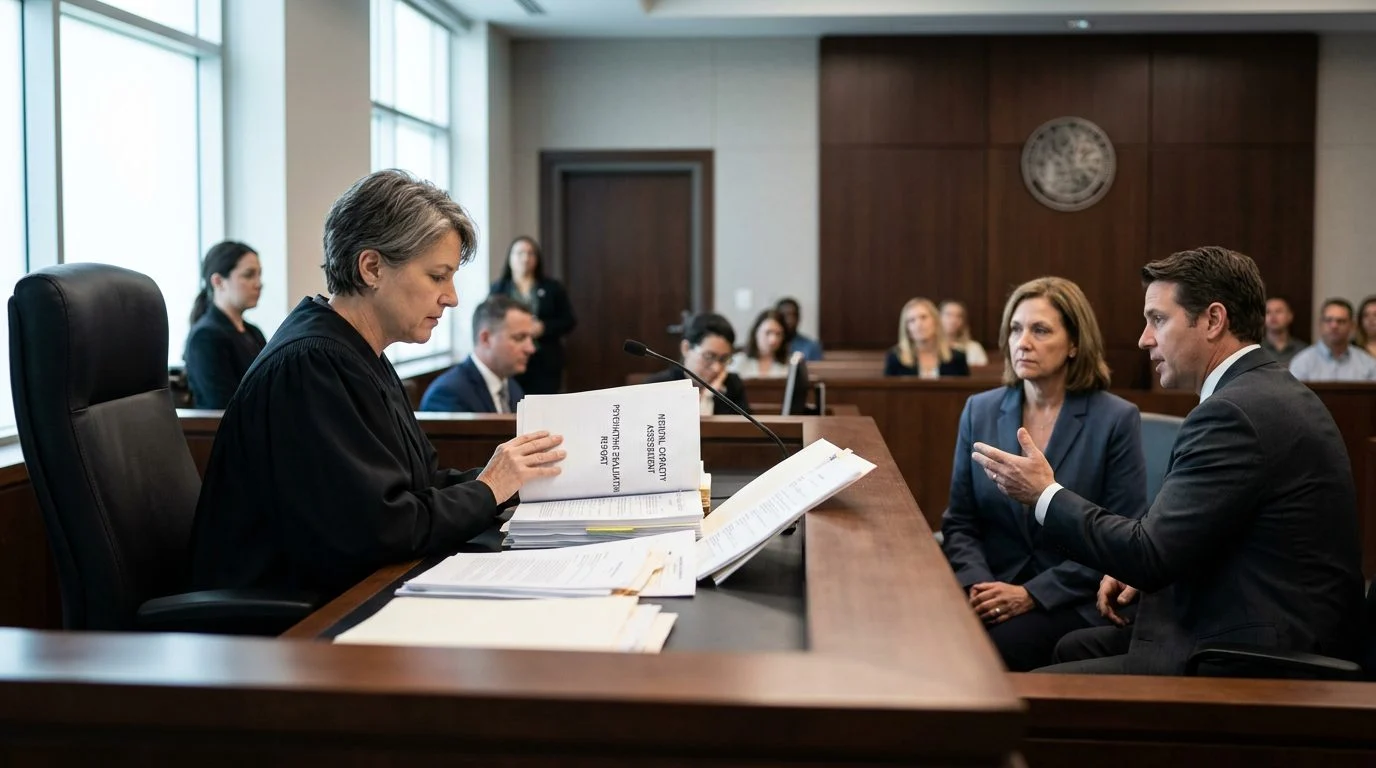
Once your petition is filed and notice is given, the court will schedule a hearing. Here’s what typically happens:
Burden of Proof
The person challenging the guardianship generally bears the burden of proving grounds for modification or termination. This means you must present evidence that persuades the judge that change or termination is warranted. The standard is typically clear and convincing evidence—a higher threshold than a preponderance of the evidence but lower than proof beyond a reasonable doubt.
Evidence Presentation
At the hearing, you may present medical testimony from the ward’s current healthcare providers, psychological or psychiatric evaluations, witness statements from family members or others familiar with the ward’s current functioning, and records documenting the ward’s daily activities and decision-making capacity. The goal is to show the judge the ward’s actual current status.
Guardian’s Response
The guardian and their attorney will present evidence supporting continuation of the guardianship. They may offer their own medical evidence, testimony about the ward’s ongoing needs, and records of the guardian’s management and care.
Court Decision
The judge will weigh the evidence and determine whether to modify the guardianship (narrowing the guardian’s powers or restoring specific rights), terminate it entirely, or uphold the existing order. The judge’s decision will be issued in a written order.
Alternatives to Full Termination
You don’t have to choose between full guardianship and no guardianship. Florida law provides middle-ground options:
Limited Guardianship
A limited guardianship narrows the guardian’s powers to only those areas where the ward truly lacks capacity. For example, the court might allow the ward to retain the right to vote, marry, make medical decisions in certain areas, or control a portion of their finances, while the guardian retains authority over other matters.
Restoration of Rights
As the ward’s condition improves, the court may gradually restore decision-making authority in specific domains, moving toward greater independence without requiring full termination of guardianship.
Modification of Guardian
If the current guardian has engaged in misconduct or a conflict of interest has arisen, you may petition to replace the guardian with someone else while the guardianship itself continues.
Timeline and Costs
The time required to challenge a guardianship varies. Simple cases with clear evidence of changed circumstances may move relatively quickly. Complex cases involving disputes over medical evidence or guardian misconduct may take months. Court scheduling, the availability of medical witnesses, and the complexity of the issues all affect timing.
Court filing fees, service of process costs (notifying interested parties), and potential attorney fees apply. Some cases may qualify for expedited hearings if urgent circumstances exist or grounds are clear. Discussing costs and timeline with an attorney early helps you plan realistically.
When to Seek Legal Guidance
Challenging a guardianship requires understanding of Florida guardianship law, court procedure, evidence standards, and the specific facts of your situation. An attorney can evaluate whether grounds exist for your challenge, help you gather necessary medical and factual evidence, prepare your petition, and represent your interests at the hearing.
Early consultation also clarifies which grounds apply to your situation, what evidence you’ll need, and what realistic outcomes might look like. A guardianship challenge is not a simple administrative process—it’s a court proceeding with legal standards and procedural requirements.

Want to know where you stand?
Tell us what happened and our team will walk you through the options available to you, at no cost.
Frequently Asked Questions
Can the ward themselves petition to challenge their own guardianship?
Yes. The ward has standing to file a petition and may do so directly or through an attorney ad litem or guardian ad litem appointed to represent their interests.
What if I don’t have current medical evidence?
Current medical or psychological evaluation is typically necessary to support a challenge. Without it, you’ll have difficulty meeting your burden of proof. An attorney can advise on how to obtain appropriate evaluations.
How much does it cost to challenge a guardianship?
Costs include court filing fees, service of process, and attorney fees if you hire representation. Costs vary by case complexity. Some families may qualify for fee waivers or payment plans.
Can a guardianship be modified without going to court?
No. Any modification or termination of guardianship must be ordered by the court. The guardian cannot unilaterally modify their own powers or terminate the guardianship.
If you’re questioning whether a guardianship still fits someone’s current situation, or if circumstances have shifted since the guardianship was established, families in your position reach out to discuss what options may be available. Robinson & Casey handles guardianship challenges and modifications for families across South Florida and statewide. Contact us to schedule a consultation and explore your next steps.
Grounds for Challenging a Mental Health Guardianship
Changed Circumstances
If the ward's mental health or capacity has improved, or if the original basis for guardianship no longer applies, the court may modify or terminate the arrangement.
Lack of Proper Notice or Procedure
Guardianships must follow strict procedural requirements under Florida law. Violations in how the guardianship was established may provide grounds for challenge.
Abuse or Neglect by Guardian
If the guardian is not acting in the ward's best interest, mismanaging assets, or failing in their duties, the court can remove the guardian and modify the guardianship.
Insufficient Medical Evidence
A guardianship must be supported by current medical or psychological evaluation. Outdated or inadequate evidence may be challenged with updated professional assessment.
How Robinson & Casey Helps
Petition Preparation
We prepare and file the petition to challenge or modify the guardianship, ensuring all required documentation and legal arguments are properly presented to the court.
Standing and Representation
Whether you are the ward, a family member, or an interested party, we advise on your legal standing and represent your interests throughout the process.
Medical Evidence Coordination
We work with physicians and mental health professionals to obtain current evaluations that support your position before the court.
Court Advocacy
We present your case at hearings, cross-examine witnesses, and advocate for the outcome you seek—whether modification, termination, or other relief.
Who Can Challenge a Guardianship?
The ward themselves may petition to challenge their guardianship directly or through an attorney ad litem or guardian ad litem. Family members and other interested parties may also have standing to file. The specific requirements depend on your relationship to the ward and the circumstances.
Common Questions About Challenging Mental Health Guardianship
Can the ward petition on their own?
Yes. The ward has standing to file a petition and may do so directly or through an attorney ad litem or guardian ad litem appointed to represent their interests.
What if I don't have current medical evidence?
Current medical or psychological evaluation is typically necessary to support a challenge. We can help coordinate with qualified professionals to obtain updated assessments of the ward's mental health and capacity.
How long does the process take?
The timeline varies depending on the complexity of the case, the court's schedule, and whether the guardian contests the petition. We guide you through each stage and keep you informed.
What are the possible outcomes?
The court may terminate the guardianship entirely, modify it to a limited guardianship, remove the current guardian, or take other action depending on the evidence and the ward's best interests.