
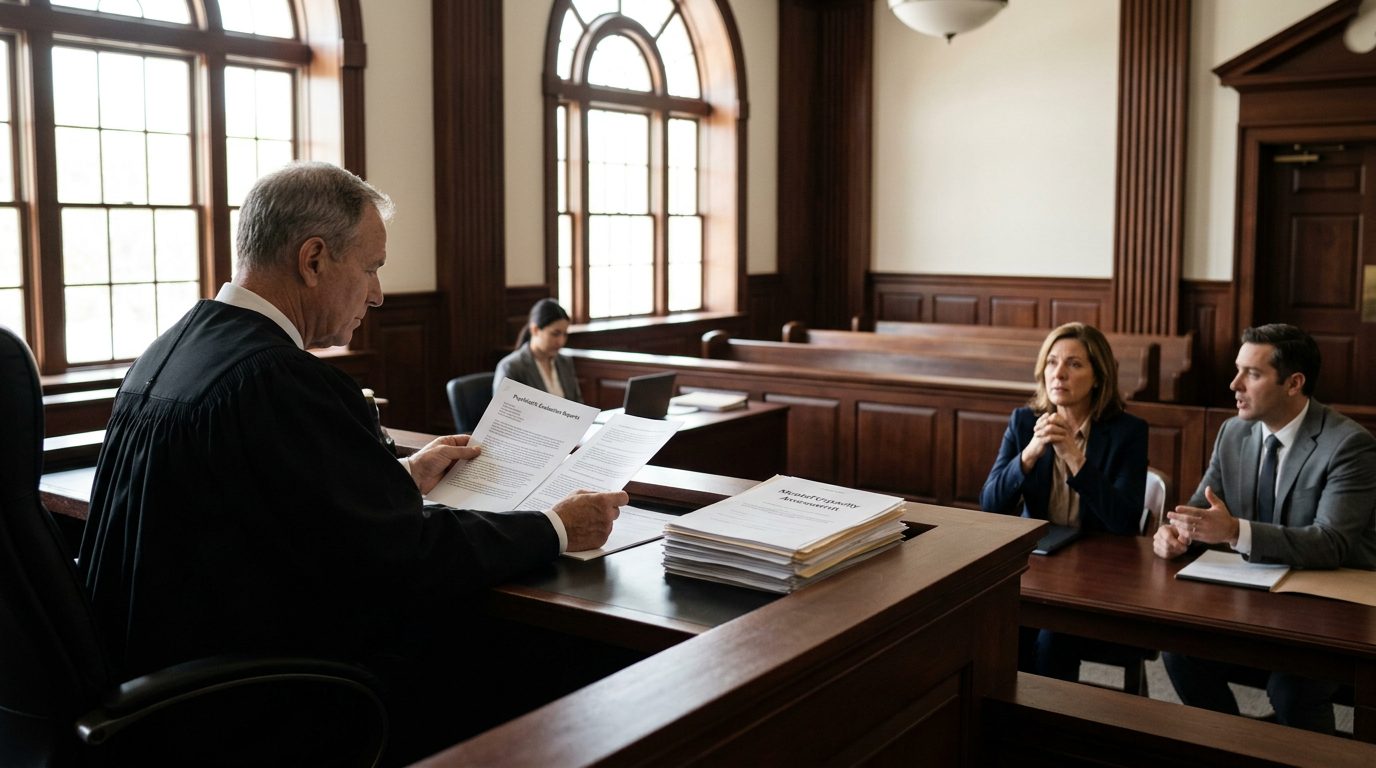
Emergency Mental Health Guardianship
Court Action When Someone Needs Immediate Protection
Robinson & Casey handles emergency temporary guardianship petitions in Florida. When a family member faces a mental health crisis, Robinson & Casey can help you seek court authority to make decisions on their behalf.
By Richard J. Casey III, Esq. · Published September 22, 2026
Emergency Mental Health Guardianship in Florida: What It Is, How It Works & What to Expect
Emergency mental health guardianship is a court-ordered legal authority that lets you make urgent decisions for an adult who cannot do so because of mental illness. It’s designed for acute crisis situations—not routine matters—and whether it is granted is a decision for the court.
If you’re facing a mental health crisis involving a family member and need immediate decision-making power over their medical care, treatment, or living situation, this guide explains the process, timing, and what Robinson & Casey handles for your case.

Not sure what your next step is?
Talk it through with our team — the first consultation is free, confidential, and carries no obligation.
What Is Emergency Mental Health Guardianship in Florida?
Emergency mental health guardianship is temporary legal authority to make decisions for an adult who lacks capacity due to mental illness and faces immediate risk or urgent need.
Unlike routine guardianship, which can take weeks to establish, the emergency version is built for crisis. A court can issue a temporary guardianship order before a full hearing if the judge finds genuine emergency circumstances. This gives you decision-making authority right away—while the full case proceeds in the background.
The scope is focused: you’ll make decisions about mental health treatment, psychiatric medication, hospitalization, therapy, and living arrangements. You won’t typically handle finances or property unless the court also grants plenary (full) guardianship.
The temporary order lasts until either the crisis resolves, the individual regains capacity, or the court converts it to a longer-term guardianship based on ongoing incapacity.
Who Qualifies for Emergency Mental Health Guardianship?
An adult qualifies if three conditions are present:
- Documented mental illness affecting their ability to make decisions about their own care and treatment.
- Immediate risk or urgent need: danger to themselves or others, inability to obtain necessary mental health treatment, or a crisis requiring swift intervention that can’t wait for routine guardianship.
- No existing guardianship or valid advance directive already in place.
The petitioner—usually a family member, caregiver, healthcare provider, or other interested party—must have legal standing to bring the case.
What Does Emergency Mental Health Guardianship Cover?
Emergency mental health guardianship gives you authority over specific areas of care and decision-making:
- Medical and mental health decisions: consent to psychiatric evaluation, medication, hospitalization, therapy, and other treatment.
- Living arrangements: placement in a psychiatric facility, residential care, supervised housing, or other appropriate environment.
- Day-to-day care and welfare: nutrition, hygiene, safety, supervision, and general well-being.
It does not typically include financial decisions, property management, or legal matters unless the court also grants plenary guardianship.
The court tailors the scope to the individual’s specific needs. Your order will spell out exactly what decisions you can make.
The Emergency Mental Health Guardianship Process: Step-by-Step
Step 1: Consultation & Case Assessment
You meet with Robinson & Casey to discuss the situation. The attorney reviews the mental health documentation, the nature of the crisis, and the urgency level to determine whether emergency guardianship is appropriate and feasible.
Step 2: Petition Preparation
The attorney drafts a detailed emergency guardianship petition. This includes:
- Allegations of the individual’s mental illness and incapacity.
- Facts showing immediate risk or urgent need.
- Supporting medical evidence, psychiatric evaluations, and records.
- Affidavits (sworn statements) from family, caregivers, or healthcare providers describing the crisis.
- A physician’s affidavit documenting the mental illness and lack of capacity to make decisions.
Step 3: Filing with the Court
The petition is filed in the circuit court of the county where the individual lives. Robinson & Casey handles all filing requirements and ensures the court receives complete documentation.
Step 4: Temporary Order (If Granted)
If the judge finds emergency circumstances exist, a temporary guardianship order may be issued without a full hearing. You then have immediate decision-making authority.
Step 5: Notice & Hearing
The respondent (the person subject to guardianship) and interested parties are notified of the petition. A full hearing is scheduled within the timeframe set by Florida law. The respondent has the right to contest the guardianship and present their own evidence.
Step 6: Guardian Appointment
If the court finds clear and convincing evidence of incapacity based on the hearing, a permanent or extended guardianship order is issued. You are formally appointed as guardian.
Step 7: Ongoing Duties
As guardian, you assume decision-making authority and must file annual reports with the court, maintain records, and act in the ward’s best interest.
Timeline: How Fast Can Emergency Guardianship Be Granted?
Temporary order: Timing depends on the court’s schedule and on whether the judge finds that emergency circumstances exist.
Full hearing: Timing depends on the court’s schedule and case complexity.
In cases where immediate action is critical, the temporary order gives you authority to act while the full process continues.
Have questions about what happened?
Ask our team directly. The first conversation is free, confidential, and there is no obligation to continue.
What Documentation & Evidence Is Needed?
To support an emergency guardianship petition, you’ll need:
- Medical or psychiatric evaluation: A recent assessment documenting the mental illness and the individual’s incapacity to make decisions.
- Physician’s affidavit: A sworn statement from a licensed physician confirming the mental illness and lack of capacity.
- Affidavits from family or caregivers: Sworn statements describing the crisis, the individual’s behavior, and why immediate intervention is necessary.
- Medical records: Recent treatment records, hospital discharge summaries, psychiatric notes, or other clinical documentation.
- Proof of notice: Evidence that the respondent and other required parties have been properly notified.
- Completed petition form: The guardianship petition with all required allegations, facts, and signatures.
Robinson & Casey can explain what to gather for your petition.
Why Choose Robinson & Casey for Emergency Mental Health Guardianship?
Focused practice: Robinson & Casey handles guardianship and mental health commitment matters.
Time-sensitive matters: Emergency guardianship petitions involve urgent timing for families facing a mental health crisis, and we understand the urgency of these situations.
Procedural guidance: We can explain the scheduling and procedural issues that may arise in your matter.
Comprehensive guidance: We handle every step—from initial assessment through petition preparation, court filing, representation at hearings, and post-appointment compliance.
Common Questions About Emergency Mental Health Guardianship
Q: Can I get a temporary guardianship order before the full hearing?
Yes—if the court finds emergency circumstances, a temporary order may be issued immediately, giving you decision-making authority while the full case proceeds.
Q: What if the person refuses to cooperate or contests the guardianship?
The respondent has the right to contest. Robinson & Casey prepares evidence and arguments to support the petition; the court makes the final determination based on clear and convincing evidence.
Q: How much does emergency guardianship cost?
Costs vary based on case complexity, court fees, and whether the matter is contested. Robinson & Casey discusses fees and costs during the initial consultation.
Q: Will the guardianship be permanent?
Emergency or temporary guardianship can become permanent if the court finds ongoing incapacity. The duration depends on the individual’s condition and the court’s order.
Q: Can I end the guardianship if the person recovers?
Yes—if the individual regains capacity, the guardianship can be terminated by petition to the court.
Q: Do I need an attorney?
While not legally required, an attorney is strongly recommended for emergency guardianship to ensure proper filing, compliance with Florida law, and effective court representation.
What Happens After the Guardianship Order Is Granted?
Once the court issues a guardianship order, you assume decision-making authority. You can now make medical, mental health, and care decisions on behalf of the ward without their consent.
As guardian, you have legal duties:
- File annual reports with the court.
- Maintain detailed records of decisions and expenses.
- Act in the ward’s best interest at all times.
- Seek court approval for major decisions, depending on the order’s terms.
If circumstances change—the individual recovers, their condition improves, or new issues arise—the guardianship can be modified or terminated by petition to the court.
Robinson & Casey can advise you on guardian responsibilities and help with required filings to keep your appointment in good standing.

Want to know where you stand?
Tell us what happened and our team will walk you through the options available to you, at no cost.
Next Steps: Schedule Your Consultation
If you’re facing a mental health crisis and need immediate decision-making authority, contact Robinson & Casey to discuss your situation.
During your consultation, bring any available medical records, documentation of the crisis, and details about the individual’s condition. The attorney will explain the process, timeline, costs, and next steps specific to your case.
Call Robinson & Casey at (561) 849-4700 or schedule a consultation online.
If a family member’s mental health crisis is preventing them from making safe decisions about their care, you may need immediate legal authority to act—and this page explains what emergency mental health guardianship involves. Let’s talk about what emergency mental health guardianship can do for you.
How Robinson & Casey Approaches Emergency Mental Health Guardianship
Rapid Petition Filing
We prepare and file emergency temporary guardianship petitions designed to move through the court system quickly when circumstances demand immediate intervention.
Complete Petition Preparation
We gather the medical and factual evidence needed to support your petition, draft all required court filings, and ensure compliance with Florida guardianship statutes.
Court Representation
We represent you at hearings and present the evidence and testimony the court needs to evaluate whether emergency temporary guardianship is appropriate.
Guidance Through the Process
We explain each step—from filing through the temporary order, the full hearing, and ongoing guardianship duties if guardianship is established.
Emergency Temporary vs. Plenary Guardianship
Emergency Temporary Guardianship
Issued by the court without a full hearing when emergency circumstances exist. Gives you immediate decision-making authority while the full guardianship case proceeds. Valid for a limited period.
Plenary Guardianship
Established after a full hearing and court finding. Grants broad authority over the person's personal, medical, and financial decisions. Continues until modified or terminated by the court.
Limited Guardianship
Restricts guardianship authority to specific areas—for example, medical decisions only, or financial matters only. Preserves the person's autonomy in other areas.
Mental Health Guardianship
Focuses on mental health treatment decisions. May be combined with other guardianship authority depending on the person's needs and the court's order.
Time Matters in a Crisis
If someone is in immediate danger or facing a mental health emergency, a temporary guardianship order may be available from the court, and the timing of any order is up to the court.
Common Questions About Emergency Mental Health Guardianship
Can I get a temporary order before the full hearing?
Yes. If the court finds emergency circumstances, a temporary order may be issued immediately, giving you decision-making authority while the full case proceeds.
What if the person refuses to cooperate or contests the guardianship?
The respondent has the right to contest. Robinson & Casey prepares your case to address objections and presents evidence to the court explaining why guardianship is necessary.
How is guardianship different from involuntary commitment for addiction?
Involuntary commitment (a Marchman Act petition) seeks court-ordered treatment for substance abuse. Guardianship grants ongoing decision-making authority over a person's affairs. They serve different purposes and may be pursued separately or together depending on circumstances.
What happens after the court approves guardianship?
You become responsible for making decisions on the person's behalf—medical, personal, and sometimes financial. You must follow court orders, file required reports, and act in the person's best interest.
Ready to Protect Someone in Crisis
Related practice areas
- Mental Health Guardianship in Florida: Complete Guide for Families
- Limited Guardianship Mental Health Decisions | Florida