
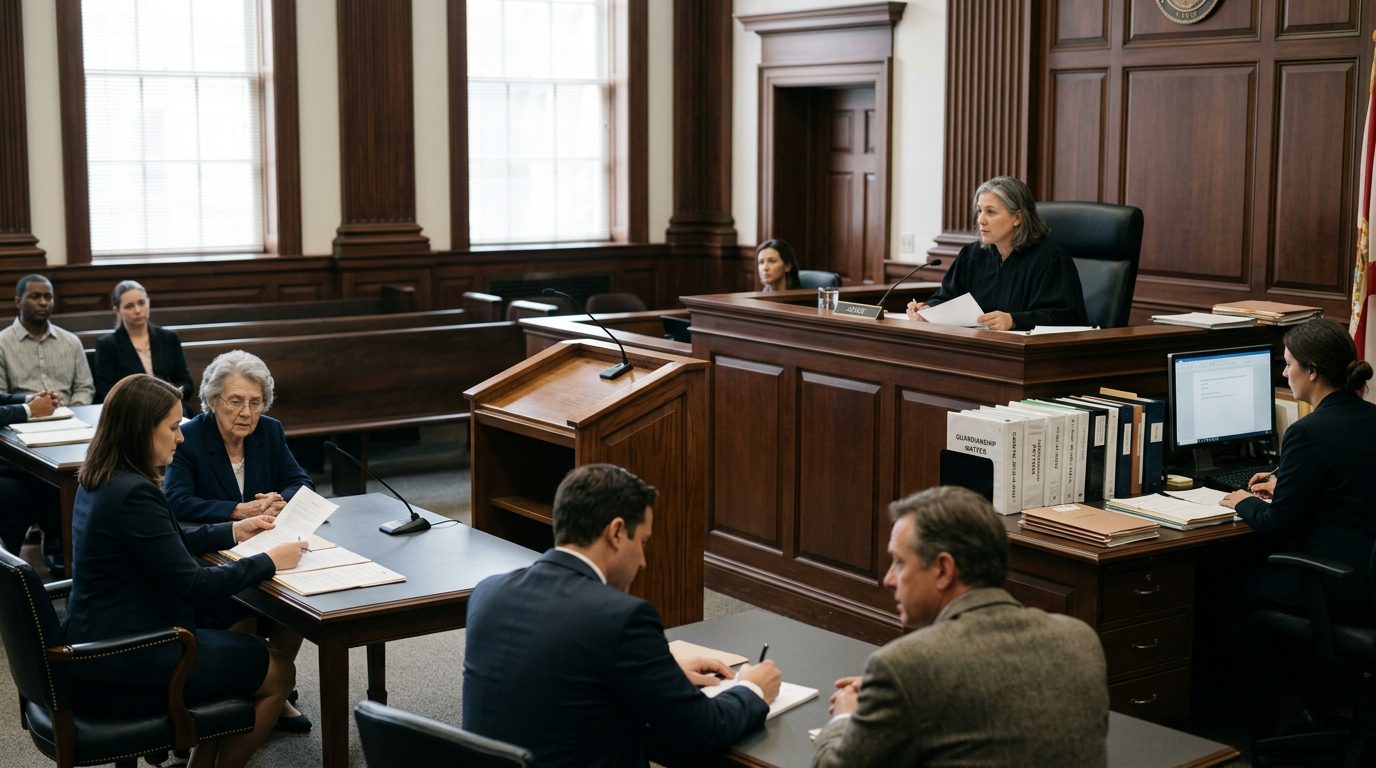
Emergency Guardianship
Protect Your Elderly Parent When Time Is Critical
Fast legal action to secure guardianship and ensure immediate care decisions in Florida
By Richard J. Casey III, Esq. · Published September 19, 2026
Emergency Guardianship of an Elderly Parent in Florida: What You Need to Know
When an elderly parent suddenly loses the ability to make decisions about their own care—due to stroke, dementia, or medical crisis—you may need emergency guardianship to act on their behalf legally and quickly. Emergency guardianship of an elderly parent is a court-granted authority that lets you make urgent medical, healthcare, and personal decisions when your parent cannot, and it can be granted within hours or days in Florida when immediate danger exists.
This guide explains what emergency guardianship is, who needs it, how Florida’s court process works, what to expect, and how Robinson & Casey helps families navigate this time-sensitive legal step.
If your elderly parent has suffered a sudden medical crisis or cognitive decline and you need to make urgent decisions about their care, families in that situation can reach out to us—call (561) 849-4149 to discuss your circumstances. Talk it through with our team — the first consultation is free, confidential, and carries no obligation.

What Is Emergency Guardianship for an Elderly Parent?
Emergency guardianship is temporary legal authority granted by a court to make decisions for an incapacitated elderly parent who cannot make or communicate those decisions themselves.
In Florida, there are two types of guardianship that apply in emergencies:
Emergency Temporary Guardianship
This is the fastest option. Under Florida Statutes Chapter 744, a court can grant temporary guardianship without a hearing (called an “ex parte” order) if it finds that immediate danger or irreparable harm will result without court intervention. This order can take effect the same day or within 24–48 hours. However, it is temporary—a full hearing must follow within 14 days.
Plenary Guardianship
This is the permanent guardianship that follows the full hearing. It grants broader, ongoing authority and continues until the court terminates it (usually when your parent regains capacity or passes away).
Emergency guardianship differs from a power of attorney or healthcare directive because those documents require your parent’s consent and signature while they still have capacity. Emergency guardianship bypasses that requirement—the court grants authority based on medical evidence of incapacity, not your parent’s agreement.
Who Needs Emergency Guardianship of an Elderly Parent?
You may need emergency guardianship if your parent faces one of these situations:
- Sudden medical crisis: Your parent has had a stroke, fall, heart attack, or surgery and cannot communicate wishes or consent to treatment.
- Advanced cognitive decline: Your parent has been diagnosed with dementia, Alzheimer’s disease, or other conditions that have left them unable to understand or decide about their own care.
- Immediate safety risk: Your parent is neglecting themselves, living in unsafe conditions, or vulnerable to financial exploitation, and no one has legal authority to intervene.
- No advance planning documents: Your parent never signed a power of attorney or healthcare directive, so no one can legally make decisions on their behalf.
- Documents are unavailable or unenforceable: Your parent has a power of attorney, but it’s lost, or the attorney-in-fact is unavailable or unwilling to act in an emergency.
In the cases our attorneys handle, the most common triggers are sudden hospitalization after a fall or stroke, or the discovery that a parent with advancing dementia has no advance directive in place.
What Does Emergency Guardianship Cover?
Emergency guardianship authority depends on what the court order specifies, but it typically covers:
- Medical decision-making: Consent to surgery, hospitalization, medication, diagnostic tests, and other medical treatment.
- Healthcare facility placement: Admission to a nursing home, assisted living facility, rehabilitation center, or hospital.
- Personal care decisions: Where your parent lives, what they eat, hygiene and grooming, and safety measures.
- Financial decisions (if the court grants plenary guardianship with financial authority): Paying bills, accessing bank accounts, managing property, and handling benefits.
Limited vs. Plenary Guardianship
The court can grant limited guardianship—authority over only specific decisions (for example, medical decisions only, not financial)—or plenary guardianship, which covers broader authority. In an emergency, you may petition for limited guardianship if only certain decisions are urgent.
The scope of your authority is defined in the court order. You cannot make decisions outside that order, and you must act only in your parent’s best interest.
How Emergency Guardianship Works in Florida
The Florida guardianship process has five main steps:
Step 1: Petition and Medical Evidence
You (or an attorney on your behalf) file a petition with the court in the county where your parent lives. The petition must include a physician’s affidavit—a sworn statement from a doctor confirming that your parent lacks the capacity to manage their person or property and stating the medical basis for that opinion.
Step 2: Court Reviews the Petition
The court clerk and judge review your petition and the medical affidavit to determine whether grounds exist for guardianship.
Step 3: Emergency Temporary Guardianship (Ex Parte Order)
If the court finds that immediate danger or irreparable harm will result without intervention, it may grant an emergency temporary guardianship order without holding a hearing first. This can happen the same day or within 24–48 hours. You then have authority to make urgent decisions immediately.
Step 4: Full Hearing
Within 14 days, the court must hold a full hearing. Your parent has the right to appear and be represented by an attorney. You may testify about your parent’s condition and why guardianship is necessary. The court may also appoint an attorney to represent your parent’s interests.
Step 5: Plenary Guardianship Order
If the court finds that guardianship is appropriate, it issues a plenary guardianship order appointing you as guardian. This order defines your authority and your ongoing duties. You then become responsible for managing your parent’s affairs and reporting to the court annually.
Timeline: How Fast Can Emergency Guardianship Be Granted?
Emergency Temporary Guardianship: 24–48 hours (same day in urgent cases)
If your petition is complete and the medical evidence clearly shows immediate danger, the court can grant a temporary order within hours.
Full Hearing: Within 14 days
Florida law requires the full hearing to occur within 14 days of the emergency temporary order.
Plenary Guardianship: 2–4 weeks total
From the time you file your petition to the time the court issues a final plenary guardianship order, the process typically takes 2–4 weeks, depending on court availability and how quickly you provide complete medical evidence.
What Affects Speed
– Completeness of your petition and supporting documents
– Quality and timeliness of the physician’s affidavit
– Court calendar availability
– Whether your parent or other interested parties contest the guardianship
Having an attorney prepare your petition ensures all documents are correct and complete, which reduces delays.
Not sure what your next step is?
Talk it through with our team — the first consultation is free, confidential, and carries no obligation.
What You’ll Need to Provide
To file for emergency guardianship, gather these documents and information:
- Physician’s affidavit: A sworn statement from your parent’s doctor confirming incapacity and the medical diagnosis or condition causing it.
- Proof of relationship: Birth certificate, marriage certificate, or other document showing you are your parent’s child or close family member.
- Parent’s personal information: Full legal name, date of birth, current address, and Social Security number.
- List of family members: Names and addresses of your parent’s spouse (if living), adult children, and other close relatives who must be notified of the guardianship petition.
- Existing documents: Any power of attorney, healthcare directive, or advance directive your parent may have signed.
- Details of the crisis: Dates, circumstances, and why immediate action is necessary (e.g., hospitalization, diagnosis, safety concern).
- Proof of residence: Utility bill or lease showing your parent lives in the county where you’re filing.
The more complete your petition, the faster the court can act.
The Court Process: What to Expect
Petition Preparation and Filing
You or your attorney prepare the petition, attach the physician’s affidavit and supporting documents, and file with the court in your parent’s county. The court clerk assigns a case number and schedules the emergency hearing.
Notice to Your Parent and Other Parties
Florida law requires that your parent and other interested family members be notified of the guardianship petition. Notice must be served according to court rules—usually by certified mail or personal service. This gives your parent and family members the opportunity to object or appear at the hearing.
Emergency Hearing (If Held Before Temporary Order)
In some cases, the court holds a brief emergency hearing before granting temporary guardianship. You may testify about your parent’s condition, why they lack capacity, and why immediate action is necessary.
Full Hearing
Within 14 days, a full hearing is held. You testify about your parent’s condition and your ability to serve as guardian. Your parent may testify or be represented by an attorney. The judge asks questions and may appoint a guardian ad litem (a person appointed by the court to investigate and report on your parent’s best interests).
Guardianship Order
If the judge finds that guardianship is in your parent’s best interest, the court issues a written order appointing you as guardian. The order specifies your authority (medical decisions only, or broader authority including financial matters) and your duties.
Ongoing Compliance
Once appointed, you must file annual accountings with the court, report on your parent’s status, and comply with all guardianship duties. The court retains oversight of your actions.
Your Responsibilities as Guardian of an Elderly Parent
Guardianship is not simply authority—it comes with legal duties:
- Act in your parent’s best interest: Every decision you make must prioritize your parent’s welfare, not your own interests.
- Make reasonable decisions: Decide as a reasonable, prudent person would decide for their own care.
- Keep detailed records: Document all medical decisions, healthcare facility placements, expenses, and financial transactions.
- File annual reports: Submit accountings and status reports to the court each year.
- Notify the court of changes: Report significant changes in your parent’s condition, residence, or circumstances.
- Avoid conflicts of interest: Do not use your parent’s money or property for your own benefit or make decisions that benefit you at your parent’s expense.
Guardians who breach these duties can be removed by the court and may face liability. The court oversees guardians to protect incapacitated persons from abuse or neglect.
Why Robinson & Casey for Emergency Guardianship
Robinson & Casey focuses exclusively on guardianship and Marchman Act matters—we handle no other practice areas. This focused approach means:
- Deep experience: Our attorneys handle emergency guardianship cases for families across South Florida and statewide. We understand the urgency and the emotional weight of these situations.
- Speed and efficiency: We know how to prepare petitions quickly and correctly, gather the right medical evidence, and file with the court to meet emergency timelines.
- Compliance experience: We ensure your petition meets all Florida Statutes Chapter 744 requirements and court rules. A mistake or omission can delay the process or result in dismissal.
- Clear guidance: We explain your duties as guardian and what to expect throughout the court process so you’re not facing this alone.
- Statewide availability: We serve families across Florida and are available by phone or in-person consultation.
Common Questions About Emergency Guardianship for Elderly Parents
Can emergency guardianship be granted without a hearing?
Yes. If the court finds immediate danger or irreparable harm, it can grant temporary guardianship ex parte (without a hearing). A full hearing must follow within 14 days.
How much does emergency guardianship cost?
Costs vary based on petition complexity and court fees. We discuss fees during your consultation.
What if my parent recovers or regains capacity?
Guardianship can be terminated by petition to the court if your parent regains the ability to manage their affairs.
Can I be removed as guardian?
Yes, if you breach your duties or the court finds guardianship is no longer in your parent’s best interest.
Do I need a lawyer to file for emergency guardianship?
While not required, an attorney ensures your petition is complete, filed correctly, and meets all legal standards—critical in time-sensitive situations.
What if my parent has a will or trust?
Guardianship is separate from estate planning. Guardianship addresses immediate care decisions; a will or trust addresses what happens to property after death.
If your elderly parent has suffered a sudden medical crisis or cognitive decline and you need to make urgent decisions about their care, families in that situation can reach out to us—call (561) 849-4149 to discuss your circumstances. Talk it through with our team — the first consultation is free, confidential, and carries no obligation.

Next Steps: Protecting Your Elderly Parent
If your elderly parent is facing a medical crisis, cognitive decline, or safety risk and you need to act quickly:
- Gather medical evidence: Contact your parent’s physician and request an affidavit confirming incapacity.
- Document the emergency: Write down what happened, when, and why immediate legal action is necessary.
- Collect personal information: Have your parent’s legal name, date of birth, Social Security number, and address ready.
- Contact Robinson & Casey: Call (561) 849-4149 or schedule a consultation to discuss your situation.
- Move quickly: Emergency guardianship is designed for urgent situations. Delays can increase risk to your parent.
If your elderly parent has lost capacity due to stroke, dementia, or medical crisis and you need to make urgent decisions about their medical care and living situation, Robinson & Casey helps families in that position every week—call (561) 849-4149 today.
Immediate Danger Requires Immediate Action
If your elderly parent faces imminent risk—from self-neglect, financial exploitation, or inability to make medical decisions—emergency temporary guardianship can be granted without a full hearing. Florida courts can act ex parte when irreparable harm is present. A full hearing must follow within 14 days.
Types of Emergency Guardianship for Elderly Parents
Emergency Temporary Guardianship
Granted quickly—often without a hearing—when a court finds immediate danger or irreparable harm. Provides short-term authority to make urgent decisions about medical care, living arrangements, or safety.
Plenary Guardianship
Full guardianship over all personal and financial matters. Used when an elderly parent cannot manage any aspect of their affairs and requires comprehensive legal protection.
Limited Guardianship
Guardianship over specific areas only—such as medical decisions or property management—while your parent retains rights in other areas. Preserves independence where possible.
Mental Health Guardianship
Focused authority to make mental health treatment decisions, including involuntary commitment for addiction or psychiatric care when your parent cannot consent.
Why Robinson & Casey Handles Emergency Guardianship
Fast Action When Seconds Count
We understand that elderly parents in crisis cannot wait. We file emergency petitions and move quickly through the court system to protect your parent's immediate safety and welfare.
Focused on Guardianship & Marchman Act Matters
Robinson & Casey focuses exclusively on guardianship and Marchman Act petitions. This narrow focus means deep knowledge of Florida's guardianship law and the court procedures that protect elderly adults.
Petition Preparation & Court Representation
We prepare all required documents, file with the court, and represent you through hearings and ongoing guardianship administration. We handle the legal complexity so you can focus on your parent's care.
Direct Access to Your Attorney
You work with the attorney handling your case. We answer your questions about the process, timelines, and what to expect at each stage.
Common Questions About Emergency Guardianship
Can emergency guardianship be granted without a hearing?
Yes. If the court finds immediate danger or irreparable harm, it can grant temporary guardianship ex parte (without a hearing). A full hearing must follow within 14 days.
How much does emergency guardianship cost?
Costs vary based on petition complexity and court fees. We discuss fees during your consultation and explain what to expect.
What happens after emergency temporary guardianship is granted?
You gain immediate authority to make urgent decisions. A full hearing is scheduled within 14 days to determine whether plenary, limited, or other guardianship should continue.
Can I pursue guardianship if my parent has a mental health or addiction crisis?
Yes. We handle mental health guardianship and involuntary commitment for addiction. If your parent cannot consent to treatment, we can petition the court for authority to make those decisions.