
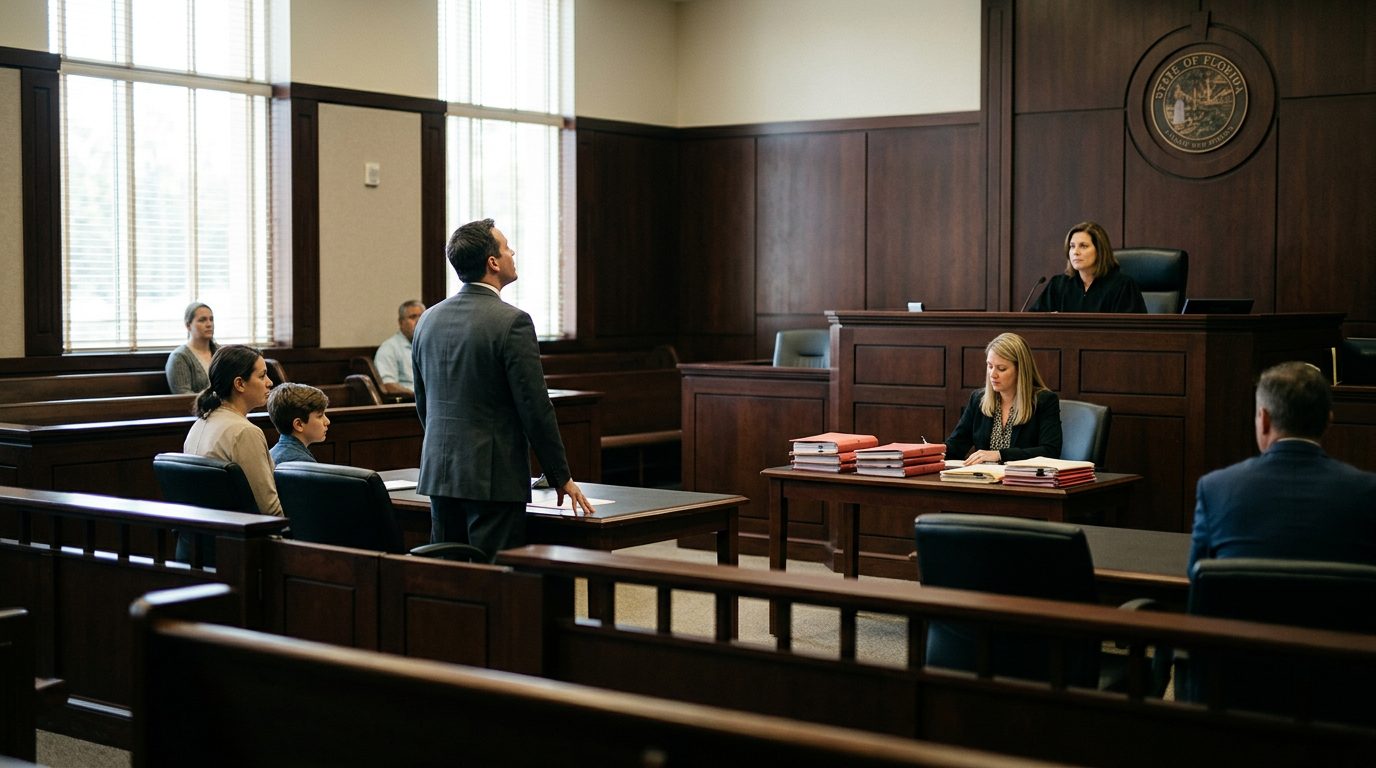
Emergency Guardianship
Emergency Guardianship of a Minor in Florida: Fast Court Action
When a child faces immediate danger or crisis, emergency temporary guardianship can be granted quickly—often within days. Robinson & Casey handles urgent petitions across Florida.
By Richard J. Casey III, Esq. · Published September 19, 2026
Emergency Guardianship of a Minor in Florida: Fast Court Process & What to Expect
When a child’s safety is at immediate risk—because a parent is incarcerated, hospitalized, or unable to care for them—waiting months for a standard guardianship hearing isn’t an option. Emergency guardianship of a minor is a temporary legal arrangement that gives you the authority to make decisions for a child in crisis, and it can be granted by a Florida court within hours or days, not weeks.
This guide walks you through what emergency guardianship is, who can petition for it, what the court process looks like, and how Robinson & Casey helps families navigate it quickly when a child needs protection now.
Not sure what your next step is?
Talk it through with our team — the first consultation is free, confidential, and carries no obligation.

What Is Emergency Guardianship of a Minor in Florida?
Emergency guardianship is a temporary legal authority granted by a Florida court to protect a child’s safety and welfare when immediate action is required. It allows you to make day-to-day decisions for a minor without waiting for a full guardianship hearing.
Unlike standard guardianship, which can take months to establish, emergency guardianship is designed for crisis situations. A judge can grant an order ex parte (without the other parent or guardian present) based on evidence of immediate danger or urgent need. That temporary order typically remains in effect for up to 72 hours, at which point a full hearing is scheduled to determine whether guardianship should continue.
Emergency guardianship is a distinct legal tool under Florida Statute Chapter 744, which governs all guardianship proceedings in the state. It bridges the gap between immediate child protection and long-term guardianship arrangements.
Who Can Petition for Emergency Guardianship of a Minor?
You don’t need to be a biological parent to petition for emergency guardianship in Florida. The law recognizes that many adults play a protective role in a child’s life.
Who can file: – A grandparent, aunt, uncle, or sibling – A close family friend or longtime caregiver – Any person with a genuine relationship to the child and a legitimate interest in their welfare – A person authorized by law to act in the child’s best interests
The court doesn’t require blood relation. What matters is that you can demonstrate a real connection to the child and a credible reason to believe their safety or welfare is at risk. The judge will consider whether you’re acting in the child’s best interests, not your own.
When Is Emergency Guardianship of a Minor Necessary?
Emergency guardianship addresses situations where a child cannot wait for standard legal procedures. Common scenarios include:
- Parent incarcerated or hospitalized: The parent is suddenly unavailable for weeks or months, and the child has no other responsible caregiver.
- Abandonment: A child is left without a parent or guardian, or the parent has disappeared.
- Parental incapacity: The parent is unable to care for the child due to substance abuse, mental health crisis, severe illness, or disability.
- Immediate danger: The child is in an unsafe living situation, facing neglect, abuse, or harm.
- Custody dispute: Custody is contested and the child needs immediate protection pending a full hearing.
- Death without a named guardian: A parent has died and no guardian was named in a will, or the named guardian is unavailable.
In each of these situations, the child’s needs are urgent. Emergency guardianship lets the court act fast to protect them.
What Does Emergency Guardianship Cover?
Emergency guardianship grants you specific legal powers to care for the child and make decisions on their behalf.
Authority includes: – Enrolling the child in school and making educational decisions – Consenting to medical treatment and accessing medical records – Making decisions about the child’s residence and daily living arrangements – Receiving child support or other benefits on the child’s behalf – Making routine care and welfare decisions
What it does not automatically include: – Management of the child’s financial assets or inheritance (may require separate authority) – Long-term decisions typically reserved for plenary guardianship
Emergency guardianship is narrower in scope than plenary (full) guardianship. It’s designed to address immediate needs and protect the child during a crisis. If ongoing guardianship is needed, the court will consider transitioning to plenary guardianship, which grants broader authority.
The Emergency Guardianship Process in Florida: Step-by-Step
Here’s what happens from the moment you file until the court makes a final decision.
Step 1: File the petition You (or your attorney) file a petition with the circuit court in the county where the child lives. The petition must include facts showing why the emergency is urgent and why the child’s safety or welfare is at immediate risk.
Step 2: Present evidence of crisis Your petition includes an affidavit (sworn statement) describing the emergency. You attach supporting documents: proof of the child’s residence, evidence that the parent is incapacitated or unavailable, medical records, police reports, or other documentation of the crisis.
Step 3: Ex parte order (immediate protection) The judge reviews your petition. If the evidence shows immediate danger or urgent need, the court can grant an ex parte order without a hearing. This order is issued immediately—often the same day or within 24 hours. You can then take the child into your care and make decisions on their behalf.
Step 4: Temporary order duration The ex parte order is typically valid for up to 72 hours. During this time, the parent or current guardian is notified of the order and the upcoming hearing.
Step 5: Full hearing scheduled The court schedules a full hearing within 72 hours to 10 days of the ex parte order (timing varies by court and circumstances).
Step 6: Full hearing At the hearing, both you and the parent (or current guardian) present evidence. The judge hears arguments about whether emergency guardianship should continue. You’ll likely need to testify about the child’s situation and why ongoing protection is necessary.
Step 7: Court decision The judge decides whether to continue emergency guardianship, modify it, or terminate it. If continued, the order remains in effect—typically for 6 months to 1 year.
Step 8: Transition to plenary guardianship (if needed) If long-term guardianship is appropriate, a separate petition for plenary guardianship is filed. That process runs parallel to the emergency guardianship and results in broader, ongoing authority.
Not sure what your next step is?
Talk it through with our team — the first consultation is free, confidential, and carries no obligation.
Timeline: How Long Does Emergency Guardianship Take?
Immediate phase: – Ex parte order: Same day to 24 hours after filing – First full hearing: 72 hours to 10 days after the ex parte order
Emergency guardianship duration: – Typically 6 months to 1 year, depending on the court order and circumstances
Transition to plenary guardianship: – Filed during the emergency period; full hearing scheduled separately – Total time to full guardianship: Varies, but typically 3–12 months from initial filing
The emergency phase is fast by design. Standard guardianship can take months; emergency guardianship prioritizes the child’s immediate safety and compresses the timeline dramatically.
What You’ll Need to File for Emergency Guardianship
To file a successful petition, gather these documents:
- Completed petition form (specific to your county)
- Affidavit or sworn statement describing the emergency, danger, or crisis
- Proof of the child’s Florida residence (school records, lease, utility bill, etc.)
- Documentation of your relationship to the child (letters, photos, school records, etc.)
- Evidence of the parent’s incapacity or unavailability (hospital records, incarceration documents, police report, etc.)
- Supporting evidence of the emergency (medical records, police reports, social services documentation, etc.)
- Proposed order for the judge to sign
- Filing fee (varies by county; typically $200–$500)
Having all documents ready speeds up the process. If you’re working with an attorney, they’ll ensure nothing is missing and that your petition makes the strongest case for immediate approval.
Why Robinson & Casey Handles Emergency Guardianship of Minors
Robinson & Casey focuses exclusively on guardianship matters, including emergency temporary guardianship. Here’s what sets the firm apart:
Speed and responsiveness: The firm understands that child safety crises don’t wait. Robinson & Casey prioritizes urgent cases and can often file within 24 hours of your call.
Local court knowledge: The attorneys have extensive experience with Florida circuit courts across South Florida and statewide. They know the judges, the procedures, and what evidence each court requires.
Detailed petition preparation: Strong petitions win ex parte orders. Robinson & Casey ensures every fact, piece of evidence, and legal argument is included so the judge has a clear, compelling reason to act immediately.
Guidance through transition: The firm helps families move from emergency guardianship to plenary guardianship if needed, or navigate changes in circumstances.
Court representation: Robinson & Casey appears in court on your behalf and advocates for the child’s best interests at every hearing.
Years of experience: The firm has handled emergency guardianship cases for families in crisis across Florida, giving it practical insight into what works and what courts expect.
Common Questions About Emergency Guardianship of a Minor
Can I get emergency guardianship without the parent’s consent?
Yes. Emergency guardianship is granted based on the child’s immediate safety and welfare, not parental consent. The court decides based on evidence of crisis or danger. The parent will be notified and given an opportunity to respond at the full hearing.
How much does emergency guardianship cost?
Filing fees vary by county, typically $200–$500. Attorney fees depend on the complexity and urgency of your case. Robinson & Casey can discuss costs during a consultation.
What happens after the emergency period ends?
The court will schedule a hearing to determine whether to continue guardianship, convert to plenary guardianship, or return custody to the parent. Robinson & Casey can guide you through this transition.
Can emergency guardianship be reversed?
Yes. If circumstances change or the emergency resolves, the court can modify or terminate the guardianship. The parent or other interested party can petition the court to reconsider.
Do I need a lawyer to file for emergency guardianship?
No, but an attorney significantly increases the likelihood of approval and ensures all legal requirements are met. Courts favor well-prepared petitions with clear evidence.
Will the parent be notified immediately?
In an ex parte order, the parent may not be notified immediately. At the full hearing (within 72 hours to 10 days), the parent or current guardian will be given notice and an opportunity to respond.
Why Acting Quickly Matters
A child in immediate danger cannot wait for a standard guardianship process. Every day matters when a child’s safety is at risk.
Emergency orders can be granted within hours, protecting the child while legal proceedings continue. Early legal action also establishes a clear record of the crisis, which supports your case for ongoing guardianship if needed.
Delays in filing mean the child remains in an unsafe situation longer than necessary. Robinson & Casey prioritizes urgent cases because the firm knows that speed can mean the difference between a child’s safety and ongoing risk.
Not sure what your next step is?
Talk it through with our team — the first consultation is free, confidential, and carries no obligation.

Next Steps: Schedule a Consultation
If a child in your care is facing an immediate crisis—whether a parent is incarcerated, hospitalized, unable to care for them, or the child is in danger—Robinson & Casey can help you move forward quickly.
Call (561) 849-4149 to discuss your situation. Be ready to describe the child’s current circumstances and the emergency you’re facing. The firm can advise you on whether emergency guardianship is the right path, what to expect, and how quickly it can move.
If you decide to proceed, Robinson & Casey will prepare and file your petition promptly, presenting the facts and evidence to the court and working to protect the child when it matters most.
How Emergency Guardianship Works
Fast-Track Court Process
Emergency temporary guardianship can be granted without waiting for a full hearing when the child's safety is at immediate risk. The court prioritizes cases involving danger, neglect, or crisis.
Immediate Legal Authority
Once granted, emergency guardianship gives you legal authority to make decisions about the child's care, medical treatment, and safety—even before a permanent guardianship is established.
Petition to Court Order
We prepare and file the emergency petition, present evidence of the crisis to the judge, and represent you at the hearing. The court issues an order granting temporary guardianship based on the child's welfare.
Parental Notice and Rights
The parent or current guardian is notified and given an opportunity to respond. Emergency guardianship does not require parental consent, but the parent has the right to contest it at a full hearing.
Common Situations for Emergency Guardianship
Parental Crisis or Incapacity
When a parent is hospitalized, incarcerated, or unable to care for the child due to sudden illness or emergency.
Abuse, Neglect, or Danger
When the child is in an unsafe home environment or at immediate risk of harm and needs protective intervention.
Addiction or Mental Health Crisis
When a parent's substance use or mental health condition creates an unsafe situation for the child's immediate welfare.
Abandonment or Disappearance
When a parent has abandoned the child or disappeared, leaving no one with legal authority to make urgent decisions.
Emergency Guardianship Is Temporary
Emergency temporary guardianship is a short-term measure designed to protect the child while the court schedules a full hearing on permanent or plenary guardianship. It gives you immediate legal authority but typically lasts only a limited time before a more permanent arrangement must be established.
What to Expect
Initial Consultation
We listen to your situation, review the facts, and explain whether emergency guardianship is appropriate and what evidence the court will need to grant it.
Petition Preparation
We draft the emergency petition, gather supporting documents, and prepare you to present the case to the judge—often with an expedited hearing date.
Court Hearing
We represent you at the hearing, present evidence of the child's immediate need, and argue for emergency temporary guardianship based on the child's safety and welfare.
Guardianship Order
If granted, you receive a court order giving you legal authority to act on the child's behalf. We then prepare for the full guardianship hearing if needed.
Frequently Asked Questions
Can I get emergency guardianship without the parent's consent?
Yes. Emergency guardianship is granted based on the child's immediate safety and welfare, not parental consent. The court decides based on evidence of crisis or danger. The parent will be notified and given an opportunity to respond at the full hearing.
How quickly can emergency guardianship be granted?
Emergency temporary guardianship can be granted within days or sometimes the same day, depending on the court's schedule and the urgency of the situation. We work to expedite the process when the child faces immediate danger.
What happens after emergency guardianship is granted?
The court will schedule a full hearing on permanent or plenary guardianship. Emergency guardianship is temporary and designed to protect the child while the court considers a longer-term arrangement.
Do I need a lawyer for emergency guardianship?
While you can file a petition yourself, having a lawyer increases the likelihood that your petition will be granted quickly and correctly. We handle the legal requirements, evidence presentation, and court procedures so you can focus on the child's safety.