
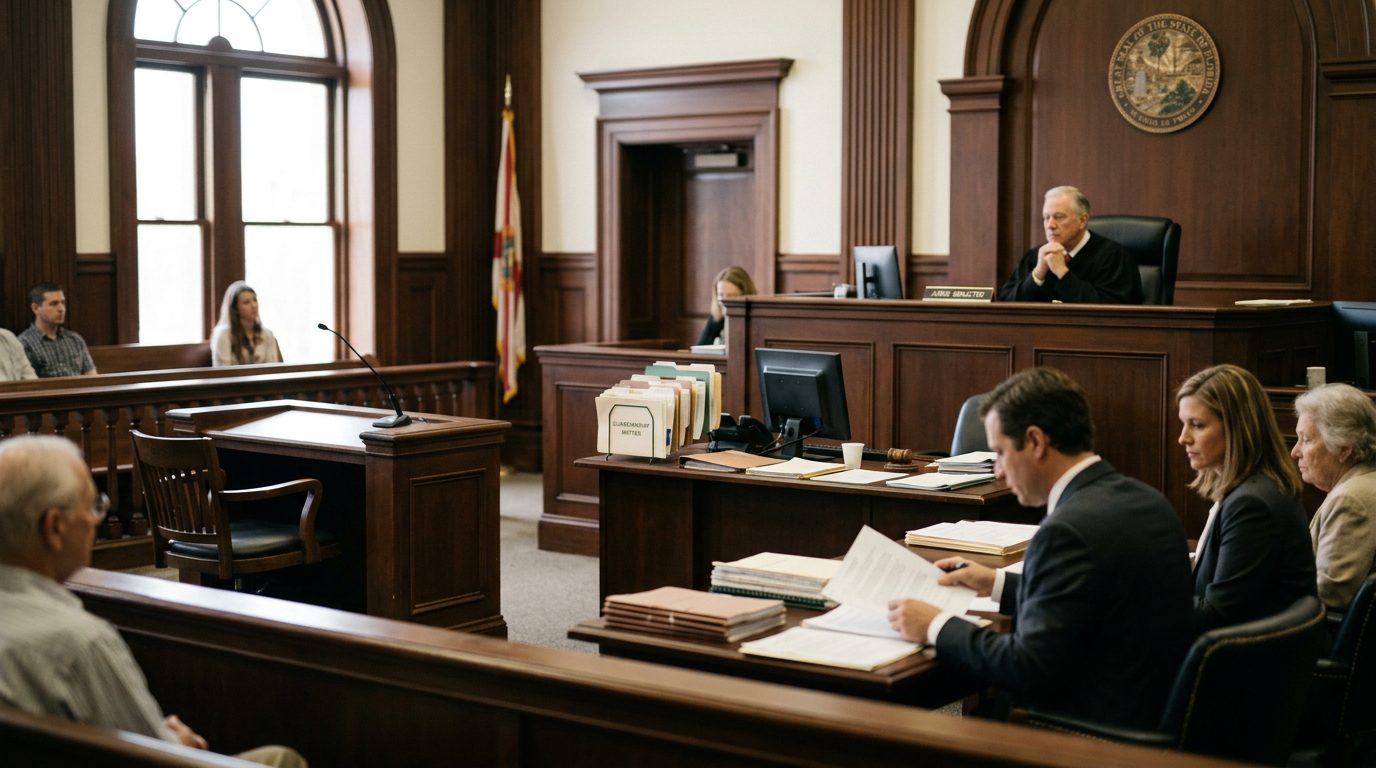
Guardianship in Florida
Guardianship of Incapacitated Adults in Florida
When an adult can no longer make decisions about their health, finances, or personal care, Florida law provides a guardianship process to protect their interests. Robinson & Casey guides families through every step.
By Richard J. Casey III, Esq. · Published September 21, 2026
Guardianship of an Incapacitated Adult in Florida: What You Need to Know
An incapacitated adult is someone who can no longer manage their finances, make medical decisions, or care for themselves due to illness, injury, or cognitive decline. Under Florida law, guardianship is a court process that allows a trusted person (the guardian) to make decisions on behalf of that adult. It’s not automatic—a court must find that the person truly lacks capacity before a guardian can be appointed.
If you’re researching this because a parent, spouse, or family member has suffered a stroke, developed dementia, sustained a traumatic brain injury, or faces another condition affecting their judgment, you’re trying to understand what comes next. This guide explains what incapacity means, how the court determines it, what types of guardianship exist, and when you might need one.
Not sure what your next step is?
Talk it through with our team — the first consultation is free, confidential, and carries no obligation.
What Does “Incapacitated Adult” Mean Under Florida Law?
An incapacitated adult is a person who lacks the capacity to manage property, make medical decisions, or care for themselves. This definition comes from Florida Statutes Chapter 744, which governs guardianship in the state.
Incapacity can result from many conditions. Dementia, stroke, traumatic brain injury, severe mental illness, developmental disability, and advanced Parkinson’s disease are common causes. The key point is this: incapacity is a legal determination, not a medical diagnosis alone. A doctor may diagnose Alzheimer’s disease, but only a Florida court can declare someone incapacitated and authorize a guardian to act.
The law recognizes that incapacity isn’t all-or-nothing. Someone might be able to make small daily decisions but unable to manage a complex estate. Someone else might make sound financial choices but lack judgment about medical treatment. Florida’s guardianship law accounts for these differences through different types of guardianship.
How Incapacity Is Determined in Florida
The court doesn’t simply accept a family member’s word that someone is incapacitated. The process requires medical evidence. Typically, a physician’s affidavit—a sworn statement from a doctor who has examined the person—is submitted to the court. The affidavit describes the person’s condition and explains why they cannot manage their affairs or make informed decisions.
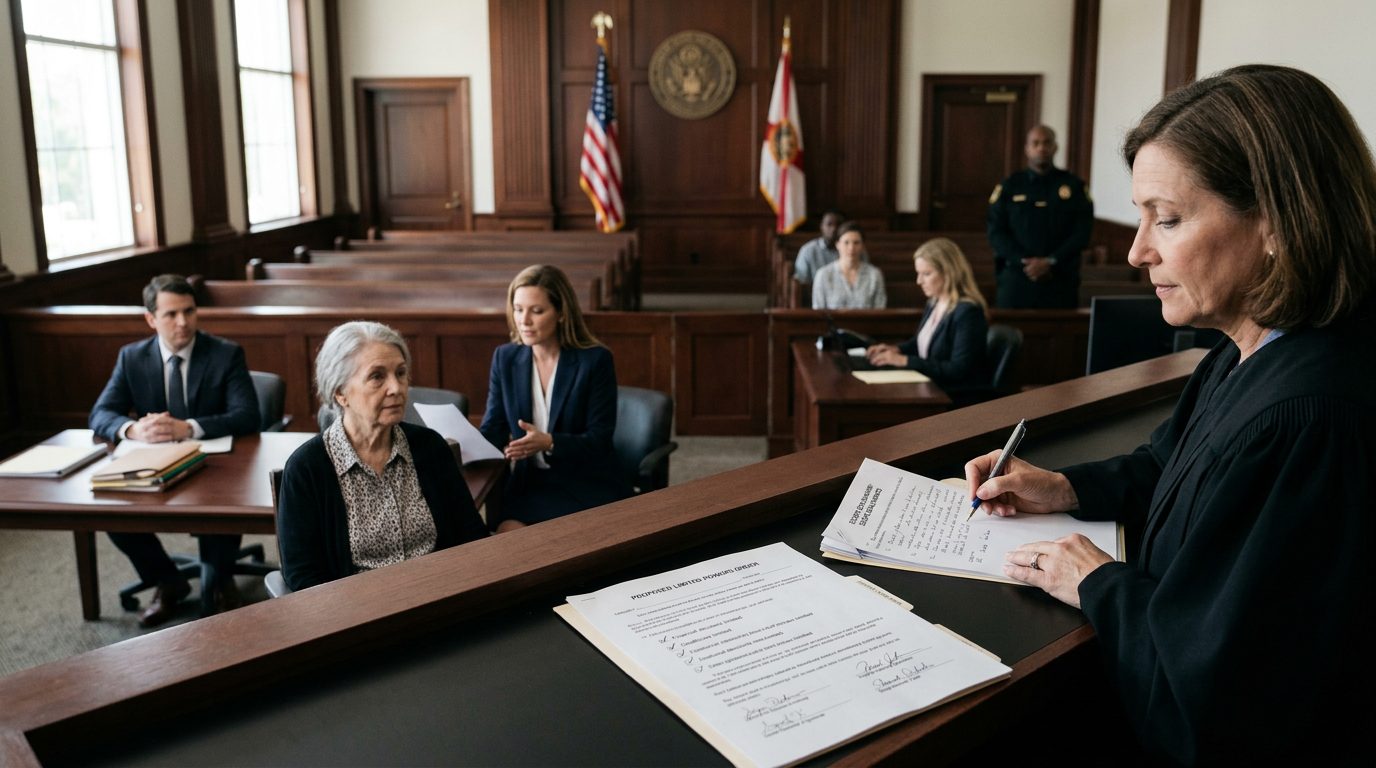
At a guardianship hearing, the court evaluates the evidence and hears from the proposed guardian, the incapacitated person (if present), and any attorney representing either party. The person facing guardianship has constitutional rights: the right to be represented by an attorney and the right to contest the petition. If the person cannot afford a lawyer, the court may appoint one.
The judge must find clear and convincing evidence of incapacity before appointing a guardian. This is a high legal standard—not just a “more likely than not” standard. The court takes seriously the fact that guardianship removes a person’s right to make their own decisions.
Types of Guardianship for Incapacitated Adults
Florida law recognizes four main types of guardianship for incapacitated adults:
Plenary Guardianship
A plenary guardian has broad authority over both the person and the property (finances and assets) of the incapacitated adult. This is the most comprehensive form. It’s used when the incapacitated person cannot make any significant decisions and needs protection in all areas of life.
Limited Guardianship
A limited guardian has authority only over specific areas. For example, a guardian might have power over medical decisions but not finances, or vice versa. Limited guardianship preserves the incapacitated person’s autonomy in areas where they retain decision-making ability. Courts prefer limited guardianship when it’s sufficient to protect the person.
Mental Health Guardianship
This type of guardianship is specifically for making mental health treatment decisions. It’s used when someone lacks capacity to consent to psychiatric treatment or medication but may retain capacity in other areas.
Temporary Guardianship
When immediate action is needed and waiting for a full guardianship hearing would put the person at risk, a court may appoint a temporary guardian. Temporary guardianship is short-term (typically 6 months or less) and is used in emergencies—for example, when an elderly person with no family present becomes suddenly incapacitated and needs immediate medical decisions.
The Florida Guardianship Process for Incapacitated Adults
The guardianship process follows these steps:
1. Petition Filed
A family member, friend, or interested party files a guardianship petition with the circuit court in the county where the incapacitated person lives. The petition names the proposed incapacitated person and the proposed guardian.
2. Notice Served
The incapacitated person and other interested parties (spouse, adult children, parents) must be notified of the petition. Notice must be given in person or by mail, depending on the circumstances.
3. Medical Evidence Submitted
A physician’s affidavit or medical records are filed with the court. These documents support the claim that the person is incapacitated.
4. Hearing Held
The court schedules a hearing. The incapacitated person has the right to attend and be represented by an attorney. The proposed guardian, the incapacitated person, and any interested parties may testify. The judge asks questions and evaluates the evidence.
5. Court Determines Incapacity
If the judge finds clear and convincing evidence of incapacity, the court enters an order finding the person incapacitated and appointing the guardian.
6. Guardian Takes Oath
The appointed guardian takes an oath to faithfully perform their duties and begins acting on behalf of the incapacitated person.
Guardian Duties and Responsibilities
Once appointed, a guardian has serious legal obligations:
Guardian of the Person
This guardian makes decisions about healthcare, living arrangements, and personal matters. They consent to medical treatment, choose where the person lives, and make decisions about daily care.
Guardian of the Property
This guardian manages finances, pays bills, protects assets, and handles legal and business matters. They may need to file tax returns and manage investments.
Both Types of Guardians Must:
– File annual reports with the court describing decisions made and the incapacitated person’s condition
– Keep detailed records of all financial transactions and personal decisions
– Act in the incapacitated person’s best interest, not their own
– Avoid conflicts of interest
– Seek court approval for major decisions (such as selling property or changing the person’s residence)
Guardianship is not a license to do whatever the guardian wants. Courts monitor guardians and can remove them for abuse, neglect, or failure to fulfill their duties.
Have questions about what happened?
Ask our team directly. The first conversation is free, confidential, and there is no obligation to continue.
Incapacitated Adults vs. Minors: Key Differences
Guardianship of an incapacitated adult is different from guardianship of a minor in important ways:
Constitutional Rights
Incapacitated adults retain constitutional rights that must be protected by the court. A minor’s guardianship is based on the parent-child relationship; an adult’s is based on a court finding of incapacity.
Incapacity Must Be Proven
Guardianship of a minor is automatic when a child is born or adopted. Guardianship of an incapacitated adult requires proof in court.
Right to Regain Capacity
An incapacitated person may petition the court to terminate the guardianship if they regain capacity. A minor cannot do this; guardianship ends when the child turns 18.
Legal Standard
The court must find clear and convincing evidence of incapacity. The standard is higher than for minor guardianship.
When to Consider Guardianship for an Incapacitated Adult
You may need to pursue guardianship if:
- The adult cannot make medical decisions or consent to necessary treatment
- The adult cannot manage finances, pay bills, or handle legal matters
- The adult is at serious risk due to inability to care for themselves
- No power of attorney or healthcare proxy is in place (and the person lacks capacity to execute one now)
- Existing documents (like a power of attorney) are invalid or were executed when the person lacked capacity
- Family members need court authority to make decisions on the person’s behalf
Alternatives to Full Guardianship
Before pursuing full guardianship, consider whether a less-restrictive option might work:
Power of Attorney
If the person still has capacity, they can execute a financial power of attorney, allowing someone to manage their finances without court involvement. This is much simpler and faster than guardianship.
Healthcare Proxy or Advance Directive
The person can name someone to make medical decisions if they become unable to do so. This avoids the need for a guardian of the person.
Representative Payee
If the person receives Social Security benefits, the Social Security Administration can appoint a representative payee to manage those benefits without guardianship.
Limited Guardianship
If the person retains capacity in some areas, a limited guardianship may be sufficient and less restrictive than plenary guardianship.
Supported Decision-Making
In some cases, a trusted person can help the incapacitated adult make decisions without formal guardianship. This approach is less intrusive but works only when the person retains some decision-making ability.
The American Bar Association Commission on Law and Aging recommends exploring these alternatives before pursuing full guardianship, to preserve the person’s autonomy as much as possible.
Common Challenges in Guardianship of Incapacitated Adults
Families and courts often face real obstacles in adult guardianship cases:
Proving Incapacity
Medical evidence must be clear and specific. Vague affidavits or outdated medical records may not satisfy the court’s requirement for clear and convincing proof. Families sometimes struggle to obtain detailed medical documentation.
Family Disagreement
Siblings or other family members may disagree about whether guardianship is necessary, who should be guardian, or what type of guardianship is appropriate. Contested guardianship cases take longer and cost more.
Balancing Autonomy and Protection
Courts must respect the incapacitated person’s rights while protecting them from harm. This tension is at the heart of guardianship law. A guardian who is too restrictive may violate the person’s rights; one who is too permissive may fail to protect them.
Contested Petitions
If the incapacitated person contests the guardianship or if interested parties object, the case goes to trial. The burden is on the petitioner to prove incapacity by clear and convincing evidence.
Court Compliance
Guardians must file annual reports, maintain records, and seek court approval for major decisions. Failure to comply can result in removal or sanctions.

Want to know where you stand?
Tell us what happened and our team will walk you through the options available to you, at no cost.
Frequently Asked Questions
What is the difference between incapacity and incompetence?
In Florida guardianship law, “incapacity” is the term used. It means the person lacks the capacity to manage property, make medical decisions, or care for themselves. The court makes this determination through the guardianship process.
Can an incapacitated person challenge the guardianship?
Yes. An incapacitated person has the right to contest the guardianship petition and be represented by an attorney. The court must hear their objections.
How long does the guardianship process take?
A routine guardianship petition typically takes 2 to 4 months from filing to appointment. Contested cases take longer. Temporary guardianship can be granted in days if there is an emergency.
What happens if the incapacitated person regains capacity?
They can petition the court to terminate the guardianship. The court will hold a hearing and may lift the guardianship if the person demonstrates restored capacity.
Does guardianship require the person to live in a nursing home?
No. The guardian decides where the person lives. Some incapacitated adults remain in their own homes with a caregiver; others move to assisted living or nursing facilities. The guardian’s decision should be based on the person’s best interest and needs.
If you’re facing a situation where a loved one can no longer make decisions about their health, finances, or daily care, you’re navigating a difficult transition. Many families in South Florida and across Florida reach out to understand their guardianship options when they’re at exactly this point. Contact us today to discuss your circumstances and learn what guardianship might mean for your family.
Types of Guardianship for Incapacitated Adults
Plenary Guardianship
The guardian has broad authority over the ward's person and property. Used when the incapacitated person cannot manage any significant decisions.
Limited Guardianship
The guardian's powers are restricted to specific areas—such as healthcare or finances—allowing the incapacitated person to retain decision-making in other matters.
Emergency Temporary Guardianship
A court-ordered temporary arrangement when immediate protection is needed while a full guardianship petition is pending.
Mental Health Guardianship
Guardianship established when incapacity stems from mental illness or cognitive decline, with focus on healthcare and treatment decisions.
How Robinson & Casey Helps
Petition Preparation
We prepare and file all required guardianship documents, including the petition, medical affidavits, and supporting evidence.
Court Representation
We represent you throughout the guardianship process, from initial filing through court hearings and final appointment.
Timely Action
When time is critical—such as emergency temporary guardianship situations—we move quickly to protect your loved one.
Clear Guidance
We explain your options, the legal requirements, and what to expect at each stage of the guardianship process.
Incapacity vs. Incapacity Determination
In Florida guardianship law, 'incapacity' means the person lacks the capacity to manage property, make medical decisions, or care for themselves. The court makes this determination through the guardianship process based on medical evidence and testimony.
Key Questions About Adult Guardianship
Can an incapacitated person challenge the guardianship?
Yes. An incapacitated person has the right to contest the guardianship petition in court. They may also petition to have the guardianship terminated if circumstances change.
What happens after the guardianship is established?
The guardian assumes legal authority over the ward's decisions and property. Guardians must file annual reports with the court and act in the ward's best interest.
Do I need a lawyer for guardianship?
While not required by law, an attorney helps ensure the petition is properly prepared, filed, and presented to the court—and protects your loved one's interests throughout the process.
What if the incapacity is temporary?
Limited guardianship or emergency temporary guardianship may be appropriate if incapacity is expected to be short-term. The court can modify or terminate the guardianship as circumstances change.
Ready to Protect Your Loved One?
Related practice areas
- Guardianship Attorney in Florida | Robinson & Casey
- Guardianship of a Minor in Florida: What Parents & Families Need to Know