
Marchman Act Petitions in Florida
Involuntary Treatment for Benzodiazepine Addiction in Florida
Robinson Casey focuses exclusively on Marchman Act petitions and guardianship matters. Richard J. Casey III, Esq. is the responsible attorney. Learn how Florida law may apply to benzodiazepine misuse, then talk with our team about your family's situation.
By Richard J. Casey III, Esq. · Published October 16, 2026
Florida’s Marchman Act can apply to substance abuse impairment, and that can include misuse of benzodiazepine medications. A court decides whether a particular person meets the law’s criteria, based on the evidence. This guide provides general information about involuntary treatment for benzodiazepine addiction in Florida.
Watching someone you love struggle with pills is frightening, and the options often aren’t clear. This page is general information, not legal advice.
Where Florida’s Marchman Act Fits
It gives a court a route to order involuntary assessment and treatment for people with substance abuse impairment.
Involuntary treatment is not automatic. A court may order it only when it finds the required conditions proved by clear and convincing evidence, as Fla. Stat. § 397.697 provides.
The Baker Act is a different Florida law. It covers involuntary examination for mental illness, and the Highlands County Clerk’s Baker Act page describes its examination period.
This process is sometimes described as “forcing someone into rehab.” The law uses formal terms instead, such as petitioner, respondent, and involuntary services. Those terms matter when you read a petition or a court notice.
Other requirements may apply, and the court decides each case.
Watching a family member struggle with benzodiazepine use is hard, and you don't have to work through Florida's court process alone. Call Robinson Casey at (561) 849-4149 to talk through your situation. Talk it through with our team — the first consultation is free, confidential, and carries no obligation.

Why Benzodiazepine Use Can Be Hard to Recognize
Benzodiazepines are prescription sedatives. Doctors often prescribe them for anxiety and sleep problems. Misuse can happen with a prescribed supply, or with pills obtained without a prescription.
Changes may be noticeable before the cause is clear. Common things to note include unusual drowsiness, memory lapses, unsteady walking, slurred speech, and sudden mood changes. These are things to write down and share with a doctor. They are not a diagnosis.
Under the Marchman Act, a petition may include a report from a qualified professional who examined the person within 30 days before filing. The statute also says that if no assessment happened, the petition must say so. Fla. Stat. § 397.68141 sets out these contents.
Keeping a simple, dated log of what you observe can help you organize facts for a doctor or a lawyer. Stick to what you saw and when you saw it.
Does the Marchman Act Cover Benzodiazepine Use?
The Marchman Act covers substance abuse impairment, and benzodiazepine misuse may be part of that picture. Whether a specific person qualifies is a question the court decides on the evidence.
The statute lists criteria. A person meets the criteria for involuntary admission if there is a good faith reason to believe the person is substance abuse impaired, or has a substance use disorder and a co-occurring mental health disorder. Because of that condition, the person must have lost the power of self-control with respect to substance abuse (Fla. Stat. § 397.675).
The statute then requires further findings. One alternative is that the person’s judgment is so impaired that he or she cannot appreciate the need for services or make a rational decision about them. The statute adds that mere refusal to get services is not, by itself, evidence of lack of judgment.
Other alternative findings involve neglect, a real and present threat of harm, or harm to self or others. Read the full text, because each finding has its own wording.
How a Marchman Act Petition Works
A petition for involuntary treatment must be filed with the clerk of the court in the county where the person is located. The clerk may not charge a fee for filing that petition (Fla. Stat. § 397.681).
For an adult respondent, the statute says a petition may be filed by a spouse or legal guardian, any relative, a service provider, or an adult with direct personal knowledge of the impairment and prior treatment (Fla. Stat. § 397.68112). Other requirements may apply, and the court decides.
The petition must name the respondent and the petitioner, state their relationship, and give the factual reasons for the petition. Fla. Stat. § 397.68141 lists these items.
The respondent has a right to counsel at every stage of the proceeding, and may waive that right only under the conditions the statute sets (Fla. Stat. § 397.681).
In an emergency, the court may act on the petition before the hearing. Fla. Stat. § 397.6818 says the court may rely on the petition alone and enter an ex parte order for assessment and stabilization.
What Happens at the Hearing and What the Court May Order
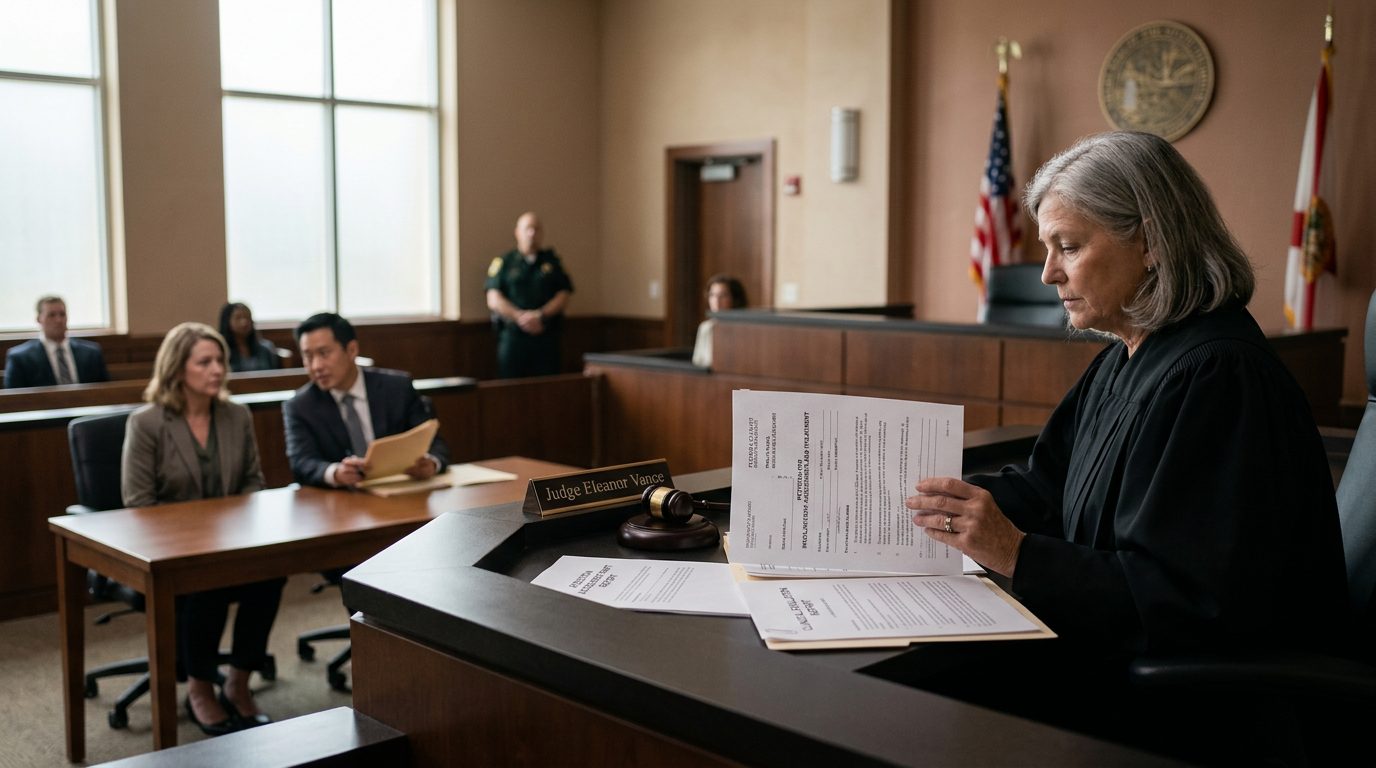
At the hearing, the petitioner carries the burden of proof. Under Fla. Stat. § 397.6957, the court decides whether the petitioner has shown, by clear and convincing evidence, that the respondent is substance abuse impaired and has a history of lack of compliance with treatment. Other requirements may also apply. Other findings may also apply, and the court decides based on the evidence and its discretion.
Fla. Stat. § 397.6957 names testimony from family members familiar with the respondent’s history as one example of evidence, and the court decides what evidence to weigh.
Under Fla. Stat. § 397.6957, the respondent’s presence at the hearing is addressed, and absence may be allowed only under the conditions the statute sets out. Other requirements may also apply, and the court decides based on its findings.
If the court orders treatment, the statute allows an order for up to 90 days with a publicly funded provider. The court may also order treatment with a privately funded provider if the respondent can pay, or if someone acting for the respondent shows willingness and ability to pay (Fla. Stat. § 397.697).
Under Fla. Stat. § 397.6975, a petition to renew an involuntary services order may be filed while the person remains in court-ordered services. Other requirements may apply, and the court decides whether to order further services based on the evidence and the circumstances of the case.
Treatment Options and Practical Questions About Cost
Under Fla. Stat. § 397.311, “involuntary treatment services” means an array of behavioral health services that may be ordered by the court for persons with substance abuse impairment or co-occurring substance abuse impairment and mental health disorders.
Costs depend on the provider, the level of care, and the person’s ability to pay or other coverage. The statute ties private treatment to ability to pay, as described above.
Filing a petition with the clerk carries no clerk filing fee under the statute cited above. Other costs, such as service of process, may apply. The statute allows the court to prohibit, or a law enforcement agency to waive, service of process fees for an indigent petitioner (Fla. Stat. § 397.68112).
A family member may ask any treatment provider to explain its charges in writing before agreeing to anything. Keep copies of every estimate and bill.
Not sure what your next step is?
Talk it through with our team — the first consultation is free, confidential, and carries no obligation.
Medical Safety During Benzodiazepine Withdrawal
Benzodiazepine changes should be guided by a doctor who knows the person’s medical history.
Withdrawal can affect the legal timeline. Under the statute, a provider may hold a respondent longer than the basic observation period when the respondent shows signs of withdrawal or needs detoxification or treatment for a medical condition, until that issue is resolved. The statute caps that extension at the scheduled hearing date, absent a court-approved extension (Fla. Stat. § 397.6818).
This section is informational. No court, lawyer, or petition changes a person’s medical needs or medical outcomes. Medical decisions belong with the person’s doctors.
Voluntary Options and When a Petition May Be Considered
Some people agree to treatment on their own. A family may start by talking with the loved one about concerns, what they have observed, and what help is available.
A Marchman Act petition is one legal route the statute provides. It is not the only option, and the right choice depends on the facts and on what the statute requires.
The statute also says that mere refusal to receive services is not, by itself, evidence of lack of judgment about the need for services (Fla. Stat. § 397.675). That means a refusal alone does not decide the question.
Frame these conversations as a family decision. Avoid promising that any approach will work, because no one can predict how a person will respond.

Talk With a Lawyer About Your Situation
Robinson & Casey is a law firm that focuses on Marchman Act petitions and guardianship matters. Richard J. Casey III, Esq. is the responsible lawyer for this page. Robinson Casey is a law firm.
Some matters may be referred to another lawyer or firm. The firm can explain how the statute applies to your facts, and the court makes the final decisions.
No outcome can be promised. Each case depends on the evidence, the court’s discretion, and the circumstances. Other requirements may apply.
If a relative’s benzodiazepine use has you worried and unsure what to do next, you don’t have to make these decisions alone. Call Robinson Casey at (561) 849-4149 or request a consultation online. The first consultation is free, confidential, and without obligation to continue.
Frequently Asked Questions
Does the Marchman Act cover benzodiazepine misuse?
It covers substance abuse impairment, and benzodiazepine misuse may be part of that picture. A court decides whether a specific person meets the statutory criteria.
Who can file a Marchman Act petition?
Under Fla. Stat. § 397.68112(1), if the respondent is an adult, a petition for involuntary treatment services may be filed by the respondent’s spouse or legal guardian, any relative, a service provider, or an adult who has direct personal knowledge of the respondent’s substance abuse impairment and his or her prior course of assessment and treatment. Other requirements may apply.
Does the respondent have a right to a lawyer?
Yes, the statute gives a respondent the right to counsel at every stage, subject to the waiver rules in the statute.
How Robinson Casey Can Help
Focused Practice
Robinson Casey limits its practice to Marchman Act petitions and guardianship matters, including involuntary commitment for addiction.
Confidential First Conversation
Your first consultation is free, confidential, and carries no obligation to continue.
Support From Our Team
Our team, including assistants and office staff, helps families organize information and understand the next steps with Richard J. Casey III, Esq.
Direct Phone Access
Call (561) 849-4149 to speak with our office about your family's concerns.
Important: Court Timing Depends on the Court
Hearings, orders, and placements under Florida law are decided by the court based on the evidence and the circumstances of each case. Timing is set by the court's schedule and discretion, and other requirements may also apply. Contact our office to discuss your situation.
Key Florida Options for Families
Marchman Act Petitions
Whether benzodiazepine misuse meets the statutory criteria is decided by the court.
Involuntary Commitment for Addiction
Florida's involuntary treatment process may be available when the statutory requirements are met. The court evaluates the evidence and makes its own determination.
Start With a Free Consultation
Share your family's situation in a confidential, no-obligation consultation so Robinson Casey can explain which options may apply.