
Marchman Act & Guardianship · South Florida
Can Police Make Someone Go to Rehab? What Florida Families Need to Know
Police can take an adult for assessment in limited situations, but longer treatment requires a court process. Robinson Casey focuses on Marchman Act petitions and guardianship matters for families in Miami-Dade and across South Florida.
By Richard J. Casey III, Esq. · Published October 20, 2026
Can police make someone go to rehab Florida? Not in the way most people expect. Police have a narrow role. An officer can take an adult for an assessment in limited situations. Longer treatment usually requires a court petition.
The Short Answer: Can Police Make Someone Go to Rehab Florida?
Police can step in when an adult appears to meet Florida’s involuntary admission criteria and is brought to police attention or is in a public place. The rules for this are in Fla. Stat. § 397.677.
The criteria are in Fla. Stat. § 397.675. The person must meet the criteria: there must be a good faith reason to believe the person is substance abuse impaired or has a substance use disorder and a co-occurring mental health disorder, under Fla. Stat. § 397.675. Because of that impairment, the person must have lost the power of self-control with respect to substance use. The person must also need services and be unable to see that need. Or the person, without care or treatment, is likely to suffer from neglect or refuse to care for himself or herself, and that neglect or refusal poses a real and present threat of substantial harm that cannot be avoided through willing, able, and responsible family members or friends or other services; or there must be a substantial likelihood that the person has inflicted, threatened, or attempted to inflict physical harm on themselves or others, or is likely to inflict it unless admitted.
The same statute says that a refusal of services alone is not evidence of poor judgment. So a “no” by itself is not enough. Whether a situation qualifies depends on the facts.
If your loved one was picked up or keeps refusing help, you don't have to work through the court steps alone. Our team can explain your options. Talk it through with our team — the first consultation is free, confidential, and carries no obligation.

What the Marchman Act Covers
The Marchman Act is Florida’s law for people with substance abuse impairment. It sits in chapter 397 of the Florida Statutes. It covers assessment, stabilization, and treatment, including treatment ordered by a court.
The statute is about getting help, not about criminal charges. Its detention rules say a protective custody stay is not an arrest. Those rules are explained below.
If a court orders treatment, the order can last up to 90 days. Fla. Stat. § 397.697 allows that period when the court finds the conditions proven by clear and convincing evidence. The petitioner carries that burden under Fla. Stat. § 397.6957.
For the full overview, read our guide to involuntary commitment for addiction.
The Law Enforcement Role Under Chapter 397
An officer can take a person to a hospital or licensed receiving facility, but only when certain steps are met. The person must refuse consent. The officer must decide that a hospital or a licensed detox or addictions receiving facility is the most appropriate place. The officer must also consider the person’s expressed wishes.
Under Fla. Stat. § 397.6772, if the person fails or refuses to consent to assistance and the officer has determined that a hospital or licensed detoxification or addictions receiving facility is the most appropriate place, the officer may, after giving due consideration to the person’s expressed wishes, take the person there without using unreasonable force. Fla. Stat. § 397.341 adds that an officer transporting the person must restrain them in the least restrictive manner available and appropriate under the circumstances.
The officer must write a report about the custody. The report must include emergency contact information. For an adult, the officer must also notify the nearest relative or other known emergency contact. The exception is when the adult asks for no notice. Families often learn about a custody this way, so keep your phone number current with the person’s providers and contacts.
An adult can also be held in a jail or other detention facility for their own protection. The officer must notify a licensed provider within 8 hours. The person must be assessed by the attending physician within the 72-hour period. The 72-hour mark is the key number to remember.
Police Involvement Versus Arrest and Criminal Charges
Protective custody for assessment is not an arrest. The statute says such detention is “not to be considered an arrest for any purpose.” It also says no record may show the person was charged with a crime.
That is different from a criminal charge. Drug possession, DUI, and public intoxication cases run through the criminal courts. A Marchman petition asks a court for assessment and treatment. It is a separate process.
Many families assume a jail stay will lead straight to treatment. It does not work that way. Under Fla. Stat. § 397.6773, a person in protective custody must be released by a qualified professional when they no longer meet the involuntary admission criteria in s. 397.675. They must also be released when the 72-hour period ends or when they consent to stay voluntarily.
The custody can continue past 72 hours only if a petition has been started. Filing a petition is the step that changes the timeline.
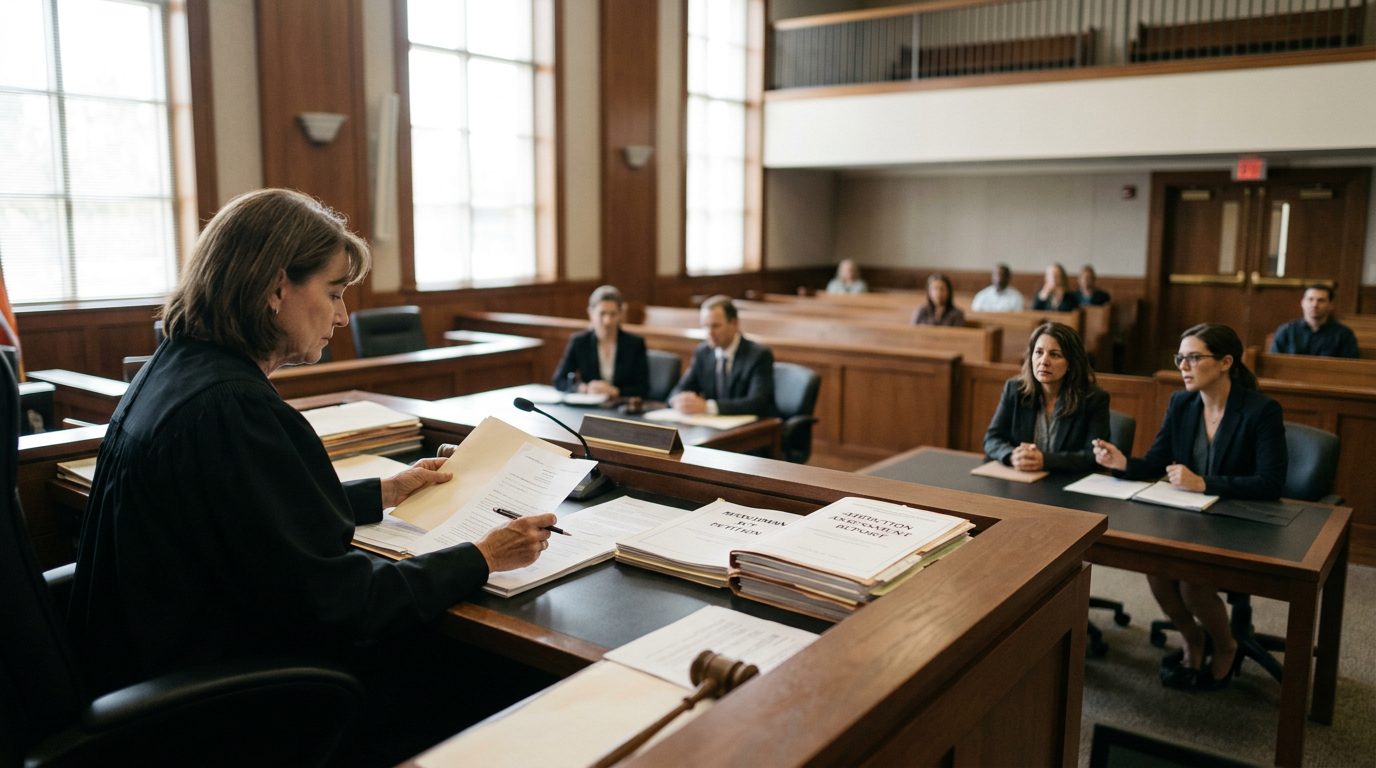
The Petition and Court Process Families Usually Need
A family member usually starts the court process by filing a petition with the clerk of court. The petition goes in the county where the person is located. Under Fla. Stat. § 397.681, the clerk may not charge a filing fee.
The petition must name the person and the petitioner. It must explain their relationship and the facts showing the need for services. Fla. Stat. § 397.68141 lists these details. Vague worries will not carry the case. Specific facts about recent use, behavior, and harm do.
Under Fla. Stat. § 397.68151, the court must decide whether the person has a lawyer. The court must also schedule a hearing within 10 court working days, unless a continuance is granted.
In an emergency, Fla. Stat. § 397.6818 lets the judge act on the petition’s contents before the hearing.
A common mistake is filing in the wrong county. It does not take away the court’s power to hear the case. However, the filing of the petition in the wrong county did not divest the circuit court in Putnam County of jurisdiction. (J.P. v. J.N., 225 So. 3d 410 (Fla. 5th DCA 2017))
Can a Spouse or Other Relative Force Treatment?
A spouse or relative can file a petition, but the court decides whether treatment is ordered. For an adult, Fla. Stat. § 397.68112 allows filing by a spouse or legal guardian, any relative, a service provider, or an adult who has direct personal knowledge of the respondent’s substance abuse impairment and his or her prior course of assessment and treatment. For a minor, a parent, legal guardian, or service provider may file.
A family member cannot order treatment on their own. The petitioner must prove the statutory criteria at a hearing. Testimony is taken under oath.
A professional’s assessment can be attached to a petition. That report helps the court. But a report alone is not a treatment order. The judge still makes the decision after hearing the evidence.
Not sure what your next step is?
Talk it through with our team — the first consultation is free, confidential, and carries no obligation.
Talking With Your Family and Next Steps
If a loved one is refusing help, the timing of each step matters. A 72-hour custody period and a petition deadline can overlap quickly. Getting the facts sorted out early can help you decide what to do next.
Richard J. Casey III, Esq. is the responsible lawyer for this page. Robinson Casey limits its practice to Marchman Act petitions and guardianship matters. The firm serves families in Miami-Dade, South Florida, and statewide.
Your first consultation is free, confidential, and comes with no obligation to continue. Call (561) 849-4149 or request a consultation to talk through your loved one’s situation.
Frequently asked questions
Can police make someone go to rehab Florida?
Not directly. Police can take an adult for assessment in limited cases. Longer treatment requires a court process.
Is police custody for assessment an arrest?
No. The statute says this detention is not considered an arrest.
How long can someone be held before a court order?
A person in protective custody must generally be released after 72 hours. The exception is when a petition has been filed.
How Robinson Casey Can Help
Marchman Act Petitions
We help families understand and pursue the court process for involuntary assessment and treatment under Florida's Marchman Act.
Guardianship Matters
Our practice focuses on guardianship, including emergency temporary, limited, plenary, and mental health guardianship.
Confidential, Clear Guidance
We explain each option in plain language so you can make informed decisions for your loved one.
A Free First Consultation
Our initial consultation is free, confidential, and carries no obligation to continue.
Don't Wait for a Crisis to Ask Questions
Every situation involving addiction or mental health is different. Speaking with a lawyer early can help you understand the options available before a situation escalates.
Matters We Handle
Marchman Act Attorney
Representation for families filing Marchman Act petitions for a loved one struggling with substance use.
Emergency Temporary Guardianship
Urgent court relief when a person needs protection and immediate decisions cannot wait.
Involuntary Commitment for Addiction
Guidance on the court process for involuntary assessment and treatment when voluntary care is not an option.
Guardianship and Mental Health
Plenary, limited, and mental health guardianship matters handled with attention to each person's needs.