
Marchman Act | South Florida
Wondering if a sibling can file a Marchman Act petition?
Robinson Casey focuses on Marchman Act and guardianship matters for families in Miami-Dade, South Florida and across Florida. Get clear answers from Richard J. Casey III, Esq.
By Richard J. Casey III, Esq. · Published October 19, 2026
Yes, a sibling can file a Marchman Act petition in Florida. The statute lets “any relative” file for an adult with a substance abuse impairment, and a brother or sister is a relative. The petition still has to state specific facts before a judge acts on it.
This guide explains who may file, what the petition must show, and what a sibling should expect at the hearing. It is written for families in Miami-Dade and across South Florida who are weighing a filing.
Who Can File a Marchman Act Petition in Florida?
The Marchman Act is Florida’s court process for ordering assessment and treatment for a person with substance use impairment. It sits in Chapter 397 of the Florida Statutes. For an adult, the law names who may file. The list includes a spouse or legal guardian, any relative, a service provider, and an adult with direct personal knowledge of the person’s impairment and past treatment (Fla. Stat. § 397.68112).
So a parent or spouse is not the only option. Relatives outside the parent or spouse group fall under the same “any relative” wording. For the full process from start to finish, read our Marchman Act overview.
Not sure what your next step is?
Talk it through with our team — the first consultation is free, confidential, and carries no obligation.

Can a Sibling File a Marchman Act Petition?
Yes. A sibling is a relative, and the adult category covers “any relative.” A brother or sister can file on the basis of that family relationship. The petition must name both the petitioner and the respondent, and state how they are related.
Filing is not the same as winning. The petition has to contain facts that show why the court should act. Those facts come from what the sibling has personally seen. Examples include a brother who has overdosed more than once, a sister who missed work or lost a job, or a sibling who refused help after a crisis. Judges look for specifics, not general worry.
The statute draws a line here. The personal-knowledge wording belongs to a separate petitioner category, the “adult who has direct personal knowledge” of the impairment and its treatment history. A sibling filing as a relative is in the relative category.
The petition is filed with the clerk of the court in the county where the person is located. The clerk may not charge a fee for filing it (Fla. Stat. § 397.681).
Can a Grandparent, Aunt, Uncle or Other Relative File?
Yes. These relatives fall under the same “any relative” wording. Grandparents often notice a decline first, especially when a grandchild or nephew lives in their home. The relationship must be stated in the petition, along with the facts behind it.
Where the relative lives matters less than where the person is. The petition belongs in the county where the person is physically located when it is filed. In J.P. v. J.N. (Fla. 5th DCA 2017), a petition was filed in the wrong county, where the person was at a detox facility. However, according to the appellate opinion in J.P. v. J.N., filing the petition in the wrong county did not divest the circuit court in Putnam County of jurisdiction.
What the Petition Must Show
The petition must state facts, not general worry. Under Fla. Stat. § 397.68141, it names the respondent, the petitioner, their relationship, and the respondent’s attorney if known. It also gives the reasons the petitioner believes the person is substance abuse impaired and has lost self-control over substance use.
The petition must give the reasons for believing the person is substance abuse impaired and has lost the power of self-control with respect to substance abuse, and either the person has inflicted or is likely to inflict physical harm on himself, herself, or others unless the court orders services, or the person’s refusal of care is based on judgment so impaired by reason of substance abuse that the person is incapable of appreciating the need for care and of making a rational decision about it. A qualified professional’s report from within 30 days before filing may come with the petition. If there was no assessment, or the person refused one, the petition must say so.
The court’s criteria are in Fla. Stat. § 397.675. They require a good faith reason to believe the person is substance abuse impaired (or has a substance use disorder and a co-occurring mental health disorder) and has lost self-control, and that, because of the impairment, the person either needs substance abuse services and, by reason of substance abuse impairment, his or her judgment has been so impaired that he or she is incapable of appreciating that need and of making a rational decision about it; or is likely to suffer neglect or refuse to care for himself or herself, that neglect or refusal poses a real and present threat of substantial harm to his or her well-being, and it is not apparent that such harm may be avoided through willing, able, and responsible family members or friends or other services; or there is substantial likelihood that the person has inflicted, or threatened to or attempted to inflict, or, unless admitted, is likely to inflict, physical harm on himself, herself, or another. The statute also says mere refusal to receive services is not, by itself, evidence of impaired judgment. A denial does not end the analysis. The petition still has to tie specific facts to those criteria.
What Evidence a Relative Should Gather
Start by writing things down. Memory fades under stress, and a written record is easier to present. Build a dated timeline. For each incident, note the date, the place, what you saw, who else was there, and what happened next.
Add any prior treatment attempts, with approximate dates and what the person did. Note any emergency room visits or police contacts you know about. Keep messages or records you already have.
Stick to what you saw and can verify. “He was drinking a lot” carries less weight than “On March 3 he missed his shift, and his coworker said he smelled of alcohol.” Don’t guess about what the person felt or intended. Name anyone who saw the incidents, because those people may be asked to testify. A clear timeline also helps an attorney understand the case quickly.
What a Relative Should Expect at the Hearing
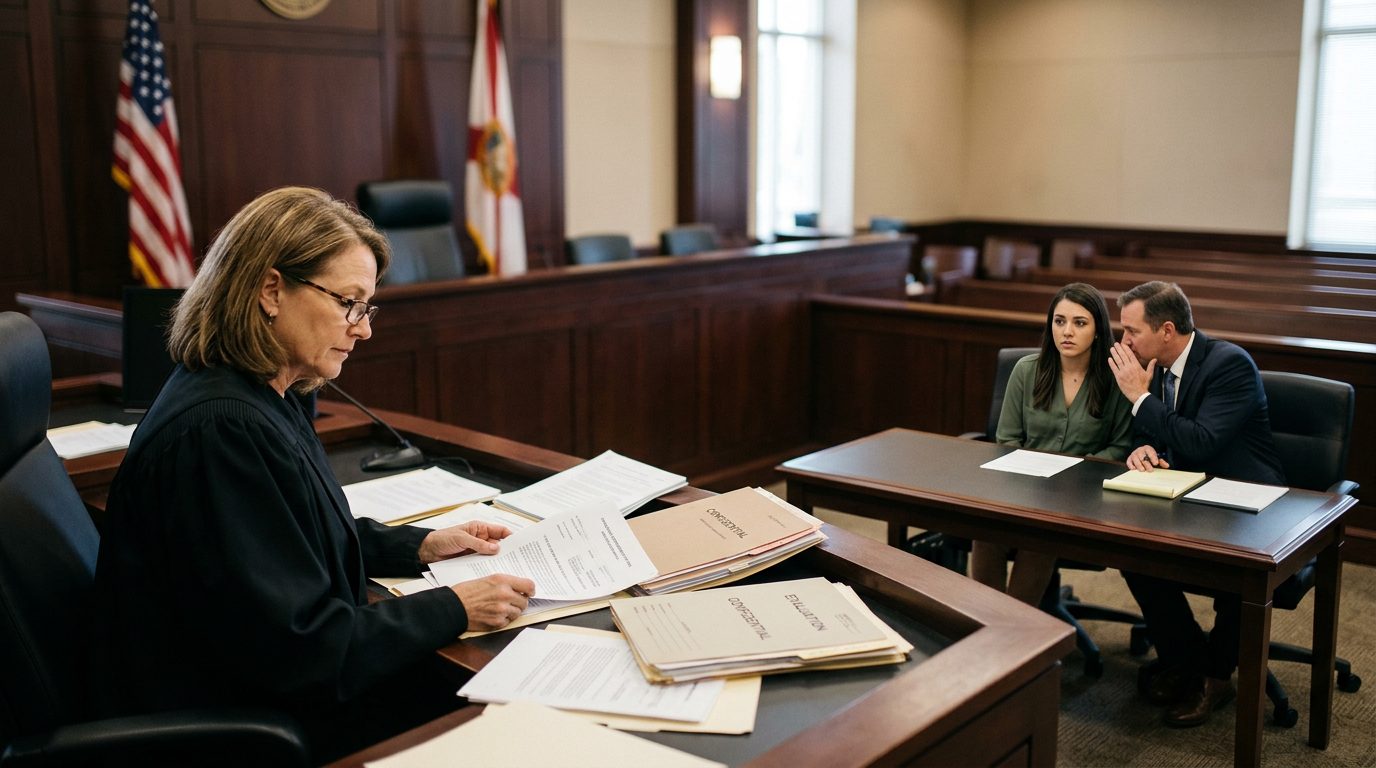
After filing, the court decides whether the person has counsel or whether counsel should be appointed. The court must schedule a hearing within 10 court working days unless a continuance is granted (Fla. Stat. § 397.68151). Copies of the petition and notice go to the respondent; the respondent’s parent, guardian, or legal custodian in the case of a minor (and the minor must be personally served); the respondent’s attorney, if known; the petitioner; the respondent’s spouse or guardian, if applicable; and such other persons as the court may direct.
The court immediately determines whether the respondent has an attorney or whether appointing counsel is appropriate; if counsel is appointed, the office of criminal conflict and civil regional counsel represents the person until the petition is dismissed, the court order expires, the person is discharged from involuntary treatment services, or the office is otherwise discharged by the court. A person who cannot afford a lawyer may receive court-appointed counsel (Fla. Stat. § 397.681). The court hears relevant evidence, including testimony from family members who know the person’s history (Fla. Stat. § 397.6957).
The petitioner must prove the case by clear and convincing evidence, a high standard. Testimony is taken under oath. A sibling who files should expect questions about what they personally observed.
The Fourth District certified conflict with R.S., J.W., and C.W.R.K. (J.J.J. v. D.G., No. 4D2023-2185 (Fla. 4th DCA July 24, 2024)).
Not sure what your next step is?
Talk it through with our team — the first consultation is free, confidential, and carries no obligation.
Marchman Act or Baker Act: Which Applies to a Relative’s Concern?
The Marchman Act covers substance abuse impairment under Chapter 397. The Baker Act covers mental illness under Chapter 394. A person can have both. The Marchman criteria cover a substance use disorder paired with a co-occurring mental health disorder (Fla. Stat. § 397.675).
For the Baker Act’s own criteria and steps, see the Florida Baker Act criteria and initiation document. Which process fits depends on the person’s condition, so that choice is worth reviewing with our office before anything is filed.

Talk With Robinson Casey About Your Family’s Situation
Picture a sister watching her brother’s drinking cost him his job, strain his health, and put him in danger on the road. She is now deciding whether to file. You do not have to make that decision alone.
Whether a particular relative qualifies depends on the family’s facts and the person’s current condition. Richard J. Casey III, Esq. is the responsible attorney. The firm limits its practice to Marchman Act petitions and guardianship matters, and serves families across South Florida, including Miami-Dade, and statewide.
To review your family’s facts, call (561) 849-4149 or request a consultation. The first consultation is free, confidential, and carries no obligation to continue.
Frequently Asked Questions
Can a sibling file a Marchman Act petition in Florida?
Yes. A sibling is a relative, and the adult petitioner category includes “any relative.”
Does a sibling need personal knowledge to file?
The personal-knowledge wording belongs to a separate petitioner category. A sibling files under the relative category.
Where is the petition filed?
It is filed with the clerk of the court in the county where the person is located.
Is there a filing fee?
The clerk may not charge a fee for filing the petition.
How we can help your family
Marchman Act petitions
We help families understand the petition process under Florida's Marchman Act, from the initial questions through the filing itself.
Guardianship matters
Guidance on guardianship options, including emergency temporary, plenary, limited and mental health guardianship.
Confidential first consultation
Your free, confidential first consultation comes with no obligation to continue.
Supportive office team
Our team, including our assistants and office staff, keeps you informed and helps you prepare for each step.
Reach us directly
Call (561) 849-4149 to talk with our office about your family's situation.
Questions families ask before filing
Who may file?
Florida law names several categories of people who may petition. Which one fits your situation depends on your relationship and the facts, so review them with a lawyer.
What information helps?
Dates, observed behavior, prior treatment attempts and names of professionals involved can help us understand your loved one's circumstances.
What happens next?
We walk you through the steps, the paperwork and what to expect, so you are not guessing at the process.
Can I still ask questions?
Yes. Bring your questions to a free consultation and we will explain how the Marchman Act and guardianship laws may apply to your family.
Do not wait for a crisis to get answers
Family emergencies can change quickly. Talking with a lawyer early helps you understand your options before decisions have to be made under pressure.