
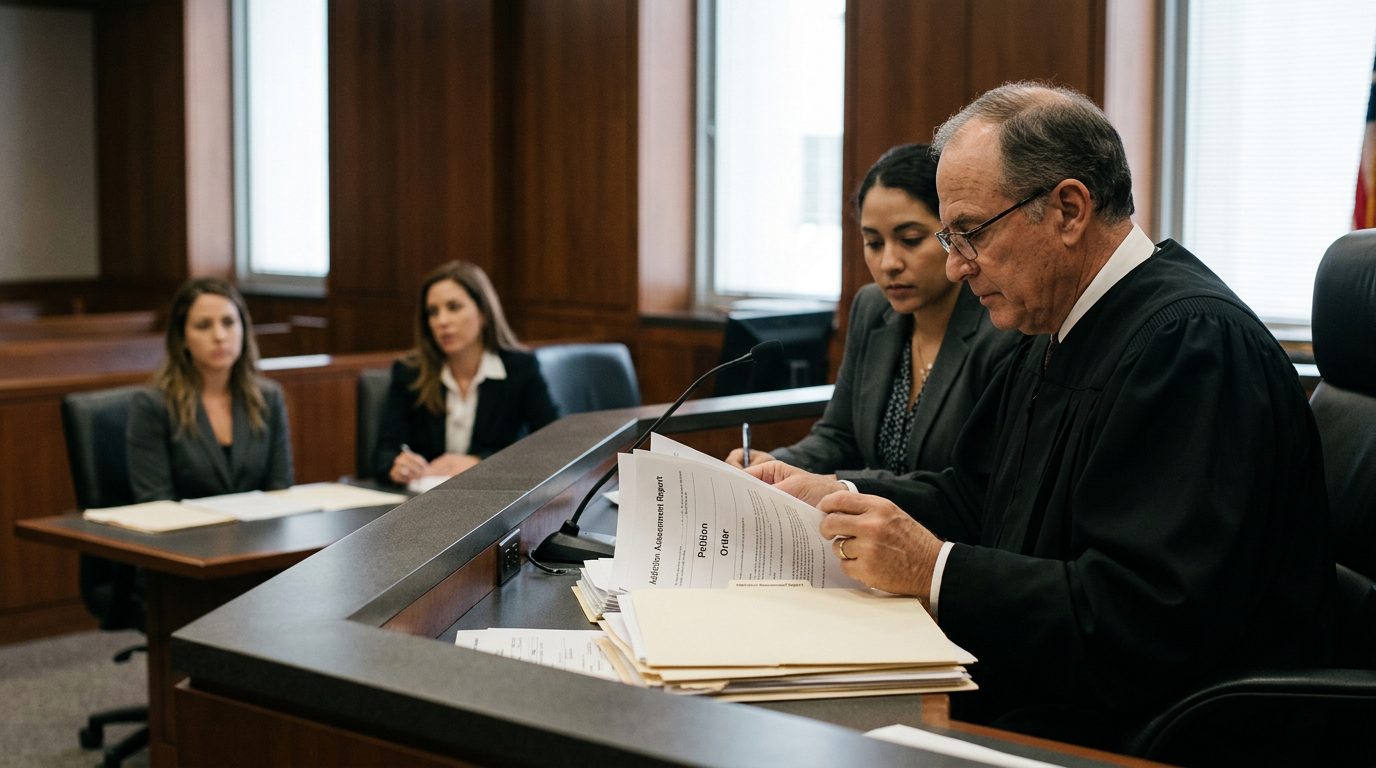
Involuntary Commitment for Addiction
Involuntary Commitment for Addiction in Miami Dade
When a loved one's substance use creates danger or incapacity, Robinson & Casey guides families through the legal process to seek court-ordered treatment and care.
By Richard J. Casey III, Esq. · Published September 25, 2026
Involuntary Commitment for Addiction in Miami Dade County
When a loved one’s addiction spirals beyond their control and voluntary treatment is refused or has failed, involuntary commitment for addiction becomes a legal option for Miami Dade families. Under Florida Statute Chapter 397, commonly called the Marchman Act, family members, healthcare providers, and law enforcement can petition a Miami Dade court to order treatment for someone whose substance use disorder poses a danger to themselves or others or renders them unable to care for themselves.
This guide explains how involuntary commitment for addiction works in Miami Dade County, what the legal process involves, and how Robinson & Casey helps families navigate petitions and hearings.
If you're facing a loved one's addiction crisis in Miami Dade and wondering whether legal intervention is the right step, families in your situation reach out to Robinson & Casey regularly—call (561) 849-4149 to discuss your options. Talk it through with our team — the first consultation is free, confidential, and carries no obligation.

What Is Involuntary Commitment for Addiction in Miami Dade?
Involuntary commitment for addiction is a court-ordered intervention that requires a person with a substance use disorder to enter treatment, even if they refuse. The legal framework is Florida Statute § 397.675, which sets out who can petition, what evidence courts require, and what criteria must be met.
In Miami Dade County, a circuit court judge evaluates whether the respondent (the person whose commitment is sought) meets the statutory standard: that they have a substance use disorder and pose a danger to themselves or others, or are unable to care for themselves due to substance use. This is different from voluntary admission to treatment. It’s a legal proceeding with specific procedural rights and protections for both the petitioner and the respondent.
Addiction affects brain function and decision-making capacity, which is why the National Institute on Drug Abuse recognizes substance use disorder as a chronic brain disorder requiring intervention even when the person refuses help. When someone with severe addiction cannot or will not seek treatment, involuntary commitment becomes the tool families use to access care.
When Involuntary Commitment Becomes Necessary in Miami Dade
Many Miami Dade families wait too long before pursuing involuntary commitment. They hope their loved one will accept help voluntarily. They try interventions, family conversations, and encouragement. But addiction doesn’t respond to hope alone.
Involuntary commitment becomes necessary when:
- Your loved one refuses all voluntary treatment options.
- Their addiction is causing immediate danger—risky behavior, overdose risk, or harm to others.
- They’re unable to meet basic needs due to substance use (food, shelter, hygiene, medical care).
- Previous treatment attempts have failed because they left early or relapsed immediately.
- Law enforcement involvement is escalating or imminent.
- You’ve exhausted every informal option and the addiction is worsening.
The difference between hoping for voluntary treatment and taking legal action is the difference between watching addiction progress and stopping it. In Miami Dade County, families who act through the courts can access immediate intervention. An emergency ex parte order can result in temporary commitment within hours or days, not weeks.
The Legal Process: Involuntary Commitment for Addiction in Miami Dade
The involuntary commitment process in Miami Dade County follows a structured legal timeline:
Filing the Petition
You or another authorized person (a family member, healthcare provider, or law enforcement officer) files a petition in Miami Dade County Circuit Court. The petition must state facts showing that the respondent has a substance use disorder and meets one of the statutory criteria for commitment. You’ll need to describe specific incidents, behaviors, and evidence of addiction.
Emergency Ex Parte Order
If immediate danger exists, you can request an emergency ex parte order (a temporary order issued without the respondent present). A Miami Dade judge can sign this order quickly if the evidence shows danger or incapacity. This order allows temporary commitment to a treatment facility while a full hearing is scheduled.
The Full Hearing
Within a statutory timeframe, Miami Dade courts hold a hearing where both sides present evidence. The respondent has the right to an attorney, to present evidence, and to cross-examine witnesses. The court must find clear and convincing evidence that commitment is necessary before ordering longer-term treatment.
Court-Ordered Treatment
If the court orders commitment, the respondent enters a treatment program. The length and type of commitment depend on the court’s order and the treatment facility’s assessment.
Miami Dade County Court System & Involuntary Commitment Hearings
Involuntary commitment petitions in Miami Dade County are filed in the Circuit Court (the state trial court with jurisdiction over civil matters). The specific division handling your case depends on where the respondent resides or is located within Miami Dade.
Miami Dade judges evaluating involuntary commitment cases consider:
- Medical evidence of substance use disorder (drug screens, treatment history, medical records).
- Specific incidents showing danger or incapacity (overdoses, risky behavior, inability to care for self).
- Testimony from family members, healthcare providers, or witnesses.
- The respondent’s history of treatment attempts and outcomes.
- The severity and immediacy of the danger.
Presenting evidence effectively matters. Courts want facts, not emotion—specific dates, behaviors, and consequences. A Miami Dade attorney helps organize medical records, witness statements, and testimony to meet the court’s legal standard.
After the court orders commitment, the respondent enters treatment. The facility provides ongoing care and assessment. Some commitments are time-limited; others may be extended if the court finds continued need.
Family Petitions for Involuntary Commitment in Miami Dade
Family members have standing (legal right) to petition for involuntary commitment in Miami Dade County. You don’t need to be a healthcare provider or law enforcement officer. You need to demonstrate that you have knowledge of the respondent’s substance use and its effects.
What Miami Dade Courts Require
When filing a family petition, you’ll need:
- Specific facts about the respondent’s substance use (what they use, how often, for how long).
- Incidents showing danger or incapacity (overdoses, unsafe behavior, neglect of self-care).
- Medical records, if available (prior treatment, hospitalizations, drug screens).
- Witness information (family members, friends, healthcare providers who can testify).
- Your relationship to the respondent and basis for knowledge.
Preparing for the Emotional and Legal Demands
Filing a petition against a family member is emotionally difficult. You’re taking legal action against someone you love. But involuntary commitment is not punishment—it’s intervention. Miami Dade courts understand this. The process is structured to be fair to the respondent while protecting the family’s interest in getting their loved one help.
An attorney helps you organize your case, prepare testimony, and navigate the court system so you can focus on the goal: getting your loved one into treatment.
Not sure what your next step is?
Talk it through with our team — the first consultation is free, confidential, and carries no obligation.
Emergency Involuntary Commitment in Miami Dade
When immediate intervention is necessary—your loved one is in acute danger, overdosing, or in crisis—an emergency ex parte order allows temporary commitment without waiting for a full hearing.
In Miami Dade County, you can request an emergency order by filing a petition and asking the court for immediate relief. A judge reviews the emergency facts (danger, incapacity, immediate risk) and can issue a temporary commitment order the same day or within 24 hours.
This temporary commitment buys time. It gets your loved one into a facility where they’re safe and can be medically evaluated. A full hearing is then scheduled within a statutory timeframe, typically within 5 days. At that hearing, the court decides whether to extend commitment or release the respondent.
Law enforcement and emergency services in Miami Dade County can also initiate emergency commitment if they encounter someone in acute crisis. But family-initiated petitions allow you to control the timing and ensure the process moves forward.
Representation at Involuntary Commitment Hearings in Miami Dade
Legal representation matters at involuntary commitment hearings. An attorney:
- Prepares your case and organizes evidence before the hearing.
- Presents medical records, witness testimony, and your own testimony effectively.
- Understands Miami Dade court rules and procedural requirements.
- Handles cross-examination and responds to the respondent’s attorney.
- Protects your family’s interests and ensures the court has the facts it needs.
Without representation, families often struggle to present evidence clearly or meet the court’s legal standard. An attorney ensures your case is organized, persuasive, and compliant with Florida law.
Robinson & Casey: Involuntary Commitment for Addiction in Miami Dade
Robinson & Casey has handled involuntary commitment petitions in Miami Dade County for families facing addiction crises. We understand Miami Dade courts, local procedures, and the judges who hear these cases. We handle emergency petitions, full hearing representation, and appeals.
When you contact us, we listen to your situation, explain your legal options, and discuss what the process will look like. We’ll tell you what evidence you’ll need, what to expect at a hearing, and how quickly we can move on your behalf.
Our role is to help your family navigate the legal system so you can focus on getting your loved one the help they need.
Next Steps: Getting Legal Help in Miami Dade
If you’re facing a loved one’s addiction crisis in Miami Dade, don’t wait. The sooner you act, the sooner intervention can begin. When you reach out to Robinson & Casey, have ready:
- The respondent’s name and where they live in Miami Dade.
- Specific incidents or behaviors showing danger or incapacity.
- Any medical records or treatment history.
- Names of family members or others who can testify.
We can often move quickly. Emergency ex parte orders can be obtained within hours if danger is clear. Full hearings are scheduled within days.
If you’re facing a loved one’s addiction crisis in Miami Dade and wondering whether legal intervention is the right step, families in your situation reach out to Robinson & Casey regularly. Call (561) 849-4149 to schedule a consultation and discuss your options for involuntary commitment for addiction.

Frequently Asked Questions
Can family members file for involuntary commitment of an adult with addiction in Miami Dade?
Yes. Family members have standing to petition for involuntary commitment in Miami Dade County if they have knowledge of the respondent’s substance use and can demonstrate danger or incapacity to the court.
What is the difference between emergency temporary commitment and longer-term commitment?
Emergency temporary commitment is an ex parte order obtained quickly when immediate danger exists, allowing temporary placement while a full hearing is scheduled. Longer-term commitment follows a full hearing where the court finds clear and convincing evidence that commitment is necessary.
What evidence do I need to present at an involuntary commitment hearing?
Courts require specific facts: incidents showing danger or inability to care for self, medical evidence of substance use disorder, treatment history, and testimony from people with knowledge of the respondent’s condition and behavior.
How quickly can an emergency involuntary commitment order be obtained in Miami Dade?
An emergency ex parte order can often be obtained within 24 hours if the petition demonstrates immediate danger. A full hearing is then scheduled within a statutory timeframe, typically within 5 days.
Do I need an attorney for an involuntary commitment petition in Miami Dade?
While not required, legal representation significantly strengthens your case. An attorney ensures your petition meets legal standards, organizes evidence effectively, and represents your interests at the hearing.
How Robinson & Casey Helps
Petition Preparation
We prepare and file the involuntary commitment petition with the court, ensuring all required documentation and legal grounds are properly presented.
Family Representation
Family members have standing to petition. We advise you on your role in the process and represent your interests throughout the proceedings.
Court Advocacy
We present evidence and arguments to the court demonstrating danger or incapacity due to substance use, supporting the case for involuntary commitment.
Urgent Matters
When immediate intervention is needed, we handle emergency temporary commitment requests to protect your loved one while longer-term proceedings move forward.
Key Distinction
Emergency temporary commitment is a short-term protective measure; longer-term commitment requires a separate court hearing with evidence of danger or incapacity. Robinson & Casey handles both pathways.
Common Questions About Involuntary Commitment
Who can file for involuntary commitment?
Family members, healthcare providers, law enforcement, and other authorized parties may petition for involuntary commitment if they have knowledge of the person's substance use and can demonstrate danger or incapacity to the court.
What must be proven to the court?
The petitioner must present evidence that the person's addiction creates a substantial likelihood of serious harm to themselves or others, or that they lack the capacity to manage their affairs due to substance use.
What happens after a petition is filed?
The court schedules a hearing. The respondent receives notice and has the right to be heard. If the court finds grounds, it may order emergency temporary commitment or longer-term involuntary commitment to a treatment facility.
How long does the process take?
Emergency temporary commitment can occur quickly to protect immediate safety. Longer-term commitment requires a court hearing, which typically occurs within days. Robinson & Casey manages the timeline and keeps you informed.
Ready to Protect Your Loved One?
Related practice areas
- Involuntary Commitment for Addiction in Florida
- Involuntary Commitment For Addiction in South Florida
- File an Involuntary Commitment Petition for Addiction | Robinson & Casey
- Involuntary Commitment Addiction Hearing Representation | Robinson & Casey
- Challenge or Appeal an Involuntary Commitment Addiction Order | Robinson & Casey
- Involuntary Commitment Hearing Representation for Addiction
- Marchman Act Involuntary Commitment for Addiction
- Emergency Involuntary Commitment for Addiction