
Marchman Act & Guardianship
Involuntary Commitment Addiction Hearing Representation
When a loved one faces an involuntary commitment hearing for addiction, you need an attorney who understands the process and will advocate for your rights in court.
By Richard J. Casey III, Esq. · Published September 23, 2026
Involuntary Commitment Addiction Hearing Representation in Florida
An attorney representing you at an involuntary commitment addiction hearing presents your case before the judge, cross-examines witnesses, and protects your legal rights during the proceeding. This is not petition filing or appeal—it’s direct courtroom advocacy when the hearing happens.
If you’ve received notice of an involuntary commitment hearing for substance use disorder, or if you’re filing a petition and need representation to present your case, you need a lawyer who understands Florida’s commitment law, moves fast, and shows up ready to defend your interests at the hearing itself.
Not sure what your next step is?
Talk it through with our team — the first consultation is free, confidential, and carries no obligation.

What Is Involuntary Commitment Addiction Hearing Representation?
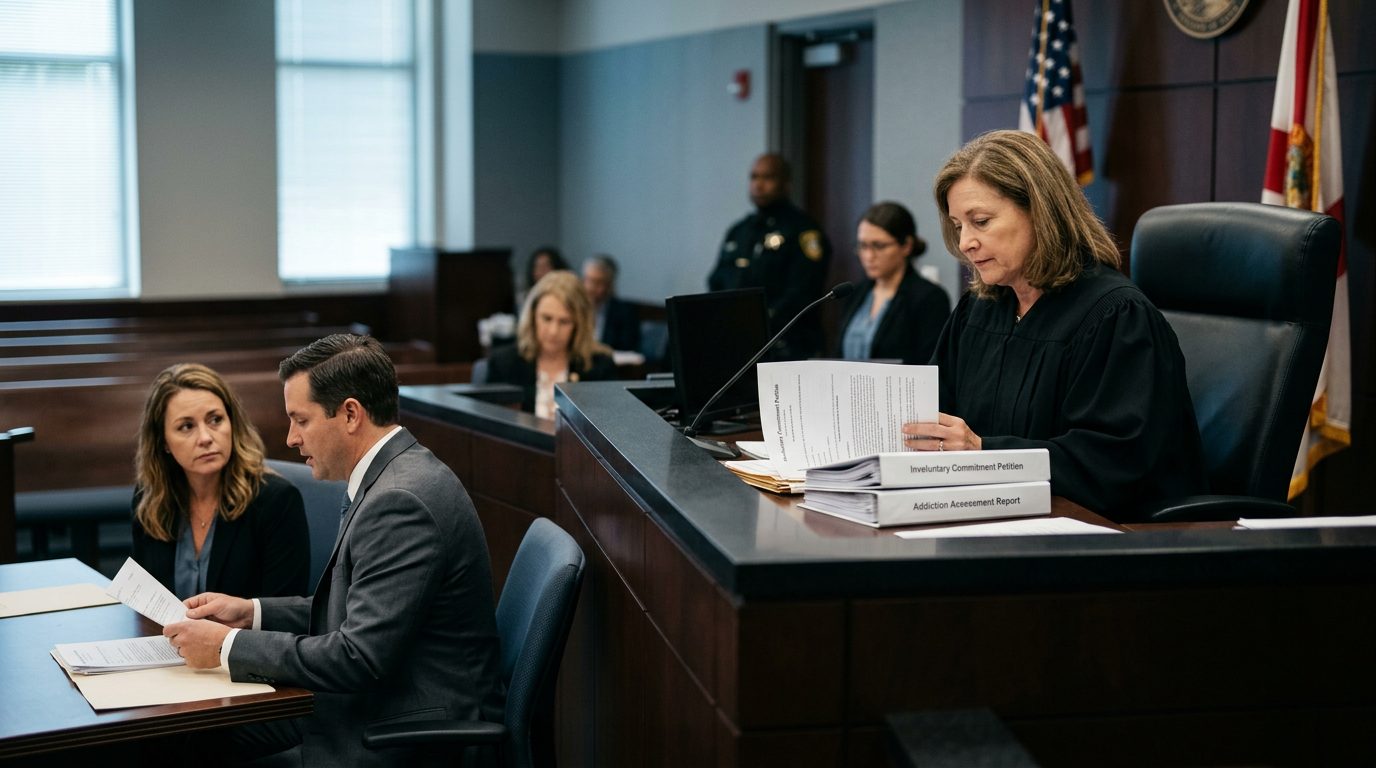
Involuntary commitment addiction hearing representation is legal advocacy during a Florida court hearing to determine whether someone meets the legal criteria for involuntary commitment due to substance use disorder. Your attorney attends the hearing, presents evidence, questions witnesses, and argues your position before the judge.
This service is distinct from filing the petition itself or appealing the judge’s order afterward. It covers the hearing day itself—what happens in the courtroom, what your attorney does, and how your rights are protected during the proceeding. Under Florida Statutes Chapter 397, known as the Marchman Act, involuntary commitment hearings follow specific legal procedures. Your attorney ensures those procedures protect you and that the court hears your side of the case.
Who This Service Is For
You may need involuntary commitment addiction hearing representation if:
- You are the respondent (the person named in the commitment petition) and want legal counsel at your hearing
- You are a family member or caregiver seeking to petition for a loved one’s commitment and need an attorney to present your case
- You received notice of a hearing date and need urgent guidance on your rights and what to expect
- You live in South Florida, Miami-Dade, or anywhere in Florida and face a tight timeline before your hearing date
Involuntary commitment hearings often occur within days of petition filing. If your hearing is coming up soon, immediate attorney availability matters. Robinson & Casey handles these matters as a core practice area and prioritizes urgent cases.
What Involuntary Commitment Addiction Hearing Representation Covers
When you hire an attorney to represent you at an involuntary commitment addiction hearing, here’s what you receive:
Pre-Hearing Consultation Your attorney reviews the petition against you, explains the hearing procedure, identifies the legal criteria the court will apply, and prepares your position. You’ll understand what to expect, what evidence the other side will present, and what your attorney will do at the hearing.
Attendance and Courtroom Advocacy Your attorney appears at the hearing and represents your interests before the judge. This includes presenting your case, introducing evidence on your behalf, and making legal arguments about whether commitment is appropriate under Florida law.
Examination and Cross-Examination Your attorney questions witnesses called by the petitioner, challenges their testimony, and tests the strength of the evidence against you. Your attorney also may call witnesses on your behalf—medical providers, family members, treatment professionals—to support your position.
Legal Arguments and Procedural Defenses The petitioner must prove by clear and convincing evidence that you meet commitment criteria. Your attorney argues why that burden is not met, raises procedural objections if the petition is defective, and presents statutory defenses relevant to your case. This is where legal knowledge of Florida’s commitment statutes and case law makes the difference.
Protection of Your Rights Your attorney ensures due process—that you have the right to be present, to present evidence, and to cross-examine witnesses. Your attorney also challenges improper evidence and objects to procedural violations that might unfairly prejudice the court against you.
Order Review and Explanation After the hearing, your attorney reviews the judge’s written order with you, explains what it means, and discusses any available next steps—whether an appeal, renewal of the commitment, or modification is possible.
How the Process Works: Step-by-Step
Step 1: Initial Contact You or a family member calls Robinson & Casey at (561) 849-4149. Your attorney gathers basic information: the date of your hearing, who filed the petition, and the facts of your situation. If your hearing is imminent, the attorney prioritizes immediate availability.
Step 2: Urgent Consultation Your attorney reviews the petition, any medical reports or police records attached to it, and your account of events. The attorney explains Florida’s commitment criteria, the hearing procedure, and what the judge will need to decide. You’ll learn what the petitioner must prove and what your attorney will argue.
Step 3: Case Preparation Your attorney identifies the legal issues in your case, prepares questions for the petitioner’s witnesses, and advises you on whether and how to testify. If you have medical records, treatment history, or letters of support, your attorney reviews them and decides what evidence to present.
Step 4: Hearing Representation Your attorney appears at the hearing—whether in South Florida, Miami-Dade, or elsewhere in Florida. The attorney presents your case, cross-examines the petitioner’s witnesses, and makes oral arguments to the judge. You are present and may testify if your attorney advises it and you choose to.
Step 5: Order and Next Steps The judge issues a written order granting or denying commitment, or granting a limited or temporary commitment. Your attorney reviews the order with you, explains what it means for you, and discusses whether appeal, renewal modification, or other remedies are available.
Timeline and Availability
Involuntary commitment hearings move fast. Florida law requires hearings to occur promptly after petition filing—often within days. This urgency is why you need an attorney who is available immediately, not weeks later.
Robinson & Casey prioritizes urgent matters. Same-day or next-day consultation is often possible if your hearing date is imminent. The firm has no scheduling delays; involuntary commitment and guardianship matters are the firm’s exclusive focus, so your case doesn’t compete with unrelated work.
The firm serves clients across South Florida, Miami-Dade, and statewide Florida. Wherever your hearing is scheduled, Robinson & Casey can represent you.
Not sure what your next step is?
Talk it through with our team — the first consultation is free, confidential, and carries no obligation.
Why Robinson & Casey for Involuntary Commitment Addiction Hearing Representation
Exclusive Focus on Addiction Commitment and Guardianship These matters are not a side service here—they are the firm’s entire practice. This means deep knowledge of Florida’s commitment statutes, local court rules, and how judges evaluate commitment petitions.
Florida-Specific Statutory and Procedural Knowledge Robinson & Casey knows Chapter 397, the Marchman Act, and how it works in practice. The firm understands the legal criteria courts apply, the burden of proof (clear and convincing evidence), and the procedural protections you have during the hearing.
Understanding of Addiction as a Medical Condition The National Institute on Drug Abuse recognizes substance use disorder as a treatable medical condition. Robinson & Casey’s representation reflects current evidence, not stigma. This informs credible advocacy at your hearing.
Responsive to Urgency These cases don’t wait. The firm is structured to respond immediately to urgent hearing dates and to get you representation fast.
Statewide Reach Whether you’re in Miami-Dade, South Florida, or anywhere in Florida, Robinson & Casey represents clients across the state.
Honest About Process and Outcomes Your attorney will explain what happens at the hearing, what your attorney will do, and what the judge will decide based on law and evidence. No false promises—just clear process and realistic assessment of your position.
What Happens at the Involuntary Commitment Addiction Hearing
Understanding the hearing process helps you prepare and know what your attorney will do.
The judge presides. The petitioner (usually a family member, medical provider, or law enforcement officer) presents evidence that you meet the legal criteria for commitment—typically that you have a substance use disorder and pose a danger to yourself or others, or that you are unable to care for yourself.
You have the right to be present at the hearing, to present evidence, and to cross-examine the petitioner’s witnesses. Your attorney exercises these rights on your behalf and advises you on whether to testify.
The petitioner must prove their case by clear and convincing evidence—a high legal standard that protects your rights. Your attorney challenges the evidence, questions the petitioner’s witnesses, and argues why the burden is not met.
The judge then issues an order. The judge may grant commitment (ordering you to receive inpatient treatment), deny commitment (dismissing the petition), or grant a limited or temporary commitment. Your attorney explains the order and any available remedies.
Frequently Asked Questions
Can an attorney prevent commitment?
An attorney presents your case and challenges the petitioner’s evidence, but the judge decides based on law and facts; the outcome depends on the court.
What if I can’t afford an attorney?
Call Robinson & Casey to discuss fees and payment options; the firm works with clients on arrangements for urgent matters.
How quickly can an attorney be available?
Call (561) 849-4149 immediately if your hearing is within days; same-day consultation is often possible.
What if I disagree with the hearing outcome?
Your attorney can advise on appeal options or, if applicable, renewal or modification of the commitment order.
Do I have to testify?
No; your attorney will advise whether testimony helps your case, and the decision is yours.
What documents should I bring to my consultation?
Bring the petition, any medical records or police reports, treatment history, and letters of support; your attorney will guide you on what’s relevant.
Related Services
Robinson & Casey also handles:
- Involuntary commitment addiction petition filing (if you’re seeking to petition for a family member’s commitment)
- Challenge or appeal of involuntary commitment orders (if you disagree with a hearing outcome)
- Renewal or modification of involuntary commitment (if an existing commitment order is expiring or needs change)
- Guardianship matters (if commitment is part of a broader guardianship need)

Take Action Now
If you’re facing an involuntary commitment addiction hearing in Florida and need an attorney to represent you at that hearing, families and individuals in your situation contact Robinson & Casey regularly—call (561) 849-4149 today for immediate guidance.
How Robinson & Casey Supports You
Vigorous Case Presentation
We present your case and challenge the petitioner's evidence before the judge, ensuring your position is heard and examined.
Hearing Preparation
We help you understand the hearing process, prepare testimony, and gather documentation to support your defense.
Urgent Response
Involuntary commitment hearings move quickly. We prioritize emergency matters and work to meet tight timelines.
Clear Communication
We explain your options, the law, and what to expect—so you're informed every step of the way.
What Happens in an Involuntary Commitment Hearing
The Petition
Someone files a petition alleging that you or a loved one meet the legal criteria for involuntary commitment due to addiction. The court schedules a hearing.
Your Right to Representation
You have the right to an attorney at the hearing. We represent you, cross-examine witnesses, and present evidence on your behalf.
The Judge's Decision
The judge weighs the evidence and testimony to decide whether the legal standard for commitment is met. The outcome depends on the facts and the law.
Next Steps
Whether the petition is granted or denied, we advise you on any further proceedings or options available to you.
Time Matters
Involuntary commitment hearings happen on a compressed timeline. If you've been served with a petition or notice of hearing, contact Robinson & Casey immediately so we can prepare your defense.
Common Questions
Can an attorney prevent commitment?
An attorney presents your case and challenges the petitioner's evidence, but the judge decides based on law and facts. The outcome depends on the court.
What if I can't afford an attorney?
Call Robinson & Casey to discuss fees and payment options. The firm works with clients on arrangements for urgent matters.
What should I bring to the hearing?
We guide you on documents, witnesses, and evidence that support your position. Preparation is key to an effective defense.
Can I appeal if the judge rules against me?
Appeal rights exist in Florida law. We discuss your options after the hearing and advise you on any further steps.