
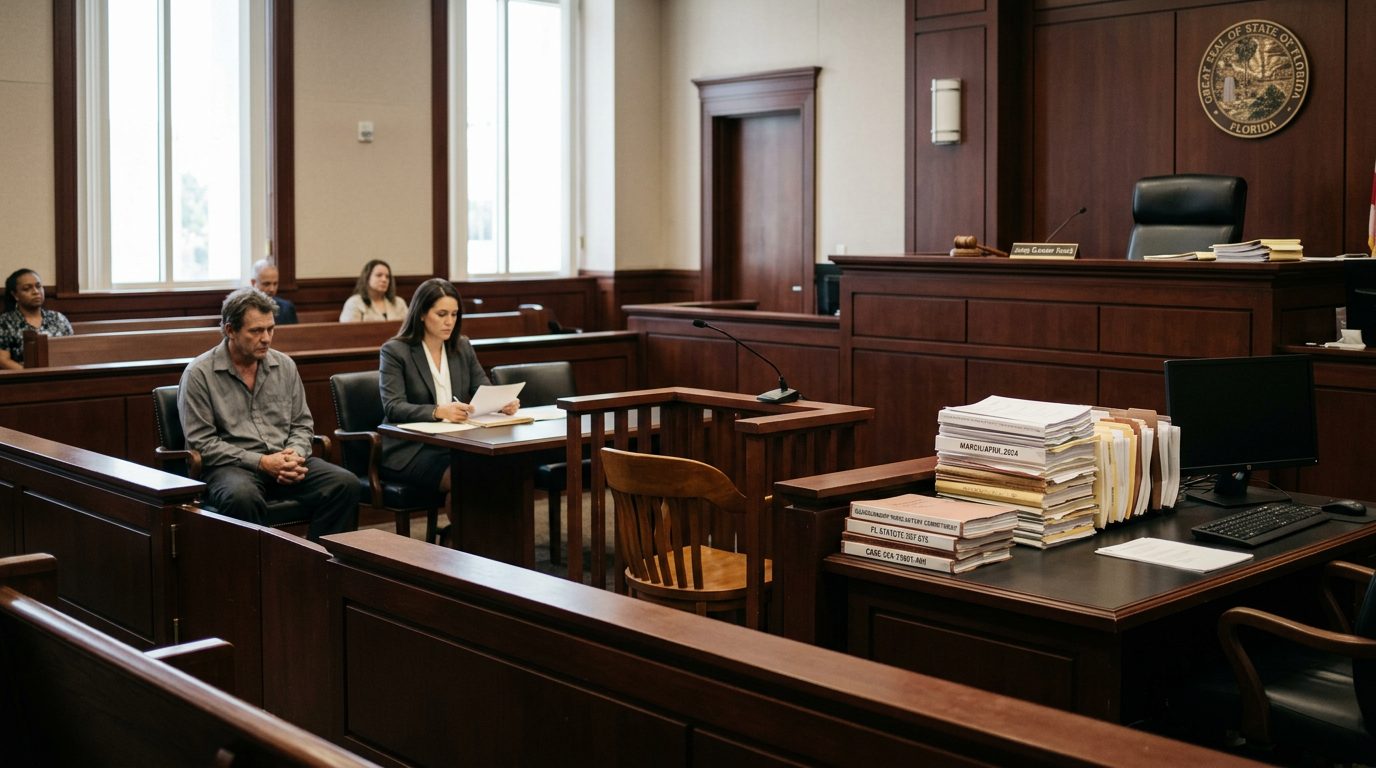
Marchman Act & Involuntary Commitment
Emergency Involuntary Commitment for Addiction in Florida
When a loved one's addiction becomes life-threatening, Robinson & Casey helps families petition the court for immediate intervention and treatment.
By Richard J. Casey III, Esq. · Published September 20, 2026
Emergency Involuntary Commitment for Addiction in Florida
When someone you love is trapped in active addiction and refuses help, emergency involuntary commitment for addiction is a civil legal process that allows you to petition a court to order immediate treatment. It’s designed for crisis situations where substance abuse poses imminent danger to the person or others—and the process moves quickly.
This guide explains what emergency involuntary commitment is, who qualifies, how the Florida legal process works step-by-step, what evidence you’ll need, and how Robinson & Casey helps families navigate this urgent intervention.
Not sure what your next step is?
Talk it through with our team — the first consultation is free, confidential, and carries no obligation.

What Is Emergency Involuntary Commitment for Addiction?
Emergency involuntary commitment for addiction is a court-ordered process that removes an individual’s choice and places them into immediate treatment when substance abuse creates imminent danger.
Unlike voluntary treatment—where someone chooses to enter a program—involuntary commitment is initiated by family members, healthcare providers, law enforcement, or designated crisis professionals. A judge reviews the petition and, if satisfied that imminent danger exists, issues an emergency order for immediate custody and transport to a treatment facility.
The legal basis in Florida is Fla. Stat. Chapter 397 (Substance Abuse), which authorizes involuntary commitment when:
- The individual has a substance abuse disorder.
- Active use or refusal of treatment creates imminent danger to self or others.
- The person cannot or will not provide for basic needs due to addiction.
This is a civil process, not a criminal one. No crime must be committed. The legal trigger is danger and addiction, not criminal conduct.
Who Qualifies for Emergency Involuntary Commitment?
An individual qualifies for emergency involuntary commitment when three conditions are met: a diagnosed or apparent substance abuse disorder, imminent danger caused by active use, and either refusal of voluntary treatment or inability to seek help.
Imminent danger is the legal standard. It includes:
- Repeated overdose attempts or overdose risk
- Driving under the influence or reckless behavior while intoxicated
- Self-harm, violence, or threats to family members
- Neglect of health, hygiene, or safety due to active use
- Medical crisis (seizures, organ failure, severe withdrawal)
- Inability to meet basic needs (food, shelter, safety)
Important: The person does not need to have failed treatment before. The legal trigger is current danger and active use, not a history of unsuccessful programs.
Examples from cases Robinson & Casey handles include a parent watching their adult child spiral into repeated overdoses; a spouse facing escalating substance abuse and domestic threats; or a sibling concerned about a family member’s homelessness and untreated addiction.
Who Can File for Emergency Involuntary Commitment?
Several categories of people can petition a court for emergency involuntary commitment:
- Family members: spouse, parent, adult child, sibling
- Healthcare providers or treatment facilities: physicians, therapists, substance abuse counselors
- Law enforcement officers: police or sheriff’s deputies
- Designated crisis intervention professionals: mental health crisis teams
- Any person with knowledge of the individual’s condition (varies by statute and circumstance)
In practice, family members file most petitions. Robinson & Casey helps you prepare and file the petition, then represents you at court hearings.
The Emergency Involuntary Commitment Process: Step-by-Step
The process is designed for speed. Here’s what happens from petition to treatment order.
Step 1 – Petition Filing
You (or your attorney) file a petition with the court in the county where the individual resides or is currently located. The petition describes the person’s substance abuse, specific examples of recent dangerous behavior, and why imminent danger exists. Robinson & Casey drafts the petition and files it immediately.
Step 2 – Ex Parte Hearing (Emergency Order)
“Ex parte” means the judge reviews the petition without the individual present. This happens the same day or within 24 hours of filing. The judge reads the petition and any supporting evidence (medical records, witness statements, police reports). If the judge finds probable cause that imminent danger exists, the judge issues an emergency commitment order.
Step 3 – Immediate Custody & Transport
Once the emergency order is issued, law enforcement (police or sheriff) or a designated officer takes the individual into custody—often within hours. The person is transported to a designated treatment facility or evaluation center. Family members do not transport; law enforcement handles this.
Step 4 – Medical Evaluation
The treatment facility conducts a medical and psychiatric evaluation within 24 hours of arrival. The evaluation confirms the substance abuse disorder, assesses the level of danger, and determines the appropriate level of care (inpatient, residential, intensive outpatient).
Step 5 – Full Hearing (Within 5 Days)
The individual has a right to a full hearing before a judge within 5 calendar days of the emergency order. This is where they can contest the commitment. Robinson & Casey appears in court on your behalf, presents evidence (behavioral examples, medical records, witness testimony), and argues for continued involuntary treatment. The individual may also present evidence or testimony.
Step 6 – Judge’s Decision
The judge decides whether to order continued involuntary treatment based on the evidence presented. If the judge finds grounds (substance abuse disorder + imminent danger), the judge issues a commitment order specifying the duration and type of treatment.
Step 7 – Treatment & Discharge Planning
The individual receives treatment at the facility. The facility develops a discharge plan and aftercare strategy (follow-up counseling, support groups, outpatient treatment, housing support) before release.
Timeline: How Quickly Does Emergency Commitment Happen?
Speed is built into the process. Here’s a realistic timeline:
- Petition to emergency order: same day to 24 hours
- Custody and transport: within hours of the emergency order
- Medical evaluation: within 24 hours of arrival at the facility
- Full hearing: within 5 calendar days of the emergency order
- Total from petition to treatment order: typically 3–7 days
This urgency reflects the reality of addiction crises. Delays can be fatal. Robinson & Casey understands this and moves immediately to file and represent you at hearings.
Not sure what your next step is?
Talk it through with our team — the first consultation is free, confidential, and carries no obligation.
What Is Included in Emergency Involuntary Commitment?
When you work with Robinson & Casey on an emergency involuntary commitment, here’s what the process includes:
- Legal consultation: Initial call to assess your situation and determine if emergency commitment is appropriate
- Petition drafting and filing: Attorney prepares the petition with specific facts and legal grounds, then files with the court
- Evidence gathering: Help collecting medical records, witness statements, police reports, and behavioral documentation
- Ex parte hearing representation: Attorney appears at the emergency hearing to present evidence to the judge
- Coordination with law enforcement: Liaison with police or sheriff to ensure custody and transport
- Facility identification and coordination: Guidance on appropriate treatment facilities and admission process
- Full hearing representation: Attorney appears at the 5-day hearing to present evidence and argue for continued treatment
- Court orders and documentation: All commitment paperwork and court orders prepared and filed
Robinson & Casey handles the legal work so your family can focus on supporting your loved one through the crisis.
Why Robinson & Casey for Emergency Involuntary Commitment?
Robinson & Casey handles involuntary commitment and guardianship matters exclusively—this is not a side practice. That focus matters in a crisis.
Crisis-ready: The firm understands the urgency of addiction emergencies. When you call, you’re talking to attorneys who move fast and know how to file and get before a judge immediately.
Florida-based and court-familiar: Robinson & Casey is licensed in Florida and handles cases across South Florida and statewide. The attorneys know local judges, court procedures, and treatment facilities. That familiarity translates to faster filings and smoother coordination.
Experience with families in crisis: The firm has guided hundreds of families through involuntary commitment. Attorneys understand the emotional weight of these decisions and the practical complexity of navigating court, law enforcement, and treatment systems simultaneously.
Hearing representation: Robinson & Casey doesn’t just file paperwork. Attorneys appear in court on your behalf at both the emergency hearing and the full 5-day hearing, presenting evidence and arguing for the commitment.
Treatment facility coordination: The firm works with local and statewide treatment providers to identify appropriate facilities and ensure smooth admission and appropriate level of care.
What Evidence Do You Need to File for Emergency Commitment?
The stronger your evidence, the more likely the judge will find imminent danger and issue the emergency order. Here’s what to gather:
- Specific examples of recent dangerous behavior: Overdose attempts, DUI incidents, self-harm, threats to family, reckless behavior while intoxicated—with dates and details
- Medical records: Substance abuse diagnosis, prior treatment attempts, medical emergencies related to use
- Witness statements: Written or recorded accounts from family, friends, employers, or professionals describing imminent danger and active use
- Documentation of refusal: Evidence that the person has refused voluntary treatment or counseling
- Police reports or incident records: Any law enforcement contact related to substance abuse (DUI, domestic disturbance, welfare check)
- Photos or videos: If available and appropriate, visual documentation of behavior or living conditions
- Timeline of escalation: A clear narrative showing how use or danger has worsened over weeks or months
You don’t need every item on this list. Robinson & Casey helps you gather and organize what you have to build the strongest petition possible.
Common Questions & Objections
Q: Will my loved one be angry or refuse to cooperate?
Involuntary commitment is court-ordered, not voluntary. Resistance and anger are common and expected. The legal process protects both the individual’s rights and your ability to intervene in a life-threatening situation. Treatment providers are trained to work with resistant patients.
Q: What if the individual contests the commitment at the 5-day hearing?
They have the right to contest it. Robinson & Casey presents evidence at the hearing to show grounds for continued treatment—substance abuse disorder and imminent danger. The judge decides based on the evidence presented.
Q: How long will the commitment last?
Duration depends on the statute, the judge’s order, and the individual’s progress in treatment. Initial orders may be 5–30 days; longer commitments are possible if danger persists. The treatment facility and court work together on discharge planning and aftercare.
Q: Can I force someone into treatment if they haven’t committed a crime?
Yes. Involuntary commitment is a civil (not criminal) process based on imminent danger and substance abuse disorder. The legal standard is different from criminal prosecution. No crime must be committed.
Q: What if the individual is homeless or out of state?
Commitment can be filed in the county where the individual is located. Robinson & Casey can help identify the correct jurisdiction and coordinate with local authorities to locate and take custody of the person.
Q: Will this affect their job, housing, or legal record?
Involuntary commitment is a civil matter and does not create a criminal record. Employment and housing impacts depend on the employer’s or landlord’s policies and the individual’s own disclosure. Robinson & Casey can discuss privacy and practical considerations specific to your situation.

Next Steps: How to Get Started
If you believe emergency involuntary commitment is necessary, here’s what to do:
-
Call Robinson & Casey at (561) 849-4149 to describe the situation. An attorney will listen to the facts and discuss whether emergency commitment is appropriate and what the process will look like.
-
Initial consultation: The attorney explains the legal process, realistic timeline, costs, and what evidence you’ll need to gather.
-
Petition preparation: Robinson & Casey drafts the petition, organizes evidence, and files with the court.
-
Emergency and full hearings: The attorney represents you at both hearings, presents evidence, and argues for the commitment order.
-
Facility coordination: Guidance on treatment facility selection and admission to ensure appropriate care.
The process is urgent, but it’s not overwhelming when you have legal guidance. Robinson & Casey has helped families in crisis move from desperation to action in days.
If a loved one’s addiction has reached a crisis point and you’re considering whether emergency intervention is necessary, families in that situation can contact us—call (561) 849-4149 to discuss your circumstances with an attorney.
Time Matters in a Crisis
Involuntary commitment is a court-ordered intervention designed to protect someone in immediate danger from substance abuse. Resistance and anger are common—treatment providers are trained to work with individuals who initially refuse cooperation. The legal process protects both your loved one's rights and your ability to act in a life-threatening situation.
How Involuntary Commitment Works
Petition the Court
Robinson & Casey files a petition on your behalf, presenting evidence that your loved one poses an imminent danger to themselves or others due to substance abuse.
Emergency Hold & Evaluation
The court may order an immediate hold while a qualified physician evaluates your loved one's condition and addiction severity.
5-Day Hearing
Within five days, a hearing determines whether commitment should continue. Your loved one has the right to contest; we represent your interests throughout.
Court-Ordered Treatment
If the court orders commitment, your loved one receives mandated treatment. We guide you through compliance and any subsequent legal proceedings.
Why Robinson & Casey for Involuntary Commitment
Focused on Marchman Act & Guardianship
We focus exclusively on Marchman Act petitions and guardianship matters. This narrow focus means we know the statutes, the courts, and the procedures inside out.
Fast Action When Minutes Count
Addiction crises don't wait. We move quickly to file emergency petitions and represent you at urgent hearings.
Statewide Florida Practice
We serve families across South Florida and statewide, handling involuntary commitment petitions in courts throughout Florida.
Direct Access to Your Attorney
You speak with the attorney handling your case—not a paralegal or intake coordinator—from your first call.
Your Loved One Needs Help Now
Related practice areas
- Involuntary Commitment for Addiction in Florida
- Marchman Act Petition & Involuntary Addiction Treatment FL