
Marchman Act & Guardianship | Miami-Dade and South Florida
When Addiction Puts a Family Member at Risk, Know What Florida Law Allows
Robinson Casey focuses on Marchman Act petitions and guardianship matters for families across South Florida and statewide. Learn how an emergency room admission for drug addiction works under Florida law.
By Richard J. Casey III, Esq. · Published October 19, 2026
The Short Answer: Yes, but Only Within Limits
Fla. Stat. § 397.679 The person must meet the statutory criteria first. Fla. Stat. § 397.679 The person must meet the statutory criteria first.
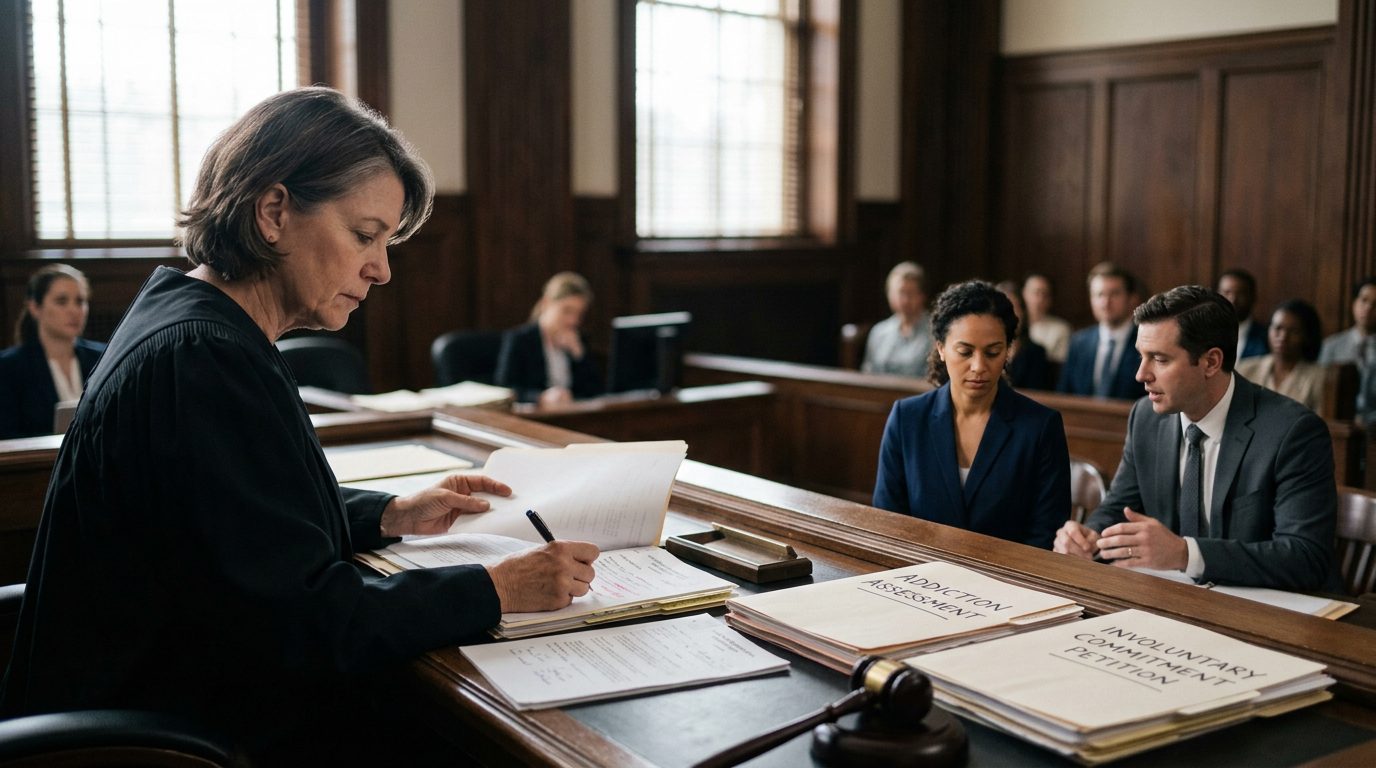
A short emergency admission is not the same as a court-ordered treatment process. Longer involuntary treatment requires a petition and a court hearing. Medical care comes first in the emergency room. Whether staff can hold a person against their will is a separate legal question. That question turns on paperwork and the person’s documented condition.
Families often arrive with one question and leave with several. This page covers the criteria, the paperwork, the police role, and what happens after the hold. Each part follows the order the law sets out.
If a loved one is in an emergency room right now, you don't have to work out the legal steps alone. We're ready to talk through your situation. Talk it through with our team — the first consultation is free, confidential, and carries no obligation.
Baker Act or Marchman Act: Which Law Covers Drug Use
Drug and alcohol impairment falls under Florida’s substance abuse law in Chapter 397. Families often call that law the Marchman Act. Mental illness falls under Part I of Chapter 394, which families usually know as the Baker Act. When addiction is the main concern, the Marchman Act is usually the route at issue.
Some people have both a substance use disorder and a mental health disorder. The substance abuse statute covers that combination directly.
A “Baker Act” note on a hospital chart does not settle the legal basis by itself. The certificate and the facts written in it do that work. Ask which law the paperwork cites, and ask why.
What the Emergency Department Does First
The emergency department first treats the medical problem. Staff check vital signs, overdose risk, withdrawal danger, injuries, and any other urgent condition. The legal process comes after those needs are addressed.
A certificate for emergency admission must say the person has been examined and assessed within the preceding 5 days after the application date. It must also give the reasons for believing the person is impaired and has lost self-control.
After admission, the attending physician must assess the person within 72 hours. That assessment decides what further services are needed.
The Criteria for Holding Someone in Florida
A person meets the criteria for involuntary admission only when specific conditions are met. There must be a good faith reason to believe the person is substance abuse impaired or has a substance use disorder and a co-occurring mental health disorder. That impairment must have caused a loss of power of self-control over substance use. Fla. Stat. § 397.675
The person must also meet one of two further conditions. The first is impaired judgment. The person cannot understand the need for services or make a rational choice about them. The statute adds that mere refusal does not, by itself, show lack of judgment.
The second condition involves danger. Without care, the person is likely to neglect themselves, that neglect poses a real and present threat of substantial harm, and it is not apparent that such harm may be avoided through the help of willing, able, and responsible family members or friends or other services. Fla. Stat. § 397.675 reads: “(b) Without care or treatment, is likely to suffer from neglect or refuse to care for himself or herself; that such neglect or refusal poses a real and present threat of substantial harm to his or her well-being; and that it is not apparent that such harm may be avoided through the help of willing, able, and responsible family members or friends or the provision of other services, or there is substantial likelihood that the person has inflicted, or threatened to or attempted to inflict, or, unless admitted, is likely to inflict, physical harm on himself, herself, or another.” This is the text as amended in 2024.
Admission also requires a certificate specific to substance abuse impairment and a completed application. The professional’s certificate is valid for 7 days after it is issued. It must also recommend the least restrictive service that fits the person.
Can the Hospital Call the Police?
Police can transport a person when the certificate calls for it and less restrictive options aren’t available. The statute gives voluntary outpatient evaluation as an example of a less restrictive option. Fla. Stat. § 397.6793
If other less restrictive means are not available, a law enforcement officer shall take the person named in the certificate into custody and deliver him or her to the appropriate facility for involuntary assessment and stabilization. If other less restrictive means are not available, a law enforcement officer must take the person named in the certificate into custody and deliver him or her to the appropriate facility for involuntary assessment and stabilization.
The admission rests on the certificate and the application.
What Happens After the Emergency Hold Ends
It can release the person and refer them to other services. Or it can keep them. Fla. Stat. § 397.6797
The facility may keep the person if they agree to stay voluntarily. It may also keep them if a petition for involuntary assessment or treatment has been started. A timely filed petition lets the provider hold the person until the court orders otherwise.
Involuntary treatment petitions go to the clerk of court in the county where the person is located. The clerk cannot charge a filing fee for them. Involuntary treatment petitions for substance abuse impaired persons must be filed with the clerk of the court in the county where the person is located. Miami-Dade Clerk of Courts
The respondent, the person named in the petition, has the right to counsel at every stage. A respondent who cannot afford private counsel has the right to court-appointed counsel. Fla. Stat. § 397.681
Not sure what your next step is?
Talk it through with our team — the first consultation is free, confidential, and carries no obligation.
Preparing Before a Court Petition
A petition has to state facts, not only worry. It must name the respondent and the petitioner, and give their relationship. It must also state the reason for believing the person is impaired and has lost self-control. Fla. Stat. § 397.68141
Dated observations help most. Write down incidents, statements, missed obligations, and any prior treatment. A certificate or report from a qualified professional who examined the person within 30 days before filing may go with the petition. Fla. Stat. § 397.68141
Quick answers
Can an emergency room hold someone for drug addiction in Florida?
Yes, in some cases. The person must meet the statutory criteria and be admitted under a substance-specific certificate.
How long is a professional’s certificate valid?
It is valid for 7 days after it is issued.
Who can request an emergency admission for an adult?
A spouse, legal guardian, relative, or responsible adult with personal knowledge can ask. A qualifying professional can too.
Which county handles the petition?
The county where the person is located when the petition is filed.

Talk to Robinson Casey About Your Situation
If someone you love is in an emergency room right now, the questions come fast. Can they be kept? Will they be discharged? Which papers matter? You don’t have to sort those out alone.
Robinson Casey limits practice to Marchman Act petitions, guardianship matters, and involuntary commitment for addiction. The firm serves families across South Florida and statewide. Our first consultation is free, confidential, and carries no obligation to continue (consulta inicial gratuita, confidencial y sin compromiso).
Call (561) 849-4149 or request a consultation to talk through your situation. If we cannot take your matter, we may refer you to another lawyer or firm. Richard J. Casey III, Esq., is the responsible lawyer.
Why Families Start Here
Focused Practice
Robinson Casey limits practice to Marchman Act petitions and guardianship matters, so each conversation centers on the laws that govern your family's situation.
Free, Confidential First Consultation
Your first consultation is free and confidential, with no obligation to continue.
Plain-Language Guidance
We explain the process step by step, so you understand your options before you decide what comes next.
Support for South Florida and Statewide
Our team serves families in Miami-Dade, across South Florida, and throughout Florida, including by phone.
If Someone Is in Immediate Danger
If a loved one is in immediate danger or may harm themselves or others, call 911 right away. Because these matters can be time-sensitive, speak with a lawyer as soon as you can to understand the steps available to your family.
Matters We Handle
Marchman Act Attorney
Guidance on Marchman Act petitions for a family member struggling with substance use.
Involuntary Commitment for Addiction
Help understanding how involuntary commitment for addiction is requested and what the process involves.
Emergency Temporary Guardianship
Support for families seeking urgent court protection when a loved one cannot make safe decisions.
Guardianship Attorney Services
Representation in plenary, limited, and mental health guardianship matters across Florida.