
Marchman Act & Guardianship · Florida
Employee Addiction Involuntary Treatment in Florida: Information for Employers
Robinson Casey focuses exclusively on Marchman Act petitions and guardianship matters. This page explains how Florida's involuntary treatment process is structured and how employers can begin a conversation with our office.
By Richard J. Casey III, Esq. · Published October 16, 2026
An employer cannot order an employee into involuntary addiction treatment in Florida on its own. Florida’s Marchman Act uses a court process, and a qualified petitioner must file a petition before a judge decides anything. This guide explains employee addiction involuntary treatment in Florida for employers, including what the process looks like and where an employer’s role ends.
What the Marchman Act Is and Why Employers Encounter It
The Marchman Act is Florida’s law for court-ordered treatment of substance abuse impairment.
Substance use often shows up at work first. Attendance may slip, performance may change, or safety may become a concern.
Under Fla. Stat. § 397.681, petitions for involuntary treatment must be filed with the clerk of the court in the county where the person is located. The clerk may not charge a fee for filing one.
If a worker's substance use is putting safety and the job at risk, you don't have to sort out the Marchman Act alone. Call our team to talk through your options. Talk it through with our team — the first consultation is free, confidential, and carries no obligation.

Who May File a Petition Under Florida Law
For an adult, Fla. Stat. § 397.68112 lists who may file. The list includes the respondent’s spouse or legal guardian, any relative, a service provider, and an adult who has direct personal knowledge of the person’s substance abuse impairment and prior course of assessment and treatment. For a minor, a parent, legal guardian, or service provider may file.
Employers are not named in that list. An individual adult with the personal knowledge the statute describes is named, though. Other requirements may also apply. An employment relationship alone should not be assumed to give someone the right to file.
What an Employer Can and Cannot Do on Its Own
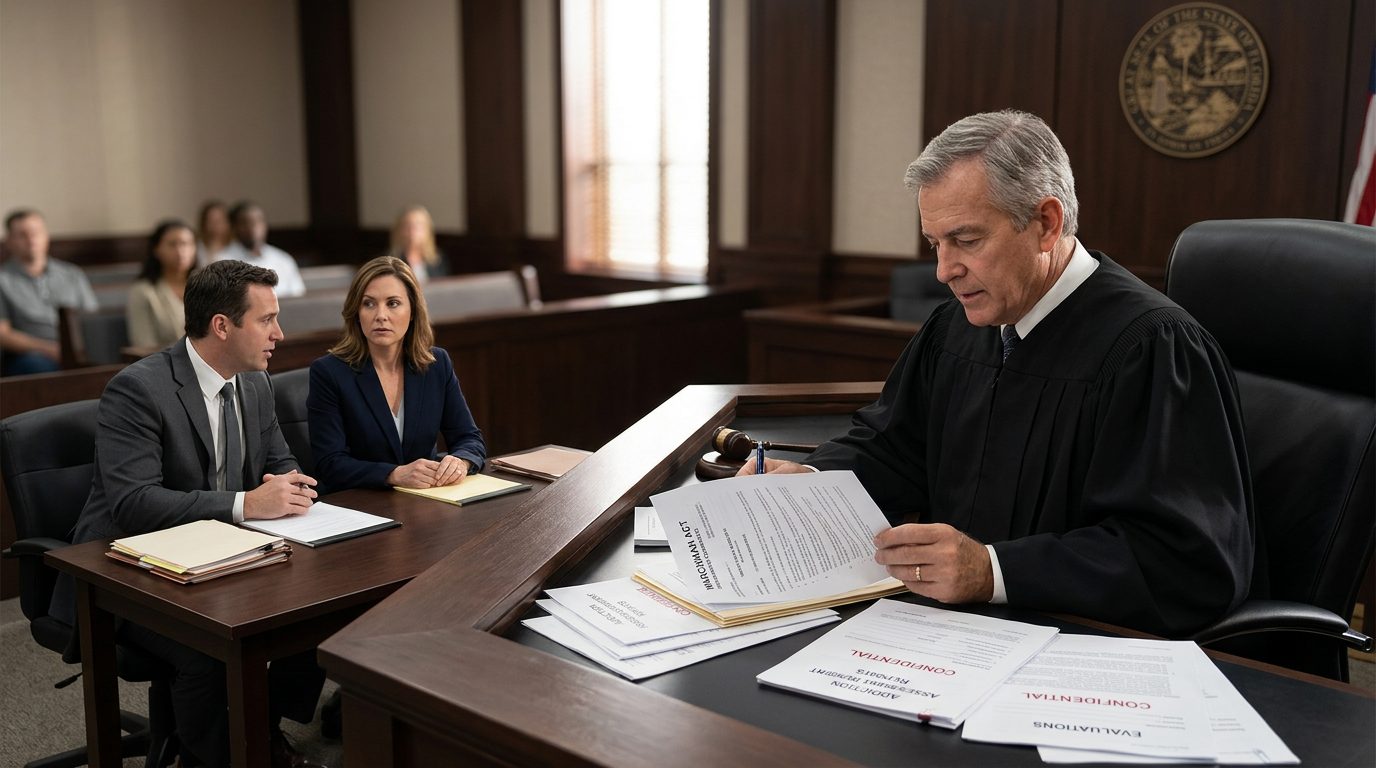
Under Fla. Stat. § 397.697, a court may order involuntary treatment services when it finds the conditions proved by clear and convincing evidence. The court makes that finding, not the employer.
An employer’s own observations may become evidence in a case. The statute says the court hears and reviews all relevant evidence, including testimony from individuals such as family members familiar with the respondent’s prior history (Fla. Stat. § 397.6957).
Decisions about attendance, discipline, leave, or keeping the job are separate questions. They depend on the facts and on employment law, which is a separate area from the Marchman Act.
Documenting Work Performance and Concerns
Keep dated, factual notes. Write down what happened, when, where, and who saw it. Attendance logs, performance reviews, and incident reports are common examples.
Avoid labels such as “addict” and guesses about the cause. Facts carry more weight than conclusions about someone’s health. A court evaluates evidence under the statute, and an employer’s opinion does not replace that review.
The statute also shows what a petition needs to say. The factual allegations must give “the reason for the petitioner’s belief that the respondent is substance abuse impaired,” and the reason the respondent “has lost the power of self-control with respect to substance abuse” (Fla. Stat. § 397.68141). A petition may also come with a report from a qualified professional who examined the person within 30 days before filing.
Which evidence is central in a given case is for the court to decide, based on the statute and the facts.
Voluntary Treatment as a Separate Path
Voluntary treatment is a different path from a court petition. The Act allows voluntary admission, as the state’s Marchman Act page notes. A person who agrees to seek treatment on their own may not need a court petition, depending on the facts.
Many employers offer an employee assistance program or referral resources. These are workplace policies, and what they offer varies by employer.
Some people also have a mental health condition alongside substance use. MedlinePlus explains that co-occurring mental and substance use disorders can occur together and are usually best treated concurrently.
What a Court Process May Involve
A Marchman case may move through filing, notice, and a hearing. The statute says the court shall schedule a hearing within 10 court working days unless a continuance is granted (Fla. Stat. § 397.68151). Continuances and the court’s schedule can change that timing.
A respondent has a right to counsel at every stage. The respondent may waive that right if the court finds the waiver knowing, intelligent, and voluntary (Fla. Stat. § 397.681). Testimony is taken under oath, and the respondent may refuse to testify.
If emergency circumstances are asserted, the court may rely on the petition alone and enter an ex parte order without first appointing an attorney (Fla. Stat. § 397.6818).
Any outcome is a possibility the court may order, not an automatic result.
Not sure what your next step is?
Talk it through with our team — the first consultation is free, confidential, and carries no obligation.
Employment Law Questions Are Outside This Page
Leave, accommodation, discipline, and termination are employment law topics. They run separately from the Marchman Act process. Employers with those questions may need a lawyer who handles employment matters.
A matter may be referred to another lawyer or firm. Robinson Casey limits its practice to Marchman Act petitions and guardianship matters. A referral may be needed for employment questions.

Talk With Robinson Casey About a Possible Petition
If a worker’s substance use is affecting safety and job performance, a Marchman Act petition may be one option to discuss with a lawyer. Richard J. Casey III, Esq. is the responsible lawyer. The firm limits practice to Marchman Act petitions and guardianship matters, including involuntary commitment for addiction.
To talk through the facts, call (561) 849-4149 or use the Robinson Casey contact page. The first consultation is free, confidential, and without obligation to continue.
Frequently asked questions
Can an employer file a Marchman Act petition in Florida?
The statute names who may file, and it does not list employers as a group.
Under Fla. Stat. § 397.68111, the statute addresses who may be the subject of a petition for court-ordered involuntary treatment pursuant to this part, and it lists conditions such as reasonably appearing to meet the criteria for involuntary admission provided in s. 397.675; other requirements may apply, and the court decides.
Where is a Marchman Act petition filed?
It is filed with the clerk of the court in the county where the person is located, under Fla. Stat. § 397.681.
What Robinson Casey Handles
Marchman Act Petitions
Petitions for involuntary assessment and treatment for substance use under Florida's Marchman Act, Fla. Stat. Chapter 397.
Guardianship Matters
Emergency temporary, plenary, limited, and mental health guardianship proceedings in Florida courts.
Involuntary Commitment for Addiction
Guidance on the involuntary treatment process for individuals struggling with substance use.
Free, Confidential First Consultation
Our initial consultation is free, confidential, and carries no obligation to continue.
Important: Who May File Is Set by Statute
How the Process Generally Works
2. Petition Filing
Under Fla. Stat. Timing and the court's schedule depend on the case.
3. Court Review
The court decides whether the statutory criteria are met, based on the evidence presented and its own discretion.
4. Discuss Your Situation
Contact our office to discuss the facts of your situation in a free, confidential consultation with Richard J. Casey III, Esq.
Speak With Richard J. Casey III, Esq. About Your Situation
Related practice areas
- Involuntary Commitment for Addiction in Florida
- Involuntary Commitment For Addiction in Miami Dade
- Involuntary Commitment For Addiction in South Florida
- Involuntary Treatment Florida: Co-Occurring Conditions