
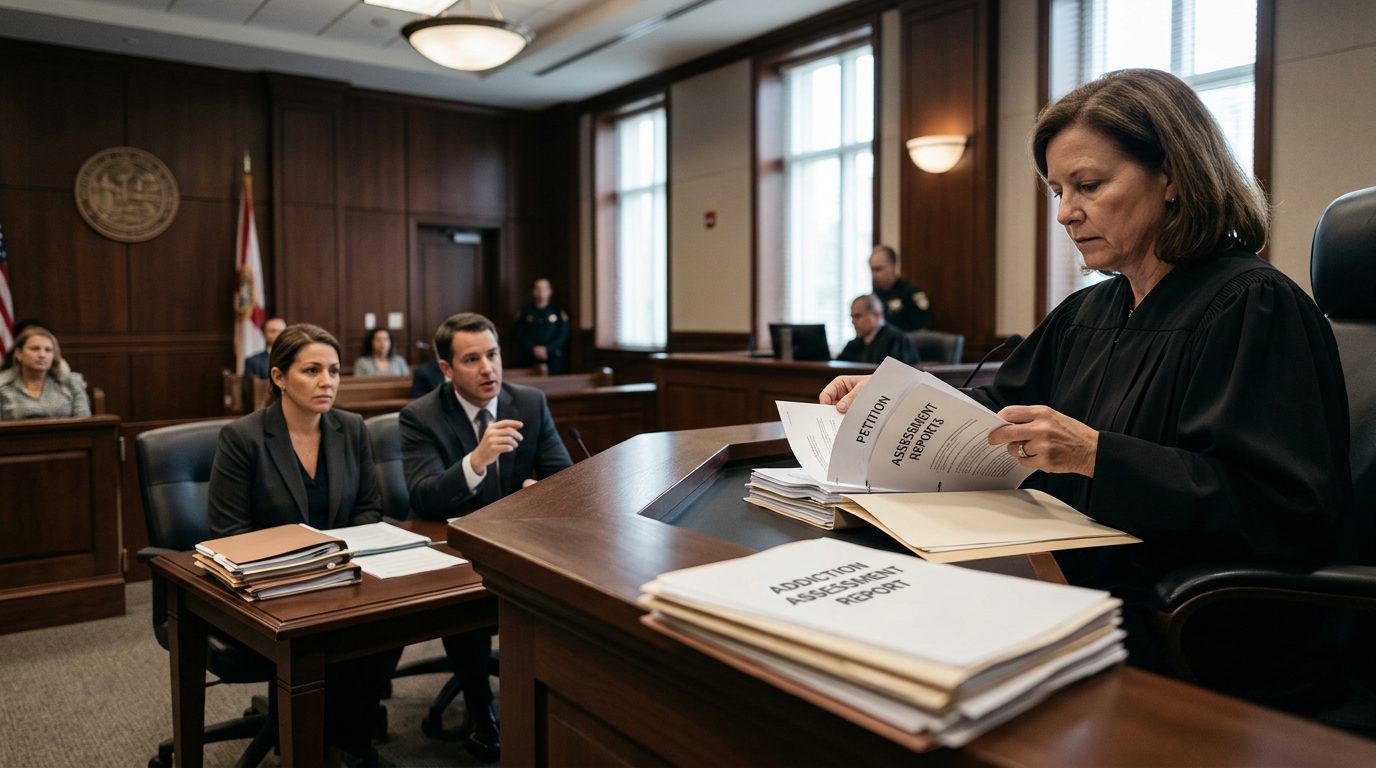
Involuntary Commitment for Addiction
File an Involuntary Commitment Petition in Florida
When a loved one's addiction requires immediate intervention, Robinson & Casey guides families through the legal process to seek court-ordered treatment.
By Richard J. Casey III, Esq. · Published September 22, 2026
File an Involuntary Commitment Petition for Addiction in Florida: Process, Requirements & Next Steps
When a family member struggles with substance abuse and refuses voluntary treatment, an involuntary commitment petition allows you to ask a Florida court to order treatment. This legal process is designed for situations where addiction poses a serious threat to the person or those around them. Understanding how to file, what the court requires, and what to expect helps you take action decisively and protect your loved one.
Not sure what your next step is?
Talk it through with our team — the first consultation is free, confidential, and carries no obligation.

What Is an Involuntary Commitment Petition for Addiction?
An involuntary commitment petition is a legal request filed in Florida court to seek court-ordered treatment for someone with a substance use disorder who refuses voluntary care.
Unlike voluntary admission to a treatment facility—which requires the individual’s consent—an involuntary commitment petition asks the court to order treatment without the person’s agreement. This mechanism exists because substance use disorder can impair judgment and decision-making, and in crisis situations, waiting for voluntary cooperation can delay life-saving intervention.
Involuntary commitment applies to both alcohol and drug addiction. It is governed by Florida Statutes Chapter 397, which establishes the legal grounds, procedures, and protections for petitioners, respondents (the person being petitioned against), and the courts.
Who Can File an Involuntary Commitment Petition for Addiction?
You do not need to be an attorney to file an involuntary commitment petition.
The law allows several categories of people to petition:
- Family members: spouse, parent, adult child, or sibling
- Healthcare providers or treatment facilities: doctors, counselors, or facility staff with direct knowledge of the person’s condition
- Law enforcement or emergency responders: police officers, paramedics, or emergency medical technicians who have encountered the person
- Any person with knowledge: in some circumstances, a concerned friend, employer, or other individual with direct knowledge of the person’s addiction and threat
While you can file without a lawyer, legal representation is strongly recommended. An attorney ensures your petition is properly drafted, filed with the correct court, and presented effectively at hearings. Procedural mistakes can delay or jeopardize your case.
Legal Grounds for Filing: What the Court Requires
First, the individual must have a substance use disorder. This means documented evidence of alcohol or drug addiction—medical records, prior treatment attempts, or statements from healthcare providers. Substance use disorder is recognized as a medical condition affecting brain function and decision-making, which is the clinical basis for involuntary intervention.
Second, the person must refuse or be unable to seek voluntary treatment. The court needs to see that you’ve offered voluntary options and they’ve been rejected, or that the person is incapable of making that choice due to their addiction.
Third, the individual must pose a substantial threat of harm to themselves or others due to their addiction. This is the critical element. Threat of harm includes:
- Overdose attempts or near-fatal substance use
- Erratic, dangerous, or violent behavior while intoxicated
- Neglect of dependent children or vulnerable family members
- Reckless driving or operation of machinery
- Suicide threats or self-harm
- Financial ruin affecting the family’s stability
- Unsafe living conditions or exposure to criminal activity
The burden of proof rests on you, the petitioner. Specific factual examples—not vague concerns—strengthen your petition. For instance, “He overdosed twice in the past six months and was hospitalized both times” is far more persuasive than “He uses drugs.”
What’s Included in the Petition Filing Process
Filing an involuntary commitment petition involves several concrete steps and documents.
Your attorney will prepare a formal petition document that includes:
- Legal allegations: specific, factual statements about the person’s substance use disorder, refusal of treatment, and threat of harm
- Affidavit or sworn statement: your detailed account of events, incidents, and observations, signed under oath
- Identification of treatment facility or evaluator: the court needs to know where the person will be evaluated and treated
- Correct county court filing: the petition must be filed in the circuit court of the county where the person resides or where the threat of harm occurred
Your attorney will also:
- Serve the petition on the respondent: the person being petitioned against must be notified of the petition and given notice of the hearing (this is a due process requirement)
- Coordinate with law enforcement or emergency services if immediate danger is present, ensuring the person’s safety during the process
- Prepare for an emergency ex parte hearing (a hearing held without the respondent present) if the court finds probable cause that temporary commitment is warranted
Step-by-Step Process: What to Expect
The involuntary commitment process unfolds in distinct stages.
Step 1: Initial Consultation
You meet with an attorney to discuss the facts of your situation, the grounds you believe exist, and the urgency involved. The attorney determines whether involuntary commitment is the appropriate legal remedy or whether another option (such as guardianship) might better serve your needs.
Step 2: Gather Documentation
You and your attorney collect medical records, prior treatment attempts, incident reports (emergency room visits, police calls, overdose reports), witness statements from family or healthcare providers, and evidence of harm or threat. Strong documentation makes the petition credible and persuasive.
Step 3: Draft and File Petition
Your attorney prepares the formal petition with specific allegations and files it with the appropriate Florida county circuit court. The court assigns a case number and schedules proceedings.
Step 4: Ex Parte Hearing (if applicable)
The judge may hold an emergency hearing without the respondent present to determine whether temporary commitment is warranted. This typically occurs within 24–72 hours of filing. If the judge finds probable cause, an emergency ex parte order is issued authorizing temporary commitment, usually for up to 72 hours.
Step 5: Service and Notice
The respondent is formally served with the petition and notice of the full hearing date. This ensures they know what’s happening and have time to prepare a response or obtain legal representation.
Step 6: Full Hearing
The respondent has the right to appear, present evidence, cross-examine witnesses, and contest the petition. You (or your attorney on your behalf) present evidence supporting the petition. The judge hears both sides.
Step 7: Judge’s Order
The court issues a written order either granting the involuntary commitment petition or denying it. If granted, the order specifies the duration of commitment and the designated treatment facility.
Step 8: Transport and Admission
If the court orders commitment, law enforcement or emergency medical services transport the person to the designated treatment facility for evaluation and care.
Not sure what your next step is?
Talk it through with our team — the first consultation is free, confidential, and carries no obligation.
Timeline: How Long Does the Process Take?
The involuntary commitment process moves quickly, especially in crisis situations.
- Emergency ex parte hearing: typically within 24–72 hours of filing
- Full hearing: usually scheduled within 5–10 business days after an ex parte order is granted
- Total from filing to court order: generally 1–2 weeks, depending on court availability and whether the respondent contests the petition
- Initial commitment duration: typically 5 days; the court may extend commitment if evidence supports continued treatment
Timelines vary by county and court docket. Some Florida courts prioritize involuntary commitment cases due to their urgent nature; others may take longer depending on caseload.
Why Robinson & Casey Handles Involuntary Commitment Petitions
Robinson & Casey focuses exclusively on involuntary commitment for addiction and related guardianship matters. This narrow focus means deep procedural knowledge and consistent experience.
Focused practice: involuntary commitment petitions are a core service. Our attorneys handle these cases regularly and understand the specific documentation, legal standards, and procedural requirements that strengthen a petition.
Florida-based and locally familiar: we are licensed in Florida and work regularly in South Florida and statewide county courts. We know local judges, court procedures, filing deadlines, and the treatment facilities and evaluators that courts rely on.
Experience with families in crisis: we understand the urgency and emotional weight of these decisions. We provide clear guidance on realistic timelines and outcomes, not false promises. We listen to your specific circumstances and advise honestly on whether involuntary commitment is appropriate.
Coordination with treatment providers: we work with addiction treatment facilities and medical evaluators to ensure smooth transition to care once the court orders commitment. This coordination reduces delays and improves the likelihood of successful engagement in treatment.
Procedural experience: we know exactly what documentation strengthens a petition, how to draft allegations that meet the legal standard of clear and convincing evidence, and how to present your case effectively at ex parte and full hearings.
Representation at hearing: your attorney appears on your behalf at both the emergency ex parte hearing and the full hearing, presenting evidence and answering the judge’s questions.
Common Questions & Concerns
Q: Will my loved one be angry if I file a petition?
A: Possibly. Many individuals feel resentment initially, but research shows that after treatment and recovery, many recognize the intervention was necessary and even life-saving.
Q: What if my loved one contests the petition?
A: They have the right to contest it. The judge hears evidence from both sides and decides based on whether you’ve proven the legal grounds by clear and convincing evidence.
Q: Can I file anonymously?
A: No. You must be identified as the petitioner, though certain details may be protected in court documents in limited circumstances.
Q: What if the petition is denied?
A: If circumstances change or new evidence emerges, you may refile. Your attorney can advise on whether a second petition is strategically sound.
Q: Does involuntary commitment ensure treatment success?
A: No. The court order ensures access to treatment, but recovery depends on the individual’s engagement, willingness, and many other factors beyond the court’s control.
Q: What are the costs?
A: Court filing fees apply (typically a few hundred dollars). Attorney fees vary; discuss costs during your consultation.
Q: Will this affect my loved one’s rights permanently?
A: Involuntary commitment is temporary. It does not result in permanent loss of rights unless a separate guardianship proceeding is pursued.
Documentation You’ll Need to Gather
Before meeting with an attorney, begin collecting:
- Medical or psychiatric records documenting substance use disorder
- Records of prior treatment attempts or admissions
- Incident reports (overdose, DUI, emergency room visits, police calls)
- Witness statements from family, friends, or healthcare providers
- Evidence of harm or threat (neglect of children, financial ruin, self-harm, property damage)
- Photos or records of unsafe living conditions (if relevant)
- Any prior involuntary commitment orders or court documents
Having this documentation ready accelerates the filing process and strengthens your petition.

Next Steps: How to Get Started
The first step is a consultation with Robinson & Casey to discuss your loved one’s situation and determine whether involuntary commitment is the right legal path.
During the consultation, you’ll explain what’s happened, the grounds you believe exist, and your goals. Your attorney will advise whether involuntary commitment is appropriate, what to expect, and what documentation will strengthen your petition.
If you decide to proceed, your attorney will guide you through every step
How Robinson & Casey Helps
Petition Preparation
We prepare and file the involuntary commitment petition with the court, ensuring all required documentation is complete and properly submitted.
Legal Representation
Our attorneys represent your family throughout the proceeding, presenting evidence and advocating for your loved one's access to treatment.
Timely Action
We understand the urgency of addiction crises and work to move your case forward efficiently through the court system.
Family Guidance
We explain each step of the process, answer your questions, and help you understand what to expect at hearings and beyond.
Important: Your Loved One Has Rights
An involuntary commitment petition gives your loved one the right to contest the petition in court. A judge will hear evidence from both sides before making a decision. This is a serious legal matter—having an attorney ensures your family's case is presented clearly and thoroughly.
Common Questions About Involuntary Commitment
Will my loved one be angry?
Many individuals feel resentment initially. However, research shows that after treatment and recovery, many recognize the intervention was necessary and even life-saving.
What if they contest the petition?
They have the right to contest it. The judge hears evidence from both sides and decides whether the legal standard for involuntary commitment has been met.
What happens after the court approves it?
If approved, your loved one is ordered into treatment. The specific facility and duration depend on the court's findings and the treatment plan recommended.
How quickly can we file?
We move as fast as the court system allows. Contact us immediately if you believe your loved one is in crisis—time matters in addiction cases.
Ready to Take the Next Step?
Related practice areas
- File Mental Health Guardianship Petition in Florida