
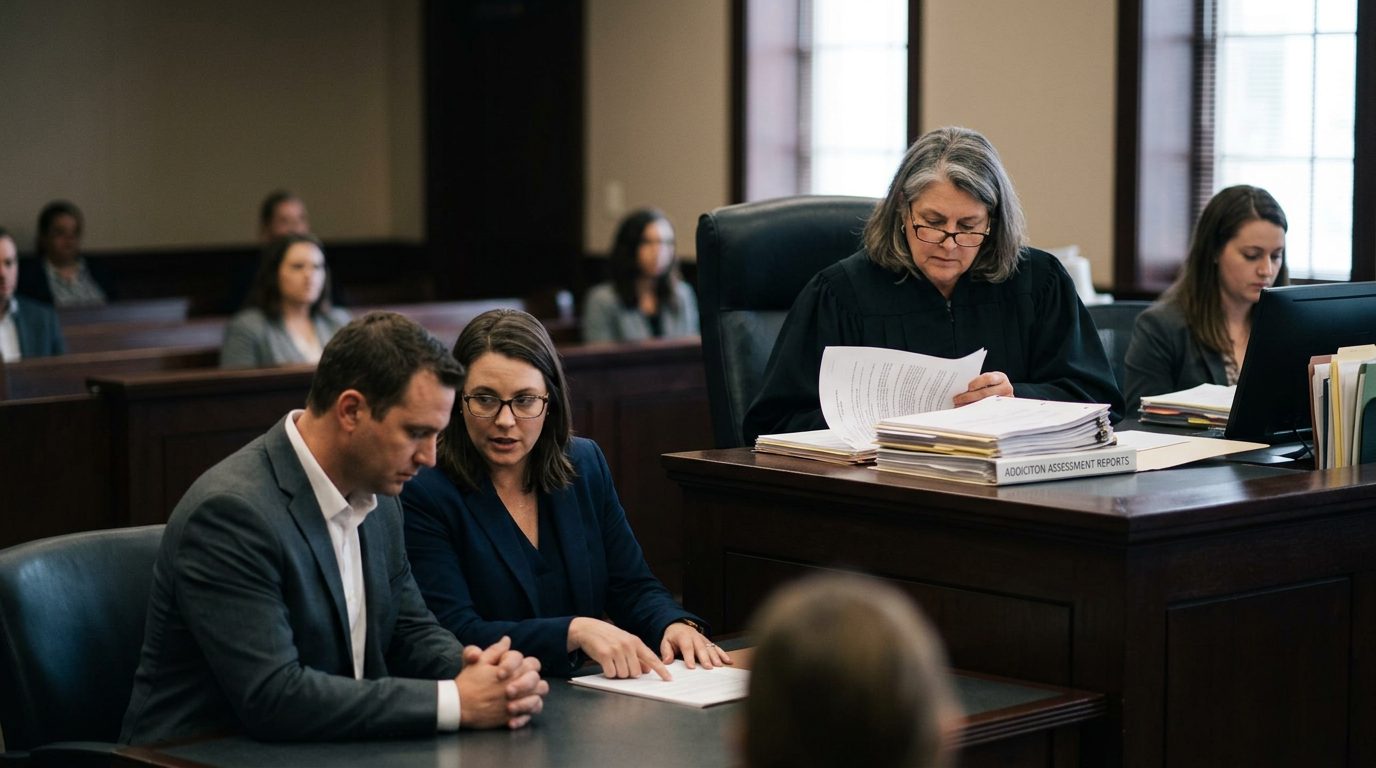
Involuntary Commitment
Challenge or Appeal an Involuntary Commitment Order
You have legal rights after a civil commitment decision. Robinson & Casey helps families understand their options and pursue appeals in Florida courts.
By Richard J. Casey III, Esq. · Published September 30, 2026
How to Challenge or Appeal an Involuntary Commitment Order in Florida
Yes, you can challenge an involuntary commitment order in Florida. The law gives you specific rights to contest the order at a hearing, to appeal if you disagree with the court’s decision, and to present evidence that the legal grounds for commitment were not met. Understanding these rights and the procedural steps available is the first step in protecting your interests.
If you're navigating an involuntary commitment order or considering how to challenge one, families in your position reach out to discuss their options regularly—contact us to talk through what may be possible. Talk it through with our team — the first consultation is free, confidential, and carries no obligation.

Understanding Involuntary Commitment Orders in Florida
An involuntary commitment order is a court decision that requires someone to receive mental health or substance abuse treatment against their will. These orders are issued when a court finds that a person meets one of three statutory criteria: danger to self, danger to others, or inability to care for themselves.
In Florida, there are two main types of involuntary commitment. An emergency involuntary commitment can be initiated by law enforcement, medical professionals, or family members and typically lasts for a short period while a full hearing is scheduled. An extended civil commitment follows a court hearing and can last longer if the court finds the statutory criteria are met.
The person who files the petition—called the petitioner—may be a family member, a healthcare provider, law enforcement, or a mental health professional. The court then holds a hearing to determine whether the evidence supports commitment. Under Florida law, this hearing must occur within 5 court working days after the petition is filed, unless both sides agree to a continuance.
What Are the Legal Requirements for Involuntary Commitment in Florida?
Before a court can issue an involuntary commitment order, the petitioner must prove that the person meets at least one of three statutory criteria. The first is danger to self—meaning the person poses a substantial risk of serious harm to themselves through suicide, self-harm, or reckless behavior. The second is danger to others—meaning the person poses a substantial risk of serious harm to another person. The third is inability to care for self—meaning the person cannot provide for their own food, shelter, clothing, or medical care and has no one willing and able to help.
The burden of proof required is clear and convincing evidence. This is a higher standard than “preponderance of the evidence” (more likely than not) but lower than “beyond a reasonable doubt.” Clear and convincing evidence means the court must be substantially certain that the statutory criteria are met based on the evidence presented.
Courts evaluate these criteria during the commitment hearing by considering medical testimony, psychiatric evaluations, the person’s recent behavior, statements from witnesses, and any relevant medical records. The distinction between mental illness and substance use disorder commitments matters procedurally: substance abuse commitments under the Marchman Act follow specific procedures and timelines that differ from mental health commitments.
Your Rights During an Involuntary Commitment Hearing
You have important legal rights during an involuntary commitment hearing. You have the right to be present at the hearing and to be heard—meaning you can speak and present your side of the case. You have the right to legal representation; if you cannot afford an attorney, you may request one be appointed to you.
You also have the right to cross-examine witnesses who testify against you, to present your own evidence and witnesses, and to request an independent medical evaluation. These rights are fundamental to due process and give you a real opportunity to contest the grounds for commitment.
After the hearing, you have the right to appeal the court’s decision if you disagree with it. This right to appeal is a cornerstone of due process protection in involuntary commitment cases and recognizes that courts can make errors or that circumstances may change.
Grounds for Challenging an Involuntary Commitment Order
You can challenge an involuntary commitment order on several grounds. The most common is insufficient evidence—meaning the petitioner did not present clear and convincing evidence that you meet one of the three statutory criteria. For example, if the evidence shows concern but not substantial risk of serious harm, the order may not be legally justified.
Procedural errors also provide grounds for challenge. If the hearing was not held within the required 5 court working days, if you were not given proper notice, if you were not allowed to be present or to have an attorney, or if other procedural requirements were not followed, these defects can be grounds to overturn or modify the order.
You can also challenge the order if circumstances have changed since it was issued. If you’ve begun treatment, stabilized on medication, or demonstrated that the original danger no longer exists, a court may modify or discharge the order based on these changed circumstances.
Violation of due process rights—such as being denied the right to cross-examine witnesses or present evidence—is another valid ground for appeal. Courts take these constitutional protections seriously.
The Appeal Process for Involuntary Commitment Orders
If the trial court issues an involuntary commitment order and you disagree with it, you can file an appeal. The appeal goes to the Florida District Court of Appeal for the district in which your case was heard. The timeline for filing an appeal is typically governed by Florida’s Rules of Appellate Procedure, and it’s important to meet these deadlines because missing them can result in losing your right to appeal.
Your appeal must include a record of the trial court proceedings, a brief explaining the legal errors you believe the court made, and citations to the law and evidence supporting your position. The appellate court will review the trial court’s decision to determine whether it was supported by competent, substantial evidence and whether the law was correctly applied.
The standard of review matters: appellate courts typically defer to the trial court’s findings of fact if they are supported by evidence, but they review questions of law independently. During the appeal, the commitment order generally remains in effect unless the appellate court grants a stay (temporary suspension) of the order pending the appeal’s outcome.
Not sure what your next step is?
Talk it through with our team — the first consultation is free, confidential, and carries no obligation.
How to Request a Hearing to Challenge the Order
If you want to challenge the commitment order before or after it’s issued, you can file a motion to modify or discharge the commitment order. This motion asks the court to reconsider its decision based on new evidence, changed circumstances, or legal errors in the original hearing.
You can request an expedited hearing if circumstances warrant it. When presenting your motion, you’ll want to gather supporting evidence—medical records, testimony from treatment providers, documentation of your stability or changed circumstances, and any evidence showing the original criteria are no longer met.
Medical testimony is particularly powerful in these cases. An independent psychiatric evaluation, a statement from your treating physician, or testimony from a mental health professional can directly address whether the statutory criteria for commitment are still present. Meeting all procedural deadlines and filing requirements is essential; courts have strict rules about how and when motions must be filed.
What Burden of Proof Is Required for Involuntary Civil Commitments?
The clear and convincing evidence standard is the legal threshold in Florida for involuntary civil commitment. This standard requires more certainty than a simple majority vote or a “more likely than not” conclusion. Instead, the court must be substantially convinced—nearly certain—that the statutory criteria are met.
This standard differs from other legal burdens. It’s higher than preponderance of the evidence (used in most civil cases) but lower than proof beyond a reasonable doubt (used in criminal cases). Understanding this distinction is important for your challenge strategy: if the evidence presented at the hearing fell short of this high bar—if it raised doubt or showed only a possibility of danger rather than substantial risk—that’s a basis for arguing the order should not have been issued.
The petitioner bears the burden of proving the case, not you. You don’t have to prove you’re safe; the petitioner must prove you meet the statutory criteria by clear and convincing evidence. This burden of proof affects how you challenge the order: you can focus on gaps in the petitioner’s evidence, inconsistencies in testimony, or alternative explanations for the behavior cited.
Common Reasons Involuntary Commitment Orders Are Overturned
Courts overturn involuntary commitment orders when the evidence simply doesn’t support the statutory criteria. For instance, if the evidence shows the person was in crisis but responded well to voluntary treatment, or if the “danger” was based on a single incident rather than a pattern, courts may find the evidence insufficient.
Procedural defects are another common reason. If the person wasn’t given adequate notice of the hearing, wasn’t allowed to attend, wasn’t represented by counsel when they requested one, or wasn’t given a fair opportunity to present evidence, appellate courts will overturn the order.
Failure to provide proper medical evaluation or to rely on competent medical testimony can also lead to reversal. Courts expect that involuntary commitment decisions are grounded in professional mental health assessment, not speculation or assumptions.
Changed circumstances—such as successful treatment, medication compliance, or the passage of time without further incidents—frequently result in orders being modified or discharged. If you can demonstrate that the original danger no longer exists, courts will reconsider the order.
Working With an Attorney to Challenge Your Commitment Order
Legal representation significantly strengthens your ability to challenge an involuntary commitment order. An attorney can ensure your rights are protected during the hearing, help you gather and present evidence effectively, and navigate the complex procedural rules that govern these cases.
Your attorney will work with you to collect medical records, identify and prepare witnesses, and develop a strategy focused on the specific weaknesses in the petitioner’s case. They’ll ensure all procedural deadlines are met and that your arguments are presented clearly and persuasively to the court.
If the trial court rules against you, your attorney can guide you through the appeal process, prepare the appellate brief, and represent you before the District Court of Appeal. Having experienced representation from the outset—at the initial hearing—often makes the appeal process smoother and more effective.

FAQ
Can I appeal an involuntary commitment order in Florida?
Yes. You have the right to appeal a civil commitment order to the Florida District Court of Appeal, and you can also request a new hearing in the trial court if circumstances change.
What is the clear and convincing evidence standard?
It’s a legal standard requiring the court to be substantially convinced—nearly certain—that the statutory criteria for commitment are met; it’s higher than “more likely than not” but lower than “beyond a reasonable doubt.”
How long do I have to appeal an involuntary commitment order?
The timeline is governed by Florida’s Rules of Appellate Procedure; typically you must file within a specific number of days after the order is entered, so it’s critical to act quickly.
What grounds can I use to challenge the order?
Insufficient evidence of the statutory criteria, procedural errors, lack of clear and convincing proof, changed circumstances, or violation of due process rights are all valid grounds.
Do I have the right to an attorney at the hearing?
Yes. You have the right to be represented by an attorney, and if you cannot afford one, you can request that one be appointed to you.
Can an order be overturned if circumstances have changed?
Yes. If you’ve stabilized, begun treatment, or demonstrated that the original danger no longer exists, you can request a new hearing and ask the court to modify or discharge the order.
If you’re facing an involuntary commitment order or trying to understand how to challenge one, you’re likely in an uncertain and stressful time. Families and individuals in your situation frequently reach out to understand their legal options and what steps come next. Robinson & Casey handles involuntary commitment challenges and appeals for families across South Florida and statewide. Contact us to discuss your situation—we’re here to help you navigate this process.
Time Matters
Appeals and requests for new hearings in involuntary commitment cases are governed by strict procedural timelines. The sooner you act, the better positioned you are to protect your rights.
Your Options After a Commitment Order
Appeal to District Court
You can appeal a civil commitment order to the Florida District Court of Appeal. This is a formal legal process that challenges the trial court's decision on the record.
Request a New Hearing
If circumstances have changed or new evidence exists, you may request a new hearing in the trial court that issued the original commitment order.
Challenge the Legal Standard
Courts apply the 'clear and convincing evidence' standard in commitment cases. An appeal can challenge whether this legal threshold was properly met.
Protect Your Rights
An involuntary commitment order carries serious legal consequences. Having an attorney review your case helps ensure all procedural protections are honored.
Why Robinson & Casey for Your Appeal
Focused Practice
We focus exclusively on Marchman Act petitions, guardianship matters, and involuntary commitment cases. This narrow focus means deep knowledge of the specific rules and procedures that apply to your situation.
Vigorous Advocacy
We work to protect your legal rights and challenge commitment orders when the evidence or procedure does not support them.
Direct Access
Contact us directly to discuss your case. We serve families across South Florida and statewide with personalized attention.
Urgent Matters
We understand that commitment orders demand fast action. We respond promptly to help you meet procedural deadlines.
Ready to Discuss Your Appeal Options?
Related practice areas
- Involuntary Commitment for Addiction in Florida
- Involuntary Commitment For Addiction in Miami Dade
- Involuntary Commitment For Addiction in South Florida
- Involuntary Commitment Addiction Florida: Timeline