
Marchman Act & Guardianship | South Florida
Does Forced Addiction Treatment Work? What Florida Families Should Know
A plain-language look at the research on involuntary treatment, how Florida courts approach it, and how Robinson Casey helps families in Miami-Dade and across South Florida.
By Richard J. Casey III, Esq. · Published November 2, 2026
Does forced addiction treatment work? The honest answer is that the research is mixed. Some studies found that voluntary treatment reduced substance use more than coerced treatment. Other studies found the opposite. No study can tell you how your child will respond.
You have likely spent years paying for treatment, trying new approaches and holding firm boundaries. Then a recent overdose, hospital stay, arrest or disappearance pushed you toward a harder question: can the law make treatment happen? This page explains what published research says, how Florida’s Marchman Act works, and what to weigh before you decide.
Why You Are Asking Whether Forced Treatment Can Work
You are asking because you are afraid, and the options you tried no longer feel safe. Every call from a hospital or police station can bring the fear of an overdose or a death. Parents in your position often also fear that their child will end up in jail or without a place to live. Some say they are losing hope that anything will work at all.
Those fears are reasonable. They do not mean you have failed. You have tried to help your child for a long time, and it makes sense to look for a stronger tool.
This question is not academic for you. It is about your child’s safety and your own ability to keep going. So this page starts with what the research shows. It cannot promise an outcome for your child, but it can show you what is known and what is still unclear.
You have carried this crisis for a long time, and you don't have to work out the legal path by yourself. Talk with Robinson Casey about what a Marchman Act petition could mean for your child. Talk it through with our team — the first consultation is free, confidential, and carries no obligation.

What ‘Forced’ or Involuntary Treatment Means
Forced, or involuntary, treatment is care a person enters because a court orders it. The person did not choose it. That is the key difference from voluntary treatment, where the person agrees to enter care on their own.
Some pressure falls short of a court order. A family ultimatum, such as “get help or move out,” is pressure, but your child still decides whether to go. A court-referred program can still involve a choice, because the person may pick it over facing a charge.
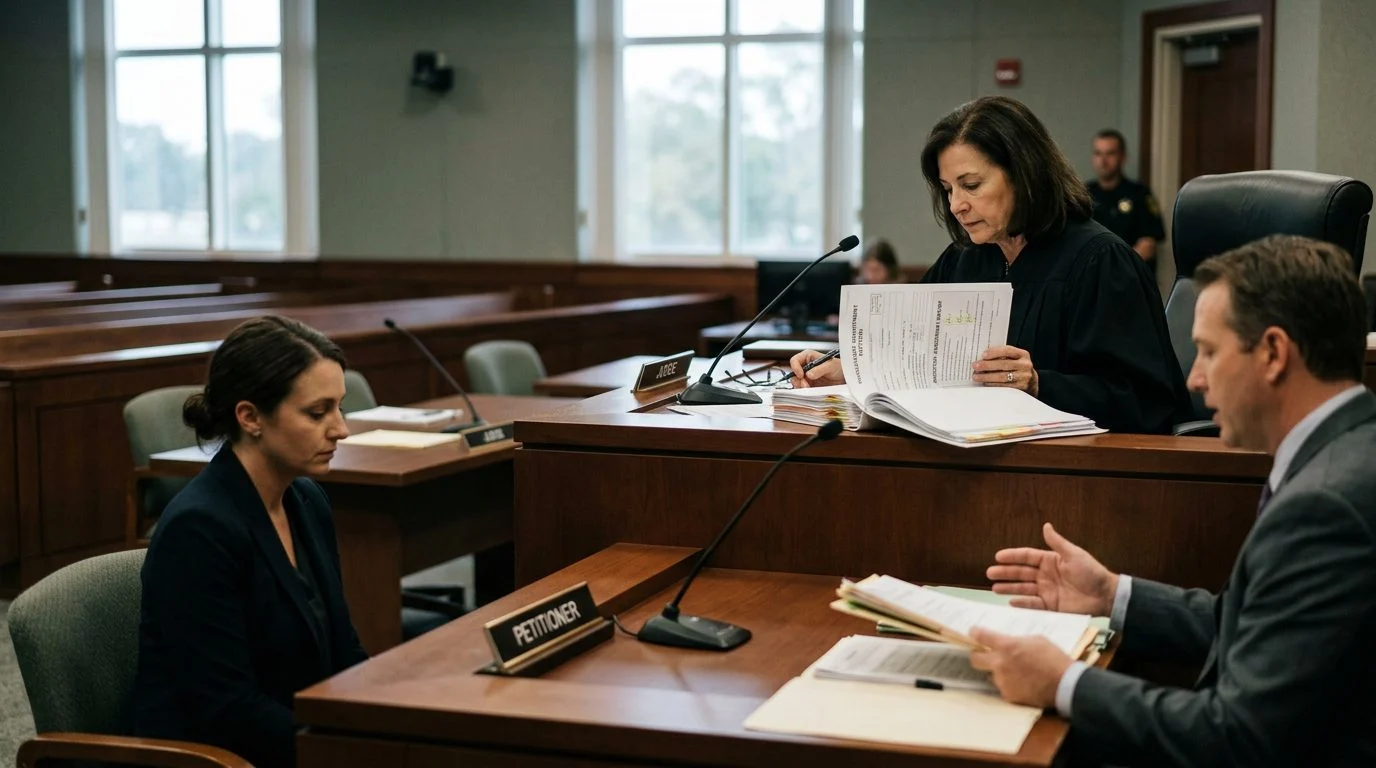
In Florida, the court route is the Marchman Act. Florida law sets criteria for involuntary admission. A person may meet those criteria if there is good faith reason to believe they are substance abuse impaired or have a substance use disorder and a co-occurring mental health disorder, and because of that impairment or disorder they have lost the power of self-control with respect to substance abuse. The criteria also require that, because of it, they have lost the power of self-control with respect to substance use. The statute says mere refusal of services is not, by itself, evidence of lack of judgment.
A parent can start the process. For an adult, Fla. Stat. § 397.68112 allows a petition by a spouse or legal guardian, any relative, a service provider, or an adult with direct personal knowledge of the person’s impairment and treatment history.
What the Studies Found About Staying in Treatment
Whether forced treatment keeps people in care is one question researchers study, and the answers vary. Published reviews compare people sent to treatment by a legal order with people who enter on their own.
One review of compulsory drug treatment found that several studies reported no significant difference from comparison groups. Other studies gave unclear results. Retention, meaning how long a person stays in care, is a common measure in this research.
Florida’s law also limits how long a court order lasts. A court may order involuntary treatment for a period not to exceed 90 days, and only when the conditions are proved by clear and convincing evidence. Under Fla. Stat. § 397.697, the court keeps jurisdiction to monitor compliance and can change the treatment type.
The takeaway is that the findings are mixed. They are not uniformly positive or negative.
Where the Evidence Is Mixed or Limited
The evidence is limited because studies differ in who they study, what treatment they offer, how long they follow people, and how they define success. That makes direct comparison hard. A program for people leaving jail is not the same as a court case started by a family.
Researchers also disagree about why coercion might help or hurt. Some argue that a court order can bring a person into care, and that engagement can follow. Others argue that pressure can damage a person’s willingness to stay in care over time. Both views appear in the literature.
Policy is still developing too. A PMC article on involuntary treatment describes how state involuntary-commitment laws for substance use disorder have grown, while their use remains limited.
For you, this means the research gives no single answer. It is a reason to look closely at the facts of your child’s situation rather than assume one result.
What the Research Says About Your Biggest Fears
Under Fla. Stat. § 397.6977, discharge planning for a respondent’s release from involuntary treatment services must include and document the person’s needs, and actions to address them, for at a minimum: follow-up behavioral health appointments, how to get prescribed medications, living arrangements and transportation, and referral to recovery support, including connection to peer support. That is planning, not a promise of safety.
On homelessness, the same discharge planning must address living arrangements. That planning does not promise housing.
On losing hope, two resources help families. The American Society of Addiction Medicine says families can seek individualized, needs-based treatment, and that treatment intensity may change as a person progresses or worsens. CRAFT strategies can help you communicate, set boundaries and care for yourself while encouraging treatment.
How the Florida Marchman Act Process Works
A Marchman Act case starts with a petition filed with the clerk of court in the county where the person is located. Under Fla. Stat. § 397.681, the clerk may not charge a fee to file that petition. In J.P. v. J.N., a Florida appeals court held that filing in the wrong county is a venue issue, not a loss of jurisdiction.
The respondent has a right to counsel at every stage, which the respondent may waive if present and the court finds the waiver is made knowingly, intelligently, and voluntarily, and a respondent who desires counsel and cannot afford private counsel has the right to court-appointed counsel.
Under Fla. Stat. § 397.681, the alleged impaired person is named as the respondent, and the section does not state who carries the burden of proof. In J.C. v. State, the court reversed an order in part because the trial court acted as the absent petitioner.
Robinson Casey focuses on Marchman Act petitions and guardianship matters in South Florida and statewide. Richard J. Casey III, Esq. is the responsible lawyer for this page. Some matters may be referred to another lawyer or firm where that fits the case.
Not sure what your next step is?
Talk it through with our team — the first consultation is free, confidential, and carries no obligation.
Questions to Think Through Before You Decide
A few concrete answers will shape which legal options are realistic for your family. Write them down before you talk with anyone.
- What is your child’s current safety risk? Has there been an overdose, a threat of self-harm, or harm to someone else?
- What treatment has been tried, and how did each one end?
- What happened in the most recent crisis, such as a hospital visit, arrest or disappearance?
- Who else in the family has firsthand knowledge of your child’s history?
If your child was assessed before a petition, that report can accompany the filing. A petition for involuntary services may be accompanied by a report from a qualified professional who examined your adult child.
Frequently Asked Questions
Does forced addiction treatment work?
The research is mixed. No study can promise a result for any one person.
Can you force an adult child into rehab in Florida?
A court may order involuntary treatment under the Marchman Act when the statutory criteria are proved, and a parent may file a petition.
Does an adult child have a right to a lawyer?
Yes.
How long can a court-ordered treatment last?
A court may order up to 90 days of involuntary treatment, and a renewal of the involuntary services order may be requested pursuant to s. 397.6975 before the end of the 90-day period.

Take the Next Step With Robinson Casey
You have been carrying this crisis for a long time. You want a legal way to get your child into proper treatment, so you no longer manage every emergency alone. Call (561) 849-4700 for a free first consultation, which is confidential and carries no obligation to continue. You can also reach out through the contact page.
How Robinson Casey Can Help
Marchman Act Petitions
Our practice focuses on Marchman Act petitions for families seeking court-ordered assessment and treatment for a loved one.
Guardianship Matters
We handle guardianship matters, including emergency temporary, plenary, limited, and mental health guardianship.
Confidential Consultation
Your first consultation is free, confidential, and comes with no obligation to continue.
Support for Families
Our team guides families through each step of the court process with clear communication.
Involuntary Treatment Is a Court Process
Petitions for involuntary treatment involve court proceedings with serious legal consequences for everyone involved. Speak with an attorney before taking steps on your own.
Matters We Handle
Marchman Act Attorney
Guidance on petitions for court-ordered assessment and treatment under Florida's Marchman Act.
Guardianship Attorney
Representation in guardianship proceedings for families in South Florida and statewide.
Emergency Temporary Guardianship
Help with urgent requests when a person needs immediate court protection.
Plenary and Limited Guardianship
Counsel on broad and narrowly tailored guardianship arrangements to fit each family's situation.
Mental Health Guardianship
Assistance with guardianship matters involving mental health needs.
Involuntary Commitment for Addiction
Support for families navigating involuntary commitment for substance use disorder.