
Marchman Act Petitions | Miami-Dade & South Florida
Build the Evidence for an Involuntary Addiction Treatment Petition in Florida
Robinson Casey limits its practice to Marchman Act petitions and guardianship matters, helping South Florida families understand what evidence to gather and how to present it.
By Richard J. Casey III, Esq. · Published October 26, 2026
A Florida judge can order involuntary addiction treatment only when the petition’s proof holds up. Dated facts and firsthand witnesses usually carry the most weight. This guide covers the proof a family should gather, how to keep it accurate, and where the process starts.
Marchman Act or Baker Act: Which Law Fits Addiction?
The Marchman Act is Florida’s law for involuntary assessment and treatment of substance abuse impairment. The Baker Act is a separate law that deals with mental health crises. Many families face both problems at once.
Florida’s admission criteria also reach a person who has a substance use disorder and a co-occurring mental health disorder. The facts decide which path fits, so describe the whole picture, not just the label.
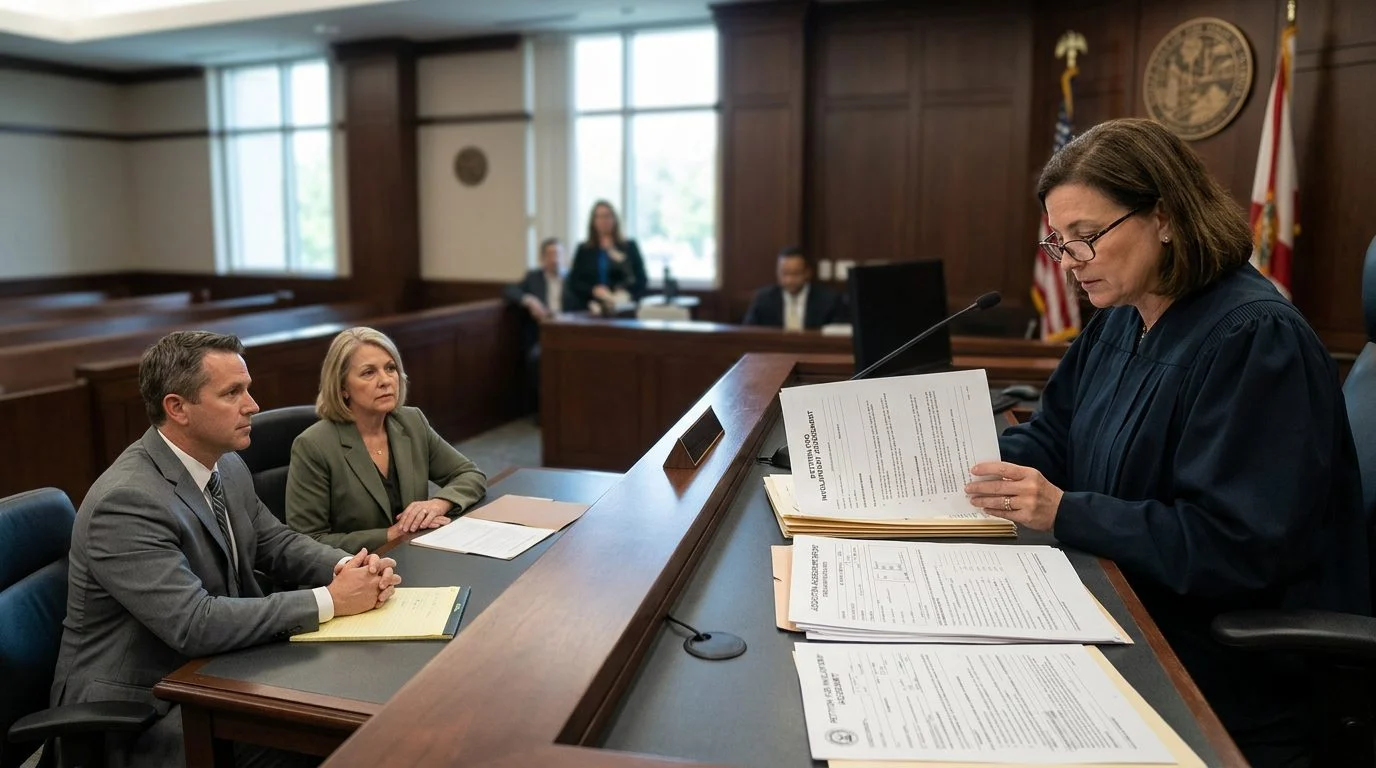
Marchman petitions are court-based. The petition is filed with the clerk of the court in the county where the person is located. The clerk may not charge a fee to file it. When the person is located in Miami-Dade County, the petition is filed with the Miami-Dade Clerk of the Court, and the clerk may not charge a fee for filing it. Miami-Dade Clerk Mental Health Court Filing in the wrong county is a venue problem, not a lack of jurisdiction. J.P. v. J.N.
A written declaration reads, “Under penalties of perjury, I declare that I have read the foregoing document and that the facts stated in it are true.” Knowingly making a false declaration is a third-degree felony. Fla. Stat. § 92.525 When the law requires a document to be verified, that verification may be made under oath or by a signed written declaration under penalty of perjury. For the step-by-step filing process, read our guide on how a Marchman Act petition works.
If a loved one's substance use has your family worried about their safety, our team can review your notes and documents with you in a free, confidential consultation. Talk it through with our team — the first consultation is free, confidential, and carries no obligation.

What Proves Substance Use Impairment?
Impairment proof shows that substance use is changing how the person lives. The petition must state why you believe the person is impaired.
Look for observable events. Missed work or school, unexplained absences, poor hygiene, unpaid bills, changes at home, repeated intoxication, and failed attempts to quit all count. Each event should have a date, a place, and a witness.
General statements carry less weight. “He’s always drunk” gives a judge little to test. “On March 3 he missed his shift, his manager called me, and he smelled of alcohol by noon” gives the judge something concrete.
Keep a dated log. Write each entry close to the time it happened, and note who was present. Mark anything you’re unsure about. Florida law also says that mere refusal to accept services is not, by itself, evidence of lack of judgment about the need for them.
How Do You Show Loss of Self-Control or Danger?
The petition must explain why you believe substance use has taken away the person’s self-control. It must also show that because of the impairment the person is unlikely to voluntarily participate in services or is unable to determine whether services are necessary, and give the reason you believe harm is likely: either that without services the person is likely to neglect himself or herself or refuse care, posing a real and present threat of substantial harm, with a substantial likelihood of serious bodily harm to himself, herself, or another in the near future, as evidenced by recent behavior, or that the person is incapable of appreciating the need for care or of making a rational decision about it. A petition for involuntary services in Florida must name the respondent and the petitioner, state their relationship, and set out the factual allegations showing the need for involuntary services for substance abuse impairment.
Useful examples include threats, injuries, driving while impaired, unsafe conditions for children or other dependents, property damage, and turning down help when it was offered. Describe what was said and done. Leave out conclusions about character, such as “he’s a bad person.”
Separate a single bad night from a pattern. A judge looks at specific events and what followed from them. One incident may matter, but a series of incidents usually tells a clearer story.
The court may order up to 90 days of involuntary treatment only if the conditions are proved by clear and convincing evidence. At a Marchman Act hearing, the court may order involuntary treatment services when it finds that the conditions for those services have been proved by clear and convincing evidence, which is why specific, dated facts carry more weight than general worry.
Does Prior Treatment History Help the Petition?
Yes. Past treatment can show that the person needs care and that earlier efforts did not hold. Detox stays, counseling, sober living, and program discharges all belong on the list.
Gather the names of programs, approximate dates, and the reason for discharge if you know it. Note whether the person left against medical advice. Write what you know, and mark what you don’t.
A petition may include an assessment by a qualified professional done within 30 days before filing. If the person was never assessed, or refused, the petition must say so. At the hearing on a petition for involuntary treatment services, the court must hear and review all relevant evidence, including the results of the assessment completed by the qualified professional.
Quote the person’s own statements about treatment when you can. Date each one and note who heard it.
Which Witnesses and Documents Carry the Most Weight?
Firsthand witnesses and original documents usually carry the most weight. The court hears testimony from family members who know the person’s history and how it connects to current conduct.
Good witnesses include family members, roommates, employers, coworkers, teachers, neighbors, and friends. Ask each one to write only what they personally saw or heard, with dates. A secondhand report adds less.
Useful documents include text messages, voicemails, emails from employers or schools, and written notes of phone calls. Before you share private messages, ask how they were obtained and whether they matter to the case.
Testimony at the hearing is under oath, the proceedings are recorded, and the respondent may refuse to testify. J.C. v. State
Which Official and Medical Records Help, and What Is Protected?
Police reports, EMS run reports, emergency room visits, and prior DUI or possession cases can document substance-related events. Treatment records get stronger protection. The exceptions include the patient’s consent or a qualifying court order. The exceptions include the patient’s consent or a qualifying court order. 42 U.S.C. § 290dd-2
A court may authorize disclosure only after finding good cause. 42 C.F.R. § 2.64
Keep copies of any records you already hold, and note where each one came from. Don’t assume every record is easy to get. Let a lawyer decide what to request and how to request it.
Not sure what your next step is?
Talk it through with our team — the first consultation is free, confidential, and carries no obligation.

How Should You Organize Evidence and Talk With a Lawyer?
Organize your proof into four parts: a one-page timeline, a witness list with contact details, a folder of documents, and a short written summary of your main concerns. Keep originals safe, and work from copies.
Robinson Casey focuses its practice on Marchman Act petitions and guardianship matters. Richard J. Casey III, Esq. is the responsible attorney for this page.
Watching a parent, spouse, or adult child slide further into substance use is hard. It’s normal not to know what to bring to a court. Our team can review your timeline and documents with you. The first consultation is free, confidential, and carries no obligation to continue. Call (561) 849-4149 or request a consultation. Results depend on the facts of each case.
What evidence for involuntary addiction treatment petition in Florida matters most?
Dated, specific facts that show impairment, loss of self-control, and a need for treatment matter most. Firsthand witnesses and documents support those facts.
Who can file a petition for an adult in Florida?
A spouse, legal guardian, any relative, a service provider, or an adult with direct personal knowledge of the impairment can file.
Does the person facing a petition have a right to a lawyer?
Yes. A respondent has the right to counsel at every stage, and the court may appoint counsel.
How Robinson Casey Supports Your Petition
Organizing Dated Facts
We help you turn general concerns into specific, dated observations of impairment, loss of self-control, and the need for treatment.
Identifying Witnesses
We discuss which family members, friends, or professionals may have firsthand knowledge that supports the petition.
Protecting Confidential Information
Your family's private records and personal details are handled with discretion from the first conversation.
Plain-Language Guidance
We explain each step of the process so you know what to expect and what the court will need to see.
Write It Down as Events Happen
Keep a dated log of specific incidents, including what happened, who was present, and what was said. Clear written records are easier to present than memories reconstructed months later.
Matters Robinson Casey Handles
Marchman Act Attorney
Petitions for court-ordered assessment and treatment for individuals struggling with substance use.
Involuntary Commitment for Addiction
Guidance on the petition process when a loved one refuses voluntary treatment.
Guardianship Attorney
Representation in guardianship proceedings, including plenary, limited, and mental health guardianships.
Emergency Temporary Guardianship
Help with urgent requests when a person's safety or property needs immediate court attention.