
Marchman Act Attorney | South Florida and Statewide
When Drinking at Home Puts Your Spouse and Family at Risk, You Don't Have to Face It Alone
Robinson Casey focuses on Marchman Act petitions and guardianship matters for families across South Florida and statewide. Call (561) 849-4700 to talk through your situation.
Casey III, Esq. · Published November 7, 2026
When a Spouse’s Drinking Puts the Children at Risk at Home
Yes, a Florida spouse can ask a court for help when drinking puts the children at risk. The main path is the Marchman Act, which covers court-ordered assessment and treatment for substance use.
You may be living this right now. Your spouse drinks most days, and their moods are hard to predict. The kids notice. A recent incident or hospital visit may have made you feel that things can’t go on this way.
Your fears are real. You worry about the children’s safety and their well-being. You worry about money, especially if bills go unpaid or work is lost. You also worry about what happens if nothing changes, and whether the marriage and family can hold together.
You don’t have to be the one with the addiction to look at a court path. This page explains the options in plain words, so you can see what the law allows.
If your husband's drinking has the children frightened and the household unstable, you don't have to weigh your options alone. Our team is ready to talk them through with you. Talk it through with our team — the first consultation is free, confidential, and carries no obligation.

What the Florida Marchman Act Allows When Substance Use Is Involved
The Marchman Act lets a court order involuntary assessment and, when the legal criteria are met, involuntary treatment. The criteria appear in Fla. Stat. § 397.675. In plain terms, there must be a good faith reason to believe the person is substance abuse impaired and has lost the power of self-control over substance use.
The law asks for more than that. Or the person must be likely to neglect their own care in a way that poses a real and present threat of substantial harm, and it must not be apparent that such harm can be avoided through the help of willing, able, and responsible family members or friends or the provision of other services. The person may also have inflicted, threatened, or attempted to inflict physical harm on themselves or someone else, or be likely to inflict it unless admitted, and there must be a substantial likelihood of that harm.
A spouse can file. An adult’s spouse or legal guardian, any relative, a qualifying professional, or any other responsible adult with personal knowledge of the substance abuse impairment may request an emergency certificate under § 397.6791.
A professional’s report from an exam within 30 days before filing may be attached. If the person was never assessed or refused, the petition must say so, under Fla. Stat. § 397.68141.
Immediate Steps When Children Are Present and Safety Is the Concern
If anyone is in immediate danger, call 911 first. A court petition is not an emergency response, so safety comes before any filing.
A spouse can also start an emergency path. Under Fla. Stat. § 397.6791, a spouse may request a certificate for emergency assessment or admission.
In a true emergency, a judge may act quickly. Under Fla. Stat. § 397.6818, the court may rely on the petition alone and enter an ex parte order (an order issued without hearing the other side). A provider may hold the person for no more than 72 hours of observation, subject to listed exceptions. Whether an emergency order fits turns on what the petition shows. Under Fla. Stat. § 397.6818, when the petitioner asserts that emergency circumstances exist, or the court finds that an emergency exists, the court may rely solely on the contents of the petition and, without appointing an attorney, enter an ex parte order for the respondent’s involuntary assessment and stabilization.
Start writing things down now. Record dated incidents, who was present, what the children saw or heard, and any past treatment. Those details become the factual allegations a petition needs.
How the Florida Court Process Typically Unfolds
A typical case moves from a fact review to a filed petition, then to a hearing and a court order. Timelines vary by county and by case, and no outcome can be promised.
Step 1: Consultation and fact review. We review dates, documents, and incident history with you. Bring what you have, even if it feels incomplete.
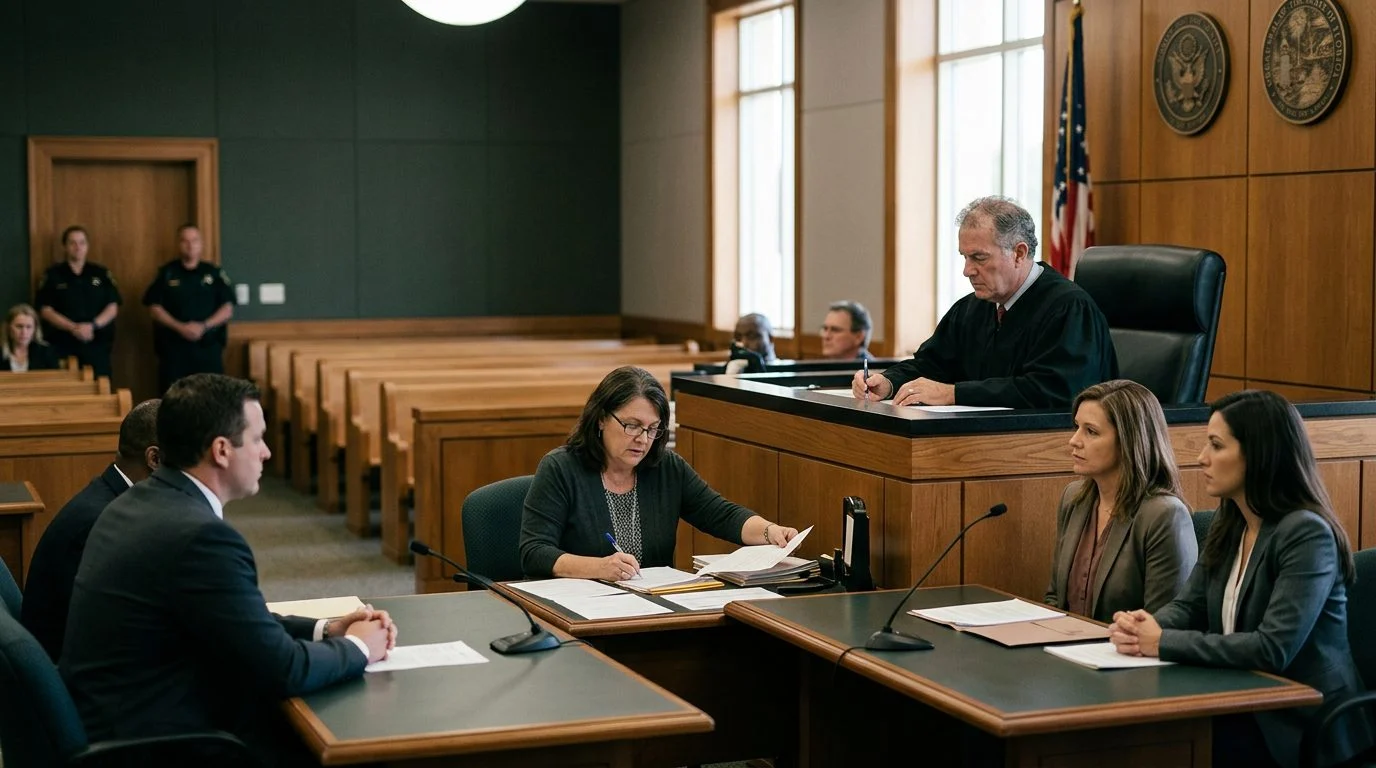
Filing. Such petitions must be filed with the clerk of the court in the county where the person is located. Fla. Stat. § 397.681 The clerk can’t charge a filing fee for this petition. The court must schedule a hearing within 10 court working days unless a continuance is granted, under Fla. Stat. § 397.68151. The court first decides whether the person named has an attorney or whether appointing counsel is appropriate. If counsel is appointed, that attorney represents the person until the petition is dismissed, the order expires, the person is discharged from involuntary treatment, or the court otherwise discharges the office.
Fla. Stat. § 397.6957 Testimony is taken under oath, and the proceedings are recorded. The court may also order drug tests, per Fla. Stat. § 397.6957.
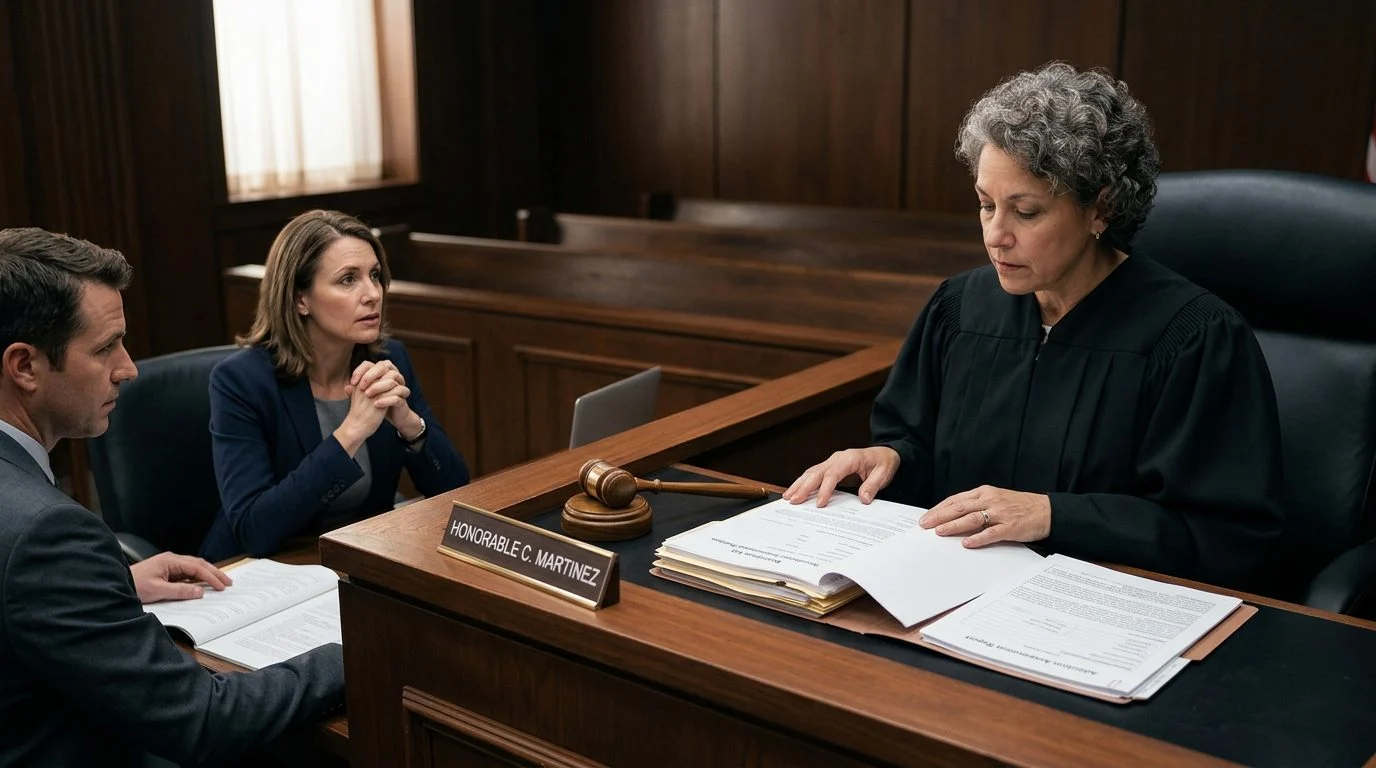
Order. At the conclusion of the hearing, the court must either dismiss the petition or order the respondent to receive involuntary treatment services from his or her chosen licensed service provider if possible and appropriate.
Under Fla. Stat. § 397.697, when the court finds that the conditions for involuntary treatment services have been proved by clear and convincing evidence, it may order the respondent to receive those services for a period not to exceed 90 days. Under Fla. Stat. § 397.697(1)(a), the court may order involuntary treatment services for a period not to exceed 90 days, so preparation matters.
Guardianship Options When the Household Cannot Function
Guardianship is a court process where a judge appoints someone to make decisions for a person who cannot safely manage their own affairs. It is a different tool from the Marchman Act, which deals with substance use treatment.
Our practice covers emergency temporary guardianship, plenary guardianship, limited guardianship, and mental health guardianship. Each fits a different set of facts.
Emergency temporary guardianship is a court option for urgent situations. Under Fla. Stat. § 744.3031, a court may appoint one only after a petition to determine incapacity is filed. The authority lasts 90 days after appointment or until a guardian is appointed, whichever occurs first, and can be extended for another 90 days upon a showing that the emergency conditions still exist.
For the incapacity question itself, Fla. Stat. § 744.331 provides for an examining committee, and its reports must be served on the petitioner and the attorney for the alleged incapacitated person at least 10 days before the hearing, unless the reports are not complete and those parties waive the 10-day requirement. One member must be a psychiatrist or other physician. The court must also appoint an attorney for the person alleged to be incapacitated.
Guardianship and Marchman Act petitions are separate court tools. The right fit turns on the facts of your household.
Why Robinson Casey Limits Its Practice to These Matters
Robinson Casey limits its practice to Marchman Act petitions and guardianship matters, serving families across South Florida and statewide. Because the practice is focused, our questions, documents, and filings stay on these two court paths.
Richard J. Casey III, Esq. is the responsible lawyer for this page. Our lawyers handle these matters, and a matter may be referred to another lawyer or firm when it falls outside our practice.
Our team includes support staff, including assistants and office staff. They help families organize documents and prepare for the first conversation. We don’t claim results or case counts here. We describe the work we do and the questions we answer.
Not sure what your next step is?
Talk it through with our team — the first consultation is free, confidential, and carries no obligation.
Questions Families Ask Before Filing
Most families ask the same few questions before deciding anything. Here are short answers.
Does filing mean I have to divorce my spouse?
Divorce is a separate decision, and the answer depends on the facts of your situation.
Can a court promise treatment or recovery?
No. No lawyer or court can promise that treatment will work or that anyone will recover.
Can a court order treatment against your spouse’s will?
What should I bring to a first consultation?
Bring dated notes about incidents, names of people who saw them, any treatment records, and information about finances and the children.
Is the first consultation free?
The first consultation is free, confidential, and without obligation to continue.
What if my matter needs another lawyer?
A matter may be referred to another lawyer or firm if it falls outside our practice.
If your spouse’s drinking has your children frightened and your household coming apart, you don’t have to carry it alone. Call (561) 849-4700 or schedule a consultation to talk through your options.
How Our Firm Approaches Marchman Act Matters
Focused Practice Area
Robinson Casey focuses on Marchman Act petitions and guardianship matters, so your case is handled by a firm that concentrates on these proceedings.
Clear, Direct Communication
We explain the process in plain language, including what to expect at each stage, so you can make informed decisions for your family.
Support for Families
Our team understands that a spouse's drinking affects the whole household. We work with families across South Florida and statewide.
Careful Preparation
We help you gather the information and documentation the court will need, and we keep you informed as your matter moves forward.
If Someone Is in Immediate Danger
If your spouse or anyone in your home is facing an emergency, call 911 right away. For legal guidance on a Marchman Act matter, call Robinson Casey at (561) 849-4700.
Common Questions Families Ask
Does filing mean I have to divorce my spouse?
Divorce is a separate decision.
Can a court promise treatment or recovery?
No. No lawyer or court can promise that treatment will work or that anyone will recover. We focus on the legal process and what it can and cannot accomplish.
What should I bring to a first consultation?
Bring a timeline of recent events, any relevant records or messages, and a list of questions. Our team will tell you what else would help.
Is my first consultation confidential?
Yes. The first consultation is free, confidential, and carries no obligation to continue with our firm.