
Marchman Act Attorney | Miami-Dade & South Florida
Marchman Act Dual Diagnosis Help for South Florida Families
Robinson Casey limits its practice to Marchman Act petitions and guardianship matters, serving families in Miami-Dade, across South Florida and statewide. Start with a free, confidential first consultation with no obligation to continue.
What to Expect When You Reach Out
Call (561) 849-4700
Speak with our team about your family's situation and the questions on your mind.
Confidential Conversation
Your first consultation is confidential, so you can share the details you need to.
Clear Explanation of Options
We explain the Marchman Act, guardianship and related petitions in plain language so you can decide what comes next.
Attention to Your Family
We understand that substance use and mental health crises affect the whole household, and we treat each matter with care.
By Richard J. Casey III, Esq. · Published November 2, 2026
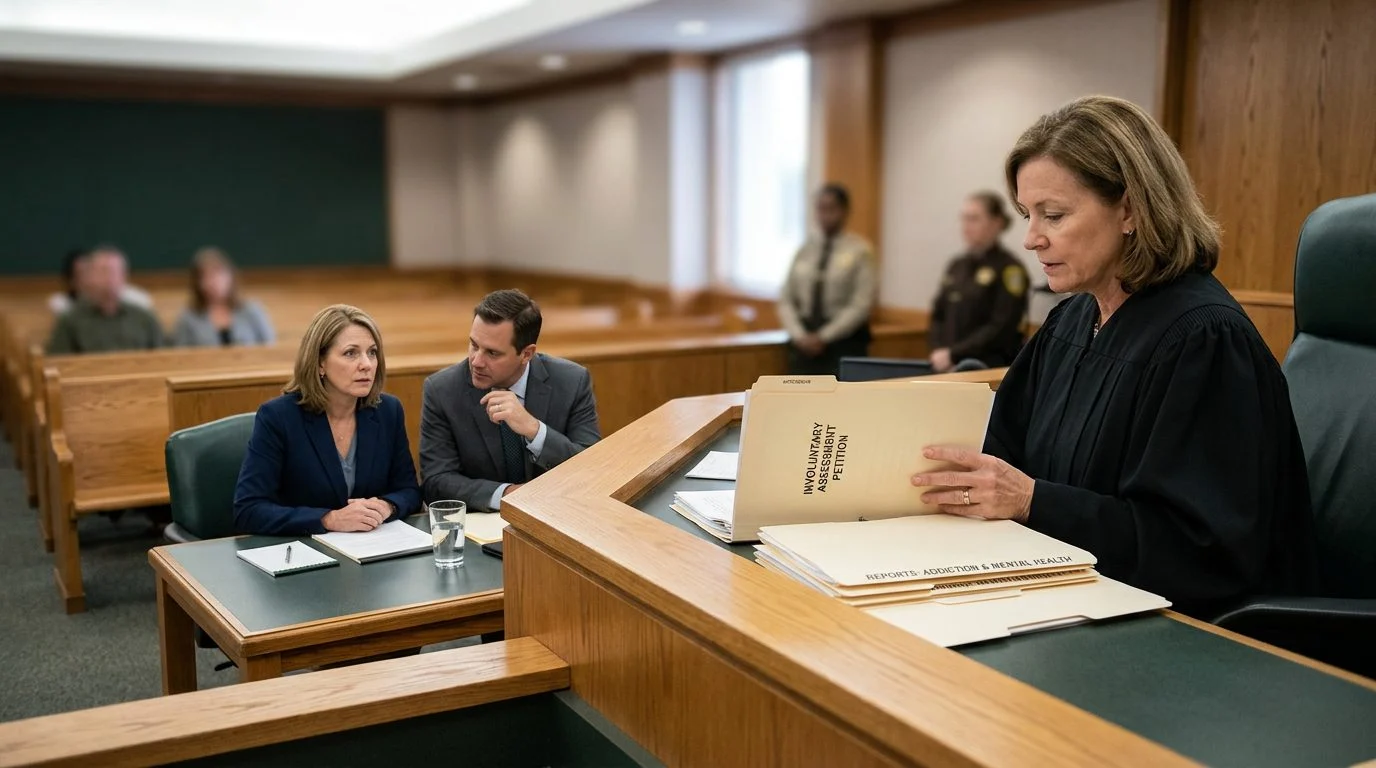
A Marchman Act dual diagnosis Florida case involves one person who has both a substance use disorder and a mental health condition. The Marchman Act can let a family ask a court to order assessment and treatment for a loved one who is severely impaired by substance abuse. The Florida Department of Children and Families describes the law as allowing involuntary assessment, stabilization, and treatment for adults and youth in this situation.
This guide explains how the law applies when addiction and mental illness occur together. It also covers the steps, the timeline, and what to consider before you decide what to do next.
What the Marchman Act Covers When Addiction and Mental Illness Occur Together
The Marchman Act covers substance abuse impairment, and Florida law also addresses cases where a mental health disorder exists alongside it. Under Fla. Stat. § 397.675, a person meets the criteria for involuntary admission if there is good faith reason to believe the person has a substance use disorder and a co-occurring mental health disorder and, because of that impairment or disorder, has lost the power of self-control with respect to substance abuse, and also either (a) needs substance abuse services and, because of impairment, cannot appreciate that need or make a rational decision about it, or (b) without care is likely to neglect himself or herself in a way that poses a real and present threat of substantial harm, with no apparent way to avoid that harm through willing, able, and responsible family members or friends or other services, or there is a substantial likelihood the person has inflicted, threatened, or attempted to inflict, or is likely to inflict, physical harm on himself, herself, or another.
A co-occurring disorder, also called dual diagnosis, means both conditions are present in the same person. Dual diagnosis can make family decisions harder. Your loved one may deny having a problem, refuse treatment, or leave a program and relapse.
You do not have to be the person with the problem. Under Fla. Stat. § 397.68112, for an adult respondent, the respondent’s spouse or legal guardian, any relative, a service provider, or an adult who has direct personal knowledge of the impairment and of the person’s prior course of assessment and treatment may file a petition.
Not sure what your next step is?
Talk it through with our team — the first consultation is free, confidential, and carries no obligation.

Marchman Act or Baker Act: Which Florida Statute Fits
The Marchman Act addresses substance abuse, and the Baker Act addresses mental illness. A co-occurring case can involve facts that matter under both laws.
- Baker Act (Chapter 394): Under Fla. Stat. § 394.463, a person with a mental illness may be taken for involuntary examination. The person must refuse voluntary examination or be unable to decide if one is needed, and either face a real and present threat of substantial harm without care, with no apparent way to avoid that harm through willing, able, and responsible family members or friends or other services, or be substantially likely to cause serious bodily harm to self or others in the near future, as evidenced by recent behavior.
- Marchman Act (Chapter 397): The focus is substance abuse impairment and a loss of self-control with respect to substance use.
- Co-occurring cases: The facts decide how the petition is framed. Clinical records and recent incidents are central under either statute.
Because the two laws overlap, a family should describe both the substance use and the mental health history in detail.
What a Court Looks For Under the Marchman Act
A court looks for specific facts, not general worry.
- Judgment route: The person needs services and, because of impairment, cannot appreciate that need or make a rational decision about it.
- Harm route: Without care, the person is likely to neglect self-care, that neglect poses a real and present threat of substantial harm to the person’s well-being, and it is not apparent that such harm may be avoided through the help of willing, able, and responsible family members or friends or the provision of other services. Or the person has inflicted, or threatened to or attempted to inflict, or, unless admitted, is likely to inflict, physical harm on self or others.
A petition must name the respondent and the petitioner, state their relationship, and set out the factual allegations. Under Fla. Stat. § 397.68141, a professional’s report from within 30 days before filing may be attached.
Treatment orders require proof by clear and convincing evidence, as set out in Fla. Stat. § 397.697. In J.C. v. State, the court explained that by proceeding as it did, the trial court failed to follow the applicable statute by essentially functioning as the absent petitioner. How a case turns depends on the facts and the court’s findings.
How the Marchman Act Process Works, Step by Step
The process starts with a petition for involuntary services filed with the clerk of the court in the county where your loved one is located. A hearing follows within 10 court working days unless a continuance is granted, under Fla. Stat. § 397.68151.
- Gather the facts. Collect dates of incidents, prior treatment attempts, refusals of care, and any mental health records. Family members with firsthand knowledge are important witnesses.
- File with the clerk. Under Fla. Stat. § 397.681, the clerk may not charge a fee to file the petition. A filing in the wrong county is generally treated as a venue problem, as in J.P. v. J.N., not a loss of the court’s power to hear the case.
- Emergency steps, if needed. When emergency circumstances exist, the court may enter an ex parte assessment and stabilization order based on the petition, as stated in Fla. Stat. § 397.6818. A provider generally may not hold the person for more than 72 hours of observation, subject to listed exceptions.
- The respondent has the right to counsel at every stage, which the respondent may waive only if present and the court finds the waiver is knowing, intelligent, and voluntary, under § 397.681. The court hears the evidence, including family testimony and the professional’s assessment. The court may also order drug tests, under Fla. Stat. § 397.6957.
- A renewal may add up to 90 more days, under Fla. Stat. § 397.6975.
Inpatient, Outpatient and Aftercare Options for Dual Diagnosis
A court can order involuntary treatment from a licensed service provider, and the order can cover inpatient or outpatient care. Outpatient treatment has its own conditions, including support from a social worker or case manager (or a court-appointed responsible individual) and, unless the respondent has been ordered into inpatient treatment at least twice in the last 36 months or demonstrates the ability to substantially comply with the outpatient treatment while waiting for residential placement to become available, an assessment that expressly recommends outpatient services, as set out in § 397.697.
Early discharge is possible. Under § 397.6971, at any time before the end of the 90-day involuntary treatment services period, or before the end of any extension granted under s. 397.6975, an individual receiving involuntary treatment services may be determined eligible for discharge when, among other grounds, the individual no longer meets the criteria for involuntary admission and has given his or her informed consent to be transferred to voluntary treatment status.
Dual diagnosis care usually works best when substance use and mental health services are coordinated. Treating providers and the court make treatment decisions. Planning for support after discharge is also a practical part of the picture.
Why Families Work With Robinson Casey
Robinson Casey is a Florida law firm that limits its practice to Marchman Act petitions and guardianship matters. The firm serves families across South Florida, including Miami-Dade County, and statewide.
- Responsible lawyer: Richard J. Casey III, Esq. is responsible for this page.
- Support staff: Our team helps families organize records, track deadlines, and keep questions in one place between conversations.
- Related guardianship matters: When a loved one cannot manage personal or financial affairs, the firm also handles emergency temporary, limited, plenary, and mental health guardianship.
Our role is to explain the process and the options. The court decides the case based on the evidence.
Not sure what your next step is?
Talk it through with our team — the first consultation is free, confidential, and carries no obligation.
Frequently Asked Questions About Marchman Act Dual Diagnosis Cases
Can a Marchman Act petition be filed if my loved one also has a mental illness?
Yes. Florida’s statute addresses a substance use disorder with a co-occurring mental health disorder. The facts decide how the petition is framed.
Is the Marchman Act the same as the Baker Act?
No. The Marchman Act covers substance abuse impairment, while the Baker Act covers involuntary examination for mental illness.
Can a Marchman Act order lead to recovery?
No. No outcome can be promised. The order addresses assessment and treatment under the statute.
What should a family gather first?
Gather dates of incidents, prior treatment attempts, refusals of care, and any mental health records.

Talk With Robinson Casey About Your Loved One’s Situation
Watching someone you love struggle with addiction and a mental health condition at the same time is hard. You may be deciding what to do next while the situation keeps changing.
To talk through your options, call Robinson Casey at (561) 849-4700 or visit our contact page. The first consultation is free and confidential, with no obligation to continue.
If Someone Is in Immediate Danger
Call 911 or go to the nearest emergency room right away. A legal consultation does not replace emergency medical or mental health care.
Matters Robinson Casey Handles
Marchman Act Petitions
Petitions for court-ordered assessment and treatment when substance abuse impairment is involved, including cases where a co-occurring mental health disorder is part of the picture. This includes involuntary commitment for addiction.
Guardianship Matters
Guidance on plenary, limited and emergency temporary guardianship, so families can protect a loved one who needs help making decisions.
Mental Health Guardianship
Support for families seeking guardianship where a mental health condition affects a loved one's ability to care for themselves or manage their affairs.
Emergency Temporary Guardianship
Fast-moving guidance for families facing an urgent situation that calls for temporary court protection while the larger case proceeds.
Talk With Richard J. Casey III, Esq. About Your Family's Situation
Related practice areas
- Involuntary Commitment for Addiction in Florida
- 5150 vs Baker Act: Florida Hold Laws | Robinson Casey