
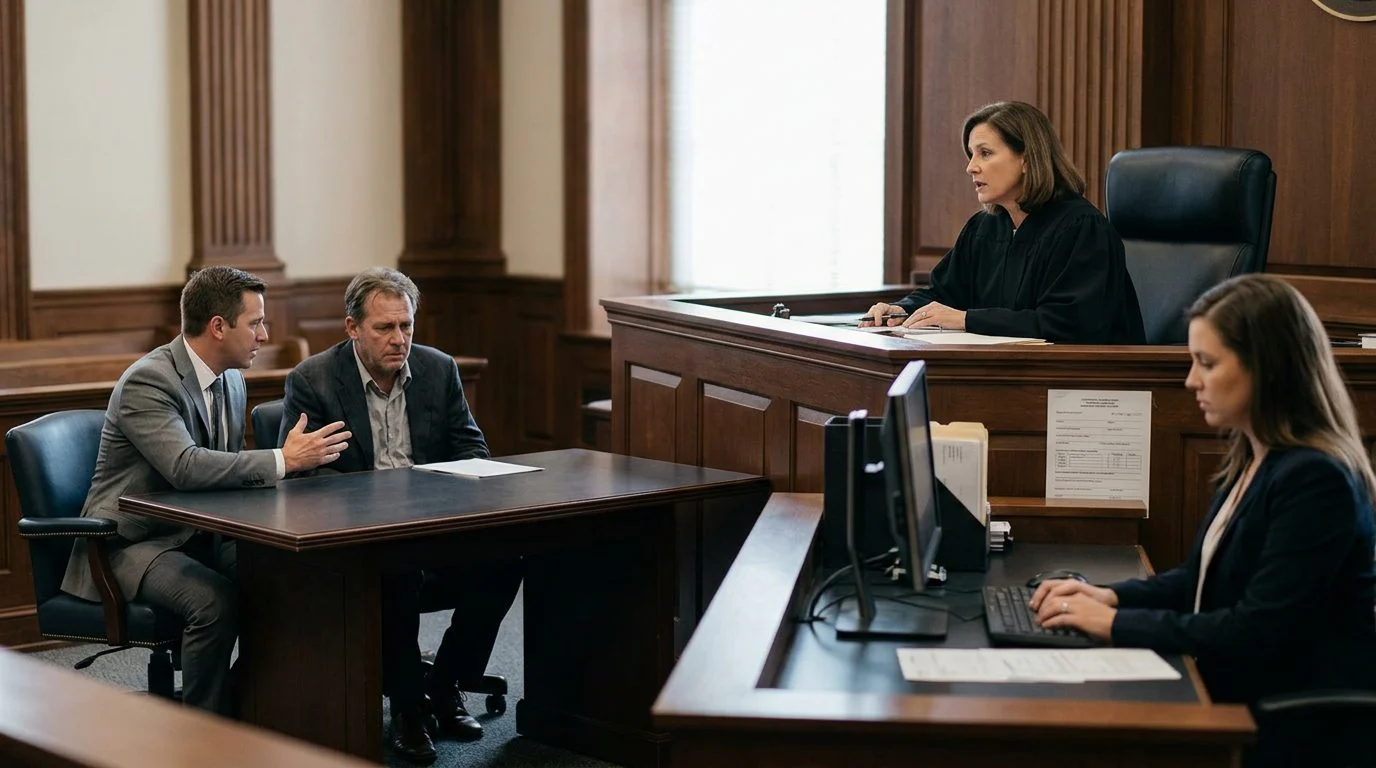
Marchman Act Petitions | South Florida
Understanding a Marchman Act Ex Parte Order in Florida
Robinson Casey focuses on Marchman Act petitions and guardianship matters for families across South Florida and statewide. Learn how an ex parte order works, then talk with our team about your situation.
By Richard J. Casey III, Esq. · Published October 31, 2026
When Your Adult Child Is in Crisis and a Court Date Feels Far Away
A Florida judge can issue a Marchman Act ex parte order before your adult child is heard in court. This page explains that one step: what it is, when a judge may act, and what happens next.
You may be reading this after a night you won’t forget. Maybe your son was pulled back from an overdose. Maybe your daughter left the hospital with no plan, or she was arrested and called you from a jail phone. Maybe she has been gone for three days and you don’t know where she is.
You have paid for treatment. You have tried interventions and set boundaries. Waiting for the usual channels now feels impossible.
Florida’s Marchman Act, in Chapter 397 of the Florida Statutes, gives families a court route for substance use crises. One step in that process is the ex parte order. Few families have heard of it before this moment.
The law also protects the adult child, who keeps rights of their own. This page covers both sides. It is general legal information, not a forecast of how any case will go.
If your adult child is in danger right now, you do not have to face the court process alone; call (561) 849-4700 or reach our team through our contact page for a free, confidential first consultation with no obligation to continue. Talk it through with our team — the first consultation is free, confidential, and carries no obligation.

What an Ex Parte Order Means Under the Marchman Act
An ex parte order is signed by a judge based on one side’s sworn request. The other side is not in the room. “Ex parte” is Latin for “from one party.”
The adult child is called the respondent. The respondent still gets notice. A copy of the petition and notice of the hearing must be provided to the respondent, and the court schedules a hearing on the petition within 10 court working days unless a continuance is granted.
The Marchman Act covers substance use. Mental-health emergencies fall under the Baker Act, which uses a different process. The Baker Act criteria guide from Florida’s courts describes its 72-hour examination period. If alcohol or drugs drive the crisis, the Marchman Act is the law that applies.
An ex parte order is temporary. It starts a process. It does not settle the full treatment plan on its own. When the court finds by clear and convincing evidence that the conditions for involuntary treatment services have been proved, it may order involuntary treatment services for a period not to exceed 90 days, and a renewal may be requested before the 90-day period ends if the conditions justifying treatment are expected to continue.
A PubMed Central article on involuntary commitment in addiction treatment notes that these state laws have seen limited use. Many families find the process unfamiliar for that reason.
When a Florida Judge May Act Before the Hearing
A judge may act before the hearing when the petition shows an emergency, or when the judge finds one exists. In that case, the judge may rely on the petition alone and enter the order without first appointing an attorney (Fla. Stat. § 397.6818).
The judge still needs a real basis.
If the respondent does not appear at the hearing for any reason, including lack of service, the court may issue or reissue an ex parte order only if, after reviewing the petition, testimony, and evidence, it reasonably believes the respondent meets this chapter’s commitment criteria and that a substance abuse emergency exists. This section does not say whether refusing services is or is not proof of impaired judgment.
Facts make the difference. In D.H. v. K.J.R., the Second District Court of Appeal held that a petition without a good-faith basis could not support an ex parte order. Whether a judge acts early depends on the facts in the petition.
What an Ex Parte Order Can Direct
An ex parte order can direct a law enforcement officer or designated agent to take your child into custody. The officer then delivers your child for evaluation to the nearest appropriate licensed service provider, or to a provider the court designates (Fla. Stat. § 397.6818). An officer must restrain your child in the least restrictive way that is appropriate (Fla. Stat. § 397.341).
The provider has a time limit. Exceptions include a court-granted extension after a hearing, signs of withdrawal or a need for detox or medical care, or an observation period that ends on a weekend or holiday.
The ex parte order sets the immediate step. It does not decide how long or what kind of treatment follows. Those questions come later, at the hearing and in any treatment order.
How the Petition Is Filed and Who May File One
A petition is filed with the clerk of the court in the county where the adult child is located. That is the place where your child is physically present, which may not be your home county (Fla. Stat. § 397.681). In J.P. v. J.N., the Fifth District held that filing in the wrong county did not take away the circuit court’s jurisdiction. However, the filing of the petition in the wrong county did not divest the circuit court in Putnam County of jurisdiction. The clerk may not charge a fee for filing this petition.
Such petitions must be filed with the clerk of the court in the county where the person is located. For an adult respondent, a petition may be filed by the respondent’s spouse or legal guardian, any relative, a service provider, or an adult who has direct personal knowledge of the respondent’s substance abuse impairment and of his or her prior course of assessment and treatment (Fla. Stat. § 397.68112). For a minor, a parent, legal guardian, or service provider may file (Fla. Stat. § 397.68112).
It must give the facts behind the belief that your child is impaired and has lost control. In an emergency, it must describe the exigent circumstances and ask for the ex parte order (Fla. Stat. § 397.68141).
A report from a qualified professional who examined your child within 30 days may be attached. If there was no assessment, the petition must say so.
A written declaration under penalties of perjury is one way to do it. Knowingly making a false declaration is a third-degree felony (§ 92.525).
What Happens After the Ex Parte Order Is Issued
The order must be carried out while the hearing is pending. If it is not carried out by the initial hearing date, it is void (Fla. Stat. § 397.6818). The court must schedule the hearing within 10 court working days, unless a continuance is granted (Fla. Stat. § 397.68151).
The court immediately determines whether your child is represented by an attorney or whether appointing counsel is appropriate. Your child has a right to counsel at every stage, which the respondent may waive only if present and the court finds the waiver knowing, intelligent, and voluntary (Fla. Stat. § 397.681). Upon filing, the court immediately determines whether your child is represented by an attorney or whether appointing counsel is appropriate. If the court believes counsel is needed, it appoints one, even if your child does not want one (Fla. Stat. § 397.681).
At the hearing, the court hears all relevant evidence. That can include family members who know your child’s history. Testimony is under oath, and the proceedings are recorded. Your child may refuse to testify. The court may also order drug tests (Fla. Stat. § 397.6957).
To order treatment, the court must find the conditions proved by clear and convincing evidence (Fla. Stat. § 397.697).
The petitioner has the burden of proving by clear and convincing evidence that the respondent is substance abuse impaired and has a history of lack of compliance with treatment for substance abuse, and the statute lists further elements, including that the respondent’s refusal to voluntarily receive care is based on judgment so impaired by reason of substance abuse that the respondent is incapable of appreciating his or her need for care and of making a rational decision regarding that need for care. In J.C. v. State, a judge who questioned the only witness while the petitioner was absent was held to have functioned as the petitioner, which was error. The trial court failed to follow the governing statute when, in the absence of the petitioner, it called and questioned the health care professional who executed the involuntary services certificate. No one can promise how a hearing will turn out.
Not sure what your next step is?
Talk it through with our team — the first consultation is free, confidential, and carries no obligation.
Your Fears, Answered Plainly: Overdose, Jail, Homelessness, and Hope
An ex parte order is built to get your child evaluated by a licensed provider. Under § 397.697(2), in cases that result in an order for involuntary treatment services, the court keeps jurisdiction to start contempt proceedings if a valid Marchman Act order is violated.
You may fear a call saying your child has died. A court order cannot control your child’s choices. What it can do is bring a professional assessment and continued court oversight. The court keeps jurisdiction to monitor treatment compliance and change the treatment approach (Fla. Stat. § 397.697).
The statute’s route runs through a licensed service provider and the court’s orders. It does not create housing. If your child has no stable place to live, the order starts a process that may lead to assessment and treatment.
Many parents feel they have run out of options. A Marchman Act petition is one more legal route. It is not a promise. No court order can promise recovery, and no one can predict how your child will respond.
Practical Steps to Take Now, and Related Guidance
Start a dated written record of what you have seen. Then gather the papers you already have. Courts rely on facts, so specifics matter.
- A dated log of incidents, including overdoses, threats, and missed days, and who saw each one.
- Emergency room or hospital discharge papers.
- Police or arrest reports.
- Prior treatment records and assessments.
A petition that lists fears without facts can fall short, as the court in D.H. found. Concrete dates and details give the judge something to weigh.
For the full overview, read our guide to involuntary commitment for addiction in Florida. Other questions you may have next include drug court versus the Marchman Act, an adult child living at home and using drugs, and a parent’s access to treatment information.
Frequently asked questions
What is a Marchman Act ex parte order in Florida?
It is an order a judge can sign on a sworn petition, without the adult child present. It starts an assessment and stabilization process.
Can a judge order my adult child into treatment before a hearing in Florida?
Yes, when the petition shows an emergency, a judge may issue an ex parte assessment order. A treatment order still requires a hearing.
How long can someone be held under an ex parte order in Florida?
A provider may not hold a person for more than 72 hours of observation, unless an exception applies.
Is a Marchman Act case the same as a Baker Act case?
No. The Marchman Act addresses substance abuse impairment, while the Baker Act addresses mental health examinations; but if the court has reason to believe the respondent also meets Baker Act criteria because of mental illness, the court may initiate involuntary examination proceedings under those provisions.

Talk Through Your Child’s Situation With Robinson Casey
If your child is in crisis now, you can talk through the specific facts with our team. You have already tried treatment, boundaries, and interventions. You want a legal path to proper care, and you should not have to carry this alone.
If your adult child is in danger right now, you do not have to face the court process alone. Call (561) 849-4700 or use our contact page for a free, confidential first consultation with no obligation to continue.
Richard J. Casey III, Esq., is the responsible lawyer for this page.
How Robinson Casey Supports Families
Focused Practice
Robinson Casey limits practice to Marchman Act petitions and guardianship matters, so our work centers on these court processes.
Clear Explanations
We explain each filing, hearing, and step in plain language so you know what to expect during a difficult time.
Confidential Consultation
Your first consultation is free, confidential, and carries no obligation to continue.
Supported by Our Staff
Our team of assistants and office staff helps families stay organized and informed from first call to final step.
If Someone Is in Immediate Danger
If a person is in immediate danger, call 911 right away. A Marchman Act petition is a court process, and our team can discuss the options that may apply to your family during a consultation.
Related Matters We Handle
Marchman Act Attorney
We represent petitioners in Marchman Act proceedings for adults struggling with substance use, from the initial petition through the court process.
Involuntary Commitment for Addiction
Our practice addresses court-ordered assessment and treatment petitions, helping families understand each stage of the proceeding.
Emergency Temporary Guardianship
When a loved one needs immediate protection, we help families prepare requests for emergency temporary guardianship.
Guardianship Attorney
We handle plenary, limited, and mental health guardianship matters for families across South Florida and statewide.