
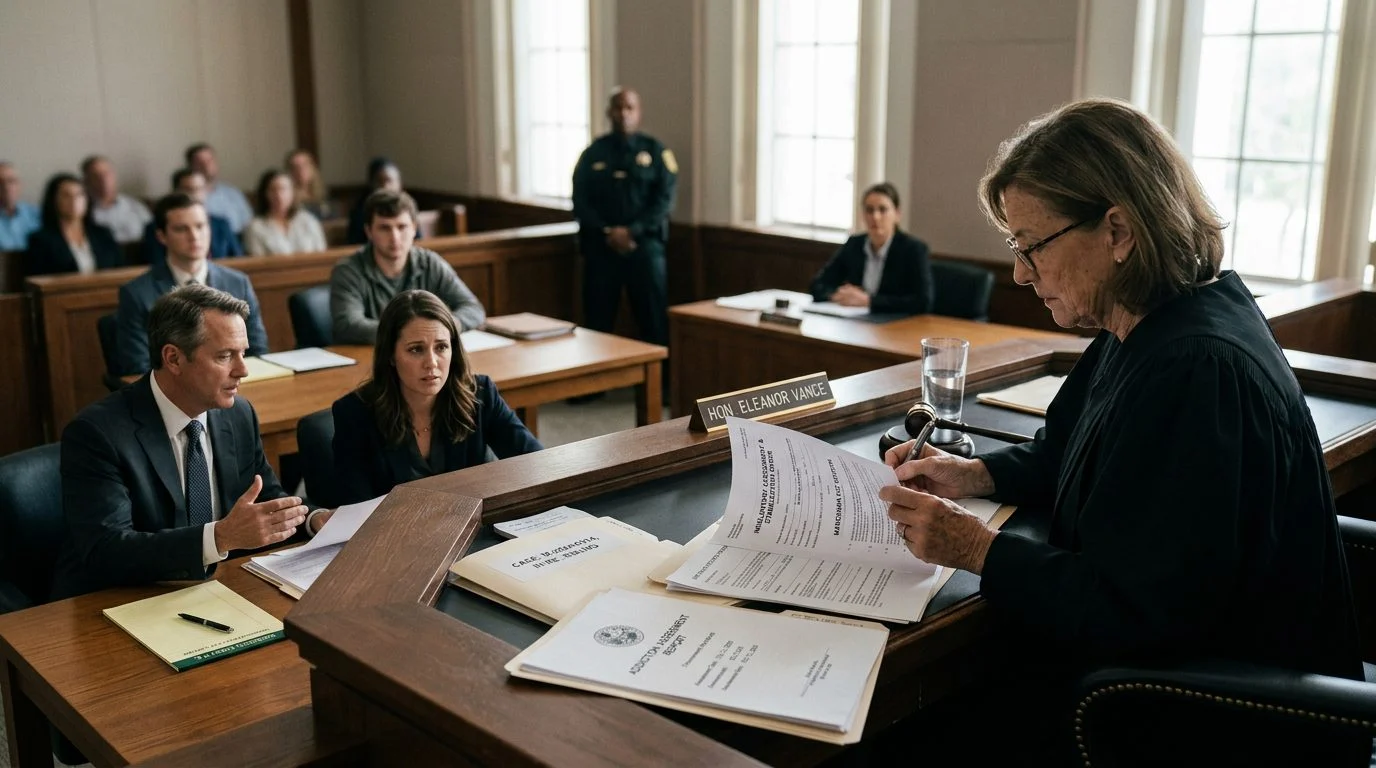
Marchman Act Petitions | Miami-Dade & South Florida
Helping Siblings Petition the Court for a Loved One in Crisis
Robinson Casey focuses on Marchman Act petitions and guardianship matters for families across South Florida and statewide. Speak with Richard J. Casey III, Esq. about your sibling's situation.
By Richard J. Casey III, Esq. · Published October 29, 2026
Yes. Under current Florida law, a sibling or adult child can ask a court for assessment and treatment of an adult’s substance abuse impairment, if the legal criteria are met. This page explains who may file, what the court looks for, and what happens after a petition is filed. Robinson Casey focuses on Marchman Act petitions and guardianship matters for families in Miami-Dade, South Florida, and across the state.
When a Brother, Sister, or Adult Child Keeps Ending Up in Crisis
Many families see the same cycle. The emergency room treats your loved one, a hospital discharges them within days, and they return to the street with no real plan for care.
Then the calls come again. They have stopped taking medication. They refuse every offer of help. Money is disappearing, or someone is taking advantage of them.
You likely fear the worst. You may worry about irreversible harm, financial exploitation, dangerous decisions, or another psychiatric hospitalization. Many siblings and adult children also believe they have no legal standing to act. You are not looking for control. You want your loved one safe and supported. The real question is whether Florida law gives you a lawful route to court-ordered help. For many families, it does.
Not sure what your next step is?
Talk it through with our team — the first consultation is free, confidential, and carries no obligation.

What the Marchman Act Is and Who It Covers
The Marchman Act is Florida’s court process for involuntary assessment and treatment of substance abuse impairment. It is found in Chapter 397 of the Florida Statutes, and it begins with a petition filed in court.
A court may order involuntary admission only if the criteria are met. § 397.675 requires a good faith reason to believe the person is substance abuse impaired, or has a substance use disorder and a co-occurring mental health disorder. The person must have lost the power of self-control over substance use. The statute also requires one of two things. Either the person is in need of substance abuse services and, because of impairment, cannot appreciate that need or make a rational decision about services, or without care the person is likely to neglect himself or herself in a way that poses a real and present threat of substantial harm, and it is not apparent that such harm may be avoided through the help of willing, able, and responsible family members or friends or the provision of other services. Physical harm to self or others also qualifies.
Who may file? For an adult, § 397.68112 lists the spouse or legal guardian, any relative, a service provider, and an adult with direct personal knowledge of the impairment and prior treatment.
What Robinson Casey Handles for Families
Robinson Casey focuses on Marchman Act petitions and guardianship matters. The practice centers on these two areas.
- Marchman Act petitions: preparing and filing the petition, and preparing the family for the court hearing.
- Guardianship for a loved one who cannot make safe decisions: emergency temporary guardianship, limited guardianship, and mental health guardianship, reviewed against your family’s facts.
- Court follow-up: questions about renewal and discharge after a treatment order.
Richard J. Casey III, Esq. is the responsible lawyer for this page. The firm serves Miami-Dade and South Florida, and families across Florida.
The Marchman Act Process, Step by Step
The process starts with a consultation and moves toward a court hearing. Each step depends on the facts of your case. Here is the typical path under the current statutes.
- Consultation. We review your loved one’s history, recent episodes, and current risks.
- Gather records. Incident reports, hospital discharge papers, and treatment history help show the pattern.
- File the petition. The petition goes to the clerk in the county where your loved one is located. It must name both people, state their relationship, and give the facts behind your belief. See § 397.68141. A report from a qualified professional who examined your loved one within 30 days may be attached.
- Court review. The court checks whether your loved one has a lawyer. It sets a hearing within 10 court working days unless the hearing is continued, under § 397.68151. Fla. Stat. § 397.68151 reads: “(2) The court shall schedule a hearing to be held on the petition within 10 court working days unless a continuance is granted.”
- Emergency orders. If an emergency exists, the court may enter an ex parte order, meaning one issued without waiting for the other side. A provider may hold a person for no more than 72 hours of observation unless an exception applies, under § 397.6818.
- Hearing and order. The court needs a clinical assessment before it orders treatment. Testimony is taken under oath, and family members can speak to past history under § 397.6957. If the criteria are proved by clear and convincing evidence, the court may order up to 90 days of treatment, under § 397.697.
- Renewal or discharge. A renewal petition must be filed before the period ends, under § 397.6975.
Your Questions About Confidentiality, Cost, Out-of-State Relatives, and Refusal
Court records in these cases are confidential. § 397.6760 makes petitions, court orders, and related records confidential. The clerk may not publish personal identifying information on a public docket.
On cost, the clerk may not charge a fee to file the petition, under § 397.681. Service of process fees can come up. The court may prohibit, or a law enforcement agency may waive, service of process fees if the petitioner is indigent, under § 397.68112. The first consultation is free, confidential, and carries no obligation to continue.
Where your loved one is physically located affects where a petition is filed, because Florida law requires the petition to be filed with the clerk of the court in the county where the person is located. The petition is filed where your loved one is physically located. For more, read about out-of-state family petitions.
Refusal alone is not enough to decide a case. § 397.675 says mere refusal to receive services is not evidence of lack of judgment about the need for them. Fla. Stat. § 397.675 reads: “(b) Without care or treatment, is likely to suffer from neglect or refuse to care for himself or herself; that such neglect or refusal poses a real and present threat of substantial harm to his or her well-being; and that it is not apparent that such harm may be avoided through the help of willing, able, and responsible family members or friends or the provision of other services, or there is substantial likelihood that the person has inflicted, or threatened to or attempted to inflict, or, unless admitted, is likely to inflict, physical harm on himself, herself, or another.” The petition must still describe specific facts. If your loved one refused an assessment, the petition must say so.
Why Families Turn to Robinson Casey
Families turn to Robinson Casey because the practice stays focused on Marchman Act petitions and guardianship matters. Your case gets advice from a firm that works in these two areas.
- Focused practice: the work centers on these two areas, not a long list of unrelated matters.
- Reach: the firm serves Miami-Dade and South Florida, and families across the state.
- Support staff: the firm’s support staff helps with scheduling and document intake.
- Plain updates: you learn what the petition needs, when the next court date is, and what to expect next.
- Current law: this page follows the current statute text, including the 2024 and 2025 amendments.
Not sure what your next step is?
Talk it through with our team — the first consultation is free, confidential, and carries no obligation.
Frequently Asked Questions
Can a sibling file a Marchman Act petition in Florida?
Yes. A sibling is a relative, and § 397.68112 lets any relative file for an adult, if the criteria are met.
Can an adult child file if a parent refuses help?
Yes. An adult child is a relative, so the same rule applies. The court must still find that the statutory criteria are met.
Does my loved one have the right to a lawyer?
Yes. The respondent has the right to counsel at every stage, which the respondent may waive if present and the court finds the waiver is made knowingly, intelligently, and voluntarily, and an indigent respondent who wants counsel has the right to court-appointed counsel under § 397.681.
Where is the petition filed?
The petition is filed with the clerk in the county where your loved one is located. See § 397.681.
Is a Marchman Act case confidential?
Yes. Petitions, court orders, and related records are confidential under § 397.6760.

Talk With Robinson Casey About Your Brother, Sister, or Adult Child
If your brother, sister, or adult child is stuck in cycles of crisis, refusal, and hospital stays, a Marchman Act petition may be the next lawful step to discuss. Call Robinson Casey at (561) 849-4149, or request your consultation online, and bring your family’s facts.
Why Families Start With a Conversation
Confidential Consultation
Your first consultation is free, confidential, and carries no obligation to continue.
Focused Practice
Robinson Casey limits its practice to Marchman Act petitions and guardianship matters, so your case is handled by a team that works in these areas every day.
Clear Next Steps
We explain the court process, the documents involved, and what your family can expect before you decide how to proceed.
Direct Access
Call (561) 849-4149 to speak with our office about your sibling's situation.
Every Situation Is Different
The outcome of any Marchman Act petition depends on the facts, the evidence, and the court's findings. Reading this page does not create an attorney-client relationship, and no result can be promised. Contact our office so we can review your sibling's circumstances.
Matters We Handle
Marchman Act Attorney
Representation for petitions seeking court-ordered assessment and treatment for a loved one struggling with substance use.
Involuntary Commitment for Addiction
Guidance on the commitment process under Florida law and what to expect at each stage of the proceeding.
Guardianship Attorney
Support for families seeking court appointment of a guardian to protect an adult who needs help managing personal or financial decisions.
Emergency Temporary Guardianship
Assistance with urgent petitions when a vulnerable adult faces immediate risk and needs a guardian appointed quickly.
Plenary and Limited Guardianship
Help determining which type of guardianship fits your family's situation and the level of authority the court may grant.
Mental Health Guardianship
Representation in guardianship proceedings for adults whose mental health condition affects their ability to make safe decisions.