
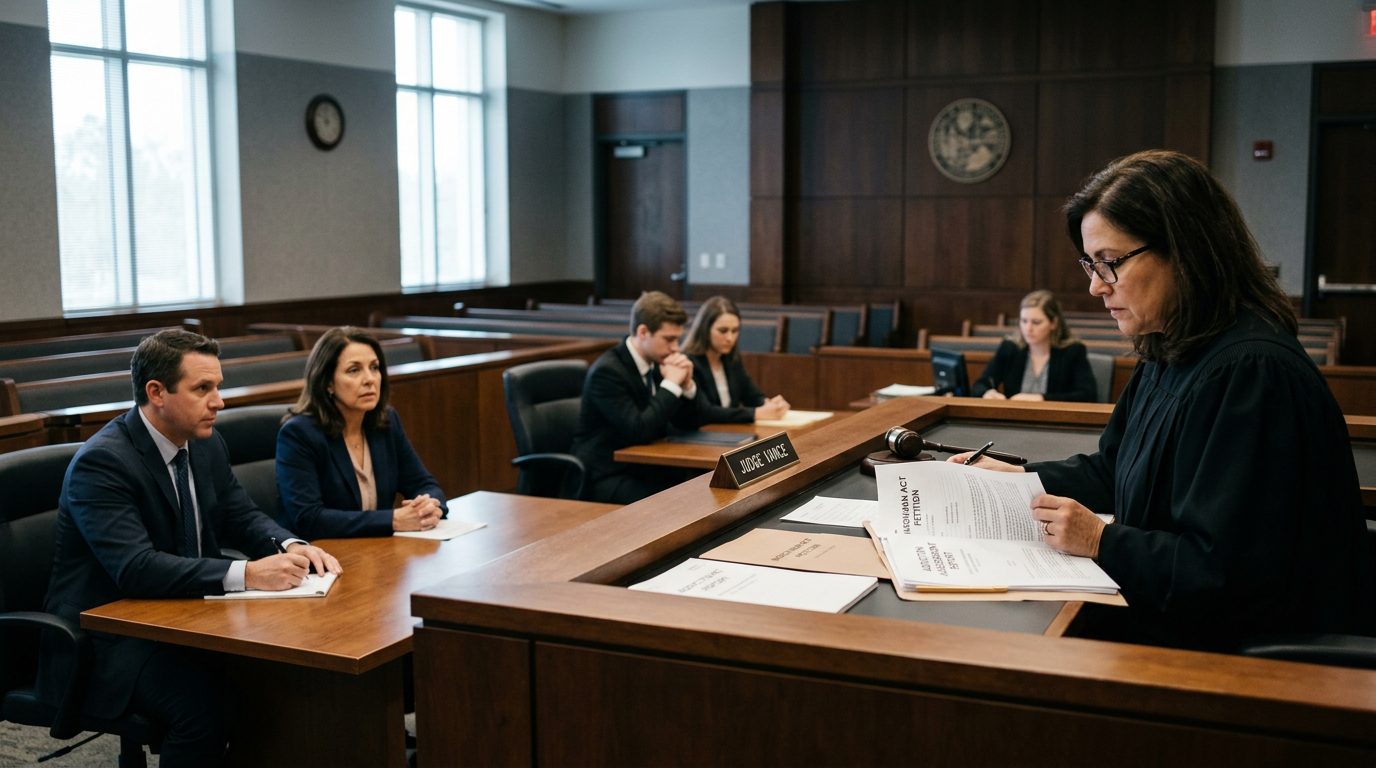
Marchman Act Petitions | South Florida
Helping Your Family Through a Marchman Act for an Adult Son or Daughter
Robinson Casey focuses exclusively on Marchman Act petitions and guardianship matters, serving families across South Florida and statewide. Start with a free, confidential first consultation.
Starting your case
Free
First consultation, confidential and with no obligation to continue
Statewide
Serving South Florida and families across Florida
By Richard J. Casey III, Esq. · Published October 18, 2026
By Richard J. Casey III, Esq., responsible lawyer at Robinson Casey, serving Miami-Dade County and South Florida families.
A Marchman Act for a young adult son or daughter in Florida is a court route for families. It applies when substance use puts an adult at risk and voluntary care is not working. This guide walks through who can file, what the court looks for, and what rights the young adult keeps. Every situation is different, so use this as a starting point for understanding the process.
How the Marchman Act Differs for Minors and Adults
A parent cannot simply step in the way they might for a minor. The filing rules change, and the family needs to know the adult rules before taking any step.
For an adult, the statute names who may file. A spouse or legal guardian, any relative, a service provider, or an adult with direct personal knowledge of the person’s substance abuse impairment and prior course of assessment and treatment may file a petition under Fla. Stat. § 397.68112.
Age decides which rules apply, and the student’s address affects where the case is filed.
These cases often start with a crisis. A call from campus, a worried roommate, a missed exam, or a frightening night can force a decision. The family then has to choose a next step, often fast and with little information. Taking time to learn the rules first can help you avoid mistakes made under pressure.
If a college-age son or daughter's drug or alcohol use has your family worried about what to do next, our team is ready to talk through your options with you. Talk it through with our team — the first consultation is free, confidential, and carries no obligation.

What the Marchman Act Is and What It Covers
The Marchman Act is Florida’s law for court-ordered assessment and treatment of people impaired by substance use. It is a court process. It exists so a judge, not only the family, decides whether the person needs help they are refusing.
Section 397.68112 governs who may file a petition for involuntary treatment services, and section 397.675 sets out the core test for involuntary admission. A person must have a good faith reason to believe they are substance abuse impaired, or have a substance use disorder with a co-occurring mental health disorder. Because of that impairment, they must have lost the power of self-control with respect to substance use (Fla. Stat. § 397.675).
The statute also requires one more finding. The person either needs services and cannot appreciate that need or make a rational decision about it. Or, without care, they are likely to neglect themselves in a way that poses a real and present threat of substantial harm. Fla. Stat. § 397.675 reads: “(b) Without care or treatment, is likely to suffer from neglect or refuse to care for himself or herself; that such neglect or refusal poses a real and present threat of substantial harm to his or her well-being; and that it is not apparent that such harm may be avoided through the help of willing, able, and responsible family members or friends or the provision of other services, or there is substantial likelihood that the person has inflicted, or threatened to or attempted to inflict, or, unless admitted, is likely to inflict, physical harm on himself, herself, or another.” Another option is a substantial likelihood of physical harm to self or others. Fla. Stat. § 397.675 reads: “(b) Without care or treatment, is likely to suffer from neglect or refuse to care for himself or herself; that such neglect or refusal poses a real and present threat of substantial harm to his or her well-being; and that it is not apparent that such harm may be avoided through the help of willing, able, and responsible family members or friends or the provision of other services, or there is substantial likelihood that the person has inflicted, or threatened to or attempted to inflict, or, unless admitted, is likely to inflict, physical harm on himself, herself, or another.”
How the Marchman Act Differs from the Baker Act
The Marchman Act covers substance use. Mental illness on its own falls under a different Florida law, the Baker Act. Families often mix the two up because both can involve emergency-style intervention.
A young adult can have both problems at once. The Marchman criteria expressly cover a substance use disorder that comes with a co-occurring mental health disorder (Fla. Stat. § 397.675). That overlap is one reason the label matters less than the facts in the petition.
Ask whether the person has lost self-control over substance use. Ask whether they are refusing care because their judgment is impaired by substance use. Those questions drive the Marchman analysis.
Who Can File a Marchman Act Petition for an Adult Son or Daughter
A parent, sibling, or other relative can file for an adult son or daughter. A spouse, a legal guardian, a service provider, or an adult with direct personal knowledge of the impairment and of the person’s prior course of assessment and treatment can also file (Fla. Stat. § 397.68112).
The petition must name the respondent and the petitioner. It must state their relationship and the respondent’s attorney if known. It must also set out facts showing why the petitioner believes the person is impaired and has lost self-control (Fla. Stat. § 397.68141).
Specific facts carry more weight than general worry. Write down dates, what you saw, what was said, and any past treatment. A report from a qualified professional who examined the person within 30 days before filing may come with the petition. If the person refused an evaluation, the petition must say so.
An adult roommate can file only with direct personal knowledge of the impairment and of the person’s prior assessment and treatment. A person may also be the subject of a petition for court-ordered involuntary treatment if they have been placed under protective custody within the previous 10 days or have been subject to an emergency admission within the previous 10 days (Fla. Stat. § 397.68111).
The Court Process: Petition, Hearing, and Involuntary Assessment
After the petition is filed, the court must decide whether the respondent has a lawyer or needs one. The court must schedule a hearing within 10 court working days unless a continuance is granted (Fla. Stat. § 397.68151).
Once a petition is filed, the court must immediately determine whether the respondent is represented by an attorney or whether appointing counsel is appropriate (Fla. Stat. § 397.68151). When the petitioner asserts an emergency, or the court finds one on reviewing the petition, the court can enter an ex parte order for assessment and stabilization without appointing a lawyer first (Fla. Stat. § 397.6818). A provider may hold the person for no more than 72 hours of observation unless the statute’s listed exceptions apply.
The petition must still give a real reason.
A person may not be ordered into involuntary treatment without a clinical assessment. The exception is when they are present in court and expressly waive it. The court must hear and review all relevant evidence, including the results of the assessment completed by the qualified professional in connection with this chapter (Fla. Stat. § 397.6957).
The petitioner carries the burden of proof. In a Fifth District case, the court erred by questioning the only witness itself while the petitioner was absent (J.C. v. State). That is a Fifth District ruling, not a statewide rule.
Court-Ordered Treatment, Aftercare, and Monitoring
If the court finds the conditions proved by clear and convincing evidence, it may order treatment for a period not to exceed 90 days (Fla. Stat. § 397.697).
The court may order publicly funded treatment. It may also order privately funded treatment if the respondent has the ability to pay, or if any person on the respondent’s behalf voluntarily demonstrates a willingness and an ability to pay. Cost is often a question families raise early.
The court keeps jurisdiction after the order. It can monitor compliance, change the treatment, or start contempt proceedings for violating a valid order (Fla. Stat. § 397.697).
A person may be discharged early. That can happen if they no longer meet the criteria and give informed consent to voluntary treatment, among other listed grounds (Fla. Stat. § 397.6971). Discharge may be determined at any time before the end of the 90-day involuntary treatment services period, or before the end of any extension granted under s. 397.6975, when one of the listed grounds applies (Fla. Stat. § 397.6971). If the court finds that the petition for renewal of the involuntary treatment services order should be granted, it may order treatment for a period not to exceed an additional 90 days (Fla. Stat. § 397.6975).
Not sure what your next step is?
Talk it through with our team — the first consultation is free, confidential, and carries no obligation.
A Student Living Away from Home or Out of State
The petition goes to the clerk of the court in the county where the person is located. That is the rule for filing (Fla. Stat. § 397.681). For a student, the location may be a campus, an apartment, or a town away from home.
The Fifth District addressed this in J.P. v. J.N.. The petition was filed in a county where the respondent was physically located, not where he lived. The court held that filing in the wrong county did not take away the circuit court’s jurisdiction. It treated the problem as a venue issue, which is raised and fixed, not a reason to dismiss.
In Miami-Dade, the Clerk’s Office directs adult petitions to Probate Court and minor petitions to Juvenile Court (Miami-Dade Clerk mental health court page). Confirm the student’s current address before filing anything.
Gather the practical details early. Note the student’s current address, campus contacts, and where they are staying. If the student has moved to another state, bring those details to a consultation so the location questions are checked against the facts.
The Young Adult’s Rights and How a Lawyer Can Help Defend Against a Petition
The young adult named in the petition has the right to counsel at every stage of the proceeding. They can waive that right only if they are present and the court finds the waiver knowing, intelligent, and voluntary (Fla. Stat. § 397.681).
A lawyer for the respondent has access to the person, witnesses, and records relevant to the case (Fla. Stat. § 397.68151).
A lawyer can review the petition and check whether its facts meet the statute. They can challenge the basis for the request when the facts support it. They can also explain each step before any hearing begins.

Questions to Bring to a Consultation and Next Steps
Bring the young adult’s age, current address, recent events, prior treatment, and any documents you have. Those details shape how the petition, venue, and hearing questions are reviewed.
Richard J. Casey III, Esq. limits practice to Marchman Act petitions and guardianship matters. The Robinson Casey team supports the work in the office. The initial consultation is free, confidential, and carries no obligation to continue.
Frequently Asked Questions
Can a parent file a Marchman Act for an adult son or daughter in Florida?
Yes. A relative, including a parent, may file a petition for an adult under Florida law.
Is the Marchman Act the same as the Baker Act?
No. The Marchman Act covers substance use, while the Baker Act is a separate Florida law for mental illness.
How long can someone be held under a Marchman Act order?
A provider may hold a person for no more than 72 hours of observation unless a listed exception applies. A treatment order may run up to 90 days.
If a young adult in your family is struggling and you’re not sure what the law allows, you don’t have to sort it out alone. Contact Robinson Casey or call (561) 849-4149 to talk through your options.
Why families bring their concerns to us
A focused practice
Robinson Casey limits its practice to Marchman Act petitions and guardianship matters, so the work stays centered on the issues that bring families to us.
Compassionate guidance
A loved one's substance use or mental health crisis is stressful. We listen carefully and explain each option in plain language.
A confidential first step
Your first consultation is free, confidential and comes with no obligation to continue.
Support from our team
Our team of assistants and office staff helps families with scheduling, documents and next steps.
If someone is in immediate danger
Call 911 or your local emergency number right away. For non-emergency questions about a Marchman Act petition or guardianship, contact our office to talk through your situation.
Matters we handle for families
Marchman Act petitions
Petitions for an adult son or daughter whose substance use is putting their health, safety or relationships at risk.
Guardianship matters
Guardianship attorney services for families seeking court protection for a loved one who needs help making decisions.
Emergency temporary guardianship
Urgent court requests for temporary protection when a loved one's situation cannot wait.
Involuntary commitment for addiction
Guidance on the court process for involuntary treatment when a family member refuses help for addiction.